

Catching Waves, Achieving Change — Alumni Profile, Anthony Chan ’72
Anthony Chan ’72 has brought his enterprising and curious mind with him from Hawaii to Amherst, starting his own M&A practice, reckoning with history, funding an endowed chair at the college, and successfully pushing for the establishment of the AAPI Studies major.
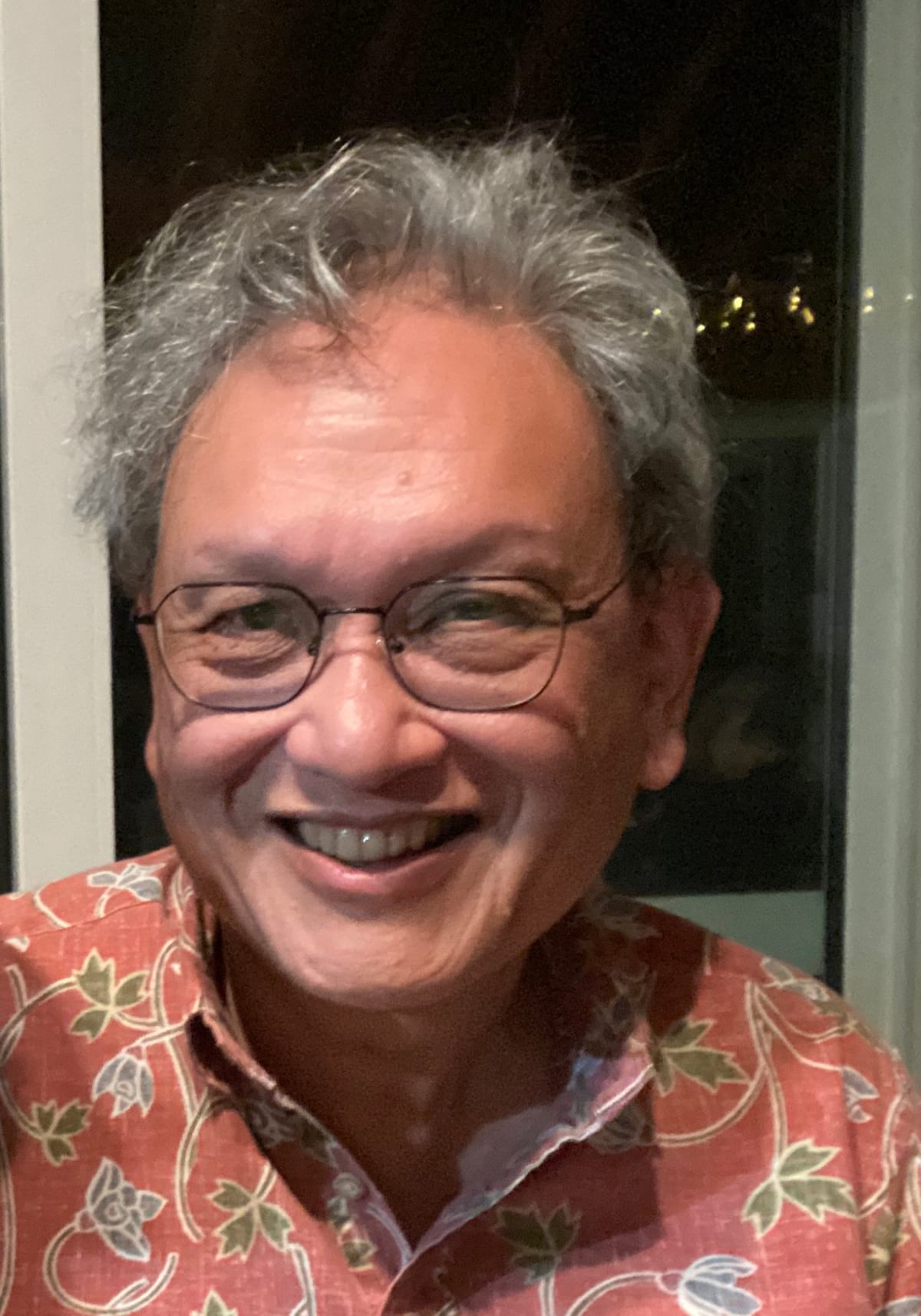
“Come on, Emma. I’m audacious.”
This was Anthony Chan ’72’s comment as I laughed-smiled, slightly confused, but also impressed by how he spent his senior year. Instead of a traditional major, Chan decided to participate in the Independent Scholar Program, with a good portion of it in Hawaii as the City Charter Commission’s youngest member at the time.
But he was right. Audacious is perhaps the best word to describe him: a student who has constantly pushed boundaries, asked questions, and not looked back.
As an undergraduate, Chan took on an independent study his senior year, pursuing a thesis while traveling between Amherst and Hawaii to be present for meetings. While his classmates were on campus attending discussions and lectures, Chan was researching city planning, city government structures, and bringing those ideas back to the Commission in Hawaii.
Chan’s willingness to go beyond preset paths stretches past simply his college years. Chan eventually pioneered efforts to establish the Asian American and Pacific Islander (AAPI) studies major at Amherst, strategically pushing for it until the college formally established the major in 2024.
Early Childhood
Chan’s family arrived in the U.S. at the end of 1955, coming by ship from Hong Kong, stopping at Yokohama, Japan, and Honolulu, Hawaii, before arriving in San Francisco, where he lived between early 1956 and summer of 1959, then moving to Hawaii two weeks before Hawaii officially became the 50th state.
But it wasn’t until after the 1965 Immigration Act that the influx of Asian immigrants was allowed into the U.S. Chan’s family was accepted to the U.S. under the Refugee Act of 1953, which de facto repealed the Chinese Exclusion Act of 1888 and accepted 2,500 Chinese applicants out of 300,000.
Chan later noted this as one of his motivations to advocate for AAPI studies. “Those are things that most Americans aren’t aware of and should be aware of.” To Chan, AAPI studies is more than representation. Rather, it is a matter of questioning dominant narratives and highlighting stories that have always existed yet never been taught.
Upon coming to the U.S., Chan spent his first years in a public elementary school in San Francisco, close to Chinatown. “In [my] first grade class of 25 to 30 students, I’d say at least two-thirds were Chinese,” he said, in addition to other Asian first-generation immigrants and others who had been born in the U.S.
Chan was quick to point out the unique perspective that “in some cases, only someone who had just arrived in the U.S. would ask questions.” He recounted how his Irish American teacher told him that they were going to celebrate Columbus Day, which “celebrated the discovery of America.”
Upon hearing this, Chan hesitated: “I turned it around in my head a few times, and then asked the question: ‘So, does that mean there were no people here [before] that discovered America?’” Chan later discovered that the answer was in fact no, but he was confused then. “The answer she gave me was that there were Indians here, and the only Indians I ever knew were the Indians I knew in Hong Kong,” he said.
His family then moved to Hawaii for his father’s work, where he attended fourth through 12th grade. Still, as a child, he grew up with many Asian American peers, as the school he attended in fourth through sixth grade reflected Hawaii’s ethnic makeup at the time — many Japanese Americans, Polynesians, Hawaiians, Chinese Americans, and “some ‘haoles’ as we call them.”
He then explained the term: “H-A-O-L-E. A ‘haole’ is the Hawaiian term for a white.”
From Punahou to Amherst
Naturally, I was curious if Chan’s diverse upbringing made Amherst’s lack of cultural diversity at the time surprising to him. When Chan entered Amherst in 1968, Amherst was still all-male, and he was one of two Asian students in his class.
However, Chan said he was not completely shocked, thanks to his experience at the Punahou School since seventh grade. Punahou was founded by New England missionaries in 1841, one of whom was an Amherst graduate, and its best-known alumnus is former President Barack Obama.
“Because its roots were in New England … it was a well-trodden path to go to Punahou and then go on to schools like Amherst and Williams [College],” Chan said.
However, the school then still had a bias toward missionary students such that the “whole school back then was still about 80% haole, and 20% local. Today, it has flipped the other way.”
The curriculum at Punahou was much like other standard preparatory schools, and while he is grateful to the writing skills he developed, Chan acknowledged that the school’s strong history and art history curricula came with some Western bias. “Among the requirements you had to take before graduation was art history [which, turns out, it] was mostly the art of the Western world, and the bias was no different when I arrived at Amherst.”
Despite not living in the contiguous United States, Chan had heard of Amherst both through Punahou as well as his grandfather’s history of education in the U.S.: boarding school at Andover, undergraduate at Rensselaer Polytechnic Institute and Columbia University, and later graduate school at Columbia. His grandfather would ultimately return to China in 1912.
He recalled how Punahou had a tendency to send students to elite schools, and despite getting accepted to Stanford University, Chan ultimately decided that “Stanford was too much like Hawaii … and I wanted to experience something different.” He was also fond of the idea of a small college: “I was convinced by the time I was making those decisions that it would be better for me from having come from this relatively small community to be at a small college,” he said.
However, even visiting colleges was a challenge for Chan. As an editor of his high school’s newspaper, Chan came across and was intrigued by a summer program at the National High School Institute at Northwestern University’s Medill School of Journalism. Tuition was waived for him, but he still lacked the funds to make it there and afford lodging. “I had no money to go there, but my teachers at Punahou helped cobble it together for me,” he said. “[They] managed to find foundations and others to support [me].”
While in Chicago, one of his English teachers, whose parents lived in Greenfield, Mass., told him that “you might as well go all the way to the East Coast.” Staying at his teacher’s parents’ place in Greenfield, Chan had an easy drive to schools like Dartmouth College, Williams, Amherst, and even Wesleyan University.
To this day, Chan remains grateful to the community that helped him find his home at Amherst, for which he still funds scholarships and funds.
“There’s no question that my life would be drastically different, but for the education I’ve received at all phases,” he said.
An Era of Protest
Upon coming to Amherst, Chan was met again with a limited world presented in classes: “The only Asian language that was even offered was Japanese,” Chan said. “If you wanted to learn Asian art, you had to go to Smith [College] to take the course.”
But Chan’s time at Amherst was also marked by student protest. “There was no year in the four years that I was a student at Amherst where, in the spring, the college did not shut down for a short period of time because of protest,” he said.
In Chan’s freshman year, the protest about the Vietnam War and other social injustices made the front page of the New York Times. “The college collectively agreed with faculty and students to send an open letter to the world, challenging some of the things that were going on,” he said.
There was so much protest that Chan’s sophomore year ended early, and students took most of their exams during the summer. His junior year was once again shut down because Black students took over Converse Hall, urging for the establishment of the Black Studies major. And his senior year ended after many students and faculty protested at Westover Air Force Base, leading to the arrest of the college’s then-president.
Unfortunately, despite the 1968 Third World Liberation Front protests pushing for the establishment of ethnic studies and coining the term “Asian American,” Chan explained that with Amherst having very few Asian students at the time, “we knew we weren’t going to get any traction, to the extent that anybody [who] took the subject [of AAPI studies] seriously, their standard response was that American Studies should embrace [it].”
Seeing Amherst’s shortcomings then, Chan saw a growing importance in Asian American studies. “If you’re going to be an institution that’s relevant in the 21st century, it’s kind of hard to ignore over half the world.”
A Busy Senior Year
Chan graduated as an independent scholar after pursuing the American Studies major for four years. During his time, Amherst still had general education requirements — as opposed to the open curriculum we know today — including “problems of inquiry” courses in humanities, social sciences, and natural sciences.
Students also had to meet certain distribution requirements, but it was different for Chan. “If you’re independent, you’re not only freed of any of those things, you’re freed of having to take courses,” he said. Instead, he submitted a project to the independent study committee to work on during the entirety of his senior year. “Essentially what a graduate student does, but you know, still in an undergraduate environment,” he said.
While working for the local paper in Honolulu over a summer, Chan ended up covering a story on the rewrite of the Honolulu City Charter. “I asked the question: ‘You don’t have any young people on it’ … and so I’m back at Amherst in my junior year, and I get an inquiry from one of the city councilmen. He said, ‘you asked the question … why don’t you be the young person?’” he recalled.
If there is any pattern in Chan’s life, it is that he is able to figure out how to make unconventional things work. So, the councilman left it up to him: “Figure it out. If you can figure a way to do this, and be here for the hearings and the meetings, I think I can work the politics to get you appointed.”
As he wished, Chan spent his senior year traveling between Amherst and Hawaii. On campus, Chan would research issues that the council was addressing, and would then push them at hearings and commission meetings in Honolulu.
“Some of my classmates would find it amusing that while they were still going to class, I just spent my time walking around campus, going to Frost Library and doing research,” he recalled. He would then “take some of those ideas and push them at hearings and commission meetings” in Hawaii. Despite the unconventional path, Chan “stitched it all together,” had a regular thesis defense, and even graduated magna cum laude.
Becoming His Own Boss
Recalling why he went to law school following Amherst, Chan replied matter-of-factly: “I knew that I had to do something.” His family came to the U.S. with almost nothing after losing its wealth in the Chinese revolution. “I grew up with basically nothing. I went to all these schools on scholarships, and so I knew I had to do something,” he said. But to make any meaningful change, “I had to go make some money.”
As to why he didn’t go into business, Chan explained that no S&P and Fortune 500 companies had a CEO who was not a white man. While he didn’t expect to be the CEO of a company, he saw “no reason to work in a corporate environment where the barrier to [his] being a CEO was the color of [his] skin.”
Chan also offered a piece of advice: “I still tell people that when you want to work in an organization, you should want to be the CEO,” he said. “You should aspire to be the top dog, and for good reason, because you should be so passionate and so driven that you should be in control of that.”
When it came to choosing law, specifically Harvard Law School, Chan explained that Amherst fostered his natural interest in government and how laws were made, so it seemed like a good path. “When you’re a first-generation immigrant, you do want to understand the society that you have you’re living in … so it became natural for me to gravitate towards law school,” he said.
Eventually, after working at Goodsill Anderson Quinn & Stifel, the largest law firm in Hawaii at the time, and becoming a partner, Chan was still often the only racial minority in workspaces. “I remember even in the early 2000s, looking around the room, and realizing that around the big conference table, I was the only non-haole sitting at the table,” he said. He eventually started his own mergers and acquisitions firm Thompson & Chan in 1983, and when his parents showed hesitations, he joked: “I had a reasonably good future ahead of me, and I said, ‘you know, if we’re as good as we think, we’ll be fine, and if we’re not, we’re overpaid, so there’s got to be justice in the world, and it worked.’”
AAPI Advocacy Continued
By 2018, Amherst had already experienced a lot of discussion over the AAPI Studies major. In fact, now Chair of American Studies and Professor of AAPI Studies Robert Hayashi was hired in 2008, “but it never got traction,” according to Chan. When the Amherst Uprising occurred in 2015, “a group of students were very invested in it,” but there was not enough momentum to form a major.
Chan’s audacity and drive to break the norm allowed him to support this sentiment toward a push for AAPI studies. “When you see a wave coming, you have to catch it,” he said. While many students and faculty had created the beginnings of this push, Chan used his resources and relationships to move these efforts forward.
As Amherst tried to raise $650 million for the college’s 200-year anniversary, Chan was invited to serve on the President’s Campaign Board. Here, his peer, John J. McCloy Visiting Professor of American Institutions and International Diplomacy Emeritus Franklin Odo, helped him arrange a meeting with Asian and Asian American students on campus, who ultimately inspired Chan to make a crucial contribution — a fund and an endowment.
Chan explained that, typically, donations in the form of the annual fund are given with preferences, but not specific uses, as the fund is spent immediately. However, an endowment, which is continually invested and used, can be allocated with more specific purposes. Chan started the Asian American Studies Initiatives Fund in 2020, aiming to send students to conferences and bring speakers to campus. “I had it for a specific purpose, which was not necessarily one of the priorities of the administration or the faculty,” he said.
Chan also funded the first AAPI Studies endowed professorship, with Sony Coránez Bolton being appointed the first Anthony S. Chan ’72 Professor in Asian American and Pacific Islander Studies. “The reason for that is that it cements the major,” he said.
After formally establishing the major in March 2024, Amherst remains the only college offering an undergraduate AAPI studies major in the U.S. However, Chan, “having caught the wave,” noted that he’s currently helping students and staff push for an AAPI studies major at Princeton.
“I figured if we had logo items, you know, very legitimate, that meant we were very established,” Chan joked, referring to the Amherst AAPI Studies hoodie.
Paving the Way
As a young kid, Chan questioned whose stories are the norm, and whose stories get told. At Amherst, Chan pursued an “audacious” independent study that split his time between Amherst and Hawaii his senior year. As a lawyer, Chan took the risk to become a leader outside the conventional corporate model. And now, in retirement, Chan continues to push for AAPI studies for the students who come after.
Looking back, Chan said he’s grateful to Amherst because “it gives you skills and lets you run with curiosity — it has the resources to let you do all those things.” He credited the relationships that are enhanced by the small size, and noted how with his appreciation for the school comes natural criticism.
His legacy at Amherst is not simply unconventional — it’s that in balancing both his criticism and appreciation for the college, he’s created more paths for students to pursue all their curiosities.
Comments ()