

Centering Connection in the Curriculum — Alumni Profile, Meghan Fitzgerald ’97
Meghan Fitzgerald ’97 fell in love with teaching at Amherst’s Little Red Schoolhouse. Through every stage of her career, Fitzgerald has continued to pursue child-driven learning, reaching over a million students.
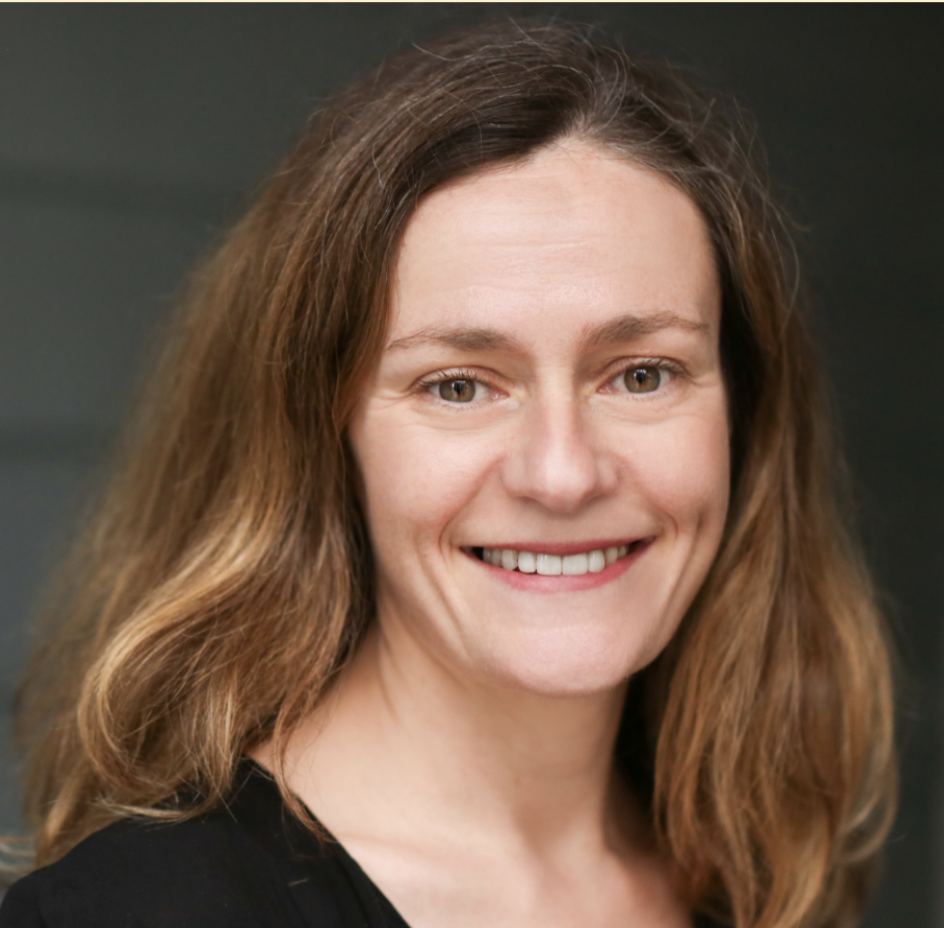
Meghan Fitzgerald ’97 has taught a great range of audiences and in a variety of places. She has been a middle school math teacher and an employee at Amherst College’s on-campus preschool. Through her company, Tinkergarten, she delivered play-based outdoor learning lessons to over a million students around the country. Currently, Fitzgerald is building a new non-profit, a10d, which will teach teens how to face the ongoing attention span crisis. Fitzgerald was a teacher in San Francisco and in Eastern Massachusetts, and a principal in New York.
Throughout our conversation, though, I was struck not only by what Fitzgerald has taught, but by her recognition of how much she has learned. Whether she was referencing her time playing rugby or her early career days working for Yahoo!, she mused on what she learned from each experience. Fitzgerald’s perspective of learning something from everyone and everything has made her a truly great teacher, leader, and Amherst (the college and the town!) community member.
Educators Everywhere
Fitzgerald grew up in Wellesley, Mass., a Boston suburb, with no shortage of amazing educators around her. Most of her family worked in education, and she attended a public school with teachers she described as “phenomenal.”
In fact, it was one of her high school teachers, an Amherst alum, who first made her consider attending Amherst. Fitzgerald knew that she wanted to attend a liberal arts college, but it wasn’t just Amherst on her mind: she also had a teacher who was a Williams College alum.
After applying to both colleges, she spent a weekend at each. “It was very clear,” Fitzgerald recalled, “I fell in love with Amherst.”
Before Amherst, Fitzgerald had wanted to be a pediatrician. She always loved working with children, yet she also loved science. But Fitzgerald remembers, “I did an internship at a hospital in the summer before coming, and realized that I do not actually have a propensity for medicine.”
Still, her high school interests shaped her career path. Specifically, Fitzgerald fondly remembers her high school’s English department as fundamental to her educational career path. To her, the skills she learned in her English classes, such as “the rigor of how to think, how to build an argument, how to tell a story, and storytelling,” are “at the heart of what makes us human, and that's what is needed now in education more than ever.”
“Amherst was a perfect place to really deepen that skill set,” she commented.
Poetry, Plumbing, and Rugby
“I thought it was marvelous that you could take anything you wanted,” Fitzgerald said of her first year at Amherst. However, Fitzgerald qualified that statement by saying she “probably could have used a little bit more help with staying focused on some of the more beginning classes.” Fitzgerald recalled feeling out of place when taking a “Women in Buddhism” class, seated among seniors who knew far more about the religion than she did.
Above all, Fitzgerald believed that her first year at Amherst challenged her to become a better writer. Though the classes she took “felt pretty uncomfortable,” they were also “wildly productive.”
Fitzgerald remembered a specific moment from a memoir writing class with senior Lecturer Helen L. von Schmidt ’78 in which Fitzgerald had mistakenly described the material of her itchy tights as wool in a writing piece. In an effort to make the students more meticulous, Von Schmidt called her out on it in front of the class, and while many students might have felt embarrassed in that scenario, Fitzgerald recalled feeling loved.
“I would go back to that class in a heartbeat,” Fitzgerald said.
Amherst also pushed Fitzgerald when she was not in the classroom. Fitzgerald described herself as a relatively shy person at the beginning of her time at Amherst. Then, she tried out for the rugby team: “You can’t really be very shy on a rugby field, or you'll be rolled over.”
Talking to Fitzgerald, it seemed clear to me that her love of literature made her an obvious candidate to be an English major. When I asked her about the addition of the psychology major, she told me that she did not plan on becoming one when she got to Amherst. But every time she finished a psychology class, she found herself wanting to take another.
Fitzgerald described the combination of her majors as “poetry and plumbing.” On the one hand, her English major helps her answer the more nebulous questions: “How do you articulate ideas? How do you write well? How do you speak clearly and pick your words wisely?” — poetry. On the other hand, her psychology degree aids her in understanding “how people are, what people need, and how they operate” — plumbing.
During our interview, Fitzgerald continually referenced her time working at the Little Red Schoolhouse, the preschool that used to be run on Amherst’s campus, as transformative in her decision to become an educator. At the Little Red Schoolhouse, Fitzgerald found a refreshing source of humanity when teaching preschoolers. Besides the meaningful connections that Fitzgerald formed with students, the staff at the Little Red Schoolhouse also shaped Fitzgerald’s career; it was from them that Fitzgerald honed the practice of child-led learning.
From Tech to Teacher
“You can’t hit a moving target,” is what Fitzgerald joked about her career path.
Though Fitzgerald knew she wanted to be an educator after graduating, she felt an urge to see what the rest of the world was like. First, Fitzgerald worked in Cambridge, Mass., at HighWired, an early internet startup that sought to connect different high school clubs through the internet.
Fitzgerald, after talking to other Amherst graduates, soon realized that she wanted to be in Northern California during the tech boom. There, she worked for Yahoo! Auctions. Fitzgerald reflected on her time at Yahoo! as integral to her understanding of the basics of business and product development.
“But the pull to educate was strong,” Fitzgerald said of her decision to leave Yahoo! She then taught at three different schools, each in a different state.
When Fitzgerald was teaching in San Francisco, she discovered the transformative power of taking her classroom on a field trip to Yosemite. Fitzgerald recalled the excitement of her students when they saw snow for the first time. To this day, Fitzgerald said, “I deeply believe that the natural world offers an unparalleled invitation to awe.”
Fitzgerald’s time in the classroom, both teaching and learning, also shaped her understanding of what makes learning effective. Fitzgerald recalled that “[as a teacher], time and [time] again, I’d leave a lecture or directed lesson feeling I’d ‘nailed it’ only to find that students couldn’t turn all of my talking into understanding.”
Fitzgerald’s style of teaching challenged some tenets of the traditional pedagogy. Instead of focusing on memorization in her math classes, she sought to help students understand the ‘why’ behind their formulas. Her math lessons emphasized the meaning and application of math. Similarly, Fitzgerald explained that when science is taught using experiential learning methods, it becomes “like a magic show that helps kids see just how unbelievably amazing the world around them is.”
When Fitzgerald decided to go back to school for her master’s degree, she specifically chose Bank Street College, a graduate school that emphasized a progressive, hands-on teaching style.
From there, she landed in education administration. She became an assistant principal and eventually a principal in Westchester County, NY. As a principal, she noticed that her students were changing in the age of technology.
“Kids were becoming extremely scheduled, and they just weren’t playing outside together very much, and that was notable in the way that they were behaving, and the way the adults around them were feeling about how they were behaving,” Fitzgerald recalled.
This observation was key for Fitzgerald. Eventually, it, alongside her previous experiences observing the positive impacts of outdoor education and experiential learning, was what compelled her to create Tinkergarten.
Leading the Future of Learning
Tinkergarten, the company designed by Fitzgerald and her husband, sought to train teachers to deliver play-based, outdoor learning to young kids and to teach them the vital skills of empathy, creativity, and problem-solving. Ultimately, Tinkergarten transformed how over 6,000 teachers taught and how over a million students experienced learning.
But it is not just the impressive numbers that gratify Fitzgerald. “I think what I’m proudest [of] is how many teachers and kids and families loved it, and not [just] the content, but loved the experience of being in community with one another in their local area,” Fitzgerald said. Fitzgerald found that the skills required to become a principal and lead an organization were very similar. “It’s the poetry-plumbing thing,” Fitzgerald said. As a principal, she had to balance the core goal of ensuring children could learn effectively with operational challenges like pipes bursting and budget issues. Similarly, as a founder of Tinkergarten, she had to learn in real-time how to keep pursuing the company’s mission in the face of an unprecedented challenge like Covid.
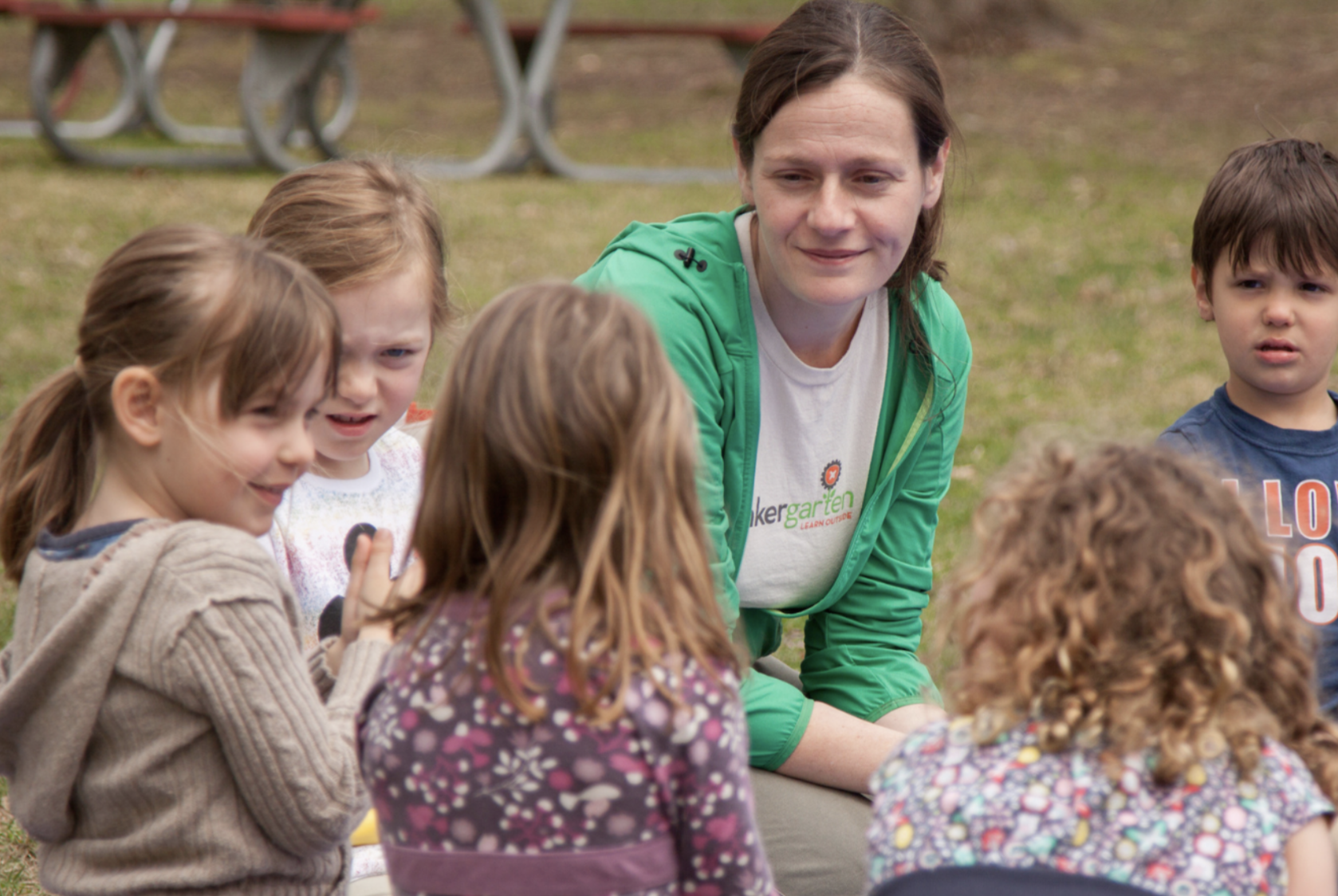
After Covid, however, it was difficult for Tinkergarten to return to the same level of growth it had been at before. Highlights, a well-known publisher of educational magazines and resources for children, soon acquired Tinkergarten, which ultimately led to structural changes in the company’s operations. Though Fitzgerald felt very lucky to work with Highlights, she said “it felt like the natural time to ‘tuck in'’all of the content we’d created, trust that the Highlights team would use it wisely, and search for other avenues to do what I know and love best.”
Her next idea came to Fitzgerald after she read “Last Child in the Woods” by Richard Louv. Reading it, Fitzgerald found that she was worried about the role that technology and generative AI would play in her children’s futures. To her, the solution didn’t seem to be a blanket ban on technology, but rather a way to encourage the next generation to continue to build strong relationships and skills in the face of rapid technological growth.
Enter a10d (“attend”). a10d aims to encourage kids, aged around 10-14, to own their attention. a10d pushes kids to answer a host of questions posed by Fitzgerald: “How does your attention system work? What are the kinds of things that can pull your attention in one direction or another? How can you be aware of those and then be the agent of your attention in the service of the things [and] the people you care about? But also, how can you build really strong relationships, and navigate a world that’s increasingly dominated by AI?”
Though the non-profit is in the early stages, they are already piloting several programs. At the Common School in Amherst, Fitzgerald has organized a group of tweens to give attention-based lessons to, which will be filmed and distributed to other educators, so that these lessons can be replicated in other schools around the country. In fact, there’s already similar prototyping debuting in Austin, Texas; Suffield, Conn.; and Chicago, Ill. From there, outcomes will be analyzed in January. Fitzgerald is hopeful that by next school year, schools everywhere will be able to sign up to receive this content.
Amherst Again
Despite both her and her husband being Eastern Massachusetts natives, they met in California and raised their children in part in New York. But they have now returned to Amherst.
While both searching for a location with the livelihood of a city and providing greenery for her family, Fitzgerald took frequent trips to Amherst. On one such trip, when visiting her former roommate — also an alum-turned-Amherst resident — Fitzgerald found herself thinking, “Wouldn’t this be a great place?”
Of course, Fitzgerald highlighted the exceptional educational environment that her children have the opportunity to learn from. “Amherst public schools are wonderfully diverse,” she said. “It’s just an awesome mix of families and people and perspectives.”
“[Amherst] has turned out to be a marvelous place to be,” Fitzgerald concluded.
Amherst will only get better as Fitzgerald continues to push future generations to pursue human connection.


Comments ()