

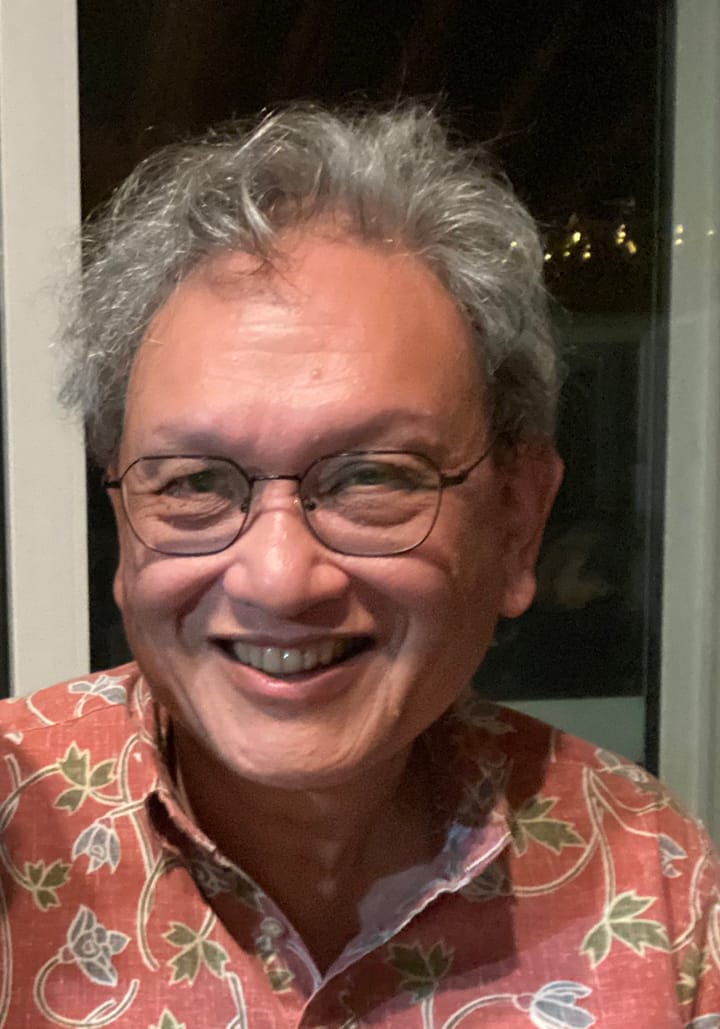
Exploring the Surgical Multiverse — Alumni Profile, Andrew Pearle ’92
A two-decade pioneer of robotics partial knee surgery and ACL reconstruction, Andrew Pearle ’92 is now exploring the next generation of personalized care.
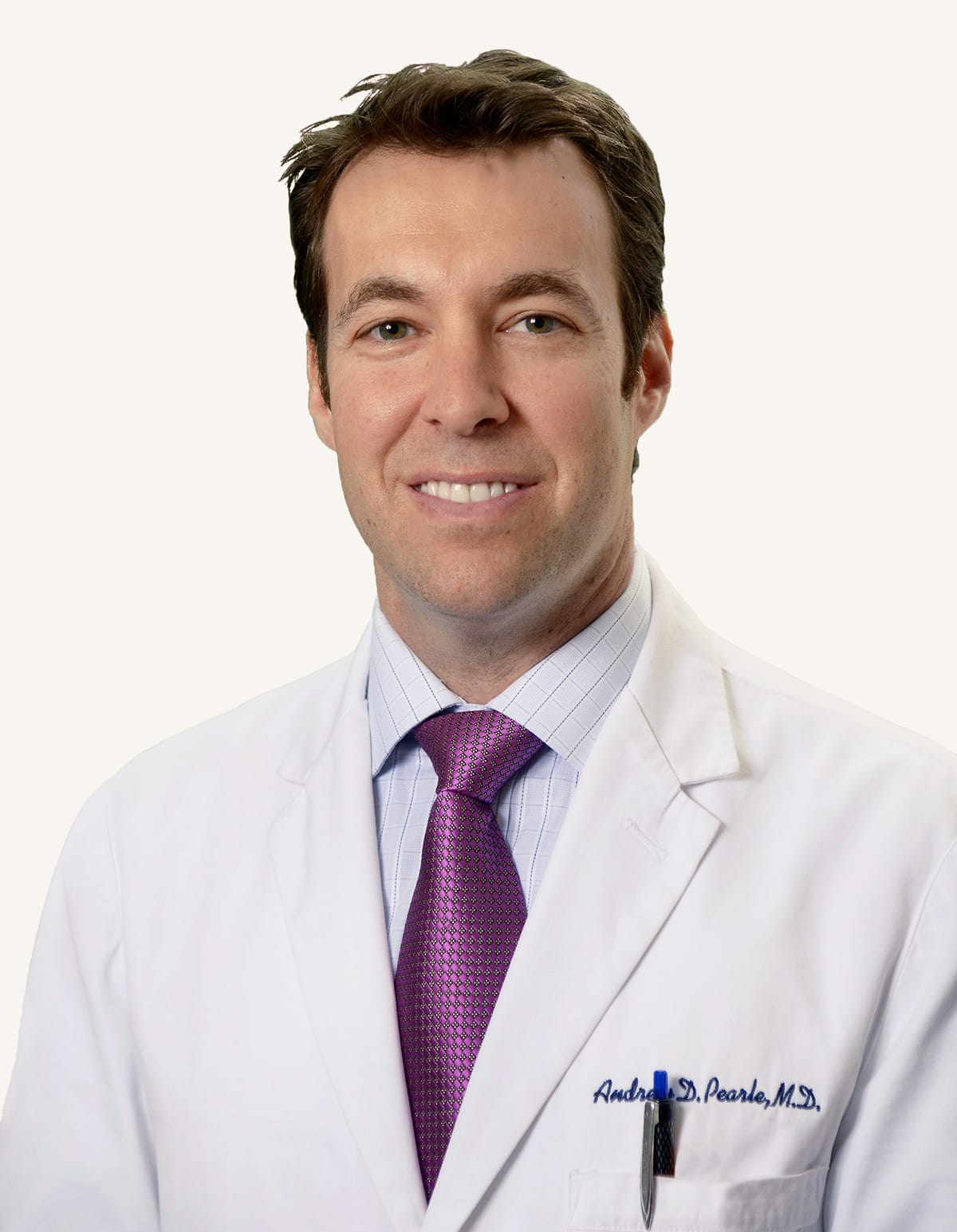
Andrew Pearle ’92 has always considered himself “a liberal arts guy.”
That may not be the first thing one immediately catches about him. An orthopedic surgeon who pioneered techniques in robotics partial knee replacement and a two-decade team physician for the New York Mets, Pearle has left his mark in the field of sports medicine.
Yet, Amherst College and the intellectual curiosity it fosters never left Pearle. Recognizing that high school athletes, especially those in underserved communities, are at higher risk of injuries, Pearle co-developed an app to help them prevent sports injuries, and is currently leading efforts in the next generation of personalized medicine through computational models that, in essence, allow surgeons to explore a “multiverse” of surgical options.
“Amherst was perhaps the best time of my life,” Pearle said.
Off to the West
Pearle grew up in Washington, D.C., but his roots trace back to western Massachusetts. Amherst was where his parents met: His father, originally from Texas, graduated from the college in 1964, and his mother from Smith College. “I was always thinking about Amherst and interested in Amherst,” he said.
Growing up, Pearle spent a lot of time with his father, a cardiologist, in the hospital, though he didn’t expect to pursue a career in medicine at the time. Going into Amherst, Pearle hoped to do “something different” and pursue the college experience to the fullest. He decided to major in American studies — what he called “[the] liberal arts within [the] liberal arts” because of the major’s interdisciplinary blend of art, history, and culture.
“I was very interested in the West … the way America expanded into the West, and I really gravitated toward the Native American experience,” Pearle said. While reading extensively on Native American cultures, Pearle noticed that many textbooks were written and taught by people who had not experienced it firsthand. Because of this, Pearle wanted to see what these cultures really looked like up close. And thus, Pearle applied for a summer externship at a hospital on the Navajo Reservation, where he witnessed the unique intersection of traditional healing practices and modern medicine.
“What was really interesting was [that] the Navajo would come to the hospital for a broken bone or to treat diabetes,” he said. “But a lot of other things that they thought of as sickness … if they were having bad dreams, or even if they were nervous about going off to college, they would treat that using more traditional Navajo practices.”
Pearle eventually returned to the reservation for his thesis with James E. Ostendarp Professor of English Emeritus Barry O’Connell, a time he considers the highlight of his Amherst experience. Aiming to take a deeper dive into forms of healing outside hospitals, Pearle traveled to sweat lodges and spent considerable time with medicine men to understand the roles of health and sickness in the Navajo worldview. “I really enjoyed every second of it,” he said. “It’s not that I have integrated that into my clinical care as an orthopedic surgeon, to be honest, but it certainly opened my eyes to different traditions and worldviews.”
Pearle’s Amherst experience was also guided by a passion for sports. Having played on the rugby team all four years and captained it for two, Pearle recalled having a “terrific” team that beat Williams College seven times in a row. Beyond winning against their long-time rival, though, what Pearle appreciated most was how the team fostered a sense of closeness between varsity and club athletes.
“We had a lot of players who were on the football team and the soccer team … so it really crossed a lot of different sports,” he said. “But it wasn’t like you had to play [varsity] sports back then to feel like you were part of the athletic scene.” Pearle added that there was much less of a student-athlete divide then, and that the rugby team felt deeply integrated into the athletic experience despite being a club sport. “We really thought of ourselves as athletes and part of the athletic community as well, and it meant a lot to us,” he said.
Though Pearle explored the breadth of the liberal arts education, he “never found anything [he] enjoyed more than medicine.” After graduating from Amherst, Pearle spent a year finishing his pre-med requirements — mostly organic chemistry — and took the MCAT, worked as a bartender, lived with his friends from Amherst, and traveled. Then, perhaps serendipitously, Pearle once again found himself out West for the next five years — this time at Stanford Medical School, in the midst of Silicon Valley’s dot-com boom.
Technologies and Turning Points
“Being out in California, everybody … pretend[s] like they’re laid back, but they’re grinding underneath,” Pearle said. Living in the epicenter of innovation — on the same campus as Google’s founders — inspired many of Pearle’s classmates to pursue careers in biotechnology. In fact, some of his closest friends dropped out of medical school to form biotech startups. Though Pearle never considered that path, he became deeply fascinated by new technology’s applications in the medical field.
Pearle spent five years at Stanford, where he participated in a clinician-scholar program that covered two-thirds of his tuition as long as he did research. Thinking that he’d follow his father’s steps in cardiology, Pearle first worked in a lab that studied apolipoprotein A — a risk factor for coronary artery disease — using mouse models. “There was some mice surgery involved that I don’t like to think about,” he said.
Pearle then worked in a radiology lab that studied weight-bearing MRIs, where instead of lying down, patients were scanned standing upright or even squatting to visualize joints in motion. But ultimately, the many inspirational orthopedic surgeons at Stanford — especially Dr. Alan Merchant, who invented the “Merchant” technique for X-raying the patellofemoral joint — drew him to orthopedic surgery and sports medicine.
“I like to be around teams. I like to be around athletes. I was a lifelong athlete myself, so that was very attractive to me — to be able to help athletes stay on the field and prevent injuries,” he said.
Pearle then returned to the East Coast for a residency at the Hospital for Special Surgery (HSS), ranked the number one orthopedic center in the U.S. by U.S. News & World Report. However, the medical world was soon shaken by 9/11 and the subsequent rise in global terrorism. “A lot of us were concerned about mass terror events and how to respond to that,” said Pearle, recalling treating patients from 9/11 as a resident. To better understand the situation and to see the pioneering techniques developed in response, Pearle traveled to the Hassadah Medical Center in Jerusalem during the height of the Second Intifada, where suicide bombings had caused over 2,000 casualties in just two years.
Lending a Robotic Hand
The hope that guided Pearle, however, was how the hospital adapted computer-assisted surgery to help remove shrapnel — hundreds of ball bearings — from victims. Through preoperative imaging, surgeons were able to visualize the exact locations of shrapnel, and by loading the images into a navigation system, they could track the exact location of their instruments in real time during operation. This innovation came to define Pearle’s career. “It’s a merger of sophisticated imaging and planning with intraoperative tools to execute that plan,” Pearle said.
Returning to HSS, Pearle recognized the potential of computer-assisted surgery for partial knee replacement — a developing technique in sports medicine at the time. In contrast to a total knee replacement, where the entire joint surface is replaced with artificial material, a partial knee replacement only replaces the damaged compartment, allowing the joint to preserve its normal kinematics. Very few surgeons attempted partial knee replacement due to technical difficulties, but Pearle decided to apply the high precision of surgical robots to facilitate this procedure.
“[Partial knee replacement] is like building a ship in a bottle,” Pearle said. “But robotics really helped with that, because you could plan where to put these small implants, and you could position them in such a way so that they were congruent or they matched each other through the range of motion, and that was hard to do by hand.”
Returning to HSS, Pearle founded the first computer-assisted surgery program in the U.S. and performed the first robotic partial knee replacement in the New York area in 2007, the third time this surgery was ever performed in the world. After almost 20 years of pioneering the field, Pearle has become “the go-to person” for partial knee replacement, and the techniques he developed have been used nationally and internationally. “I’ve done more robotic partial knee replacements than probably anyone in the world,” he said.
Partial knee replacement has now become a career-saving surgery for professional athletes, allowing 60.3% of athletes to sustain pre-injury level performance even after surgery, including Lindsey Vonn, whose surgery allowed her to come back to Olympic skiing from a five-year hiatus, and New York Islanders goaltender Semyon Varlamov, who returned to the NHL after two partial knee replacements. “I’m proud to say that [these surgeries] are not only helping patients, but people,” Pearle said. “Robotic partial knee surgery is producing a zero-restriction knee. People are doing incredible things on these partial knee replacements like running marathons, hiking Mount Everest and returning to the Olympics. Not all my patients need to do this of course but it is gratifying to see these types of results in a technique that I have helped develop. We did not anticipate this when I started doing this 20 years ago.”
ACL Guardian
Despite huge successes in robotic partial knee replacement, Pearle doesn’t limit himself to one procedure; he also specializes in anterior cruciate ligament (ACL) reconstruction — another long-established and impactful surgery in sports medicine. Pearle, at one point, even tried applying computer-assisted surgical techniques to ACL reconstruction, but this time the technology was not as enabling as it had been with partial knee replacement, as placement of the graft — the tissue used to replace the damaged ACL — must account for individual anatomical differences.
“Another way to think about computer-assisted surgery is like a GPS system, but you have to know where you want to go,” Pearle said. “We didn’t have an address to put in the GPS system, basically, for ACL surgery.”
Already a high-volume ACL surgeon and a member of the ACL Study Group, an invitation-only international consortium of ACL experts, Pearle decided to focus on emphasizing ACL injury prevention. Fifty to 80% of ACL injuries can be prevented with a few specific exercises, but Pearle noticed a general lack of awareness in athletic training, especially at the high school level.
“If you play soccer, you may work on your penalty kicks. If you play basketball, you may work on your free throws,” Pearle said. “But nobody focuses on … the mechanics of how you change direction. Turns out, people with faulty mechanics when they change direction are more likely to be injured, and it’s something that’s very modifiable.”
Pearle became aware of the need to expand what he calls the “playspan” of athletes — the amount of time they can remain active in sports for. He explained that high school athletes have almost a 20% risk of tearing their ACL, and that following an ACL injury, there is a higher risk of developing arthritis after a decade or two. This leads to a rather counterintuitive result: that by beginning their sports careers early, athletes can end up having a shorter playspan.
“If you think you’re doing something good, you’re trying to stay healthy, but then you tear your ACL, and all of a sudden your playspan diminishes, and you’re not able to play your sports at the age of 30 or 40, that’s not good,” Pearle said. “We should create lifelong learners in education, and we should create lifelong athletes for our sports.”
Pearle eventually developed an app named “RIIP Reps” in collaboration with Mike Gold ’95, his Amherst rugby teammate and later entrepreneur in residence at HSS, which provides agility-based training routines that aim to prevent athletes’ knees from collapsing into a dangerous position (known as the Elvis knee) that often leads to ACL injuries. RIIP Reps is now part of more than 500 athletic teams’ training programs spanning 32 states and 104 school districts. Many of the app’s users are Title I schools — schools that receive federal funding to help low-income families.
Pearle told me that RIIP Reps is essentially a “philanthropic gift” from him and Gold to underserved communities. “We’re great at research in this country, [but] we’re not great at implementing our research,” Pearle said. “If you’re not implementing it into clinical practice, it can be just research for research’s sake.” As a free, evidence-based training app, RIIP Reps is Pearle’s attempt to make the outcomes of medical research accessible for all.
I told him that it was “very Amherst” of him to do. “Very much so,” he said.
Two Decades With the Mets
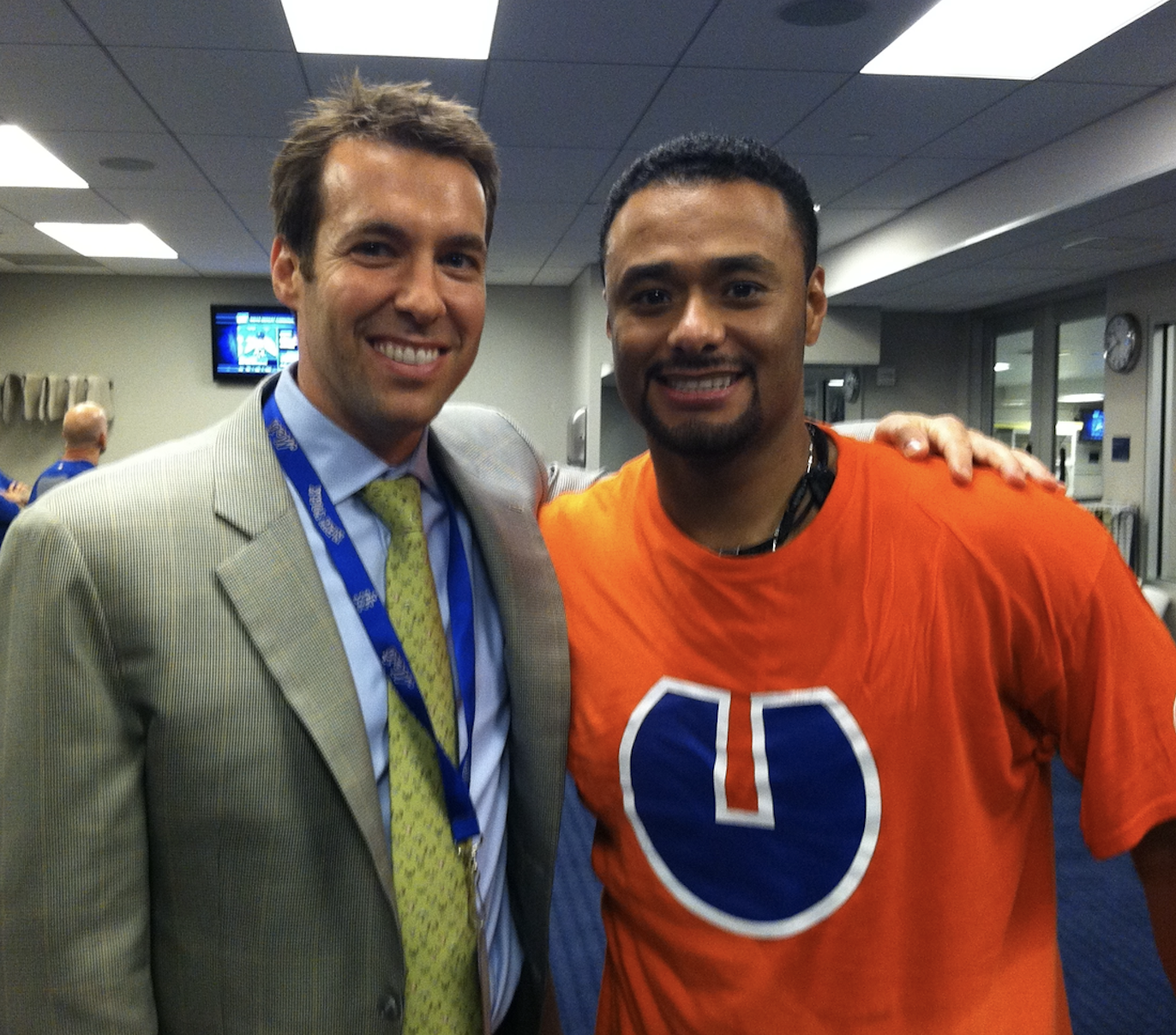
Alongside his pioneering efforts in knee surgery and injury prevention, Pearle also served as a team physician for the New York Mets for 20 years, covering about 25% of their home games each season. With a team of physicians, Pearle treated the Mets and the visiting teams before and during games, often making calls on whether a player could return.
“It’s a tremendous time commitment, but I certainly loved it,” Pearle said. During his time with the Mets, Pearle witnessed Johan Santana throw the first no-hitter in Mets’ history, and became close with many renowned players — David Wright, Jose Reyes, and Pedro Martinez — during their prime. Pearle’s children also grew up with the Mets, often seeing their spring practices.
“It’s great to be around athletes for sure … but there’s a lot of politics to being a team physician as well, and after two decades, it can get a little old,” Pearle said. He passed on the duty to younger attendings two years ago.
A Surgical Multiverse
Now, Pearle focuses his research and practice on orthopedic digital twinning, where images of a patient’s joint can be integrated with computational models to create a virtual replica that surgeons can use to run various simulations on.
“It’s like the Avengers in the multiverse, where you have a million different options to defeat [Thanos], and [there’s only] one correct one,” Pearle said. “That’s almost how I think about the digital twin … It’s like doing a million different experiments on a patient until you come up with the one personalized treatment that’s best for that patient.”
Pearle is now the program director of the HSS Digital Twin platform, a four-year multidisciplinary initiative funded by a $10 million endowment to pursue the next generation of personalized care. Pearle views this as the ultimate replacement for paper medical records, where all data collected during clinical consultations can be incorporated into the digital twin that patients can easily access online. Surgeons can also explore infinitely many possibilities, from predicting sports-related injuries to outlining treatment options.
“Our hope is that over the next four years … every patient who comes to HSS with a knee problem gets a digital twin of their knee, and we can simulate how their knee is going to behave,” Pearle said. “I really see this as the next frontier.”
After spearheading robotics-assisted surgery for more than two decades, developing the computational multiverse is Pearle’s “next mountain to climb.”
“Learn for Learning’s Sake”
I still find myself in awe of Pearle’s many roles — surgeon, researcher, coach, father, professor at Weill Cornell Medical College, and now endowed chair of the Digital Twin platform. When I asked how he finds balance between them, his answer was rather simple: passion prevails.
“It’s been an active life. I will say that when you’re in medicine, you tend to get addicted to it a little bit … and I’ve enjoyed every minute of it,” Pearle said. “You know, it’s the old saying: If you love your work, you never work a day in your life.”
I can only imagine how much passion and love guided Pearle through Amherst 35 years ago, whether on the rugby field or through the deep canyons of the Navajo Reservation. Indeed, Pearle told me that he came to Amherst simply for the love of liberal arts — to “have experiences” rather than focusing on what comes after, and he hopes that current students can enjoy the educational experience to the fullest as well.
“Learn for learning’s sake, not just to be a pre-professional,” Pearle said. “You’re a much more interesting person if you have a breadth of knowledge, and Amherst affords that if you take advantage of it. That’s the beauty of a liberal arts school.”
Comments ()