

Investigating the Athletic World — Alumni Profile, Elaine Teng ’12
Elaine Teng ’12 combines rigorous and empathetic reporting with her many areas of expertise to help produce bombshell investigative features for ESPN.
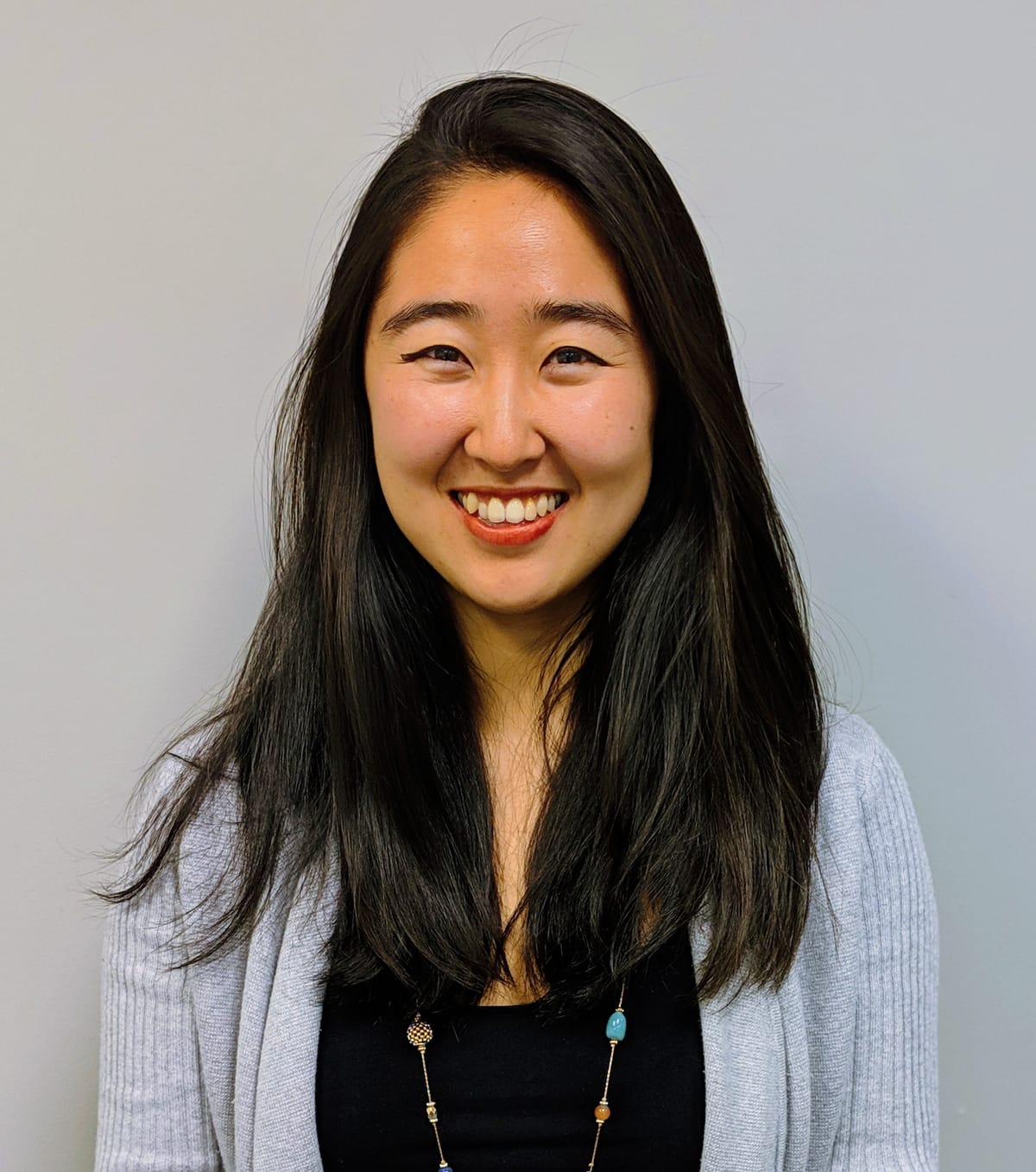
Elaine Teng ’12 has always loved storytelling.
Starting off with her high school paper as an enthusiastic writer, Teng pursued her passion for news coverage as a writer for The Amherst Student. She kept that momentum in her professional career, writing for publications such as National Geographic and The New Republic before turning her attention to sports coverage. For the past ten years, she’s kept that passion alive as a senior investigative editor at ESPN, the multinational sports network and cable company.
Inspirations For Exploration
Teng is originally from Southern California, so Amherst College was the complete opposite of what she was used to. “I had never been anywhere that small in my life!” she said. The weather was also new for her: It was her first time seeing snow.
Coming from a large technical high school, Teng was not intimidated by Amherst’s small size. She made sure to fully utilize one of the college’s key features — the open curriculum. Her high school was very STEM-heavy, so she leaned into the humanities at Amherst, taking classes in French, Spanish, religion, film, and more. Her course selection was a giant “hodgepodge” that culminated in a major of European Studies, which built off her existing interest in European history and literature.
Growing up, Teng didn’t have a clear career in mind, but was an active reader and enjoyed writing.
“I loved reading, I loved being read to. I liked writing. I would make up stories about all my little imaginary dolls and stuff,” she said. Her parents also supported her in her pursuit of humanities instead of pushing her toward medicine or engineering. “My dad especially is so humanities-minded himself, [and] he helped cultivate my love for reading and writing,” she said.
Despite writing many stories on her own, it wasn’t until her friend suggested she join the student newspaper in her high school that Teng began sharing that interest with others. This activity carried over to her time at Amherst, where she wrote extensively for The Student, including homecoming profiles of her own. In fact, of all the articles she wrote, it was a homecoming profile of an alumnus that stuck with her the most.
“He said this beautiful thing that […] no matter how much time it’s been, he thinks back to standing on Memorial Hill on a crisp October day, the leaves [being] all yellow around you, the wind blowing. [He said that there was this] feeling of possibility,” she recalled.
Much happened during Teng’s time at Amherst, but she agreed that this sense of possibility was often present. The prospect of pursuing journalism wasn’t really something that had ever occurred to her given that it wasn’t a career path anyone in her family had pursued before, and the general instability of the work makes it a tricky undertaking.
The typical path at Amherst, she recalled, was to choose one of the major pre-professional tracks, like medical or law school. Her family, in particular, hoped she would pursue law, believing that “understanding the laws” and “understanding your rights” would provide a sense of autonomy. Teng understood this perspective — her parents, having immigrated to the U.S., sometimes felt “pushed around” or that they didn’t fully “understand their rights.” Still, she admits she didn’t follow that path, noting that her family wasn’t unsupportive, but rather “just never told me either way.”
Finding a Path
It wasn’t difficult for Teng to become part of the Amherst community. Besides writing for the paper, she also joined the choral society. Despite having a background in piano, she hadn’t expected to take part in choir. “I’d never sung in a choir before,” she said. “It was a risk that I took.” Teng came to appreciate the collaborativeness of choir that was absent in playing piano, and until this day, she continues to sing in a choir with a few other Amherst graduates in Connecticut, where she now lives.
While in high school, Teng worked for the Orange County Register, hoping to further pursue her interest in journalism. But a meaningful piece of advice she received from a journalist was “don’t study journalism” and instead “go become an expert in something else.” This is how Teng settled on majoring in European Studies.
“I took so many classes: English, history, Spanish, French, German, religion, all of these hodgepodge things … fit under this one very interdisciplinary category, so that’s what I did,” Teng said.
As a European Studies major, Teng was required to complete a year of study abroad. Teng decided to spend that year in Spain.“[Going to Spain] put [me] out of [my] comfort zone entirely to live in another country, and especially [one that speaks] another language,” she said.
While the college she attended there wasn’t the most academically rigorous environment she’s been in, having to partake in classes completely taught in Spanish where the goal wasn’t to learn the language itself but an entirely different topic, involved a lot of adjusting and hard work. In particular, Teng mentioned an art history class she took while abroad that proved to be an unexpected challenge. “In English, I think it would have been like a walk in the park, but having to learn all these words and read them in Spanish for things that I don’t even know in English … that was really challenging and really fun in that way.”
Later, when Teng moved to the U.K. to complete a master’s program at the University of St. Andrews, she discovered that even in an English-speaking environment, there were still significant cultural differences to navigate.
For instance, with moving comes the process of adulting. At Amherst, students can rely on structures like the dining hall and existing housing, but these weren’t accessible to her in Spain or the U.K. Instead, Teng had to cook and clean for herself in an apartment in another country, which added another layer of challenge as she navigated not only the practical aspects of daily life but also adapted to different cultural norms, including a different work culture and cadence of living.
For her, though, understanding the world meant engaging with these other lifestyles — even growing up in a Chinese household gave her additional insight outside of the American perspective. These various cultural experiences have been integral to building the flexibility Teng needed in journalism — a very unpredictable environment.
“Having a completely different experience of life is fascinating and helps inform your worldview,” she said. “If you’re interested in the world, I think you should just go be in it.”

Uncovering Stories
Though Teng was initially concerned about the instability of the journalistic world, she decided to return to her long-time passion. After spending a year earning her Master’s in Arts at St. Andrews, among other things, Teng worked as an editor for National Geographic and The New Republic before making the leap into sports media. Although her background was primarily in political journalism, she welcomed the opportunity at ESPN, where she found the investigative side of sports reporting to be the most challenging and rewarding.
Much of her work, she said, revolves around talking to reporters, helping them come up with ideas, and getting them to the point where there is a story to go after and write about. She plays a key role in shaping these ideas and serves as the main point of contact for the investigative reporters on her team, responding to pitches and tracking potential and developing stories.
In 2024, a major project Teng worked on concerned two-way Dodgers star Shohei Ohtani, centering on his former interpreter, Ippei Mizuhara, who was fired after allegations of stealing $17 million to pay off illegal gambling debts. Tisha Thompson, the expose’s author, credits Teng for the extensive support she offered through “many sleepless nights,” spending hundreds of hours brainstorming, writing, and editing.
Teng also covered the 2022 Beijing Olympics extensively, including a vivid account of U.S. figure skater Vincent Zhou’s last-minute withdrawal due to Covid and a timeline detailing Russian figure skater Kamila Valieva’s controversial win amid doping allegations. In addition, Teng published an article titled “Why Dortmund star Erling Haaland could become the world's best footballer” in 2020 — rather predictive of the Norwegian soccer star’s viral fame in the 2026 World Cup.
Because of how vast ESPN is as a company, another part of Teng’s job is figuring out how to make a story live across a variety of mediums. For example, she recently transformed the investigation of Mizuhara into a multi-part podcast series, retracing the timeline while also offering deeper analyses in a different format. Teng’s day-to-day tasks are constantly changing, but she said that’s part of the appeal. “What I love about journalism is that you wake up in the morning and you have questions about something and it’s your job to go figure out the answers to those questions,” she said.
She credits her time at Amherst for encouraging her curiosity and willingness to do so.“I use what I learned at Amherst in big and small ways every day, whether that’s interpersonal skills and knowing how to interact with other people, or for reading and writing, asking questions and being curious,” she said.
The Future of Journalism
While many of us take our access to a free press for granted, sometimes focusing more on perceived biases, Teng believes that readers should appreciate and make use of the wide range of news outlets available to them, especially in an age when passive media consumption is so common.
“[My parents] come from a place that doesn’t even have [a] free press,” Teng said. “Yes, underlying bias in most magazines and publications makes the industry tough to navigate, but there is a value in obtaining differing perspectives on the same subject. We can always be improving and thinking about bias.”
With the increasing usage of AI to summarize events we experience as humans, Teng sees an increasing importance in engaging with actual, human journalism.
“A huge part of what we do is reporting and talking, going to places and trying to find out the truth and not relying on what’s publicly available,” Teng said.
This human dedication to objectivity and sharing the truth about the world is why subscribing to reputable newspapers matters, and why what Teng does matters more than ever in an age of AI, too.
Amherst opened many doors for Teng by providing a space for growth that has been critical to getting her to where she is now. Her path through Amherst — being a risk-taker and choosing to be part of challenging opportunities — has led to great benefits in the journalistic world.
“I think you just sometimes have to say yes and see where it leads you, even if it wasn’t where you expected in the first place,” she concluded.
That much is true. Each risk she took, whether it was joining choir, studying abroad in Spain, or joining an unfamiliar industry, ended up not really being a risk, because there was the prospect of growth.


Comments ()