

Ninth Annual Black Art Matters Visual Arts Showcase Highlights “Inclusivity, Community, Sharing, and Celebrating”
With the opening of the ninth Black Art Matters (BAM) Festival on March 3, Contributing Writer Isabelle Sloan ’28 shares details and background about the program and some of the artworks exhibited this year.
The ninth annual Black Art Matters (BAM) Festival opened at the Mead Art Museum on March 3. Showcasing student-submitted work, BAM highlights the art of Black students at Amherst. Artwork at the festival ranges across various media, including oil painting, photography, audio, and collage. Besides creating pieces for the festival, students were also invited to submit pieces they made for their classes or as a part of an independent project.
The festival began in 2018 in the dormitory of Zoe Akoto ’21, who noticed a lack of creative work by Black students on campus. With support from the Mead Art Museum, the Multicultural Resource Center, the Black Student Union, and the African & Caribbean Student Association, the showcase has grown under the leadership of student organizers and artists throughout the years.
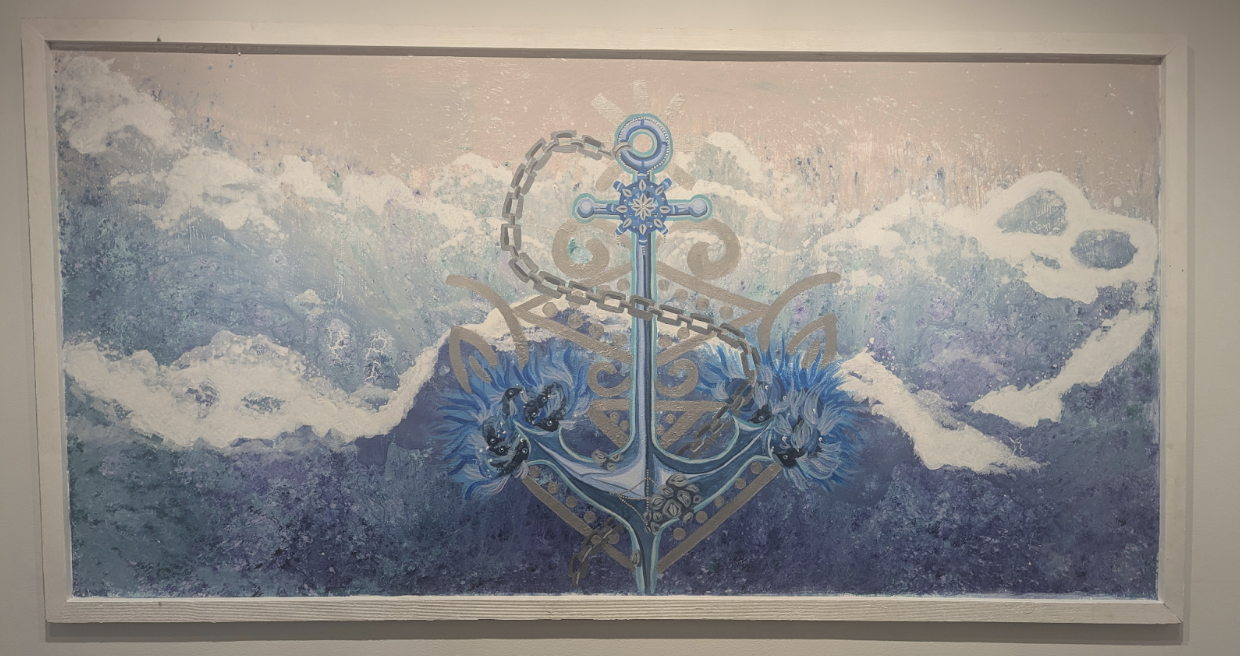
What was special about this year’s exhibition was that it was the first to invite students from across the Five College Consortium to submit their pieces. There were two non-Amherst pieces, one of them being “Yemayá” by artist Edwina Polanco ’25 from the University of Massachusetts Amherst, which is also the largest work in the exhibit. The artwork depicts an anchor surrounded by ocean waves, covered in chains, and incorporates fish and cowrie shells. Named after the Yoruba Orisha (divine spirits in the Yoruba religious tradition) of the ocean, motherhood, and fertility, who was brought to the Americas by enslaved West Africans, Polanco’s piece highlights the impact of the Atlantic Slave trade.
I had the opportunity to speak with student organizer and artist, Rachel De La Cruz ’26, who noted that “at the end of the day, BAM is about inclusivity, community, sharing, and celebrating artwork.” The collaborative effort of BAM, curated and organized entirely by student artists and organizers, highlights the supportiveness of the student network at both Amherst and other institutions.
De La Cruz hopes that, in the future, the festival will continue inviting more students from other campuses to submit their work. According to De La Cruz, BAM highlights the fact that “there’s so much creativity on campus, and it’s really important to continue to foster and encourage the arts in general in all capacities.” For the festival’s 10th anniversary next year, De La Cruz hopes to have an artist from each of the Five Colleges submit artwork.
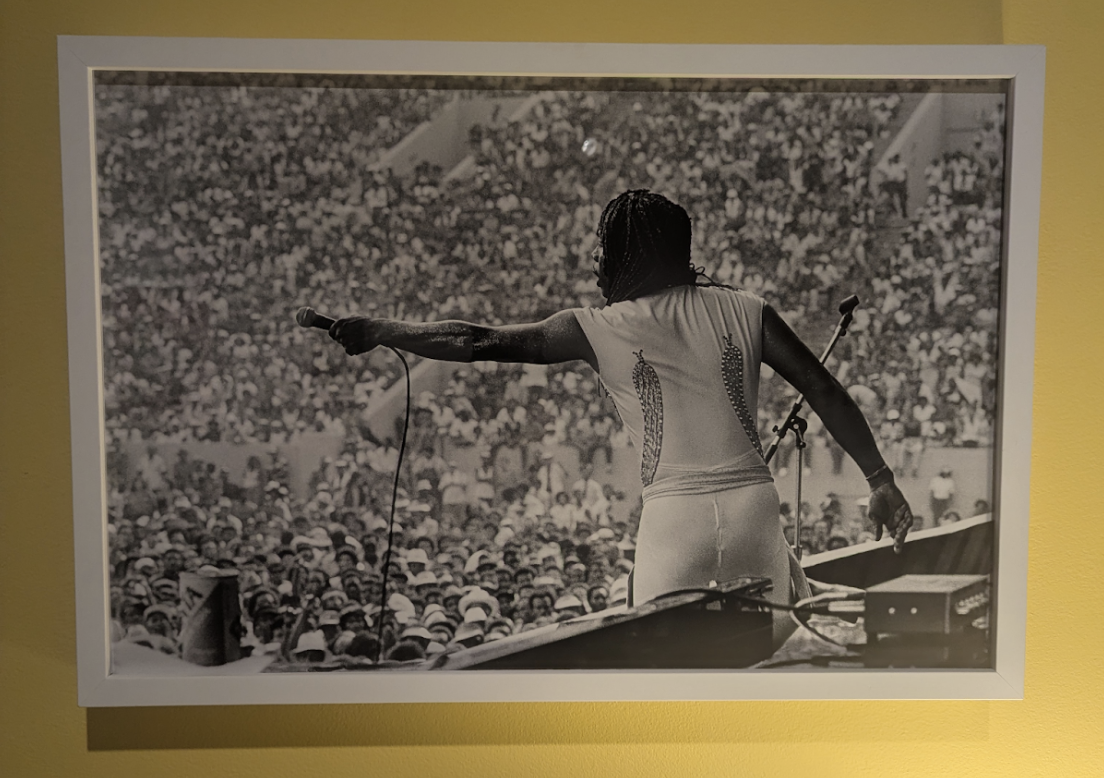
Those who visit the museum will also be greeted by Kwame Brathwaite’s “Revolutionary Movements,” which is separate from BAM but still thematically related. Brathwaite’s photography highlights Black excellence and beauty through music, fashion, and activism. Notably, his work helped document the Black is Beautiful movement throughout the 1950s and 1960s. “Revolutionary Movements” will be on display until July 5, 2026.
De La Cruz reflects on having BAM featured alongside Brathwaite’s work: “It’s really special for us to be put in this conversation and legacy of activism. To see ourselves as the future artists and creators who are going to be taking on these big political challenges.” In particular, De La Cruz pointed out Brathwaite’s photograph of Rick James on the wall leading into the BAM exhibition. The black-and-white photograph captures James holding a microphone out to a crowded audience. Coincidentally, the artwork’s placement shows James’ arm outstretched toward the BAM student exhibition. De La Cruz reflects on this photograph as a symbol of Black performers and artists passing on the torch to the next generation of artists featured in the BAM exhibition.
For visitors in the space, De La Cruz hopes they will appreciate that the purpose of art is sometimes “just about joy, sometimes it’s just about creating something and sharing it with people and having a conversation about it, and that is enough.” BAM truly showcases joy: De La Cruz’s piece, “Luis and Me,” depicts two children smiling at the viewer. Between BAM and “Revolutionary Movements,” these two exhibitions fully display this sense of joy.
Student artworks from this year’s festival will be on display until May 3. The Mead Art Museum is free and open to the public from Tuesday to Monday, 9 a.m. - 5 p.m., and until 10 p.m. on Thursdays.
Visit the BAM exhibit to see for yourself the joy in the student pieces. Visit with a friend or family member, or find a stranger in the exhibit and have a conversation. Talk about the artwork, let yourself be inspired, and appreciate the creativity and stories showcased by the student artists!

Comments ()