

North Africa in the Eyes of Paul Bowles and Tayeb Salih
In this comparative book review, Contributing Writer Daniel Shen ’30 analyzes the shared themes of foreign lands and self-exploration in Paul Bowles’s 1949 “The Sheltering Sky” and Tayeb Salih’s 1966 “Season of Migration to the North.”
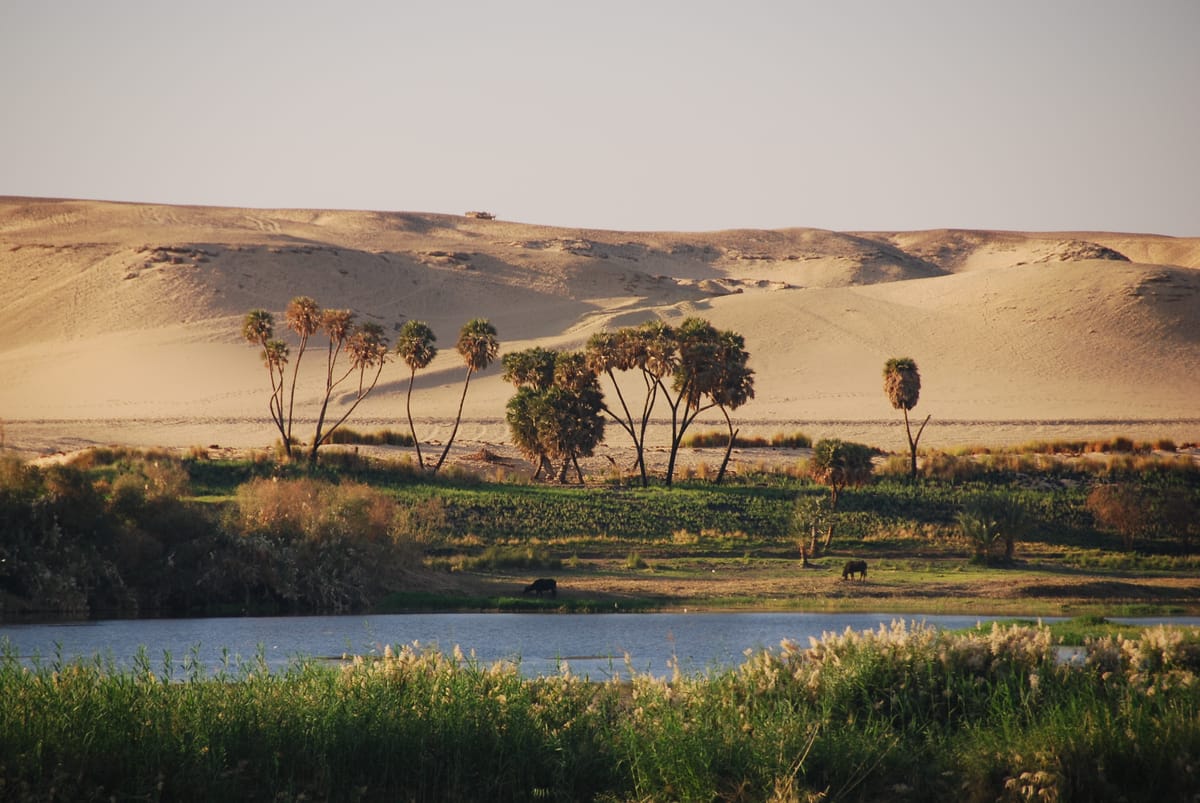
Study abroad, gap years, travel: The belief that going somewhere new will change you is hardly original. Two novels show how it can go very wrong and, in doing so, reveal what it means to live on the diverse and shrinking Earth. In this article, I invite you to read them together.
A Sudanese Arabic-language novelist who settled in London. An American English-language novelist who settled in Tangier. Sudanese geniuses who study in London and return. American travelers who journey into the Sahara and don’t return.
What does a traveler’s knowledge of a foreign destination determine about their fate? Paul Bowles’s “The Sheltering Sky” (1949) and Tayeb Salih’s “Season of Migration to the North” (1966), chronicling journeys in opposite directions, both explore answers to that question. Bowles’s Americans penetrate North Africa knowing nothing and wanting to know nothing, and the desert mutilates them. Salih’s Sudanese protagonist masters the “West,” exploits that mastery against the colonizers, and dies in despair. From the novels, we learn that knowledge is the foundation of agency in a (post)colonial world, and that the way one chooses to use such knowledge determines whether one is empowered or destroyed. From here onward, spoilers.
In “The Sheltering Sky,” Port Moresby, one of the two protagonists, dies of typhoid fever in a remote Algerian town three-quarters into the book. A page before, Bowles famously writes, “reach out, pierce the fine fabric of the sheltering sky, take repose.” It is the only appearance of the titular adjective among the novel’s many depictions of the sky, and it consummates the metaphorical sky that shields humanity from the meaningless universe, that shields Port and Kit Moresby from the senseless Sahara, that ruptures as the American man dies within.
The plot ripples with this existential premise. Three Americans (the unhappily married Moresbys and Tunner, a third wheel) travel deeper and deeper into the Sahara after World War II. The Moresby couple, driven by a search for meaning and a desire to mend their marriage, are consumed: after Port’s death, Kit surrenders her body to a formidable Tuareg trader — her mind, identity, language, and grip on reality to the wilderness. Tunner, with nothing to find and nothing to lose, is the foil: the conventional “Westerner” who never fully enters a foreign culture.
“I am no Othello,” Mustafa Sa’eed, the other protagonist, declares in “Season of Migration to the North,” referencing William Shakespeare’s “Othello,” which depicts an African general destroyed by a manipulative ensign. “I am a lie,” he tells the nameless narrator what he should have said when he was tried for the murder of Jean Morris, his English wife. He adopted the exotic “Moor” persona to seduce British women, weaponizing the European fetishization of the noble savage. He avoided the death sentence because a professor framed him as a victim of the collision between North and South — colonizer and colonized.
Salih’s novel unravels with that clash. The nameless narrator returns from literary studies in England and meets Mustafa, a mysterious Sudanese who studied literature in London some 40 years earlier, seducing and destroying European women as colonial revenge. After Mustafa’s ambiguous death, the narrator undergoes a personal tragedy and finds himself in the Nile, where Mustafa was last seen, between the North and South, and chooses to live.
A significant knowledge gap exists regarding the travelers’ destinations in the two novels. Only with their “great deal of luggage” can Port and Kit travel so freely in North Africa. It contains an unstated amount of currency, French Algerian francs that never run out until Kit loses everything before succumbing to Belqassim, the Tuareg trader. The couple never worries about learning Arabic or North African culture, proud of their ability to travel into a setting completely foreign to them. Port enjoys exploring alien towns, people, and landscapes, following his whims and hired guides; his capital permits his carefreeness and carelessness.
Mustafa Sa’eed, by contrast, masters the British secondary school curriculum — English, arithmetic, Latin, and European history — before he even sets foot in London for college. He understands the “West” better than some Westerners do. The two novels dramatize the knowledge gap that colonialism incubated: Those who belonged to powerful nations could move through other people’s countries without learning anything about them, while those in colonized lands had to study their rulers to survive.
Knowledge leads to empowerment. Mustafa’s knowledge of the “West” allows him to decorate his room with “burning sandalwood and incense, pungent Eastern perfumes, lotions, unguents, powders, and pills.” He presents himself as an Othello-like figure and makes the European women he brings to his room “yearn for tropical climes, cruel suns, [and] purple horizons,” consummating his reverse-colonization.
Port’s and Kit’s refusal to learn about North Africa leaves them in an inevitable spiral into destruction. “My only plan is, I have no plan,” Port says to Tunner. After he refuses to be immunized, he dies from typhoid fever. Belqassim marries Kit and abuses her, all while she “had not yet learned his language; indeed, she did not consider making the effort.”
What one chooses to do with knowledge matters. Salih does not stop at Mustafa’s reverse-colonization. He argues that violent, vengeful uses of knowledge, especially in the context of colonialism, lead to self-destruction. Mustafa, alienated, guilty, and forlorn, eventually disappears in the Nile despite knowing how to swim. Salih’s narrator shows the alternative: Knowledge used with compassion, not conquest, spares him the despair that devours Mustafa.
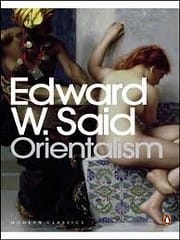
“The Sheltering Sky” is part of the “Western traveler discovers the East” literary trope, discussed in Edward Said’s theory and 1978 book “Orientalism.” This concept casts the Orient as an exotic destination where a Western protagonist travels to test, reinvent, or lose themselves. Yet Bowles complicates the trope by ending the existential text with tragedy: the two Western travelers destroyed by the East. Salih also deconstructs this literary tradition, reversing it and attaching another layer of warning against Eastern revenge on the West.
For Bowles’s Americans, ignorance is a luxury that the impassive desert nullifies. For Mustafa, knowledge is a necessity for survival, yet mastery cannot salvage him once he weaponizes it. Only Salih’s narrator, caught in the Nile between North and South, West and East, survives because he chooses to live responsibly and carefully.



Comments ()