

Yale Law Professor Reflects On Affirmative Action
Last Wednesday, Professor of Law at Yale Law School Justin Driver delivered a lecture titled “The Fall of Affirmative Action.” He refuted conservative claims that affirmative action causes victimization of people of color, academic mismatch, and racialized balkanization.
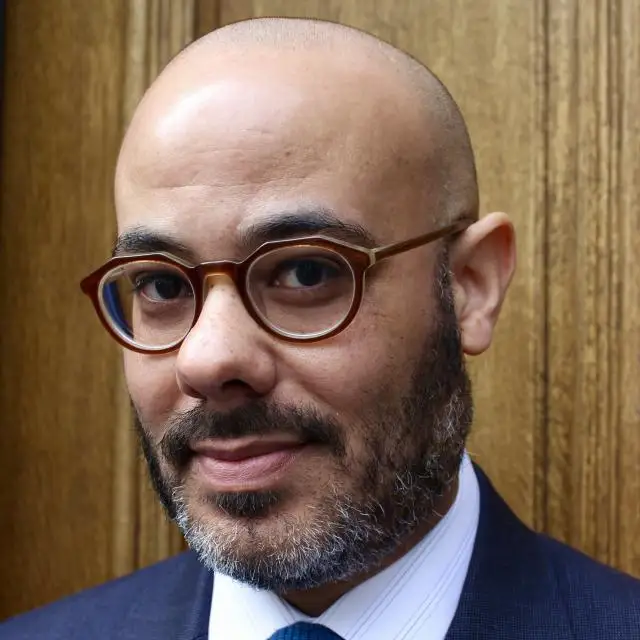
Last Wednesday, the Department of Education Studies welcomed Robert R. Slaughter Professor of Law at Yale Law School, Justin Driver, to give a lecture titled “The Fall of Affirmative Action.” Driver is the author of the 2025 book “The Fall of Affirmative Action: Race, the Supreme Court, and the Future of Higher Education,” where he analyzes the aftermath of the 2023 Supreme Court “Students for Fair Admission v. Harvard” (SFFA) case, which ruled that race-based affirmative action was unconstitutional.
Driver began with an overview of the history of affirmative action and the Supreme Court’s stance on the topic. From 1960 to 1970, affirmative action caused a surge in black admissions at Harvard University, Princeton University, and Yale University combined from 0.5% to 10%. Driver painted affirmative action as “an assault on the prevailing racial hierarchy of this nation.” He added that the policy did not just change how schools were composed, but provoked “cascading consequences” that made a “foundational social transformation” in all areas of American life.
However, Driver made it clear that the Supreme Court was “ambivalent” on the concept of affirmative action even before the SFFA decision. They turned the main rationale for affirmative action to “racial diversity, not racial remediation,” and Driver’s prior experience clerking for former Justice Sandra Day O’Connor made him pay close attention to her 2003 “Grutter v. Bollinger” ruling that “in another 25 years … affirmative action will no longer be necessary,” which set the stage for the 2023 ruling.
He then shifted to describing and refuting conservative arguments against affirmative action. “I really am trying to take conservative arguments seriously,” Driver said, as he grouped the arguments into three general categories on what affirmative action creates: self-victimization, academic and social mismatch in institutions, and racialized balkanization.
“These concerns … are going to be intensified rather than alleviated as a result of the end of affirmative action,” Driver said. This downturn is in addition to the other negative effects of “plummeting Black enrollment rates” at many top institutions.
He next sought to complicate “the traditional liberal justification for affirmative action.” Driver responded to the idea that “affirmative action is designed to attack racial subordination” on the basis of the Equal Protection Clause of the Constitution by citing the ideas of Justice Clarence Thomas, William Nelson Cromwell Professor of Law at Yale Law School Steven L. Carter, and the late lawyer and activist Derrick Bell. All three referenced themselves as benefactors of affirmative action, while maintaining varying degrees of agreement with the concept. They all admit that “there is this subordinating component” within the term itself that “envelops black students in a cloud of suspected incompetence,” as Driver paraphrased from Bell.
Two of Driver’s further responses dealt with the ruling of SFFA itself. First, Driver referenced an aspect of the definition of racial subordination related to the basis of the ruling: that Asian American students were the victims of “vicious stereotypes” during admissions processes that followed affirmative action.
The second was that the ruling only prohibited affirmative action based on race for the sake of race, or “race qua race.” Driver cited the “Texas 10% rule,” which guarantees the top 10% students from all Texas high schools a spot at UT Austin, as an example of accepted affirmative action that achieves diversity goals and is, for now, permitted by the ruling.
“The goal of racial diversity and the means that universities can use [are permissible] … and therefore many other things should be constitutionally permissible,” Driver said. He then began a discussion about what his preferred alternative methods would be.
Driver first made it clear which methods of non-racial affirmative action he believes would not actually promote racial diversity. These are the “simple” acts of “getting rid of legacy admissions” and focusing solely on class in place of race. Driver outlined his belief that these approaches are “too crude” to actually make change. Many institutions that Driver describes, particularly MIT and Princeton University, have no or limited legacy admissions and have more low-income students than ever, but still experienced a steep decline in black enrollment after SFFA.
Driver then put forth three categories of strategies he thought would work in the place of affirmative action: affirmative action for “political designations” — such as being a descent of slavery or being a member of a Native American tribe — instead of racial designations, an increase in local schools sending students to flagship campuses nearby, and the inclusion of more yes-or-no questions concerning the level of applicant opportunity in university applications.
Throughout the talk, Driver made it clear his preference is strongly for “good old affirmative action as existed in the pre-SFFA world.” However, he admitted that he is proposing these other options around an idea that is “not available anymore,” and that work going forward must be done in a “constitutionally viable function.”
“This is a second best world,” Driver said. However, he still holds that “the wheels of justice may turn slow, but they do turn” towards what is right. He concluded, reflecting on the current era, that the dangers of intellectual “acquiescence are profound, and the promise of dissent is boundless.”

Comments ()