

Admin Addresses “Voices of the Class” Controversy
Over the course of two months, the college’s administration has taken action to support the students affected by recent media coverage of “Voices of the Class” by connecting them to resources such as the Office of Student Care and asking news outlets to blur student faces from photos and videos.
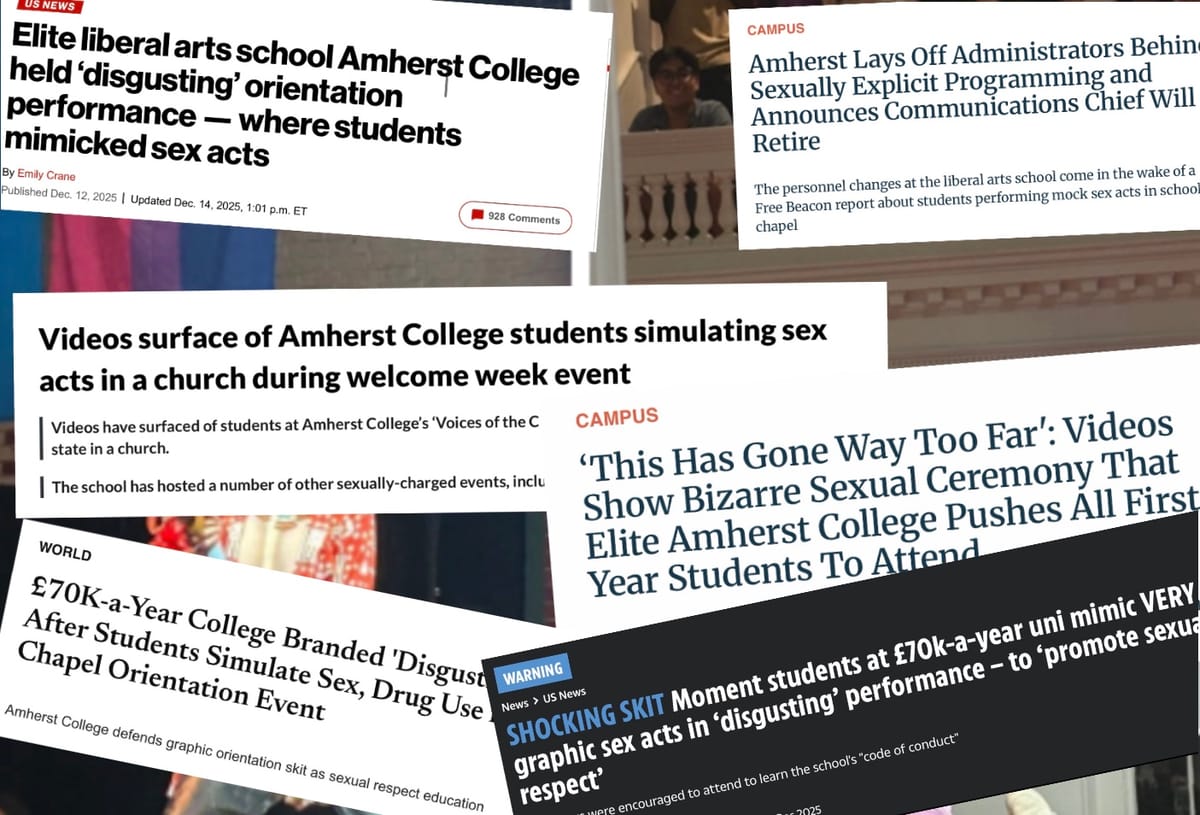
The college’s administration is still handling repercussions following the wave of reporting on the annual orientation performance “Voices of the Class,” which originated from a Dec. 12 article published by the Washington Free Beacon that resulted in many student performers experiencing harassment and doxing, according to the Office of Student Affairs.
Director of Media Communications Caroline Hanna said that the administration’s focus was “first and foremost” directed towards protecting students by seeking the removal or blurring of student faces from photos and videos of the performance.
“While for legal and privacy reasons we are not in a position to share specific details about actions taken, a team from across the college was working on an hour-by-hour basis on this issue throughout late December and early January,” Hanna said. “We reached out to the affected students as soon as we became aware of the article’s publication, and we have continued to offer them significant support over the course of the past two months.”
Affected students have been in continuous engagement with the Office of Student Care, the class deans, the Center for Counseling and Mental Health, and other faculty and staff, as well as the Information Technology department, which helped reduce their digital presence. The administration also covered the costs of external services for those concerned about doxing.
In a Dec. 16 article associating the recent elimination of staff positions with controversies regarding “Voices of the Class,” the Washington Free Beacon affirmed that it has received a request from the college to modify or remove footage of the event, and stated that it declined to do so. As a result, photos and videos are still included in both the original article and a follow-up article published by the New York Post.
Another priority of the administration was to ensure corrections of inaccurate or misleading reporting in certain articles while recognizing that media outlets and reporters have the right to make editorial decisions in accordance with principles of the free press. Though unable to provide further details, Hanna shared that in multiple instances, the administration’s outreach was successful in convincing outlets not to pursue certain stories because of the potential to cause further harm to students.
“Our media response was both deliberate and assertive, guided by best practices for media and crisis management,” Hanna said. “Throughout the process, we had to balance the possible benefit of requesting corrections or the blurring of the video and photos against the risk that such requests would generate additional external attention.”
Hanna added that the administration is actively discussing ways to handle the recording of future public events.

Comments ()