

Brandon Terry Revisits the Civil Rights Movement
As part of MLK Day of Service and Action, the Office of Diversity, Equity, and Inclusion organized a lecture by Harvard University Associate Director of the Social Sciences Brandon Terry. He discussed his new book, “Shattered Dreams, Infinite Hope: A Tragic Vision of the Civil Rights Movement.”
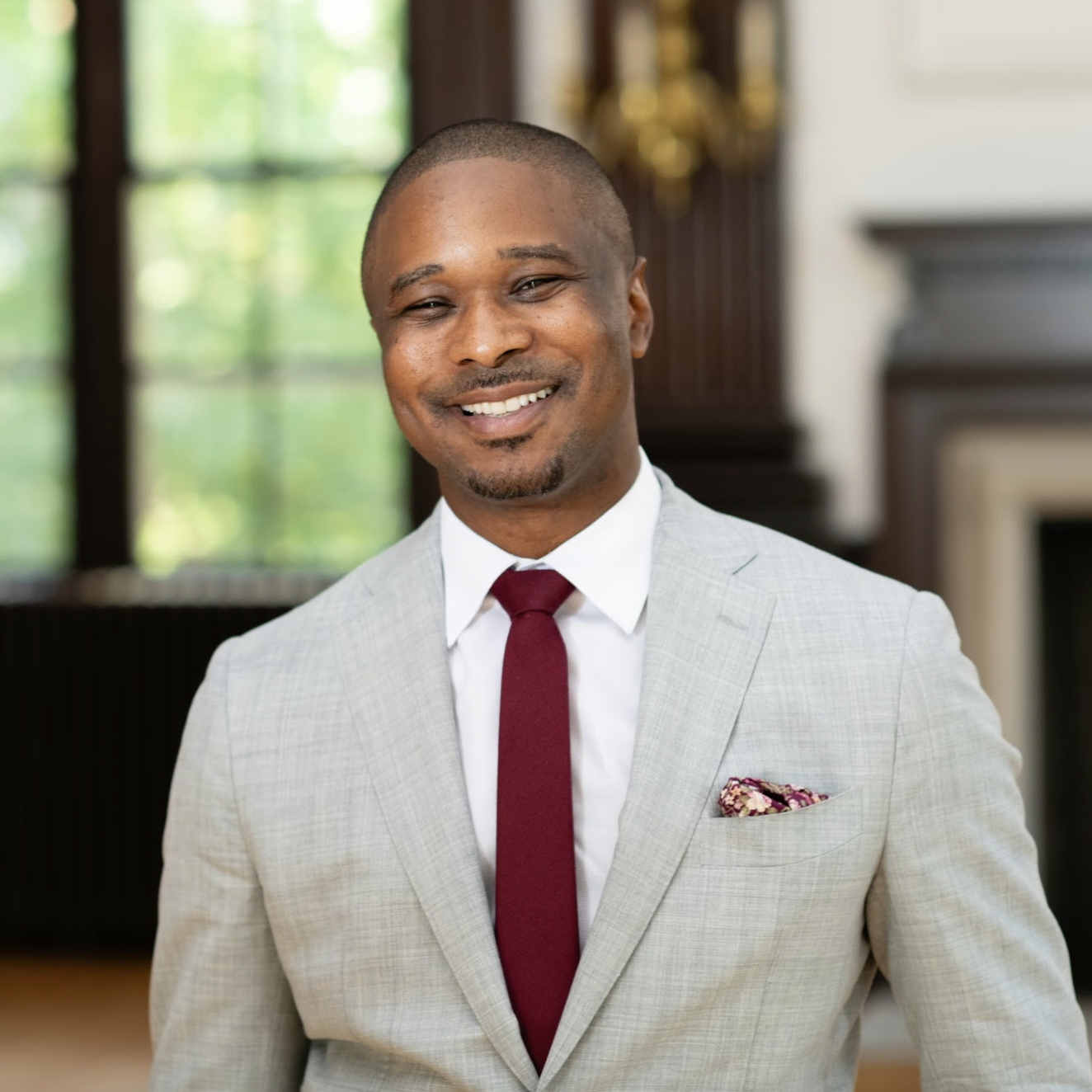
On Wednesday, Harvard University Associate Director of the Social Sciences Brandon Terry presented his rethinking of the Civil Rights Movement to students and faculty, drawing on his recent book titled “Shattered Dreams, Infinite Hope: A Tragic Vision of the Civil Rights Movement.” The event, organized by the Office of Diversity, Equity, and Inclusion, was part of the college’s Martin Luther King (MLK) Jr. Day of Service and Action, an event that encourages students to engage in dialogue and civil service.
Terry began the lecture by framing the Civil Rights Movement as an exemplary event that functions as a touchstone of ethics, culture, and politics. He argued that recalling the Civil Rights Movement relies on an “economy of narratives,” interpreting it as an essential form of historical discourse, as it helps people make sense of a complex world. “The Movement suffuses popular culture, shapes how we interpret our current political climate, and helps us understand our ideals,” he said.
Terry then placed historical storytelling into three distinct genres: romantic, ironic, and tragic. He claimed that each genre expresses a distinct value, speaks to how we understand right and wrong, and reflects particular judgments about the nature of conflict.
Terry argued that the romantic narrative has dominated the telling of the Civil Rights Movement, situating “American history within a redemptive arc.” The romantic narrative treats the United States’ founding documents, such as the Constitution and the Declaration of Independence, “not as objects of structural critique, but as vessels of unrealized virtue.” This story reassures us “that progress, though slow, is structurally embedded in [the] kind of society we are.” To Terry, this society could manifest in multiple different ways: “Maybe our constitutional project, maybe our American creed, maybe our ability to self-correct.”
While the romantic vision highlights the country’s structural virtues, Terry cautioned that it also limits our political imagination. He noted that the narrative no longer compels broad affirmation, and in doing so, obscures the deeper price of the struggle. “You don’t get the cost of it, the suffering of it, the philosophical significance of loss,” he said.
According to Terry, the dominant narrative overlooks these nuanced dimensions and allows us to forget what these losses reveal: the limits of political structures, the persistence of injustice, and the many alternative paths for change that were never pursued.
Terry then focused on the ironic narrative of the Civil Rights Movement, often associated with Afro-pessimism, which portrays America as fundamentally anti-black and progress as stagnant. Terry argued the ironic vision makes a crucial mistake — “it mischaracterizes the fundamental contingency and conflict that’s at the nature of politics, whether we want to acknowledge it or not,” he said.
Rather than urging the audience to anchor their political understanding in solely the romantic or ironic accounts, Terry advocated for a tragic lens. He contended that the tragic narrative “insists that our moral and political lives unfold in a world structured by conflict, contingency, and limitation, all at the same time.” Citing W.E.B Du Bois’s description of Reconstruction as a “splendid failure,” Terry presented the tragic sensibility as a lens through which to view serious moral conflict [as] ineradicable, recognize that defeat has real philosophical significance, and understand that contingency really governs political life.
Terry argued that both the romantic and ironic visions provide poor guidance for political judgment: The romantic vision can leave people unprepared for defeat and disappointment, while the ironic vision fosters a sense of helplessness. Quoting MLK’s sermon that inspired the title of his book, “Shattered Dreams,” Terry asked: “How do we live with unfulfilled hopes and blasted dreams, shattered dreams?”
Terry shared two valuable answers we can gain from the tragic vision, stating that “we may not yet be in the worst of all worlds, however despairing you feel it, could be worse than it is right now, and it may be part of your responsibility to try to stand a thwart that possibility and keep the possibility of something better alive for the people who come after.” Secondly, Terry concluded that the tragic genre doesn’t abandon hope but reframes it. On hope, he said, “It's a discipline. It's a practice. It's a style of attention toward the world.”
Attendees found the event powerful and insightful. “I think it’s a really interesting, unique take on the Civil Rights Movement and where it is now that normally isn’t expressed. It’s like it’s either continuing or it’s done, but [the talk] was a different way of looking at it,” Ayana Alles ’28 said.

Comments ()