

Celebrating Identity in the Fifth Annual Nuestras Voces
This year’s Nuestras Voces brought an evening of poetry, music, and film that highlighted the depth and range of Amherst’s bilingual community. Managing Features Editor Nife Joshua ’26 reflects on the performances and stories students shared about navigating Latinx language, culture, and identity.
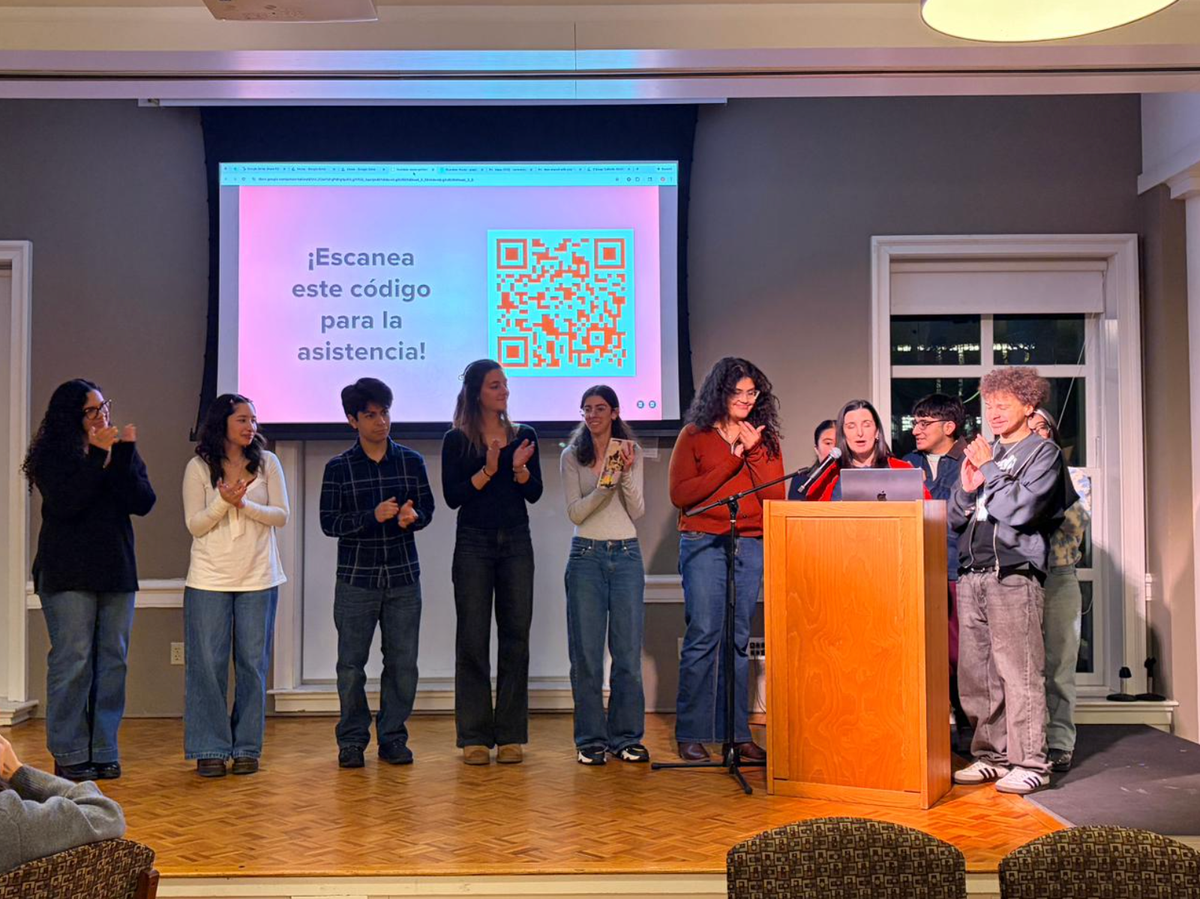
Nuestras Voces returned on Friday for its fifth year, reaffirming its place as a cornerstone tradition for Amherst’s Spanish-speaking and learning community. Created by Senior Lecturer in Spanish Carmen Granda’s Spring 2020 course LLAS/SPAN-205: “Finding Your Bilingual Voice,” Nuestras Voces grew from a small classroom event into an annual showcase where students explore identity through language and performance. This year’s program brought together readers, musicians, and filmmakers whose work reflected the many ways Spanish, English, and Spanglish shape daily life.
This year’s event featured performers Nate Scharf ’28, Gina Durazo ’26, Jessiret Peña Gómez ’29, Justin Vásquez Peralta ’28, Isa Lattuada ’26, Joshua De La Cruz ’26, Val Gualdron ’28, Alexa Martínez ’26, Valeria Badra ’27, Amber Nelson ’26, and Manuel Badena ’27, and Lilian Martínez, a senior at Smith College.
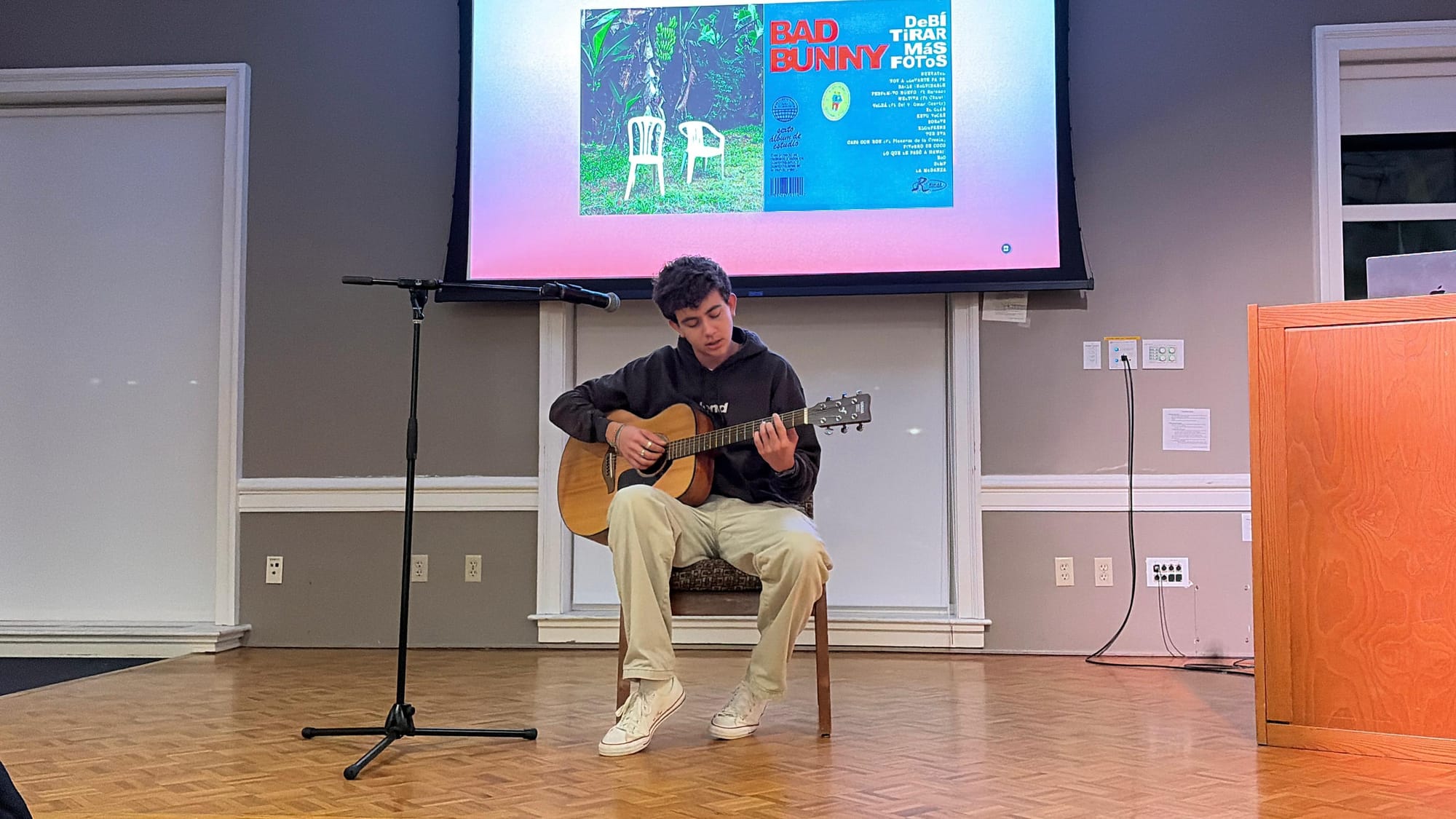
As attendees entered the Friedmann Room, they paused at a table to jot down short reflections on bilingualism and its role in their lives. Once people took their seats, the night opened with the first highly anticipated performance. Scharf, a student in SPAN-201, stepped forward with an acoustic cover of “Turista,” a soft, beautiful rendition of Bad Bunny’s original track.
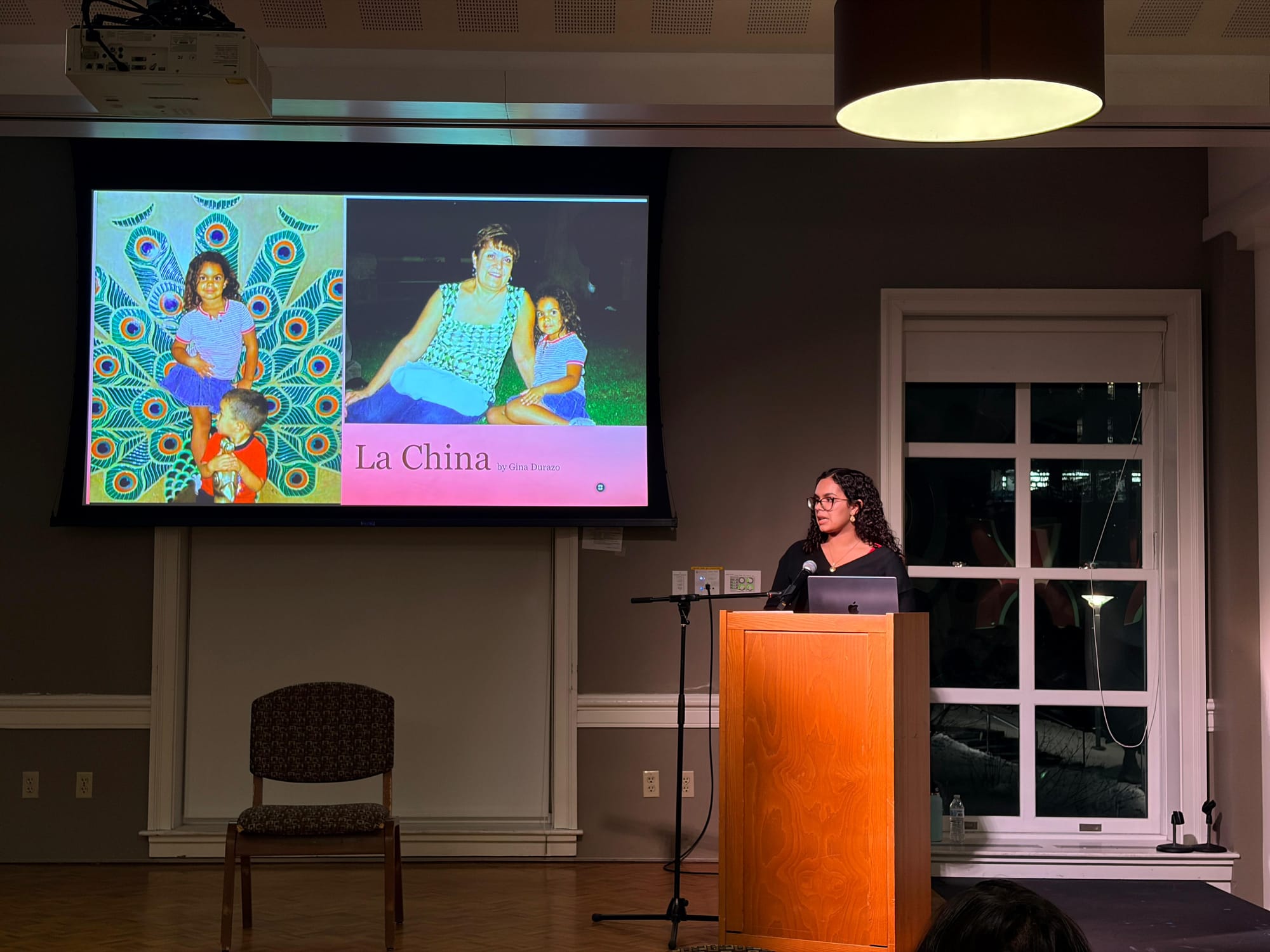
The program then transitioned to work from SPAN-205, starting with Durazo’s poem “La China.” Her piece centered on the assumptions associated with her nickname and the small but constant negotiations that come with carrying a name filtered through family, culture, and others’ perceptions: “No podían decir mi nombre. La ‘G’ se les escapaba, como si el sonido no existiera. Gina salió china”. In English, the stanza translates to “They couldn’t say my name. The 'G’ slipped away from them, as if the sound didn’t exist. Gina came out [sounding like] China.” Ultimately, her piece resonates with heritage speakers who often deal with the challenges of having both Spanish and English versions of their own names.
The lineup continued with several original works, including Gómez’s “El Campo,” Peralta’s “Estickers,” Lattuada’s “Corazón Partido y Lleno,” De La Cruz’s “Suavemente Still Swaggin,” Gualdron’s “Mi País,” Lilian Martínez’s “La Tricolor,” and Alexa Martínez’s “Baila.”
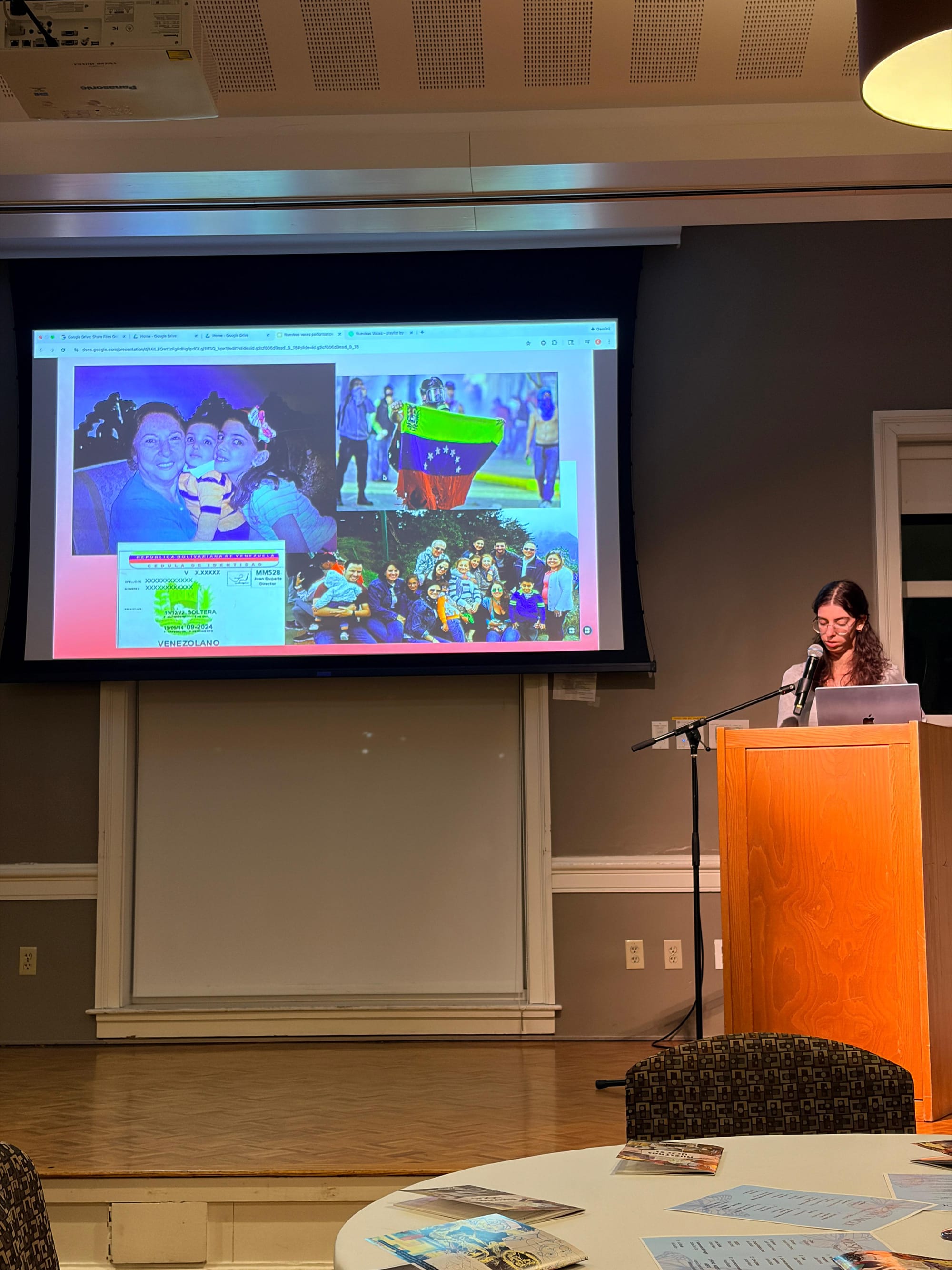
A memorable moment from the evening came from Badra whose poem, “Escenas de aeropuerto: explosivos,” focused on her experience navigating travel as a Venezuelan with Syrian roots. Her poem describes how she has often been the target of airport security’s suspicions due to her Syrian last name. The highlight of the poem is the revelation of the meaning behind her last name, which explains that the name actually translates to “love”, an especially poignant contrast to the suspicion she faces for it.
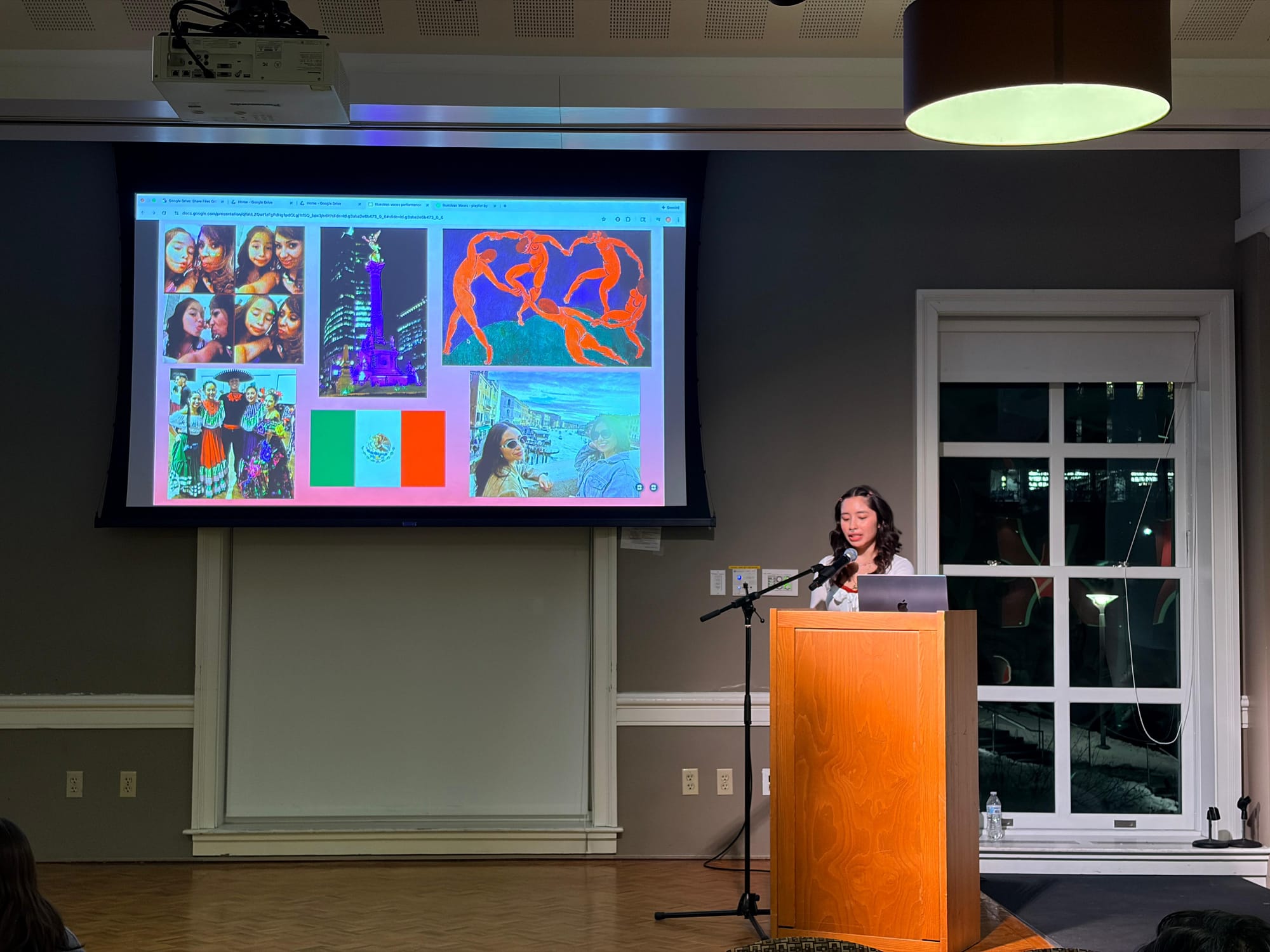
Another standout piece was Martínez’s original poem “Baila.” It recounts how she was often mocked when she was younger for having prominent hair on her arms, a shared trait amongst Latina women. Martínez also addressed feelings of severance from her Mexican culture while being raised in the United States, describing how living in a country that didn’t speak her family’s language or reflect their customs made her question her roots. She ends the poem by focusing on dance, which she says has always been central in her family and remains a part of her identity that she never felt could be taken from her. After performing, Martínez said she was nervous about sharing one of her biggest insecurities publicly, but felt that speaking about it helped reduce the insecurity’s hold on her. She emphasized that Nuestras Voces provides a necessary space at a predominantly white institution. “I held on to the one thing my culture is so proud to have, dancing, as an outlet to keep myself sane as a way to block out their words and just go freely about the world.”
Later in the program, Nelson presented her film project, originally created for her course, BLST/FAMS/FREN-361: “Francophone African Cinema.” Her work examines how language, especially a heritage language that one does not grow up speaking, shapes connection to culture. Through interviews with her family, Nelson traced her Dominican and Haitian roots and reflected on why she spoke Spanish rather than French or Haitian Creole in her childhood. Much of the film centered on the tension she described in the interview, where “Latinos [did] not really think that I’m fully Latina … because I’m Black, or I look … dark-skinned.” She explained that this shaped both the film and her decision to present it at Nuestras Voces, adding that she wanted people to understand that “I am Black, and I also do hold this other identity, one that I feel most connected to.”
At the close of the official program, the open mic portion began. Multiple attendees came forward, including Gallardo, who shared a documentary-style video created for a different film class. The event’s welcoming atmosphere encouraged speakers at all levels to perform, including two SPAN-102 students. Marc Salazar ’27 read a short poem in English, and Evan Yang ’26 shared a brief haiku in Spanish.
In keeping with tradition from past events, Granda invited her current students to join her at the end of the night as she read a collective poem built from “one verse from each poem that students wrote.” The reading brought the voices of the night together.
In her closing reflections, Granda spoke about the larger purpose of creating a public space for heritage Spanish speakers to be heard. She noted that many bilingual and bicultural students arrive at Amherst unsure whether their home Spanish or their use of Spanglish “belongs” in an academic environment. For her, the event exists to counter that feeling and to affirm that students’ full linguistic selves are welcome. She described Nuestras Voces as a space where students can “claim their voices with confidence” and where bilingual identity is treated as a source of strength.
Granda also emphasized that these moments matter for Latinx students who may not often see their cultural or linguistic backgrounds reflected on campus. She said she hopes the tradition continues to expand in future years and imagines a version where “not just Spanish and English, but all the languages at Amherst College come together,” rooting the event more deeply in the diversity of the student body.

Comments ()