

Cementing Amherst’s Literacy Legacy — Alumni Profile, Lauren Groff ’01
With five novels, dozens of short stories, and countless awards under her belt, Lauren Groff ’01 doesn’t need any introduction. But underneath all this fame she remains a humble person and lifelong learner.
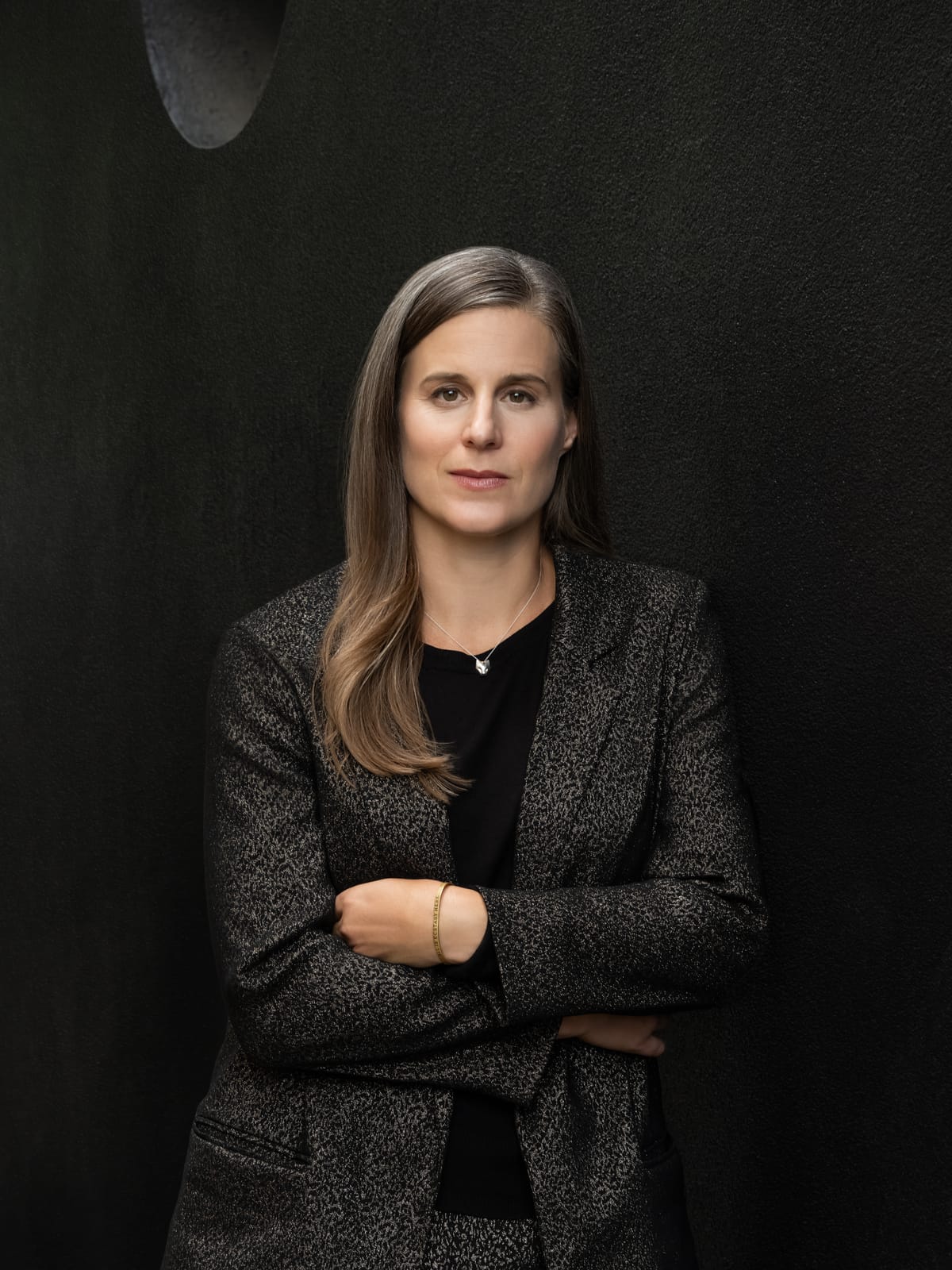
Every generation, there come new authors that cement Amherst’s legacy as the so-called “Writing College”: The 1920s had Joseph Moncure March ’20, known for his narrative poem “The Wild Party” (now adapted for Broadway); the 1940s had Pulitzer Prize winners Richard Wilbur ’42 and James Merrill ’47; the 1970s brought us Scott Turow ’70 and Cullen Murphy ’74; and the 1980s pushed Amherst’s legacy to the forefront of artistic innovation with literary heavyweights Harlan Coben ’84, David Foster Wallace ’85, Dan Brown ’86, Rafael Campo ’87, and Debby Applegate ’89.
When considering which alumni carry this legacy in the 21st century, there is perhaps no author more significant than three-time National Book Award finalist Lauren Groff ’01, whose achievements include a 2018 Guggenheim Fellowship for Fiction and her work being translated into 36 languages, among other things.
Interviewing someone with so many accolades can be intimidating. But as I interviewed Groff, that fear quickly dissipated. She was once a student here, too, sharing the same experiences that make Amherst feel like Amherst — life-changing courses, loving professors, and, of course, tight-knit communities.
From Cooperstown to Amherst
Although Groff now lives in Florida, she grew up in Cooperstown, New York. Those familiar with Groff’s work will recognize Cooperstown as the place she drew on to construct Templeton, the fictional town in which some of her earlier stories take place (most notably, her 2008 debut novel “The Monsters of Templeton”). Much like how the narrator in Groff’s 2008 short story “Lucky Chow Fun” describes Templeton as a place where its residents “renounce the comforts of city life for a tight community and spectacular beauty,” Groff described Cooperstown as a similarly intimate place: “You really are just stuck watching the people around you, seeing the way that relationships sort of develop, and what’s going on, and it’s really good to grow up in a small, isolated, rural village, if you want to be a novelist.”
It’s easy to see the connection between Groff’s love for Cooperstown and her eventual matriculation at Amherst. But Groff was originally supposed to attend Middlebury College as a recruited swimmer. After committing to Middlebury, she toured Amherst and thought, “This is the place for me,” after visiting Emily Dickinson’s grave, but by that time, it was too late.
Luckily, she was given a bit more time to change her path: After graduating from high school, Groff won a Rotary Club scholarship that allowed her to study in Nantes, France for a year. It was a difficult transition since her limited language proficiency forced her to “attend [ninth] grade with [her host family’s] 14-year-old daughter.” But it was during her time in Nantes that she reflected on her college commitment: “I was just in love with Amherst, and I didn’t want to go to Middlebury, so I applied from France … and got in.”
The Athletic Writer
Perhaps what most defined Groff’s time at Amherst, beyond her literary education, was her experience with the Amherst women’s rowing team. She explained that the sport changed her “life in every single direction.” She met her husband, Clay Kallman ’00, through crew, as he was the captain of the men’s team, and the memory of crew and athletics remains alive in Groff’s fiction.
Several of her stories and characters feature athletes, such as her 2019 short story “Brawler” and the aforementioned “Lucky Chow Fun.” In “Monsters of Templeton,” Dr. Cluny encounters a monster corpse during his morning row. Groff’s 2013 interview with The Student details her experiences on the crew team, as does her essay “The River in the Dark,” which was one of nine essays in the Amherst magazine’s bicentennial edition. In the piece, she muses on the impact crew has had on her life: “sometimes memories live deep in our flesh … in our bodies we hold the memories of the places we have been. Our memories remain alive because they become habits and radiate out of the past, into our daily lives.”
The team’s early practice schedule is something Groff has adopted for her writing sessions. To this day, she still wakes up at 5 a.m. to begin her work. And while she doesn’t row anymore, her sons are rowers, and she still routinely exercises: “I need to have an athletic outlet, or else I go insane.”
The Literary World
Groff said that “I’m still carrying around a lot of the voices that I learned and read at Amherst.” Her classes exposed her to writers commonly recognized as pillars of the so-called Western Canon, such as Dante Alighieri. She also studied John Milton, another widely taught writer, when she was abroad at St. Catherine’s College, Oxford, for her spring junior year.
Although Groff hadn’t completely decided whether she wanted to become a novelist before coming to Amherst, she admitted that she had always “been a poet.” It wasn’t until she began taking classes with Eliza J. Clark Folger Professor of English Judith E. Frank, however, that she thought, “Well, maybe [being a novelist] is possible.” She credited Frank’s classes — which introduced her to contemporary writers like Toni Morrison, Grace Paley, and Lorrie Moore — with breaking her conception that the literary world was just for “dead white men.”
“I’d read all these astonishing writers and think, ‘Oh, my God, they’re walking on the same earth as me. It’s not impossible to become a writer,’” Groff explained.
While Groff recalled a lot of Amherst professors as being integral to her college experience, one moment in G. Armour Craig Professor of Language and Literature Emeritus Howard Chickering’s class, back when Amherst had just begun incorporating computers into its classes, particularly stayed with her. When Chickering gave Groff a “B” on her paper, she went to his office hours, where he said he could tell she’d written her essay on a computer. “I said, ‘What do you mean?’ He’s like, ‘Your ideas are just not developed enough. Why don’t you try writing it by hand and slowing down your thinking?’” Groff explained. “So I rewrote the essay by hand, and from then on, I’ve only ever written by hand.”
Like many aspiring novelists at Amherst, Groff pursued a creative writing senior thesis. It was titled, “Stunts, or, explorations in autobiography.” She explained it as her attempt at exploring “the titration of closeness in autobiographical writing, and the ways that you can change the self through autobiographical writing.” She wanted to see where the “borderline of fiction and nonfiction” could be drawn. Her decision to choose this topic for her thesis was influenced by a class she took with Hewitt about autobiographical writing in the French Caribbean, which she claims “changed everything for me.”
Groff is still in contact with her advisor, Professor of English and Film and Media Studies Andrew Parker, whom she referred to as Andy — even after he left Amherst in 2012 to teach French and comparative literature at Rutgers University–New Brunswick. She recalled how “Andy had kept a draft of [the thesis] and gave it back to me [several years after graduation], and I was so embarrassed. [But] I’m so happy that I did it, because [writing the thesis] was the most fun that I’ve had in school.”
Groff’s thesis also taught her persistence. Right after she graduated, she bartended, worked for the Department of Human Services in Philadelphia, and was an administrator at Stanford University — all in the span of three years. But “I was writing that whole time,” Groff said. “The creative thesis taught me that a project doesn’t have to necessarily be successful.”
While creative theses can be used for Master of Fine Arts (MFA) program applications as a demonstration of an applicant’s writing ability, Groff didn’t include her thesis in her portfolio when applying to the University of Wisconsin-Madison, where she’d later get her MFA — she’d already written enough of her own material since graduating.
Reckoning with “Literary Amherst”
Groff’s resume is long — five novels and two short story collections, with a third collection coming out in February 2026. That is also ignoring the essays, features, interviews, and standalone stories she routinely publishes in magazines like The New Yorker and The Atlantic. Groff has clearly cemented herself within the lineage of Amherst College writers, but how does she orient herself within this history?
Ironically, the Amherst writer Groff is most drawn to is Emily Dickinson. It was her visit to Dickinson’s grave that pushed her toward Amherst, and it’s a Dickinson poem that she reads every morning “when [she’s] starting to work.”
But she explained that there was a similarity among Amherst alumni who became writers, herself included: “Someone who really wants to learn and to think … that’s what I see in my Amherst lineage, my literary lineage — people who are constantly pushing, trying to change, trying to develop, trying to think in novel ways.”
While the question of audience is central to one’s work, Groff doesn’t like to think of herself as writing for a specific audience: “I don’t even think about audience at all until the book is about to come out … It’s a one-person-to one-work relationship. If you start to let the idea of a third party in, all of that energy that’s bouncing back between the one to one relationship, just gets dissipated.”
In fact, Groff wants to avoid being seen as an author who only writes for people like herself. “I would hope that I don’t think of my work as being just for women or just for people like me. I would really hate that.” Groff said. “I love women, but I also want to write to men. And I also want to write to everyone. So it’s negotiating that is actually really complicated.”
Groff views her literature as a way to question or challenge existing power structures both inside the world of her books, as well as within the broader publishing industry. “I resist the single narrative,” she told me. “And I think often we’re fed the single narrative, right? The single narrative of what makes for a mother, or makes for motherhood, the single narrative of what God is, right?”
And although she was “unbelievably grateful” for then-President Barack Obama’s decision to pick her 2015 novel “Fates and Furies” as his favorite book of the year, she also couldn’t help but wonder, “Why does it take a man [to bring attention to my work], but also a powerful man too? It’s a complicated thing. It’s representation and audience.”
A Bookstore-sized Pawprint
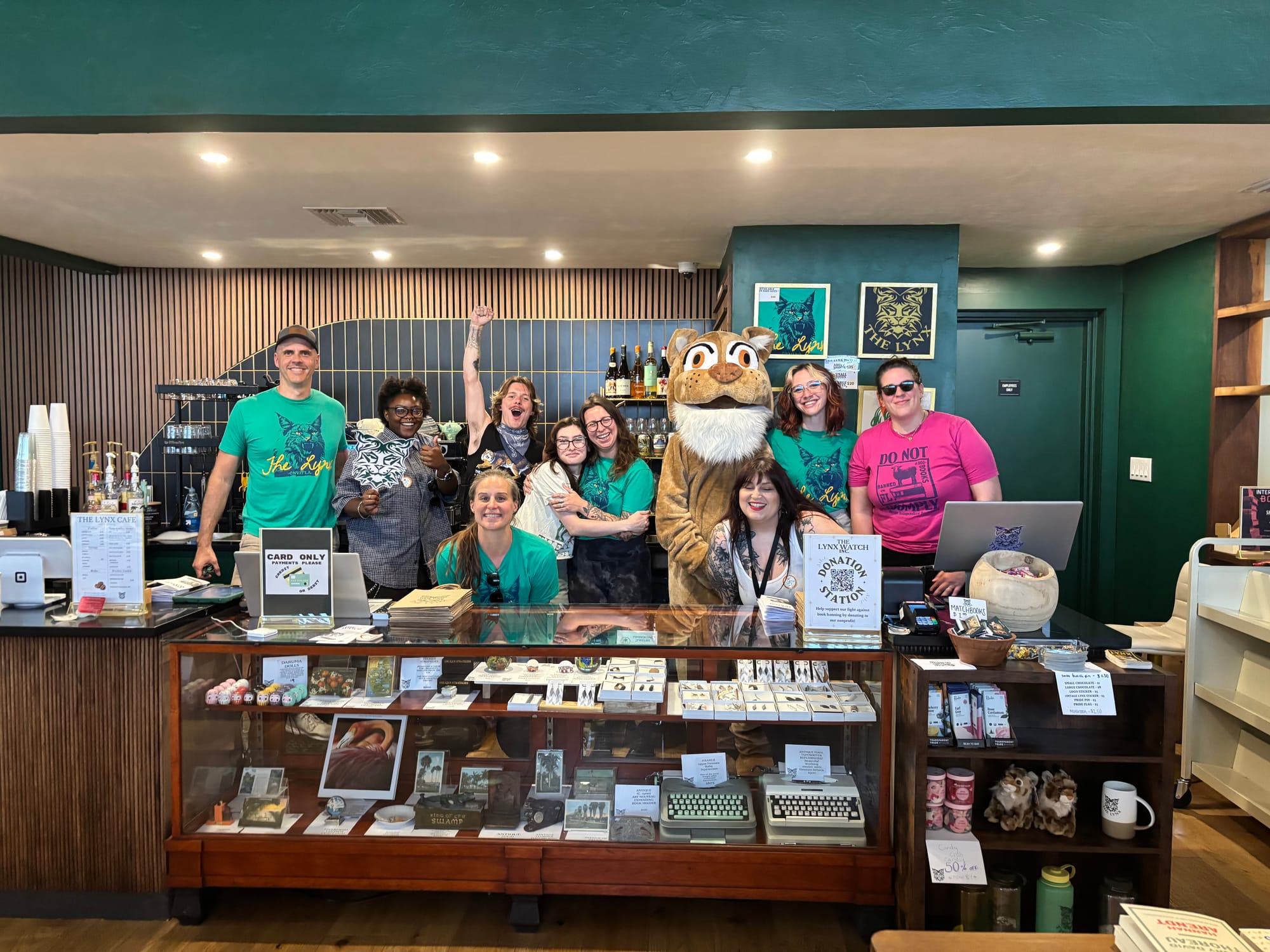
A part of what the word “legacy” means for Groff is also accessibility, emblematized by The Lynx, the bookstore she opened in Gainesville, Florida. Although Groff had initially moved to Florida, where her husband’s family lives, on a condition — “only if she could travel as needed … and if [her husband] agreed to reassess periodically” — the establishment of The Lynx indicates that Groff intends to stay in the sunshine state, at least for the time being.
The Lynx is particularly important in Florida, since the state is not only distant from the United States’ major literary hubs (New York City, Boston, Chicago, etc.), but also has the highest rate of book bans in the whole country. In the Amherst magazine’s recent article about the bookstore, “Reading in the Dark,” Groff positioned The Lynx as “a lighthouse.”
Despite Florida’s relative isolation, Groff views her position as a Floridian writer as pushing back against the hegemony of major literary hubs: “We [Floridians] actually have a really beautiful, robust literary legacy in history, and it’s important to celebrate people who are not just in New York City, right? It’s really important to celebrate the vast and diverse and incredibly different ways of storytelling that are happening throughout the world in the country.”
“I’m very happy to sort of uphold … Florida pride, but also to tell the rest of the world, ‘please don’t condescend to us.’ We’re actually quite worthy of your love and help,” she said.
Looking into the Future
When she’s not writing, taking care of her children, or helping run The Lynx, Groff revisits the writers she first encountered at Amherst — Anne Carson, the Ancient Greek dramatists, Vladimir Nabokov, William Shakespeare (whose work she recently reread in its entirety), and Marcel Proust. Her essay on Murasaki Shikibu’s “The Tale of Genji” was also published in The New Yorker earlier this year.
While Groff doesn’t represent the entirety of her literary generation — Jennifer Acker ’00, Aatish Taseer ’03, and Aparna Nancherla ’05E are other notable names — it’s easy to see how her achievements single her out among her peers. Her career is one defined by her ability to push back against traditional expectations while still maintaining her integrity. She isn’t done, either: Her upcoming short story collection, “Brawler,” will be published February 2026. One can only imagine what more she will bring in the future.

Comments ()