

College Offers Exclusive Preview of Student Center
Ahead of its anticipated fall opening, the college offered editors of The Student a sneak peek of the new Student Center and Dining Commons. The tour provided details of the space and interesting facts about its construction.
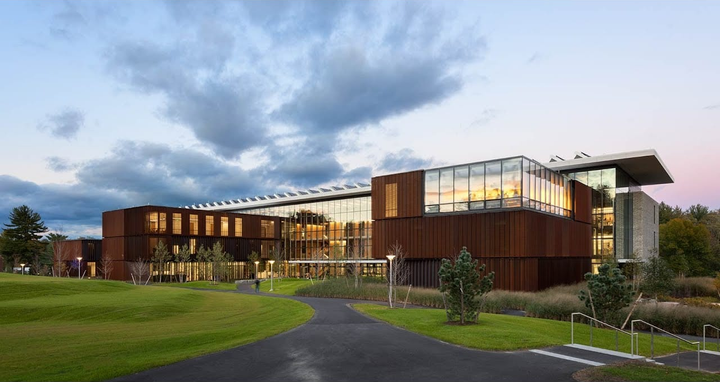
On Monday, four editors of The Student toured the new Student Center and Dining Commons with Building Director Megan Nicklaw and Associate Vice President of Planning, Design, and Construction Tom Davies. We would like to offer a preview of the four-story building — with 54,000 square feet of student activities space and 43,000 square feet of dining space — that will become available next fall.
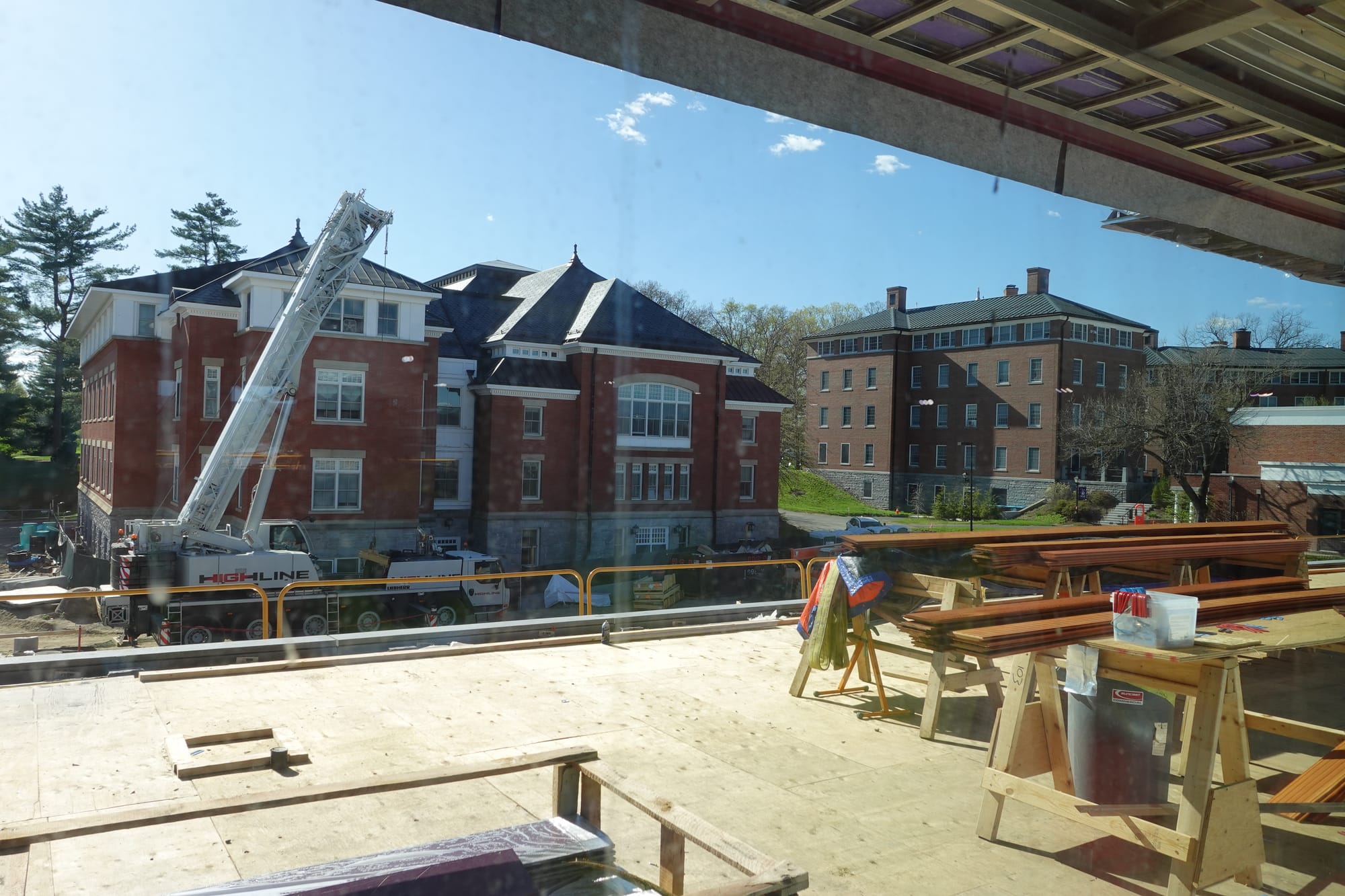
With more than 200 construction workers having 10-hour shifts every workday, the Student Center is nearing completion, already boasting a complete interior framework that outlines student spaces. Davies shared that despite international tariffs, the Covid-19 pandemic, and cost escalations further complicating the construction process, the building project is still “on budget, on schedule.”
The south entrance, facing towards the Science Center and King and Wieland dorms, opens to the first floor of the Student Center. This door will be accessible by stairs from the Greenways dorms, various pathways, and an accessible route. The first floor houses the Alumni Pub, with an up to 90 person capacity, as well as a party room connected to the pub. The makerspace, Grab & Go — which will be renamed to “Mammoths on the Go,” — a large event space, and many student organizations’ offices will also be located on the first floor.
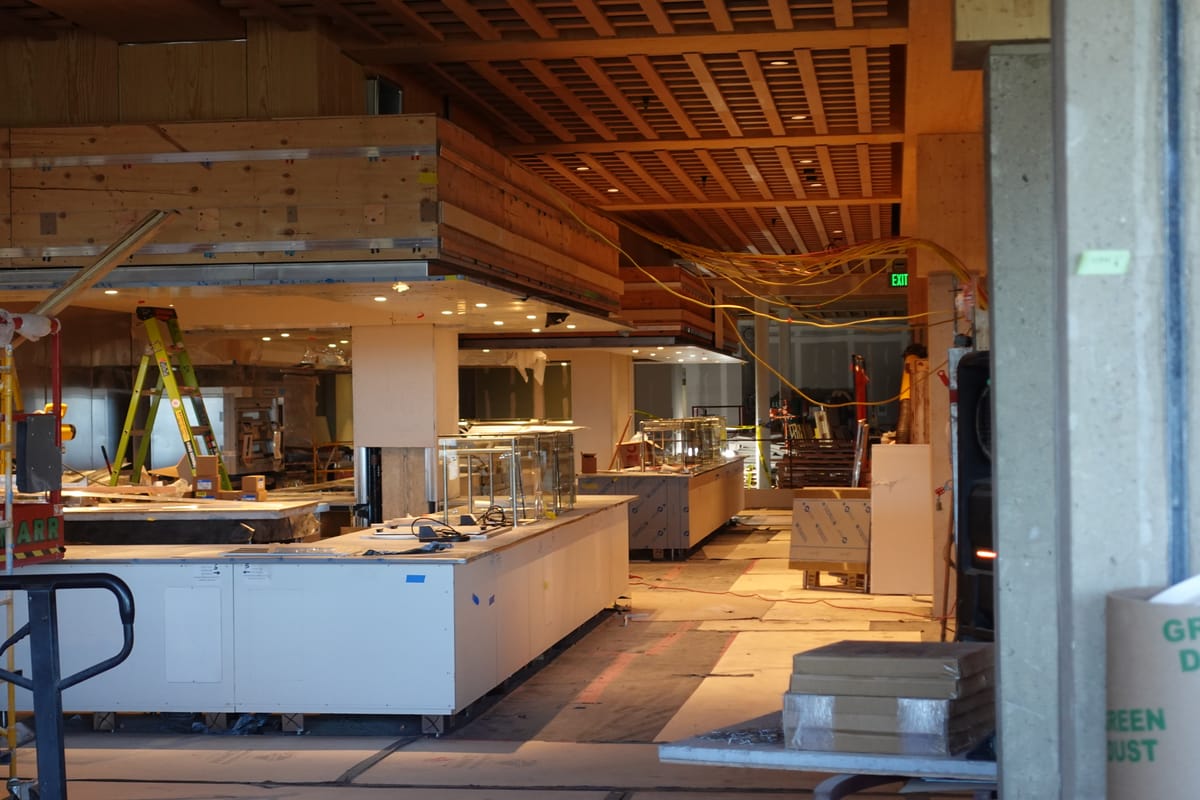
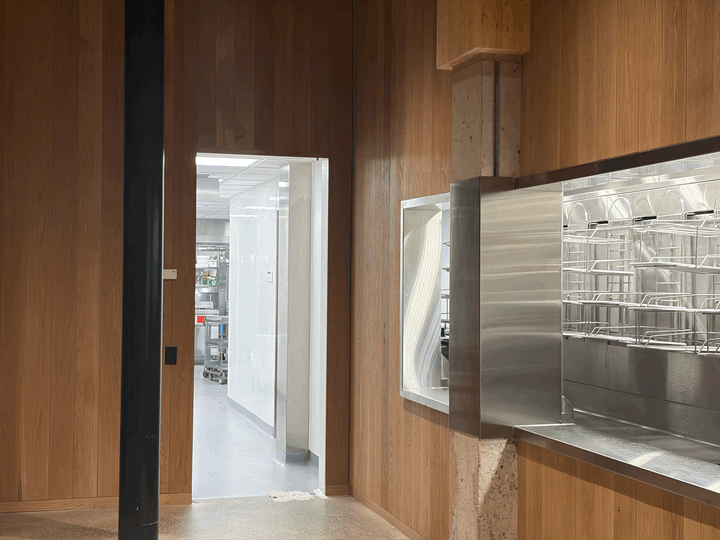
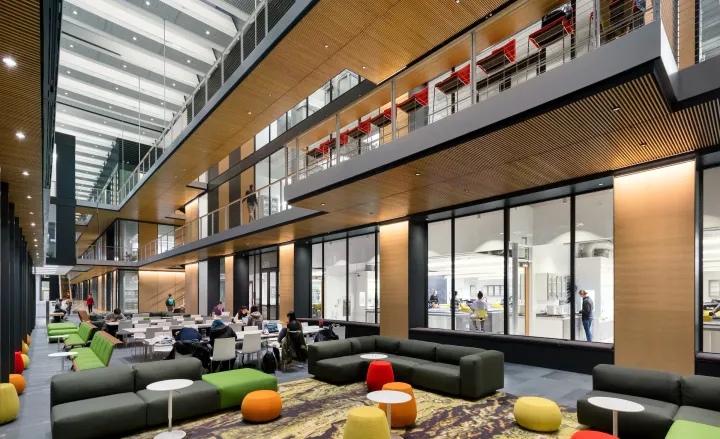
The second floor of the building will be dedicated entirely to the new dining center, featuring a central food service area with 14 culinary stations, 12 of which will be staffed. Kitchens will be located on the same floor behind the culinary stations. Student seating will wrap around the food service stations, with a total seating capacity of 900 — twice that of Valentine Dining Hall. There are also several reservable semi-private dining rooms for 8 to 10 students. Faculty and staff seating, as well as a low-sensory dining room for students who prefer a quieter meal, will be located on the side of the floor facing Keefe Campus Center.
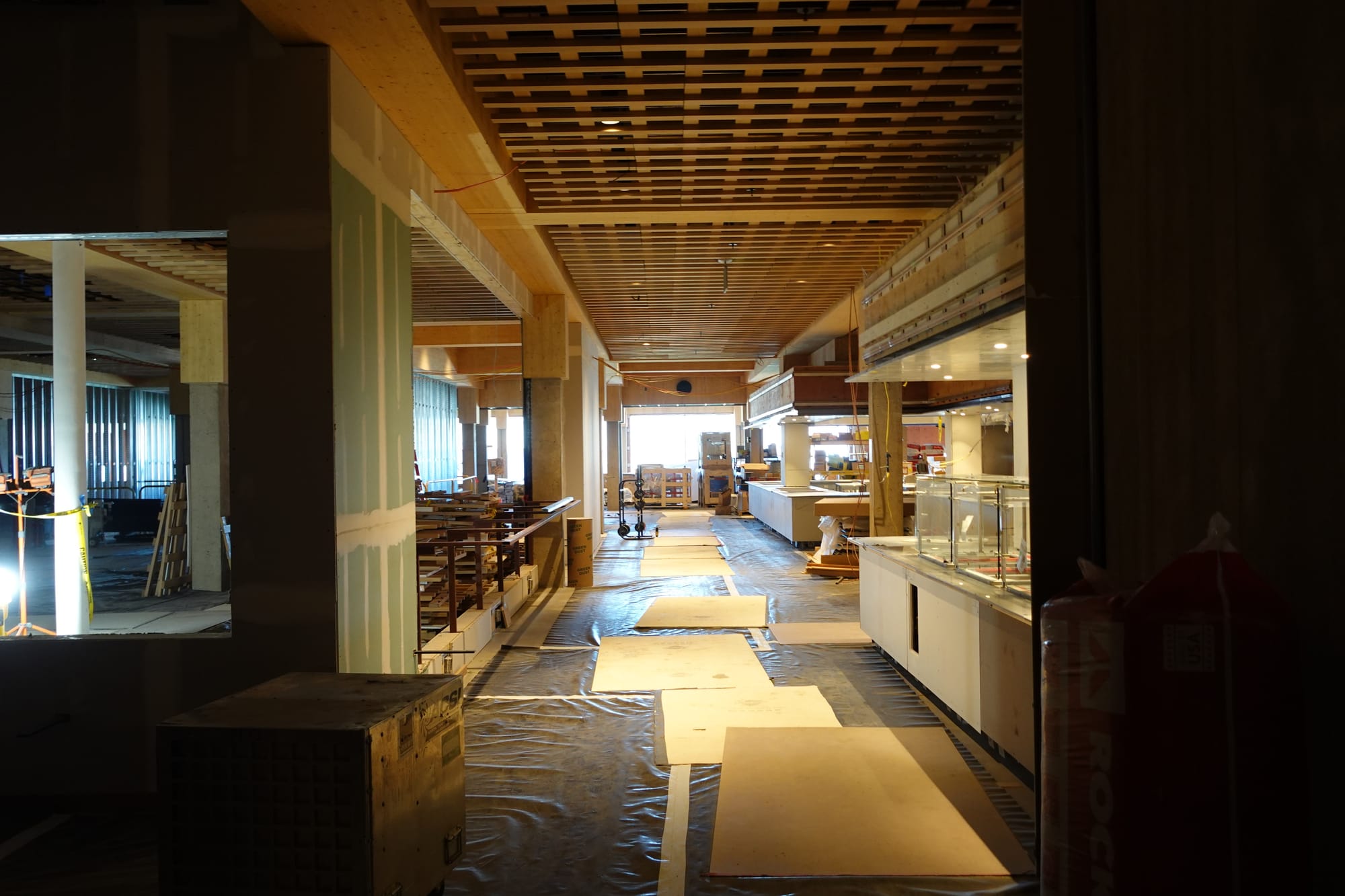
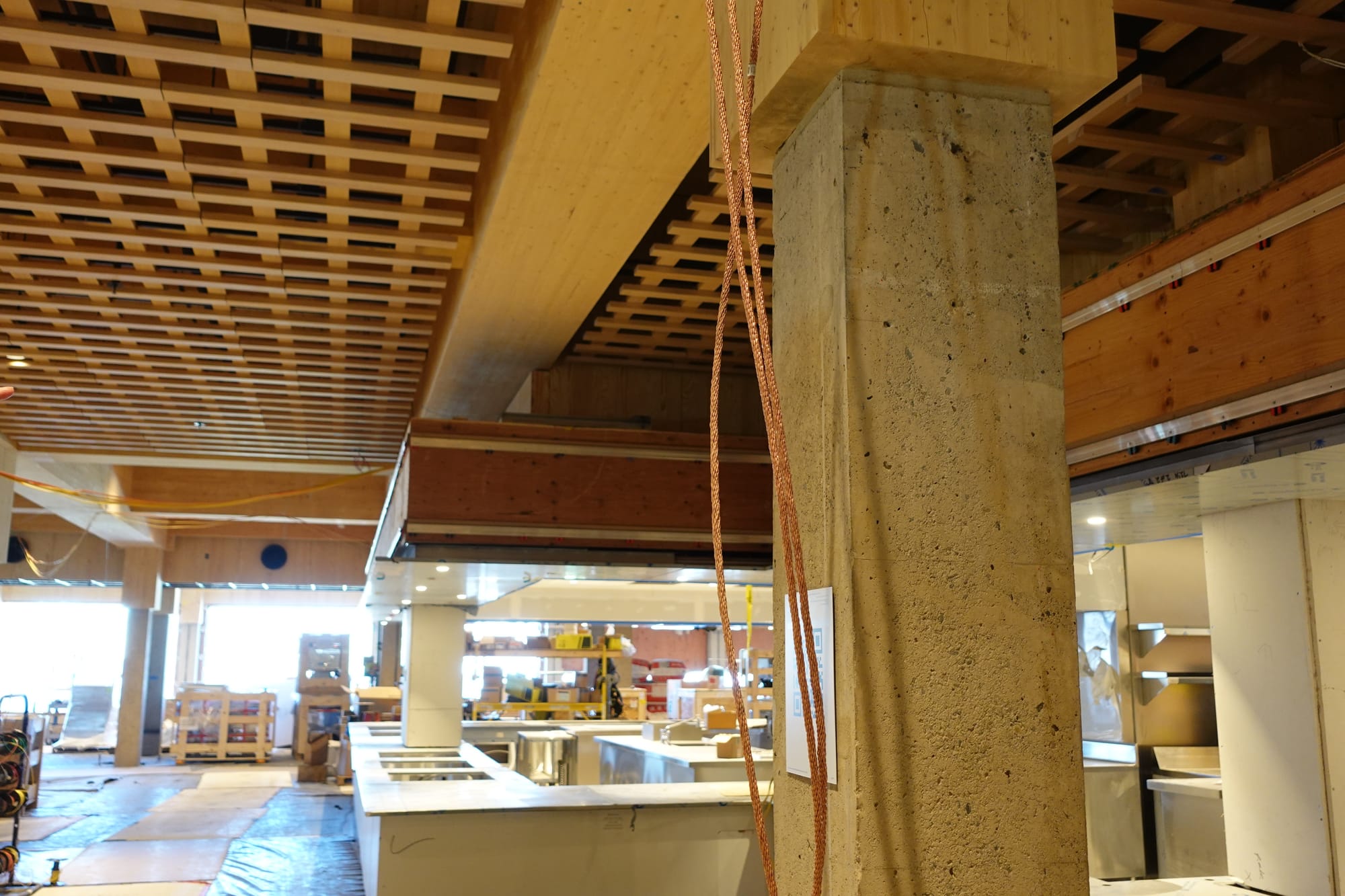
Davies noted that all concrete pillars on the second floor are remnants of the former Merrill Science Center that have been repurposed and connected to the timber ceiling. In addition, the entire Student Center reuses the former science center’s concrete foundation. This design measure reduces the building’s carbon footprint by 440 tons.
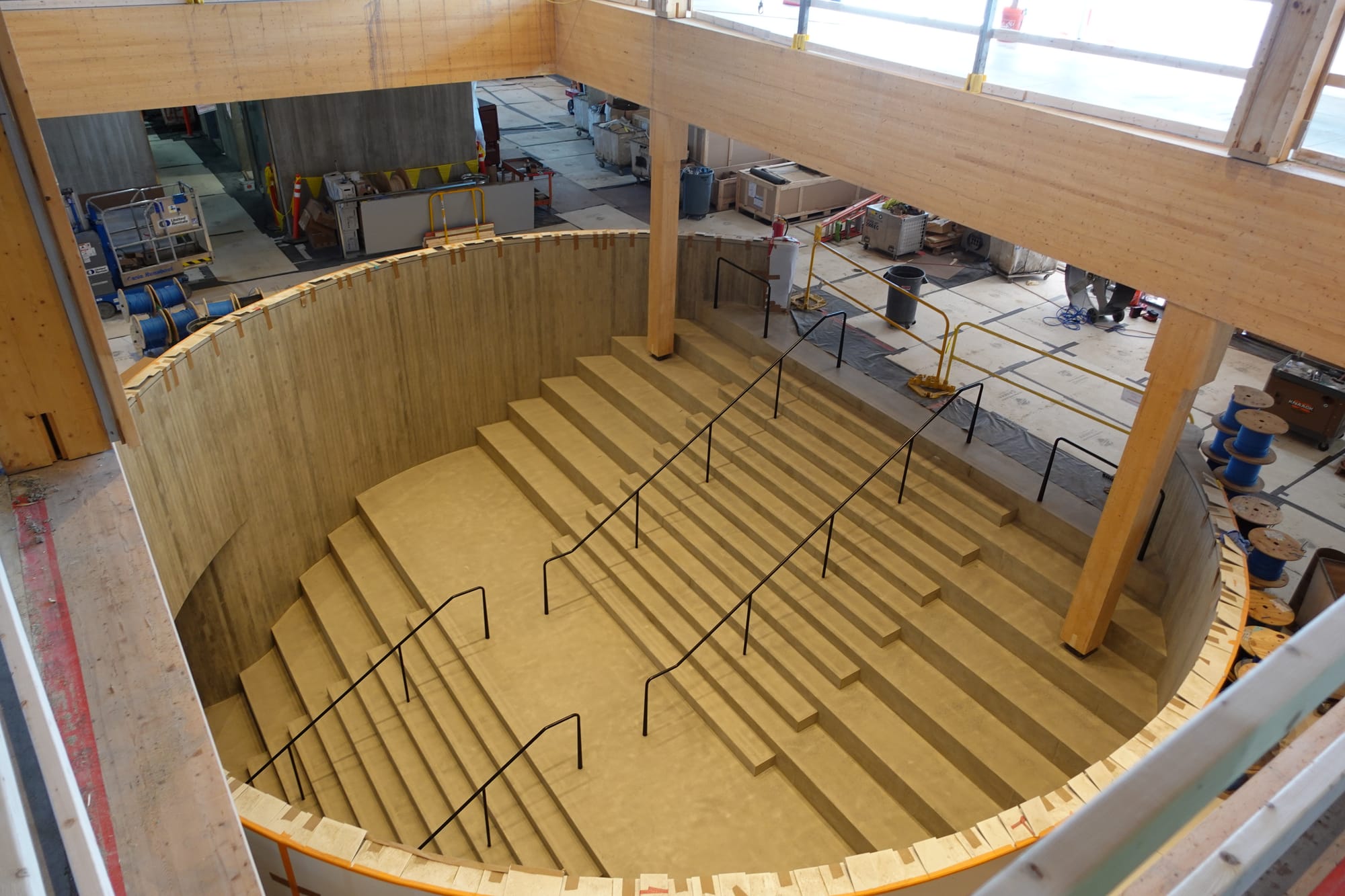
To reach the third floor, students will climb a large staircase with a circular opening that leads to the second main entrance facing Charles Pratt Dormitory and the First Year Quad. According to Davies, the staircase is a signature of the architecture firm, Herzog & de Meuron, known for their versatile use of raw concrete. Here, the circular opening is made out of smooth concrete that imitates the texture of timber. The staircase is located at the center of the building, with all other spaces — dining, resource centers, and student lounges — coming off left and right.
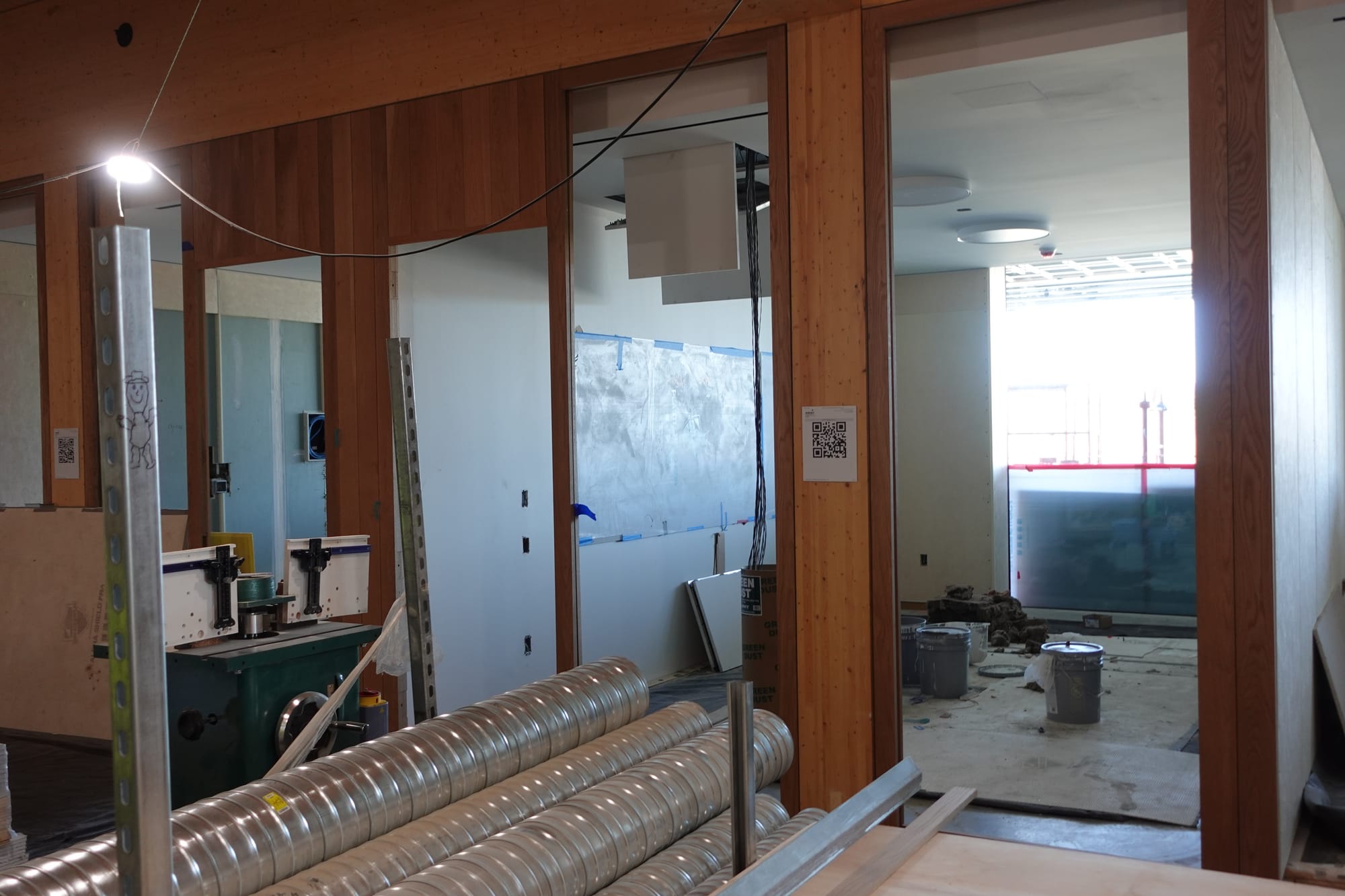
The third floor will house the Office of Identity and Cultural Resources (OICR), which will be in a suite with a common area and individual spaces for each of the community resource centers. There will also be a suite dedicated to student affinity groups, including La Causa, Asian Student Association, Jewish Student Life, and the veteran lounge. The floor also features a glass-encompassed winter garden, a cafe, a gaming room, multiple meeting and study spaces, and event rooms. An information desk, where Nicklaw plans to hire 20 to 25 student workers to serve as the center’s information team for visitors, will be located at the main entrance near the cafe. A large terrace with greenery, seating, and partial roof coverage surrounds three sides of the building on the third floor, looking out to the baseball field and Memorial Hill.
The relocation of student organizations and affinity groups to the Student Center, according to Nicklaw and Davies, is part of the college’s longstanding effort to create spaces that best meet these groups’ needs. The Student Center will be the college’s first-ever space designed to intentionally bring student organizations together.
“The precedent was that groups had been set in spaces because those spaces were available, not necessarily [because] they fit,” Nicklaw said. “Now, the college is trying to undo decades of those types of machinations by designing and building something specifically for student groups.”
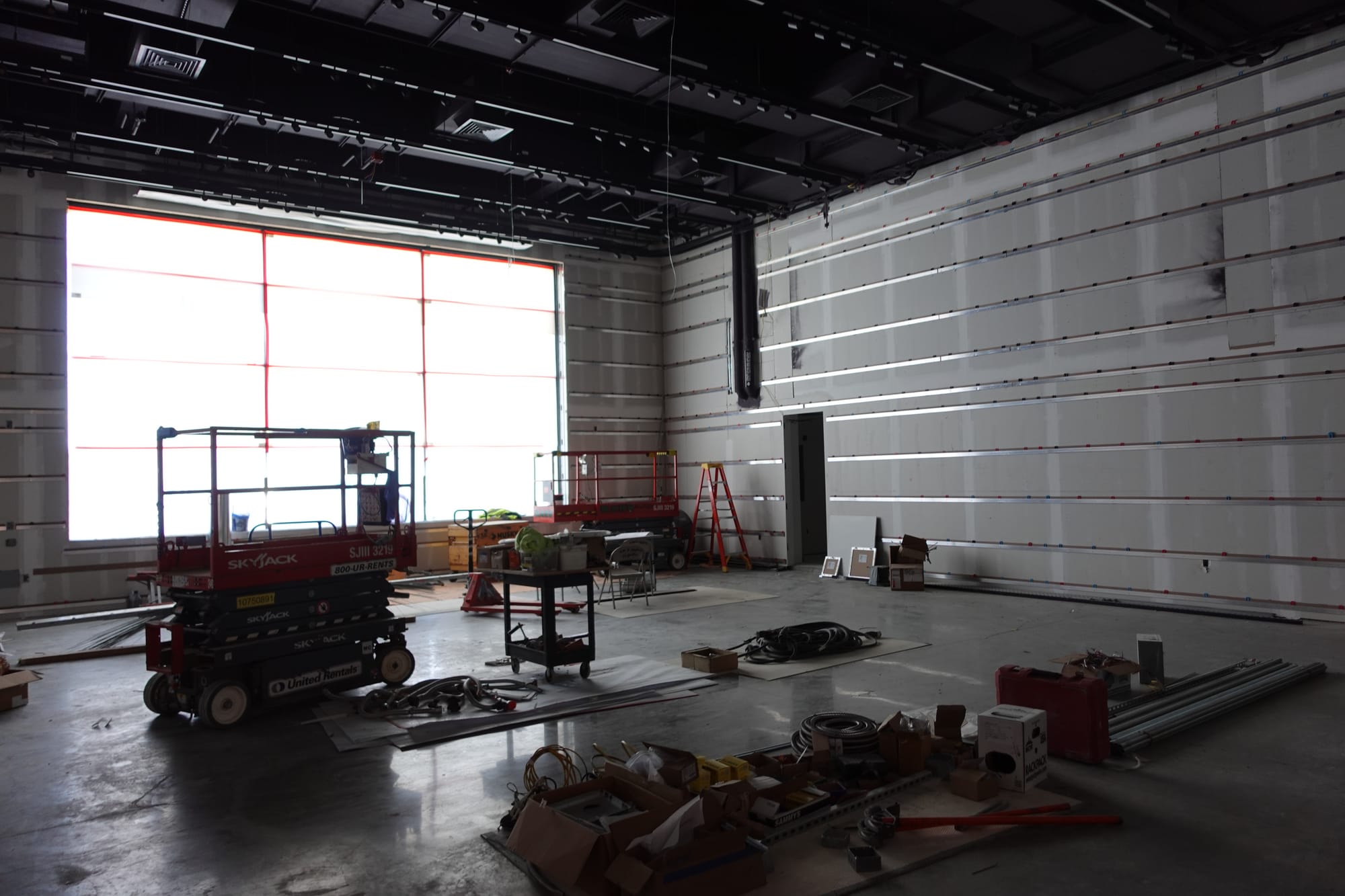
The top floor of the building features a multipurpose theater with acoustic walls and sprung floors, along with its own storage and green room. According to Nicklaw and Davies, this theater will be a space to host student plays, film screenings, Mr. Gad’s House of Improv shows, and even the jazz performances that currently take place in the Friedmann Room in the Keefe Campus Center. Across from the theater is an interfaith gathering space, a Muslim prayer room, a “movement room” with sprung floors where dance and yoga could take place, and a den-style student lounge with a vapor mist fireplace.
Nicklaw emphasized that the first year of operation will serve as a beta test of the new student center, as she will be working closely with the Office of Student Engagement and Leadership to gather data from campus events as well as direct feedback from students, faculty, and staff to better understand how the Amherst community can adapt to the new space. “I see a lot of opportunities to better track registration, attendance, cost, return, what we’re programming, how we’re programming,” she said. “I’m trying to instill some sort of longevity. This building’s going to be here forever, and we want to build processes that are evergreen.”
When asked about how the Student Center will change campus life, Nicklaw said its impacts will be “seismic” as a building of this scale is unprecedented. She also advises students to remain patient as they adapt to new spaces and new campus cultures.
“I always ask people for patience, because the way things look on day one isn’t how it’s going to look in year two and year three,” she said. “This is where student [feedback] is going to be integral. We want to feature our students, and really get them in here and make it vibrant.”
Editor’s Note, April 29, 2026: Several building and organization names were corrected.
Comments ()