

Daring to Chase the Perfect Musical Score — Alumni Profile, Mason Daring ’71
Honoring his college dreams of becoming a rock-and-roll star, Mason Daring ’71 has built a career composing music for big-time film directors.
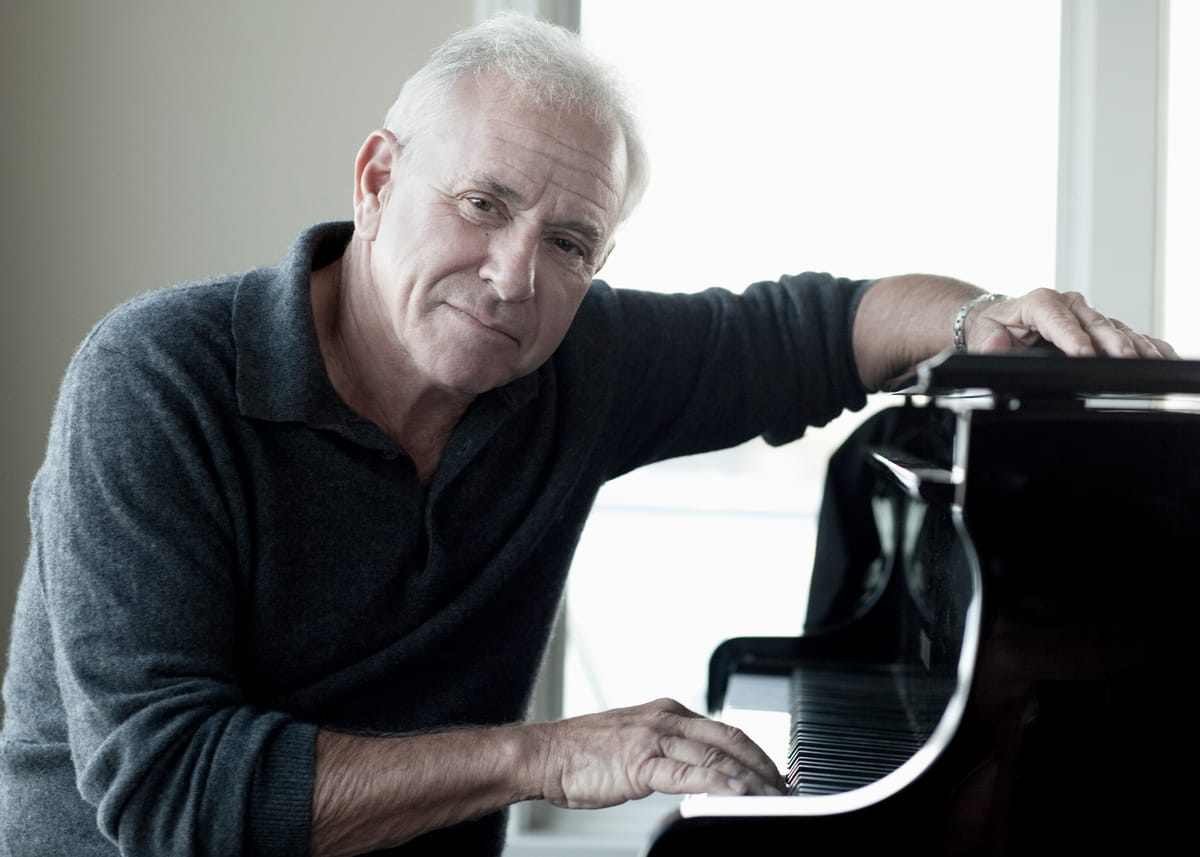
On the third day of his freshman year, Mason Daring ’71 noticed a posted vacancy note in search of a new lead guitarist for popular Amherst band in the late 1960s, “The Things that Go Bump in the Night.” Despite his reservations about the band’s name, he auditioned and got the job.
“That’s the worst goddamn name for a band I ever heard,” Daring recalled. “But we made a lot of money, so I forgave them.”
Since then, Daring has chased music his entire life. From law school to writing, producing, and eventually composing films, Daring’s passion for music never wavered.
Daring has primarily composed music for director and close friend John Sayles for almost all of his films — including “Return of Secaucus 7,” “The Brother From Another Planet,” “Matewan,” “Passion Fish,” and “Lone Star.” Daring has also collaborated with Wes Craven, Tom Hanks, Peter Yates, and Graham Yost.
After graduating from the college in 1971, Daring became an entertainment attorney before transitioning to working full-time as a composer for films and television shows, while also managing his own record label.
Finding His Key at Amherst
Daring remembered performing at one particular concert at Buckley Recital Hall, which solidified his decision to pursue music for a living and chase his dream of being a rock-and-roll star.
“It changed my life. I said, ‘You know, I want to do this. I want to write [and perform] songs now,’” he said.
While at Amherst, Daring completed an independent major in music. Beyond writing and performing music, he was also a member of the ski team and the Alpha Delta Phi fraternity, which granted him a fellowship to pursue writing music. Daring made it a point to take advantage of all the college had to offer. In the first semester of his junior year, Daring decided to do a domestic exchange program, spending four months at Voorhees University, a historically Black university in South Carolina.
As a white student, Daring did it because he was curious and “thought race relations were a big deal in America.” He also went because he thought it would help him become more serious about life and his future.
“I was goofing around too much,” he said. “I was just chasing girls, playing guitar, and I said, ‘I’m not taking advantage of Amherst the way I should.’”
Daring said Amherst organized the whole process and was very supportive.
“When I wanted to go to [Voorhees], I went to the president and the dean, and I said, ‘You know, it’s just something I’d like to do.’ They said, ‘That sounds like a great idea,’” Daring explained.
This freedom to do what you want, Daring hopes, is something Amherst will never stop providing to its students.
He also credited the Amherst music department for encouraging and supporting his music career, while also providing him with the skills and resources to do it professionally later on.
Daring recalled how Hampshire College had opened a four-track recording studio during his senior year, which he used to learn how to produce and record music. “My time slot was Saturday night, from midnight to 6 a.m. on Sunday morning, and I just stayed up all night recording,” he said.
By the time Daring had graduated from Amherst, he knew how to write, produce, and record his own music. “I give Amherst full credit for that,” he said.
Daring also mentioned two music professors, Peter R. Pouncey Professor of Music Lewis Spratlan and Professor of Music Henry Mishkin, as particularly important mentors who shaped his pursuit of music.
“They really believed that I had talent. If they hadn’t said that, I never would have tried,” he said.
A Rockstar Law Student
After graduating, Daring had planned to play music full-time with another band he joined during his years at Amherst. The band, called “Daring Jones Southworth and McNeer,” signed with Columbia Records but ultimately broke up before releasing its first record.
Daring spent the next couple of years in Boston, primarily as a solo performer, playing at bars like the now-famous Hampshire in House.
Law school then became Daring’s next venture: “I just got frustrated with the whole music thing. So I said, ‘What the hell, I’ll become a lawyer.’” He applied to Suffolk Law School in June of 1973 and enrolled a few months later in September.
But in between law classes and passing the bar exam, Daring couldn’t help but be drawn to music yet again. Daring used his middle name, Mason, when he would perform because, contractually, as a full-time law school student, he wasn’t allowed to work more than 10 hours a week. By going by his first name, Kevin, in law school, no one would recognize that he was actually breaking this contract. He eventually dropped his first name entirely and simply went by his stage name, Mason Daring.
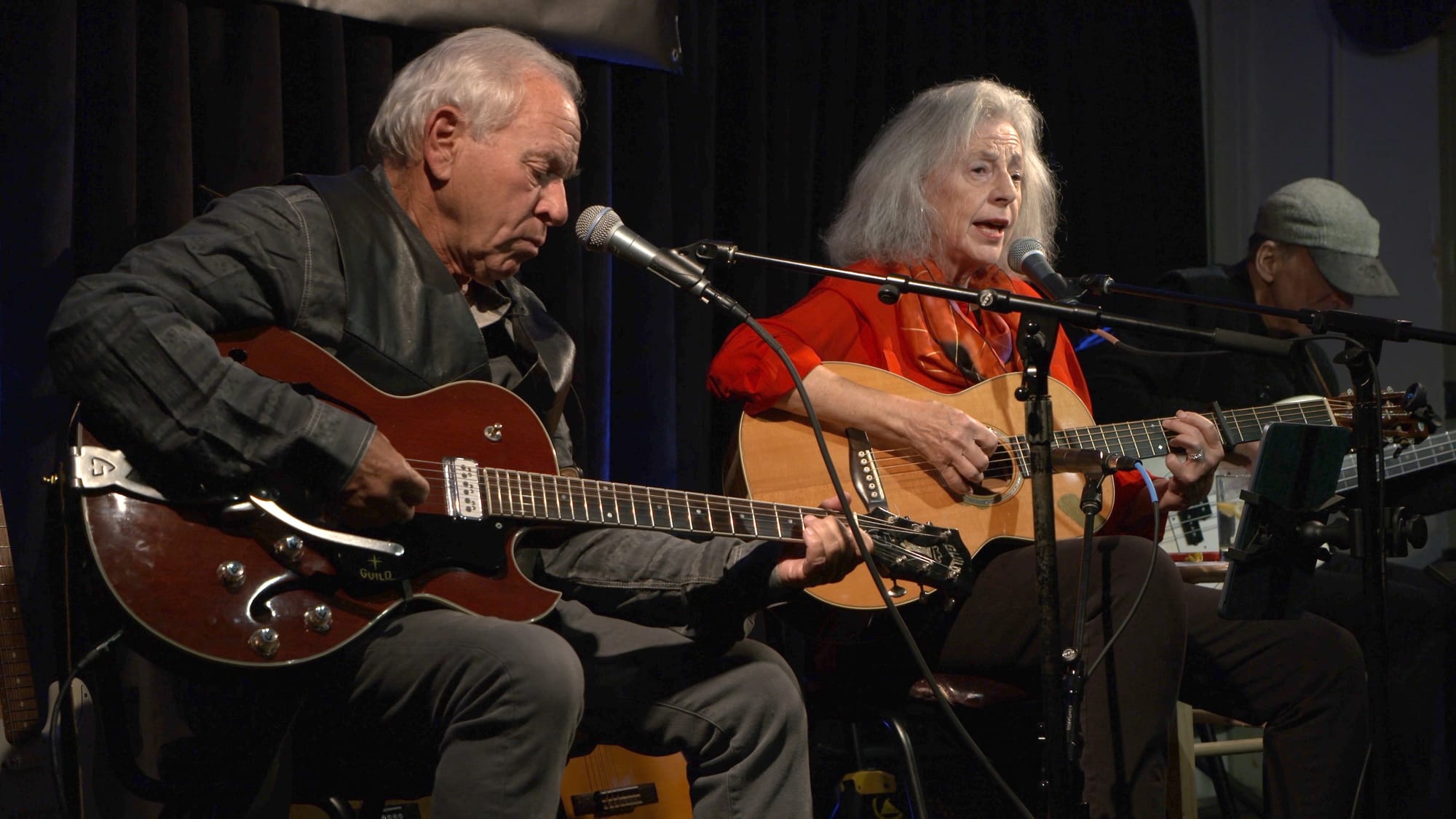
He also met musician Jeanie Stahl during this time, and the pair began playing and making music together; they still do to this day, 52 years later.
Scoring a Lifelong Career
After law school, Daring practiced as an entertainment attorney, something he already knew a lot about from the contracts he previously signed as an early-stage musician. Utilizing connections from the industry, he also began learning how to make movies on the side, working as an editor, writer, and producer for film and television.
Having already somewhat established himself in the entertainment industry, Daring had his breakout moment when he met Sayles, who was working on his first-ever movie, “Return of Secaucus 7,” and needed a lawyer. While hesitant at first, because many debut movies end up failing due to insufficient funds, Daring agreed to do the legal work for the film. After Daring shared some of his music with Sayles, he was eventually also asked to do the music for the film.
“He [then] asked me to be the lawyer and the music guy for his second movie called “Lianna,” Daring said. I said, 'I don’t want to be a lawyer anymore. I’ll get you a different lawyer, but I’d like to do your music.'”
Since then, Daring has composed music for 17 out of 18 of Sayles’ films, which, according to Daring, is rare in Hollywood. He considers himself lucky to have worked with big-time directors like Sayles, describing the difficulty of breaking into the business.
“If you are gonna write music, you better be goddamn good, because you’re not necessary, you’re an option, pal, and you better earn your way onto the screen,” Daring said.
Daring now spends most of his time in his hometown of Marblehead, Massachusetts, and is currently working on releasing a documentary about him and Jeanie Stahl titled “Marblehead Morning.” More than half of it is a concert film featuring songs recorded and performed by Daring and Stahl.
Daring has also been in talks to do the music for two other upcoming films, if they are made. “You never really retire,” he said. “If you can work with directors you like, it’s fun, you should [do it].”
Most recently, Daring was also unanimously named president of the class of 1971 at the recent annual meeting of class officers. “This is a position of absolutely diddly-squat, by the way,” he joked. “I have been promised it is free of rancor, class, money, and merit.”
To this day, Daring remains grateful to the college for setting him up for a successful and long-standing career.
“I tell people I’m the luckiest man you know, and I don’t know who you know,” he said.

Comments ()