

Editorial: The Future of Val
The Editorial Board examines the possible future of Valentine Dining Hall, offering some ideas to the administration.
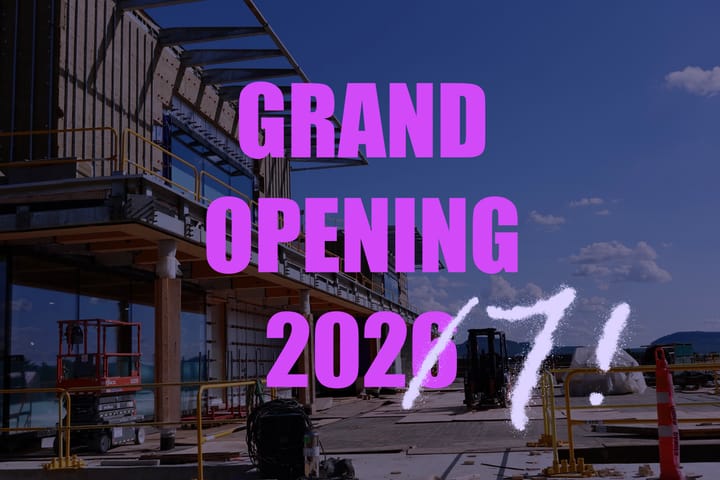
Let’s address the question quietly taking over campus: What, exactly, happens to Valentine Dining Hall (Val) once the new Student Center and Dining Commons (Student Center) is built?
In the absence of clear answers, we’ve heard plenty of rumors. We’ve heard tittle-tattles of a 2030 demolition. Or murmurs that it will be storage for a little bit. Maybe the Mead Art Museum will be moving. But there will be NO second dining hall.
What we haven’t heard (at least not loudly or clearly) is a simple question: What do students want? And given that students are both the primary users of campus spaces and the paying members of this institution, that question seems like a reasonable place to start.
So before timelines solidify and decisions harden into blueprints, we, the Editorial Board, want to offer our honest thoughts on what Val’s future could be — and what it should be.
Proposal #1: The Pond
Allow us to offer a modest proposal — and yes, we’re going to start with a somewhat satirical one.
If we must lose Val, then at minimum we should be compensated with waterfront property. Smith College has a lake of its own. Mount Holyoke College has two. The University of Massachusetts, Amherst has a respectable body of water strategically placed behind its brutalist masterpieces. Hampshire College has a pond. We, a proud institution of higher learning, have seasonal puddles. Which, respectfully, is not enough. Bring back Lake Hitchcock, or at least a miniscule version of it.
Call it climate-forward campus design. Call it regional competitiveness. Call it student morale infrastructure. Call it what it is: Pond maxxing. Yes, we are mostly joking. But also — are we?
Proposal #2: Third Space or We Revolt
On a serious note: We love “third spaces,” which if you don’t know are a social environment outside of home (the first space) and work (the second space) where people gather for community connection. People love talking about third spaces. We love putting “third spaces” in strategic plans. But where, exactly, are they?
For all of Val’s architectural quirks and infrastructural struggles, it holds something rare on this campus: capacity. Yes, right now it is at capacity — painfully and obviously so. Anyone who has circled the dining hall during the lunch rush at 12:55 p.m. scanning for a single open chair knows that feeling intimately (oh no, you might have to sit next to someone new!). Val can hold a crap-ton of people. And until they knock it down, which we’ve heard it will be, it should be used to hold the crap-ton of people there are.
Once Val is no longer a dining hall, that space presents an opportunity. It could become what the Powerhouse was perhaps meant to be — a true large-scale social and event hub — except centrally located and actually used.
Right now, our social scene can feel like the “eight different party problem:” 40 people here, 25 people there, one DJ inexplicably marooned in a common room, and the unfortunate freshman who trekked to the Powerhouse (which, respectfully, is far away, sort of odd, and next to the police station — a combination that does not scream “carefree Saturday night”).
Val is big. Val is central. Val has the slight chaotic neutral energy required for 200-plus people in one room. If you glance at the capacity plaque across from the trophy case near its North Campus side, you’ll notice something remarkable: It can hold a significant portion of the student body: 1,880 (without tables and chairs).
If the administration does not want a second dining hall, that’s one decision. But we still need overflow space. We still need flexible, reservable venues for events, performances, organization gatherings, formals, and the 10 Things I Hate About You party aesthetic. We need somewhere to exist that is not a dorm common room capped at 99 people because more than 99 people want to be there.
Val could be that space. A true large-event hub. A real third space. And while we’re at it: Maybe we keep the balcony. Truly, all college students want is a porch or balcony with string lights. Is that too much to ask?
Proposal #3: A Greenhouse. No, Seriously.
If we’re dreaming big for a moment: Give us a greenhouse. Not one tucked away on the second floor of the Science Center, but something closer to the scale and presence of the gardens at Smith College Botanic Garden that is open to the public and to everyone on campus.
Imagine prime campus land used for something growing. A public greenhouse at the literal heart of Amherst. Study tables among plants. Sunlight harnessed in February. STEM majors wandering over from the Science Center and remembering that the rest of campus exists. Humanities majors discovering chlorophyll in community.
It sounds whimsical, but it gestures toward a real concern: Where is the center of campus shifting?
Right now, much of STEM life happens at the Science Center. That’s natural — it’s where all labs and classrooms are. But as the new student center moves closer to that side of campus, the gravitational pull shifts with it. Val has long acted as a kind of hinge point — geographically and socially central. If that anchor disappears and the new hub forms closer to the Science Center, we have to ask what that signals — that we are centering STEM students, as the rumors say.
What would it look like to intentionally bring students back toward this part of campus?
And practically speaking, a greenhouse is not just a building. It is a humid apology for New England winter.
Proposal #4: The Mead? The Museum? The Middle of Campus?
We’ve also heard whispers that the Mead Art Museum could move. That possibility raises a larger question: Is this space meant primarily to serve the Amherst student body, or to function as a more public-facing destination that draws visitors in from town and beyond?
Both are worthwhile goals. But they are not the same goal.
Whoever occupies one of the most central, visible plots on campus will shape the everyday rhythms of student life. Even if this area becomes the “former” center once the new student center opens, it will still sit prominently along the road — something that many people drive past. Right now, Val creates a kind of buffer between campus and traffic. It gives us a sense of enclosure and separation from the road. If that building disappears entirely, the campus-road boundary will feel very different — more exposed, more open. That could be exciting. It could also be disorienting. The architecture of a place quietly shapes how protected or permeable it feels.
Placing the museum there would say something intentional about visibility and access. It would signal that Amherst values public engagement in a prominent space. At the same time, it would shift a large, day-to-day building from primarily student use to a more curated cultural destination.
There’s also an argument the other way: Could it be interesting to position the museum closer to town, strengthening the literal and symbolic bridge between Amherst and the broader community?
It is about what we center — students, visitors, or some carefully balanced combination — and how we want campus to feel at its most visible edge.
Proposal #5: Anything But a Parking Lot
We say this with love and urgency: Please do not make it a parking lot.
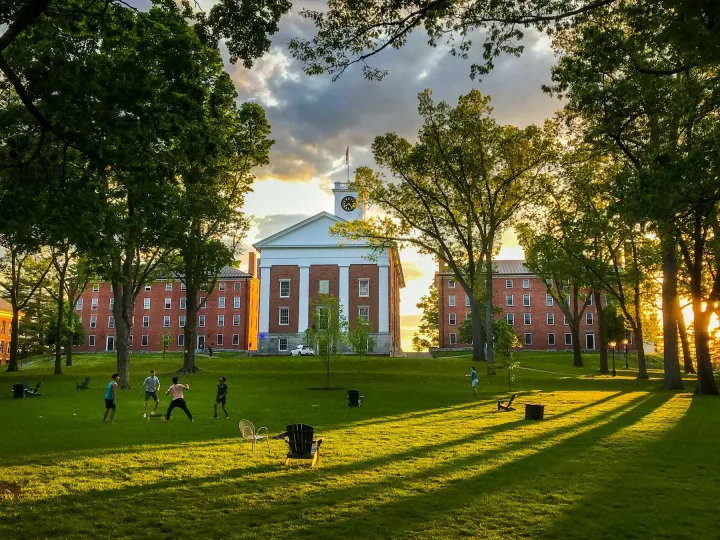
We understand that parking is a real need. Truly, we do. But please — not there. Not in one of the most beautiful, historic, and visible parts of campus. Framed by Fayerweather and Chapin, that stretch of land is beautiful. Additional parking is necessary, but let’s find a solution that doesn’t sacrifice one of campus’s most striking areas to asphalt.
Why We’re Writing This
We understand that planning takes time. Capital projects come with constraints — budgets, engineering realities, donor requirements, and acronyms that can make anyone’s eyes glaze over. Change doesn’t happen overnight.
But from a student perspective, the process feels distant. Clear timelines from administration are scarce, and open invitations for input are limited to formal committees that most students don’t sit on. Rumors and half-answers have become our main source of information, which makes the future feel decided before we’ve even had a say.
If decisions are being shaped now, then now is exactly the moment to ask the people who will actually live with the results.
Before that chapter closes, we want the chance to imagine what comes next. It’s a chance for the campus to dream together about the spaces that define our community.
Unsigned editorials represent the views of the majority of the Editorial Board (assenting: 8; dissenting: 0; abstaining: 2)
Comments ()