

Educators Discuss Censorship in K-12 Classrooms
On Nov. 19, educators Jamel Donnor and Brendan Gillis discussed ongoing censorship in K-12 history education under the current federal administration. The talk examined the role of state education standards in combating censorship, as well as broader concerns about the future of history education.
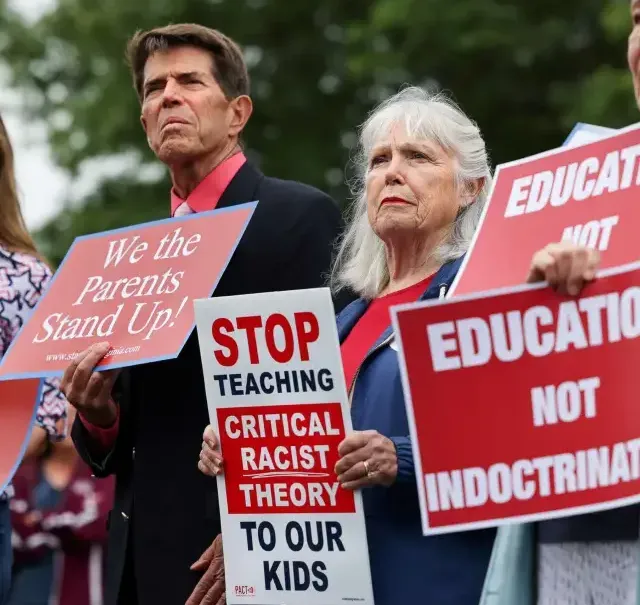
On Nov. 19, the Center for Humanistic Inquiry (CHI) Salon welcomed students and professors to a discussion titled “Politics, Democracy, and Censorship: The Future of History Education in American Public Schools.” The discussion detailed the modern political battleground of K-12 history education in the United States.
Jamel Donnor, associate professor of education at the William & Mary School of Education, and Brendan Gillis, the director of teaching and learning at the American Historical Association, were invited to campus to discuss ongoing threats to K-12 history education and offer insights into the struggle for political control over curriculum. The event was hosted and moderated by Charles Hamilton Houston Professor of Black Studies and History Stefan Bradley, Department Chair of History Ellen Boucher, and Five College Professor of Education Studies Kristen Luschen.
Gillis opened the discussion by explaining that a dichotomy of hope and fear is at play in modern history education. He explained that many teachers are still professionals who can continue to teach important history despite the “chaotic” changes in education policy under President Donald Trump’s administration to limit the autonomy of teachers. “I find [these changes] alarming, but there are things we can do about it,” he said.
Both speakers made sure to distinguish between state academic standards and executive orders issued by the Trump administration. Donnor clarified that executive orders are not laws and are “only as good as [the] enforcement” that is passed from the Justice Department to the states, while the states themselves still have power over their own education systems.
Gillis analyzed the distinct way in which censorship of history education is playing out in Maine and Texas, demonstrating how different states are polarized on this topic. Maine is one state that is experiencing federal pressure to change its state schooling policies, but even it is not being forced to abide by the section of the executive orders that Gillis identifies as focusing on “patriotic education.” Gillis said that the state government of Texas, however, has “already adopted [a] radically revised [history] course sequence” without direct pressure from executive orders.
Donnor went on to emphasize the importance of knowing state policy. He described how the laws of Massachusetts shape education programs by ensuring schools teach foundational American documents like the Constitution while avoiding the perpetuation of stereotypes about minority groups.
According to Gillis, state education standards are the key to understanding the future of history education. “Standards themselves are not always super exciting, and [this] can often hide the most compelling changes,” Gillis said. He emphasized that standards are a “participatory process” that is shaped and expanded by society, while simultaneously shaping the youth into learned members of society.
Both speakers expressed reservations and worries about the future of history education. Donnor’s main concern was the growing inaction due to a “lack of critical thinking,” which is creating “collective amnesia” surrounding ongoing attempts to censor history education. “There’s always this notion of hierarchy [that] that’s just the way things are, and you’re supposed to accept it,” Donnor said. “We create this docile population that then doesn’t critique things or search for better.”
Gillis worried about the potential that artificial intelligence (AI) would take over the education field, citing Bill Gates’ claim that teachers could be replaced by AI education programs in the future. He held that critical thinking is what history education is best at promoting, and also what is most at risk in the prominence of AI and censorship.
Students enjoyed the talk, with many in the audience engaging with the questions about the future of education raised by the speakers.
Gillis concluded the talk with a message of hope, acknowledging “the incredible questions that our students will ask — the incredible ideas that they have,” and how such actions can protect the future of history education.
Editor’s Note, Dec. 7, 2025: The article has been updated to correct a mispelling of Jamel Donnor’s name.
Comments ()