

Exploring Both Sides of The Brain — Alumni Profile, Claudia Kirsch ’86
Having to restart a career from the ground up might come as a letdown to some, but Claudia Kirsch ’86 views her non-linear journey through the field of neuroradiology as a wonderful one.
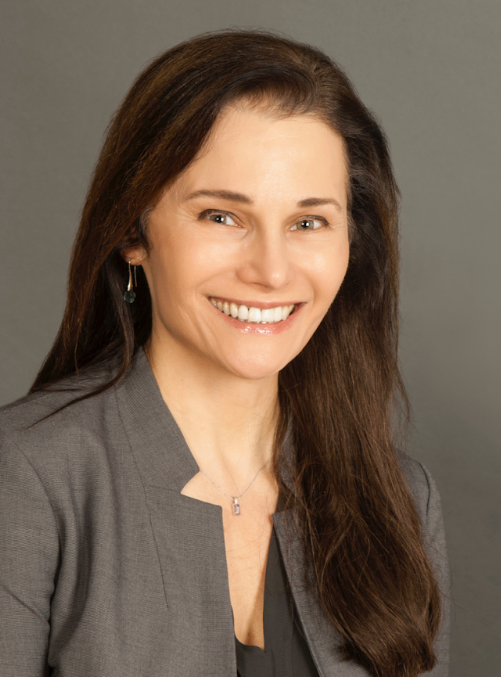
Claudia Kirsch ’86 leads a life defined by duality. She was a neuroscience and a fine arts major at Amherst College. She is both a student and a professor of neuroradiology at the Yale School of Medicine. That duality is key to her work, where she utilizes artificial intelligence (AI) to analyze skull pathology caused by viruses. Her creativity and methodical approach are integral to her being the researcher she is today.
Embodying the Open Curriculum
As a child, Kirsch was exposed to her mother’s passion for art and her father’s work in the sciences, which sparked her love for both. On the one hand, her mother loved the arts, and she grew up being shepherded from one art museum to another. On the other hand, she was exposed to the sciences and medicine early on by her father. “[My father] was a neurosurgeon, so I thought everyone’s dad was on call,” she joked. She recalled being particularly fascinated by the skull models he kept in his study and the discussion of diseases they had at the dinner table. These influences led Kirsch to become enthralled with medicine at a surprisingly young age. “I remember, at age four, drawing him a picture of what I thought cancer was — a bunch of white blood cells beating up the red blood cells.”
When she was in high school, Kirsch knew she wanted to attend medical school and began the college process with a focus on achieving that goal, rather than considering how she wanted her undergraduate experience to unfold. This mindset changed, however, when her uncle urged her to stay focused on the present. She remembers him telling her, “You have an opportunity to get a great liberal arts education, [and] you may never get that opportunity in your life again. Don’t waste it.”
Following his advice, she began researching top liberal arts colleges and ultimately landed on Amherst because it provided her with the unique opportunity to explore a dual course of study in both science and art. Kirsch, who applied early decision, “was thrilled to be accepted.”
A double major in neuroscience and fine arts, she described Amherst as a place where she could fully utilize “the duality of [her] brain.” At Amherst, Kirsch’s favorite courses ranged from Latin to biochemistry to a class on the history of Israel, taught by the Dwight Morrow Professor of History and American Studies, Emeritus Gordon Levin. She engaged in summer research with the “fantastic” Assistant Professor of Chemistry Ruth Stark, and explored her creative side through her fine arts coursework. While her two majors appear very different on paper, Kirsch said that neuroscience and the arts complement each other.
For example, Kirsch’s senior thesis at Amherst, entitled “Navajo Medicinal Art: The Sandpaintings that Heal,” examined how traditional sand paintings functioned in Navajo healing ceremonies as a powerful form of medicine. Kirsch was inspired both by her father, who was then chief of neurosurgery at the University of New Mexico, and her parents’ collection of Navajo art. Working with advisors from both the art history and anthropology departments, she found ways to meld her interests together.
Today, Kirsch values the friends she made during her undergraduate years more than any information she learned in her classes, as “[she] was surrounded by some incredibly intelligent, brilliant people, and to [her], that was one of the most important things.” She described her peers fondly, remembering her days in the Phi Delta Sigma fraternity alongside author Dan Brown ’86 and on the debate team with Delaware Senator Chris Coons ’85. “To know those friends from way back in my college days is really kind of a remarkable experience,” she said.
Despite the small size of Amherst, multiple people whom she graduated are involved in the field of neuroradiology. As she has moved and taken on new roles throughout her career, many of Kirsch’s former classmates have become close colleagues.
Try, Try Again
Kirsch’s first foray into the world of radiology came directly following her Amherst graduation in 1986, when she joined the Biomedical Laboratory in the life sciences division at the Los Alamos National Laboratories. She spent that year examining regeneration of the spinal cord under high-field 9 Tesla MRI, research that won her the American Society of Neuroimaging’s Oldendorf Award in 1987. Kirsch was the first woman and first trainee to ever receive this award, which recognizes the best abstract submitted on original neuroimaging work in the nation.
The Oldendorf Award was just the first of many honors Kirsch would receive throughout her career. Kirsch had “always wanted” to do research, but recognized the additional benefit of gaining clinical experience. In the fall of 1987, she enrolled at the University of New Mexico School of Medicine and was inducted into the Alpha Omega Alpha national medical honor society upon her graduation in 1991. Although she called this a “wonderful” honor, she considered her experiences outside the classroom through rotations and internships as the most defining parts of her medical education.
Throughout internships, residency, and fellowship experiences, Kirsch focused on imaging of the skull base. She explored different high-field MRI techniques, publishing on their efficacy in evaluating diseases of the head and neck. Kirsch eventually began her first post-educational position as associate professor of neuroradiology at the University of Medicine and Dentistry of New Jersey (UMDNJ), now part of the Rutgers University medical system.
Before long, Kirsch shifted gears. She had recently gotten married and had her first baby when the new family uprooted their life in New York to move to London. “My husband used to work in the World Trade Center, and he wasn’t as happy with his job, and he got an offer to go to London,” she recalled. “So he said, ‘Would you want to go to London?’ And I said, ‘Well, okay, sure.’” Despite having been on the short track to becoming a full professor at UMDNJ, Kirsch said she was grateful they moved when they did, just three months before 9/11.
Due to different medical licensing requirements in England, she struggled to settle into her new professional environment. Kirsch gradually rose back through the ranks. Starting out as an attending in neuroradiology at the Royal London Hospital, “teaching [and] running the head and neck tumor board.” After four years in the throes of hospital life, reading cases and treating patients, Kirsch was promoted to lead the academic radiology division. Kirsch found that she excelled in her newfound home, only for “home” to move again.
Kirsch returned to the United States on what was supposed to be a brief visit for her brother’s wedding in San Diego. But after taking their older daughter to a baseball game during the trip, Kirsch’s husband wondered whether it might be beneficial to raise her, along with their newborn child, in the country where their parents grew up. “While on the beach, my husband said, ‘Call [the University of California Los Angeles] and see if they need someone!’” Kirsch explained. “I called, and then [the] next day interviewed [with] Chair of Radiology Dieter Enzmann, who said ‘We are looking for someone, doing exactly [the research] you are doing,’ [and] offered me the job at the interview.”
A year later, the family arrived in southern California. Despite her previous experience in neuroradiology, Kirsch once again had to navigate the tenure track from the beginning. “They said, ‘Well, all the work you did, you know, for the past five years in the [United Kingdom] is great … but we’re not going to count [it],’” she said.
After years of family-driven career changes, Kirsch’s next move was driven by her work. In 2009, she was recruited to the new head and neck ENT program at the Ohio State University Medical Center, where she quickly became an associate professor. A desire for her family to return to the East Coast, combined with the opportunity for further career advancement, led Kirsch to move again, eventually leading to her current position as a professor of neuroradiology at Yale School of Medicine in 2022.
Even though it took her longer than may be considered “typical” to reach such a position, Kirsch regrets nothing about her journey. “All along the way, I’ve learned that it doesn’t really matter what’s kind of happened to you, it’s kind of what you choose to do with it.”
Back in the Classroom
Today, Kirsch is involved in the field of neuroradiology both as an instructor and a student. In describing her move back to the East Coast, she explains, “One of the key reasons [I moved] is that I wanted to go back and complete a Ph.D.”
She wanted to pursue this degree so she could conduct in-depth research inspired by her own experiences during the pandemic. “In March 2020, I got very sick,” Kirsch said. “I had case after case of horrible neurologic outcomes … including venous thrombosis, strokes, inflammation, and yet here I was recovered.”
Kirsch’s doctoral research employed AI and high-resolution MRI imaging techniques to study viral diseases of the head, neck, and skull base, including the mechanisms of the human papilloma virus (HPV) and Covid-19 viruses.
She said that she “really wanted to dive deep and see if we could apply advanced imaging and artificial intelligence to better understand the mechanisms of disease.” Her research, utilizing 7 Tesla high-field MRI techniques, has successfully identified small nerves containing ACE-2 receptors, which regulate blood pressure, in the olfactory tract that may serve as a site for viral entry into the nervous system. These receptors had been largely overlooked in previous neurological research, but as Kirsch’s findings demonstrate, “They’re there. We just didn’t appreciate them.”
Kirsch’s return to the other side of the classroom has reinforced her appreciation for the unique challenges of academia. “It’s a lot of work for those three little letters,” she laughed. Despite the challenge, Kirsch said that the experience is “absolutely worth it,” and looks forward to defending her dissertation soon.
The field of neuroradiology has allowed Kirsch to combine the dual influences of her innate passion for science and her desire to help others. Every one of her research questions is developed with the benefit of patients in mind; every biomarker, disease mechanism, and structure that her neuroradiology work reveals information that can be used to improve patient treatments. As she explained, “When you have that ‘A-ha’ moment or you see something, it’s a phenomenal feeling, literally phenomenal. And if you can do something that helps the patient, even better.”
A Modern Scientist
Kirsch acknowledged the challenges that come with being a member of the scientific community in the current climate of the U.S. However, she refuses to be defined by such challenges, instead aiming — as she paraphrased from Albert Einstein — to “find clarity in adversity” and recommit to her research. To her, politics and ideologies come and go, but “science always wins out.”
More than anything, Kirsch encourages STEM students to remain dedicated to the field they love and to continue fighting for opportunities, even in the face of such uncertainty. In fact, she thought this uncertain time meant that “there’s never been a better time” to go into the field. “There’s always going to be the naysayers … You should always stay the course of doing what you love doing, because there will be a need,” she said.
Kirsch believes that disease and viruses will always exist, and thus, there will always be a need for research. She predicted that lasting symptoms in the hundreds of millions infected by Covid-19 will necessitate more research and scientific education than ever. At the end of the day, Kirsch urges students to ask themselves, “How do you want to be remembered?”

Comments ()