

For the Love of the Game: Beyond “Heated Rivalry”
You have probably heard of “Heated Rivalry,” a show depicting the romance between two hockey players that has taken the world by storm. In light of the series’ popularity, Contributing Writer Irisa Teng ’29 shares sports media recommendations that make up for elements “Heated Rivalry” missed.
On a chill weekend in J-term, I sat down with my friends to watch “Heated Rivalry,” (2025 – ) two months late. I did not expect to be blown away by its plot or its filmography, but based on its widespread reception, I, at the very least, expected to fall in love with the queer romance. No matter how trope-y its execution or premise, I wanted to be another one of its sycophants, chanting, “I don’t care, but I ship it!”
Instead, I watched a show that was wholly irrelevant to hockey and therefore wholly unromantic. “Heated Rivalry” fails not just because it forces a chemistry between the two characters, but because it neglects to highlight a single complete hockey match and therefore, it misses out on a euphoric, exhilarating world of potential that underlies the foundation of romance and sports in the first place.
Sports matches, by definition, carry a narrative. Even just through scoreboard updates, each game has the potential to tell a heroic underdog tale, a neck-and-neck tiebreaker, or an obliteration by an intimidating team. The push and pull of the game builds a nervous anticipation that causes us to scream at our TVs.
This is why romance, and especially slow-burn romance, is a parallel genre to sports. Chemistry is developed through unresolved tension, and with each opportunity to get together that the characters ruin, we become more and more invested, more and more desperate. In order for romantic media to be effective, the audience must want to see the characters get together before they themselves make a move. This characteristic is especially important (yet lacking) in “Heated Rivalry,” whose marketability depends on an eight-year “situationship” tagline.
However, rather than echo already existing criticisms about “Heated Rivalry,” I will offer both queer and non-queer, sports and non-sports media recommendations that capture the essence of sports and romance: creating the game. I have separated them into two categories: conventional sports and death games.
Matches Made on the Court
- “Challengers” (2024) directed by Luca Guadagnino
“Challengers” is notorious for centering a toxic, bisexual love triangle. Yet it also doesn’t forget its unique identity as a tennis movie. Key conversations and events happen on the tennis court, and not only are plot points embedded in the game technique, but they are also nonverbal, for example: Patrick (Josh O’Connor) touching the tennis ball to the neck of his racket before serving).
Like “Heated Rivalry,” the plot of “Challengers” spans over a decade, but unlike “Heated Rivalry,” the film develops layers to each character’s complicated relationship with tennis and each other, with a runtime nearly three hours shorter. It manages to save time for critical tennis matches, while still placing due emphasis on petty squabbles and romantic beats.
- “Marty Supreme” (2025) directed by Josh Safdie
For a movie that has an overwhelming number of side quests, “Marty Supreme” still manages to bake central character motivations into the table tennis sport. Although the canon romance doesn’t happen between two players, the romance and sports storylines are inseparable due to their oppositional quality. Frequently, Marty Mauser (Timothée Chalamet) is forced to choose between playing table tennis and taking care of the mother of his child, and on the way, he has an affair with a wealthy actress.
Table tennis is real to Mauser, shown through his proposal for orange ping pong balls, his entertainment side hustle, and his unique trick shots. The game point matters. The pursuit toward playing table tennis breathes through every action Mauser makes, culminating in an orchestral final match.
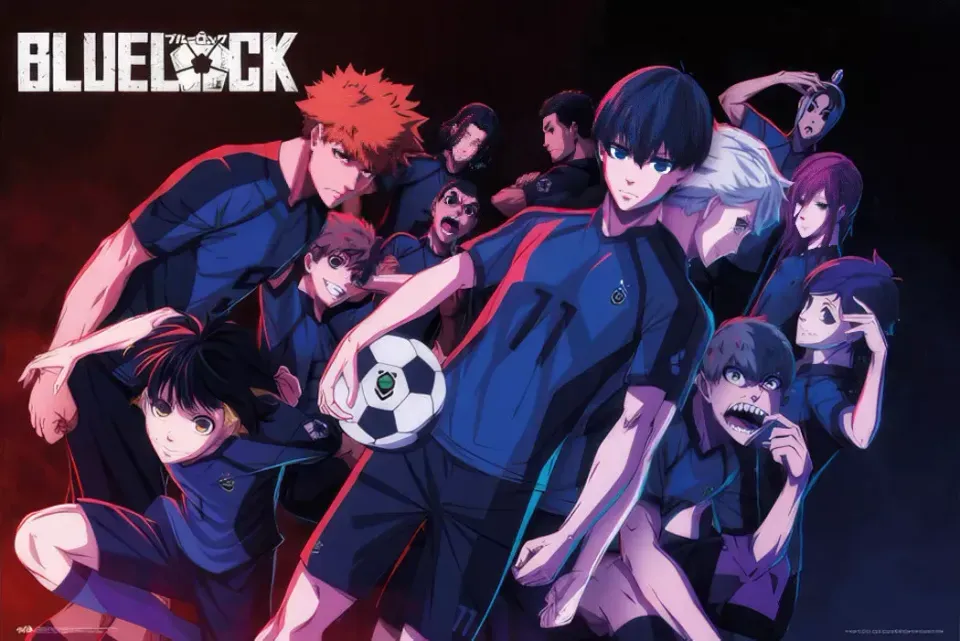
- “BLUELOCK” (2022 – ) written by Muneyuki Kaneshiro
An anime and movie series adapted from manga, “BLUELOCK” is not explicitly romantic. However, it is a masterclass in hyper-specific sports storytelling, with hints of intimacy. Yoichi Isagi (VA Kazuki Ura), a forward in his high school soccer team, is invited to join a hyper-intensive, high surveillance training facility named Blue Lock, designed to develop the best strikers of Japan.
Every episode, Isagi makes progress toward adding specific, named skills to his soccer performance, such as “Spatial Awareness,” “Metavision,” and “Flow State.” Each skill is treated like a fantasy power-up, with special characteristics and drawbacks psychoanalyzed by the main character himself, during mid-match monologues. The audience is encouraged to engage in sports-centered power scaling, where understanding character-specific traits are crucial to following the plot, to a point where the audience begins to expect and hope for specific game outcomes beyond those that involve the main character. Each player’s playing style changes with each opponent, supplying a match-specific dialogue that requires curiosity for every corner of their colleagues’ minds.
Survival Games that Breathe with Love
In the past two decades, a new genre of horror and action and media has surfaced called the death game. Death games in movies were first popularized by the Japanese film “Battle Royale” (2000), embraced in Western media with “The Hunger Games” (2012), and most recently gone viral with “Squid Game” (2021 – 2025). I argue that this trope is the most effective at bringing characters intimately together, while maintaining its sports-like, win-loss framework. For loyalty to be tested, there must be emphasis on the risk of grief.
- “The Long Walk” (2025) directed by Francis Lawrence
“The Long Walk” was first printed in 1979, under Stephen Hawking’s pen name, Richard Bachman. In an impoverished, totalitarian society, a group of young men walk till the death for a grand prize of all the money and things in the world. When a character stops walking and receives three warnings, they are shot by military officials driving on tanks by their sides. Without a destination, the walk ends when there is only one left standing.
Screenwriter JT Mollner revealed in an interview with “IndieWire” that when he was adapting the book, he had kept asking himself, “What’s the love story here?” When characters can do nothing but walk and talk, we are allowed to then explore their relationships and find moments of humor and generosity, even at the end of their lives. Each mile walked, charley horse gained, and “Warning! First warning!” curtly shouted, means the world to the viewer.
- “Alice in Borderland” (2020 – 2025) directed by Shinsuke Sato; “Squid Game” (2021 – 2025) directed by Hwang Dong-hyuk
The most recent viral sensations of death games into the horror genre, these two East Asian shows hurtle the viewer into unconventional battles to the death.
In “Alice in Borderland,” players choose death games to participate in, separated into four categories based on card suits. Spades indicate an emphasis on physical skill, while hearts threaten a game riddled with betrayal. They jump between levels of an apartment building and run around a botanical garden wearing death collars.
Strategy is imbued not only in the play-by-play of each game, but also in how large groups of players organize themselves to tackle different games. Characters are forced to their lowest moments, which provide a healthy juxtaposition as they perform at their kindest.
While “Squid Game” gives less agency to players, characters are similarly forced to form tight-knit bonds at the brink of death, or even at the expense of it. Sacrifice is central, as characters keep deluding themselves into making one more friendship, believing that maybe one more person can escape the tournament-style capitalistic hell.
Though “Heated Rivalry” has no doubt broken barriers by encouraging real hockey players to come out and by returning the spotlight to queer representation in media, I implore that we do not end that dialogue here. Queer people deserve well done sports-centric romance too, and there is an existing abundance of media from different genres and mediums to pull from; there is no need to confine ourselves to one adaptation of a commercialized romance book. In 2026, begin to question why creatives turn to sports and games as a foundation for romantic relationships in the first place. And spoiler alert: It’s not just because the actors look good.


Comments ()