

From Script to the Big Screen — Alumni Profile, Mary Coleman ’86
At Pixar and now at Locksmith Animation, Mary Coleman ’86 has turned her Amherst-honed love of storytelling into a career shaping some of the most beloved animated films.
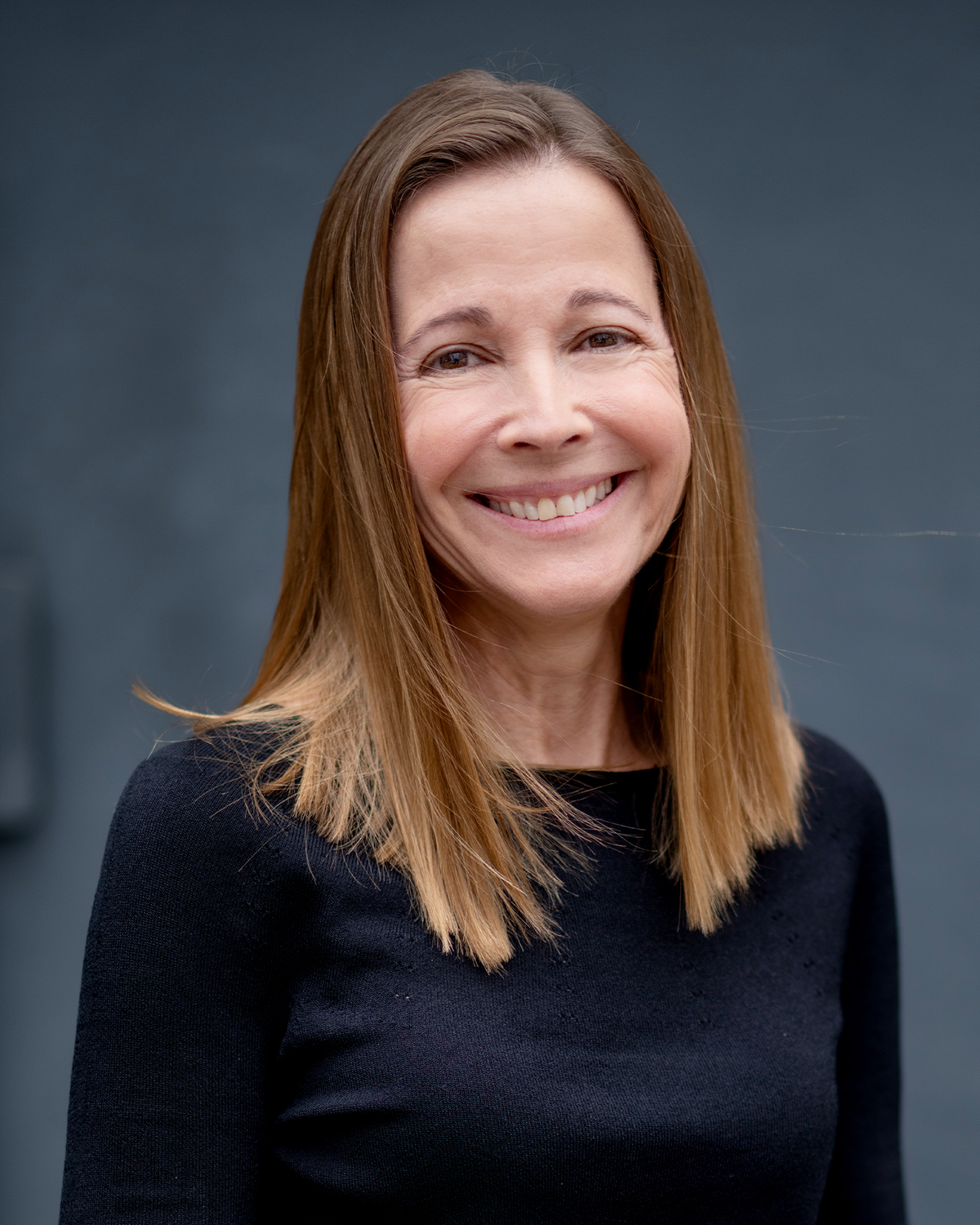
From the halls of Monsters University to Remy’s kitchen and Dory’s deep blue sea, Mary Coleman ’86 has spent her career helping animated worlds come alive. As Pixar’s longtime head of creative development and now chief creative officer at Locksmith Animation, Coleman has shaped some of the most beloved stories in modern film — guiding ideas from rough sketches into movies that define a generation. But before Coleman was working with storyboards and screenwriters, she was a freshman on the First-Year Quad, lying on a thin layer of snow, laughing as her friends teased her for trying to make a snow angel in what was barely a dusting. “I’d never even seen snow before,” she said. “I thought it was magical.” That same wide-eyed sense of wonder has followed her ever since.
Coleman came to Amherst from San Diego already knowing she wanted to study literature. “Amherst had such a well-known English department,” she said. “That was the number-one reason I came.” But the school quickly expanded her imagination beyond the page. “I thought I was going to be an English professor at Stanford University. I had it all mapped out,” she said, smiling. “Then I took this amazing film class with Professor of English John Cameron and theater classes with Professor of Dramatic Arts Michael Birtwistle, and suddenly I was seeing stories everywhere — not just in books.”
Finding a Stage
Amherst didn’t have a film program, or even an official interdisciplinary major at the time. But Coleman made one. With encouragement from her advisor, Professor of English Barry O’Connell, she created her own concentration in theater, film, and literature. “It wasn’t a major they advertised,” she laughed. “It was more like — if you knock, they’ll open the door. But you have to knock.” That curiosity became her trademark. “I just wanted to understand how stories moved — from words to stage to screen,” she said.
In the mid-1980s, Amherst’s creative world was small but vibrant. “There weren’t fancy performance spaces,” Coleman remembered. “There was a little black box theater, and anyone could use it. You didn’t need to be a theater major. You could just ask for the space and put on a show.” She still recalls a student production of Sam Shepard’s “Cowboy Mouth.” “It was raw and weird and experimental,” she said. “There was a sense of freedom — if you wanted to try something, you just did it.”
Just before graduation, Coleman received a nomination from her advisor, Barry O’Connell, for the Watson Foundation Fellowship — an award that allows students to travel for a year and explore a personal project. “It wasn’t something I even knew existed,” she said. “It just landed in my lap. And it changed my life.” She spent a year traveling through Eastern and Western Europe, attending theater festivals and interviewing directors. “It deepened my love for theater,” she said. “By the time I came home, I knew I wanted to pursue it seriously.”
When Coleman completed her fellowship, she returned to the U.S. “really fired up." So, she enrolled in a graduate program at Harvard and later earned a Master of Fine Arts at the University of California, San Diego — not because those degrees were required, she noted, but because she needed “a place to practice.” Soon after, she moved to San Francisco and began volunteering at the Magic Theatre, a small company known for premiering new American plays.
“I was an usher, a script reader, whatever they needed,” she said. “I also worked at Trader Joe’s and waited tables to pay the bills.” After a year of volunteering, she was hired part-time and eventually became the associate artistic director. “I loved the development side — watching a script change in the rehearsal room, helping shape new plays. That early, creative messiness — that’s what I lived for.”
From Plays to Pixar
Coleman’s transition from stage to screen happened the way most of her career has: unexpectedly. “One of the Magic Theatre’s subscribers was one of Pixar’s early employees,” she explained. “He called me one day and said, ‘My boss is looking for someone to help start a development department — someone who understands story but isn’t from Hollywood. Would you be interested?” Coleman laughed. “I told him I didn’t really like cartoons. And he said, ‘We make a different kind of cartoon.’” She then watched “Toy Story” and “A Bug’s Life” on VHS, and everything changed. “The storytelling blew me away. It was emotional, funny, smart — like great theater.” She went to meet them “just for fun” and ended up staying for the next 23 years.
At Pixar, Coleman helped guide films from the earliest sparks of imagination through years of revision. “In any given week, I’d be brainstorming new ideas, working with directors on pitches, overseeing research — everything from fish locomotion for ‘Finding Nemo’ to Day of the Dead traditions for ‘Coco,’” she said. Pixar movies, she explained, take about five years to make, with three of those years spent building and rebuilding rough versions of the film — a process called storyboarding or “animatics.” “We’d watch them eight or nine times, tear them apart, fix them, watch again,” she said. “It’s brutal, but it’s why those stories feel so strong.”
Her favorite project was Up. “It’s so weird — a grumpy widower, a Cub Scout, a house floating to Venezuela,” she said. “You could never sell that to a Hollywood studio. But Pixar let us take risks.” Early in development, she recalled, director Pete Docter wanted to try making the film without a traditional villain. “We gave it a shot, but the story just didn’t have enough conflict,” Coleman said. So she nervously pitched an idea for the film’s antagonist — one that would eventually evolve, with help from "The Incredibles" director Brad Bird, into the character of Charles Muntz. “I almost didn’t say it because I thought it might be stupid,” she admitted. “But you learn to say it anyway. That’s how the best stuff happens.”
Moving Across the Pond
After more than two decades at Pixar, Coleman got another unexpected call — this time from London. Locksmith Animation, a young independent studio, was looking for a chief creative officer. “At first, I said no,” she said. “I wasn’t going to leave Pixar. I wasn’t going to move to London.” She felt flattered but certain she’d spend the rest of her career at Pixar — until she spoke with the recruiter and then with Locksmith’s founder. “After that conversation, I thought, 'Wow, I think I need to do this,'” she said. “It scared me, but in the best way.” She went downstairs to tell her husband: “'Okay, this might sound crazy, but what do you think about moving to London?” He was instantly supportive.
Now, she leads a smaller, scrappier team that reminds her of her early days in theater. “We don’t have Pixar’s resources, which means we have to be clever,” she said. “It’s challenging — and I love that. At Pixar, we’d maybe gotten a little too comfortable. I’m surprised, at 60, to have chosen to get uncomfortable again — but it’s exciting.”
When asked what she’s learned about leading creative teams, Coleman didn’t hesitate. “Inspire, then get out of the way,” she said. “You can’t micromanage creatives. You have to trust them. You hire people because they have vision — your job is to make space for it.”
What Lasts
Coleman hasn’t spent much time back on campus since graduation — though she did return once, in 1988, to speak on an alumni weekend panel about the performing arts. “It was less than two years after graduation, and I was still living in Boston, so I didn’t really think of it as ‘going back,” she said. Still, Amherst remains at the center of her story. One of her close friends, Diana Helander ’85, became her co-founder in a women’s book club that’s been running in San Francisco for more than 30 years. “It started because we missed those Amherst conversations,” she said. “Sitting around, talking about books, ideas, art — that’s still my favorite thing to do.”
She credits Amherst with giving her the freedom to follow her curiosity. “I had a full scholarship, even for my junior year abroad,” she said. “They cared about who I was and what I wanted to do — not just my test scores. That kind of faith in students changes you.” And though she hasn’t returned in decades, she mentioned her interest in visiting again: “Maybe once I move back to the States, it’s time.”
When asked what she’d tell Amherst students who dream of working in storytelling or animation, Coleman smiled. “My whole career has been unexpected,” she said. “The Watson Fellowship. Pixar. Locksmith. None of it was planned. So my advice? Say maybe. Say maybe to the thing you didn’t expect. You might surprise yourself when that maybe eventually becomes a yes.”
Comments ()