

From Stand-Up Comedy to John Oliver — Alumni Profile, Johnathan Appel ’16
Johnathan Appel ’16 was rejected from Gad’s House of Improv for four years. Now, he is an award-winning writer at “Last Week Tonight with John Oliver.”

Johnathan Appel ’16 wrote an article in 2019 on what his life would look like if he had gone to law school (according to his mom): “I become a senator, a Supreme Court Justice, and the President of the United States — all at the same time.”
That would have certainly been an impressive resume — if Appel did not go through with a career in comedy.
Appel is currently a writer for “Last Week Tonight with John Oliver,” and a contributor to The New Yorker, McSweeney’s Internet Tendency, and The Boston Globe, among others. Outside of writing, he runs an open mic called Some Fun Lines.
While his writing on “Last Week Tonight” is mainly political, Appel’s other works take many different forms: one of his latest pieces reimagines Beauty and the Beast — from the perspective of a servant turned chamber pot.
And Appel’s “unrealistic and fanciful career choice” has won him five Emmys for Outstanding Writing For A Variety Series, three Writers’ Guild Awards for Best Comedy/Variety Talk Series, and a Peabody Award.
Unfortunately, I did not get the chance to ask what his mom thinks about these awards, but I would imagine that she is impressed — there is much to be proud of.
Back in the Big Appel
Appel video-called me from his New York City apartment — in the background, a tuxedo cat named Heidi entered and exited the frame. Appel returned to the city after growing up there.
For a good portion of those 18 years, Appel went to St. Bernard’s, a private, all-male school with a “very British vibe.” It was there, in sixth grade, that Appel got his start as a performer, acting in the play “How to Succeed in Business Without Really Trying.” Appel said he vividly remembers the disappointment he felt when he did not get the lead. Despite his one-line role as “businessman #3,” Appel had “caught the acting bug.” Unfortunately, he had little time for theatre in high school — cross country practice conflicted with play rehearsals.
Appel attended Riverdale Country School for high school, where he immersed himself in history and politics. These academic passions led him to choose Amherst in 2012: “I liked that there were people who would disagree with me. You have to understand that was like, Romney Republicans,” he said. “And the bigger thing was that I really liked the [political science program] here.”
“Don’t Do Comedy”
Appel said he was told repeatedly throughout college: “Don’t do comedy.” His comedic “villain origin story” occurred at Amherst, Appel said — he auditioned for Mr. Gad’s House of Improv all four years of college and never got a callback.
The closest Appel got to satire was writing for The Student’s April Fool’s edition (he was pleased to know that the tradition is still alive). In fact, he had been in my shoes once before, interviewing an alum for a homecoming profile. But all Appel could think about during the interview was the fact that he was running late for a show at Amherst Cinema.
Appel said he also wrote some “truly, in retrospect, rancid reviews” for the arts and living section. Recently, he actually read his review on the romantic comedy “About Time” at a comedy show performance — “I was so clearly going through a breakup when I wrote it,” Appel said.
Despite not being involved in comedy at Amherst, Appel participated in the theater department’s performances — he was the lead in The Cherry Orchard by Anton Chekhov his senior year, and the lead in a friend’s senior thesis.
Appel majored in political science, with a concentration in “institutions and the reproduction of inequalities,” and considered Associate Professor of Political Science Jonathan Obert and George Daniel Olds Professor of Economic and Social Institutions Kristin Bumiller to be his most influential mentors. At Bumiller’s suggestion, Appel took the opportunity to be a teacher’s assistant for an art history and English class at the Hampshire County Jail.
“They were very sweet guys,” Appel said. “For them, it was their only course … They were just very devoted to it.”
He was also surprised to find out that the students at the prison tuned into his WAMH college radio show: “SexAppel,” where he played “Top 40” hits at 10 a.m. on Sundays.
Stand-up in Taiwan
After college, Appel thought he might be a serious actor — or work in policy. Instead, he ended up in Taiwan as a Fulbright English Teaching Assistant.
“I thought [Taiwan] would be interesting for a number of reasons, including that they’ve been colonized by three different places. The culture there was just fascinating,” said Appel, who also spent a summer in China while in college.
It was in Taiwan that Appel started doing stand-up comedy. He ran an open mic in Kaohsiung — the performers included three expat comedians, and one local, middle-aged man who was practicing his English by reading dad jokes off his phone.
“He crushed,” Appel said. “Oh my god, he was so funny.”
Before long, Appel was traveling across the country to perform stand-up, from Kaohsiung to Taipei.
Appel’s Path to “Last Week Tonight”
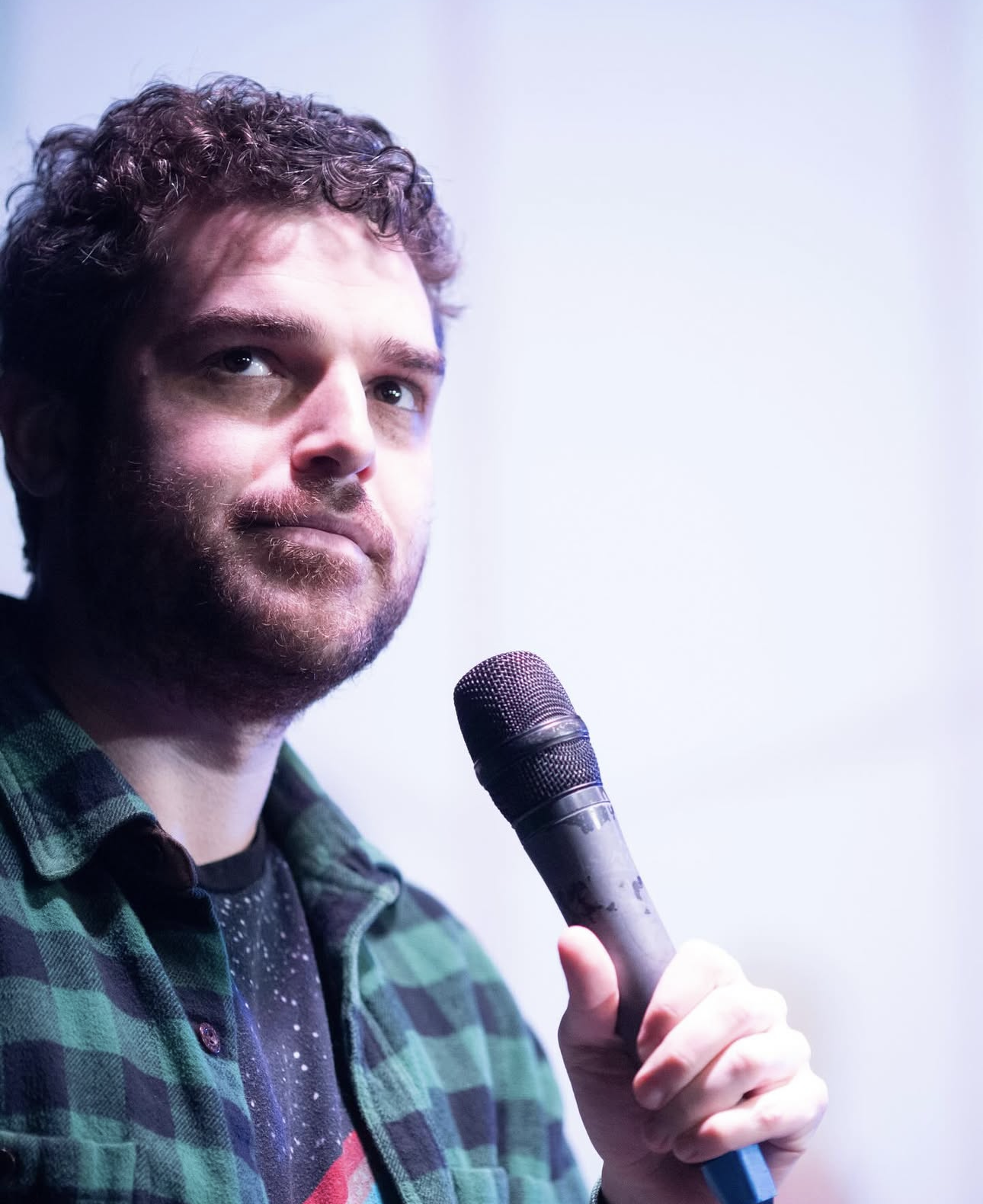
Following his Fulbright year, Appel returned to New York. He realized he did not really enjoy the “grind” of stand-up, so he turned to writing (one of his pieces: “In Defense of Our College’s Mascot, Sir Racist Von Genocide,” was inspired by Amherst’s mascot change). At the same time, Appel worked teaching, tutoring, and nonprofit jobs.
Appel also began applying to write for late-night shows. Some of the applications included prompts like: “Write 20 jokes that have to do with the news this week” or “Write a script about this particular story that happened three months ago.” These applications are intended to test the speed and ability of writers to gear their jokes toward a specific audience or topic, Appel said.
When the executive assistant to John Oliver reached out to him in March 2020 via Twitter, Appel thought it was a joke. Nevertheless, he submitted an application for “Last Week Tonight” — Appel was asked to write about a Democratic Senate primary in North Carolina. The next day, the Covid lockdown started.
In May 2020, Appel began his role as one of 12 writers for the show at the time, and has worked there ever since. “I’m always proud of the stories where I learn a lot, and I feel like anybody watching is going to be like: ‘I didn’t know any of that,’” Appel said. “I just think adding nuance to some of these political topics is really important.”
These stories include a recent one on Israeli Prime Minister Benjamin Netanyahu, one on deep-sea mining, and a piece on carbon offsetting. Oh, and one on John Dillermand, a Danish children’s cartoon about a man with a massive penis.
Appel was also very proud to work on a story about “Bird of the Year,” a New Zealand competition. Oliver launched a campaign on behalf of the pūteketeke — he raved about the bird on his show and bought billboards around the world. The pūteketeke won the contest with 290,374 votes.
Shifting from stand-up to a full-time late-night show writer meant that Appel was no longer writing in his own voice but in the voice of John Oliver.
Appel said that writing character voices (like the chamberpot and the fictional alumnus defending Sir Racist Von Genocide) is one of his favorite kinds of things to do — “and that’s kind of how I approach writing for John,” he said.
Appel’s talk-show writing has been motivated by the question: “What is it about this person’s public persona that I can make fun of?” Appel said. “I’ve made a lot of jokes about John being British, John looking old — things that I could not joke about myself.”
Appel said that because he bases his pieces on large amounts of footage and articles compiled by the show’s research department, the writing process “does often feel like [he’s] doing a research paper in a Bumiller seminar.”
“It’s all dependent on other people [like investigative journalists] doing this incredible work, and then me learning about that work and going, ‘Okay, how do I contextualize it?’” Appel added.
In 2023, Appel worked on a story about welfare, and the research team put together sources that were similar to those in his senior thesis, titled “The Dirtiest Word in American Politics: The Symbolic Crisis of Dependency in American Social Policy,” about Temporary Assistance for Needy Families (TANF).
“I don’t know anybody else from Amherst who’s using their degree like I am,” Appel said, “Which is funny, because you would not think that comedy writing would be using highly analytical political theory.”
Appel in the Industry
Going to the Emmys every year is a “weird thing. It feels very surreal every time,” Appel said. “I feel very lucky to be a part of it and for people to recognize the show like that … I believe in what we’re saying and I believe we make a good show.”
Appel added that in the current political climate, which has directly impacted comedic talk show hosts, he is grateful that HBO does not provide editorial input on “Last Week Tonight,” and that the Federal Communications Commission (FCC) does not oversee the show.
“Obviously, it’s very different at CBS. Obviously, it’s very different at ABC,” Appel said, referencing Stephen Colbert’s announcement that CBS will be canceling the late show in May 2026, and the suspension of “Jimmy Kimmel Live!” in mid-September following pressure from the FCC. “There’s been a palpable fear for our industry and for the jobs that we love.”
Still, Appel said that it brings him hope that writers at these shows are refusing to compromise or self-censor.
“If I didn’t know anything about the industry, I might think ‘Oh, maybe the writers are thinking about how to say this differently,’” Appel said. “That hasn’t been my experience. If anything, [we’re] angrier, as we should be.”
Core Advice
Outside of his work, Appel has been trying to “recapture” the energy he had in college by taking “random” creative classes, like neon-sign making.
“If you like something, why not learn more about it?” Appel said. “And I will bring it back to comedy and say: Knowing a bunch of random [stuff] is so important for joke writing, because joke writing is just connecting things in weird ways.”
Appel has one more piece of advice: “Having cats has been the best thing. They changed my life. I love my cats,” he said. “If you work in a political field, it can feel like everything is shit, and having something to ground you is really helpful. And for me that’s been my cats … and my friends, and my fiancée.”

Comments ()