

Lowery’s “Mother Mary” Hits All the Wrong Notes
Staff Writer Harry Finnegan ’28 offers a witty yet scathing review of David Lowery’s 2026 musical drama “Mother Mary,” which follows a pop star’s emotional reckonings as she prepares to return to the stage, using three criteria to break down the movie’s shortcomings.
If you are someone who enjoys pop music like me, you probably have some criteria for what counts as a good pop album. From a purely apocryphal canvas of the general opinion of this criteria, this can be divided into three categories: production, songwriting, and vocal performance. A good pop album does not necessarily need to excel in all three to be good; for instance, an album can get away with mediocre or generic lyrics if the production and vocals are good enough to outweigh them.
If movies were judged by the same standard, the 2026 movie “Mother Mary” would be a career-ending flop for any fictional pop star.
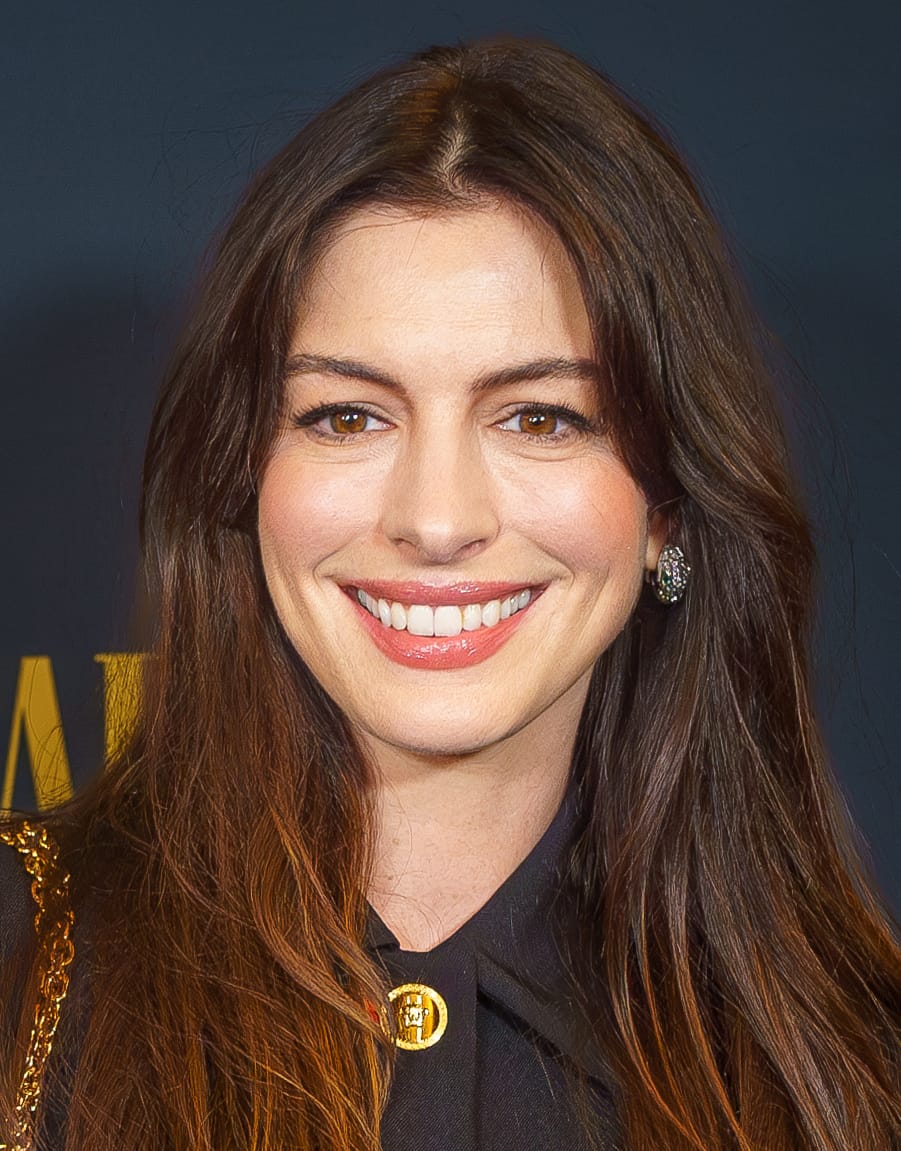
“Mary” is structured largely as a duet between the fictional titular pop star, played by Anne Hathaway, and Michaela Coel as Sam Anselm, her ex-friend and a genius dress designer. Playing the role of producer on the project is writer and director David Lowery, best known for 2021’s “The Green Knight” and a general sense that he is good at making slow and moody dramas. Indeed, the movie is a slow and moody drama, with Hathaway and Coel taking up the bulk of the runtime.
Of the three categories, “Mary” first and most obviously falters on the production standpoint, mainly because Lowery spent almost two years putting the film together after filming wrapped. For a movie as still and small as this one — there are a few surrealistic flashbacks, but most of the film takes place in a barn that looks a lot like a soundstage — this can only be a symptom of some larger problem behind the scenes. However, one may still forgive this if Lowery managed to use all that time to salvage the film.
Unfortunately, this is not the case. The movie is edited with a slipshod rhythm and no intentionality behind it; the eagle-eyed viewer can pinpoint the places where shots must’ve been rendered unusable. Continuity of motion and place is broken so often in the first half that either reshoots were desperately needed or were done poorly. The simplicity of the set isn’t doing Lowery any favors either, as almost no shot in the main barn set achieves anything compositionally interesting. Wall to wall, the first half is shots of brown wood as the backdrop to the main conversations.
To his credit, Lowery does do some interesting things as the film shifts into obtuse surrealist symbolism during its second half. One standout scene is a long, silhouetted shot that has Hathaway stumbling in and out of a diorama montage of concerts and outfits. But after the obvious mismanagement that broke the first half, it all seems like too much effort too late. Lowery’s desperate grasps at nice images and nice sequences fall apart the second he cuts back to the barn, if they even feel earned in the first place.
In any case, many production issues can be ignored if there are some good songs and lyrics; it’s hard to tell them apart sometimes, even on the best pop albums. The only problem is that, again, “Mary” can’t manage to do that.
To revisit the first half, the two-handed duet structure, where virtually the only characters are Mary and Sam, is the perfect set-up for a play-like atmosphere, which is what Lowery attempts. However, the dialogue is overwritten to the point of being almost incomprehensible. On an actual stage, the theatrics of it all might work, but the mangled shots turn it all into nonsense. Coel delivers monologues as if she were the tragic central figure in a Shakespearean drama, but Lowery is most certainly not William Shakespeare, and Anselm is too thinly drawn to mean anything. Hathaway, meanwhile, is given little to do but listen and pout, in what amounts to extremely obvious attempts at the writer-director telling his actress to act in subtleties to express what isn’t really there.
The staginess isn’t entirely discarded when the script gets weird, but at least some of the dialogue is gone — the aforementioned diorama shot is dialogue-free, and the parts around it are mercifully visual as well. Lowery, not one to let himself make a good decision, pairs this with an equal uptick in nonsensical symbolism, as religion, ghosts, griefs, and traumas all meld into a meaningless sludge. Certainly, there may actually be a meaning somewhere. But no part of the opening gives the viewer any reason to care about any of it; the film is all metaphors and no actual plot or characters.
Bad production and bad writing are probably enough to sink a pop album, but it might at least be worth paying attention to if the performance of the lead artist is actually good. And Coel and Hathaway are typically good at what they do, as they have an Emmy and an Oscar, respectively, under their belt. Neither of them, however, can salvage the material, if they are even properly trying to do so. Coel attempts to fashion Anselm into a figure with gravitas and intensity, but nothing in her eyes shows that she actually cares about what she is saying, even when the character ostensibly opens up. And Hathaway gives it her all in some physically demanding scenes, including one standout possession-tinged dance sequence, but she is weepy and rarely present in any scene.
It’s hard to fault either actress for this, especially when the entire cast, aside from them, also gets the short end of the acting stick. The two most prominent of these are Hunter Schafer and Sian Clifford, known for their performances in the TV shows “Euphoria” and “Fleabag” respectively. In “Mary,” though, they have a few single-word lines with no emotions or personality behind them. This pattern seems to shift the blame for the performances onto Lowery, although certainly none of them are rising above his direction for their characters.
There’s another aspect to the pop music comparison that is unique to this film in particular, however: It actually has original songs, written by Jack Antonoff, Charli xcx, FKA Twigs (who also briefly features in a similar small role to Schafer and Clifford’s) for Mother Mary to perform. These are people who know how to create good pop albums — people who can follow the three main criteria.
But even they fall into the trap of the fourth, secret criterion that pop music movies so rarely anticipate: Pop music is impossible to make without a person for the audience to care about.
Lowery certainly makes their job difficult: Mother Mary proclaims herself as inventive and larger than life, but she instead comes off as an unholy amalgamation of Taylor Swift and Lady Gaga who can’t seem to stop writing songs so laden with obvious religious symbolism that they are almost all literally about churches. Every time she performs on stage — complete with rigid and uninteresting choreography and obvious lip-sync — all intended ambiguities disappear in favor of “how did she ever get famous at all?”
The humor in the fact that the movie itself is named after its failed central pop star is not lost on me, though it may be lost on Lowery. He grasps at the same heights as her, but fails to see his own film as two years’ worth of failed ambitions and a patchwork of obtuse scraps. In the end, the worst thing about trying to make a good pop album is that you can end up making a terrible pop album. “Mother Mary,” like the worst pop, just hurts your ears and makes you skip to the next song.

Comments ()