

Martín Burt Discusses Social Entrepreneurship in Paraguay
As a part of their Speaker Series, the Amherst Political Union welcomed Paraguayan social entrepreneur and politician Martín Burt. He discussed his experience as founder of Fundación Paraguaya, a Latin American non-profit focused on combating poverty through entrepreneurial training.
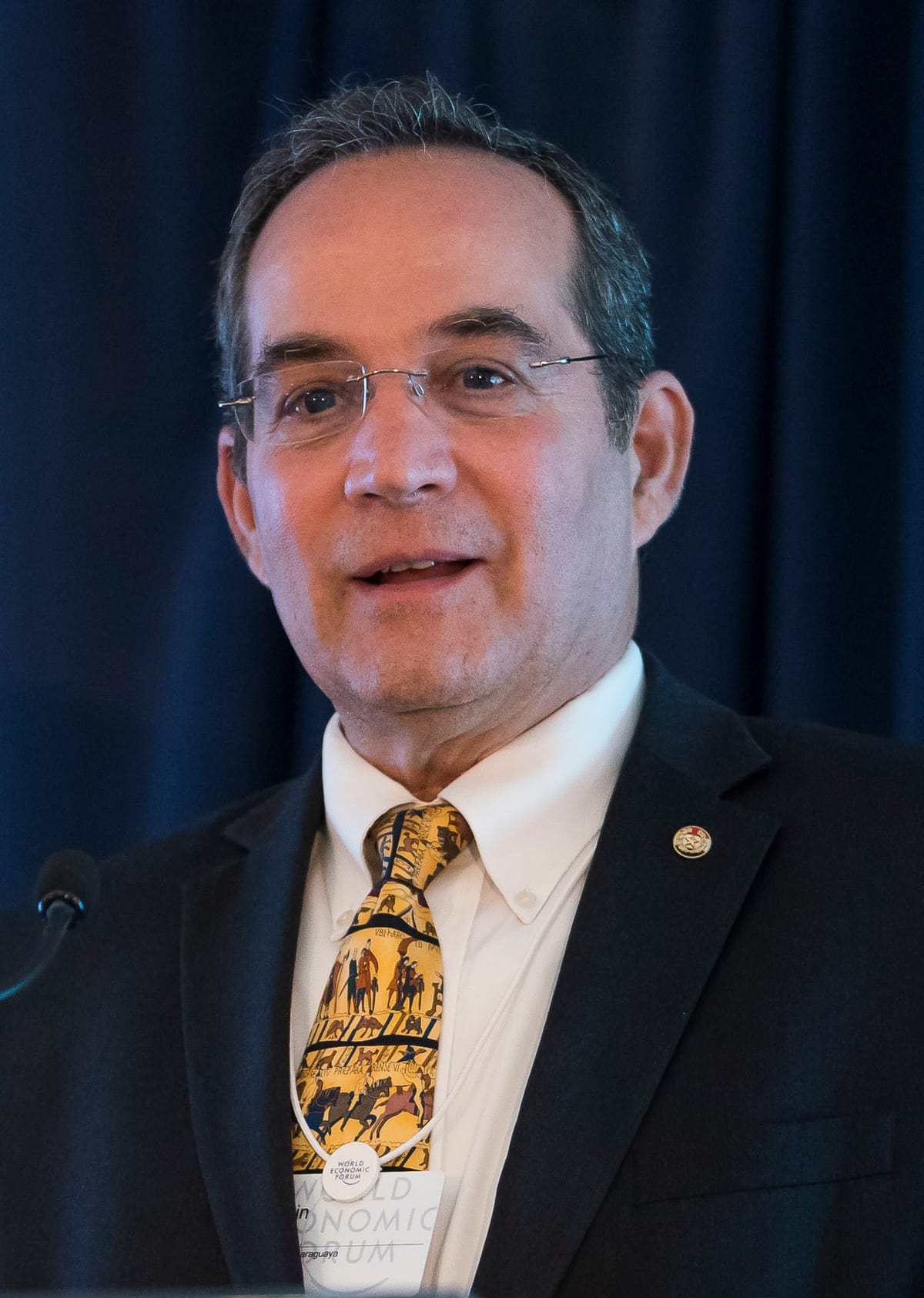
On Thursday, the Amherst Political Union (APU) welcomed students to the first installment of its 2026 Speaker Series titled “Politics, Government, and Social Entrepreneurship.” The discussion was hosted by Dr. Martín Burt, founder and director of Fundación Paraguaya — a Paraguayan nonprofit which works to combat poverty through entrepreneurial training.
Burt began by relating his own history to the nonprofit that he would eventually found. This story began in the Cold War, when his home country, Paraguay, a “small, insignificant country in the middle of South America,” was beset by a military dictatorship. The U.S. initially supported the regime due to its anti-communist stance; however, President Jimmy Carter and the United States Agency for International Development (USAID) later focused American “soft power” on fighting the human rights abuses committed in the dictatorship through diplomatic pressure and economic investment in Paraguayan social programs.
Burt then acknowledged the impact that USAID had on his own nonprofit organization. “If USAID had not existed, we would not exist,” Burt said. He explained that the agency gave Fundación Paraguaya “seed money” before the effort took off.
Burt also briefly discussed his time in other areas of public service, such as when he was the mayor of Paraguay’s capital, Asunción, from 1996 to 2001, and when he was the chief of staff to President Federico Franco from 2012 to 2013.
“I’ve been on both sides of the counter and … the grass is always greener,” said Burt, referring to the difference between social work in the government and in an independent nonprofit. Regardless of what area he is working in, Burt shared that the first lesson of helping people is “understand[ing] other people’s perspectives,” whether they be government or nonprofit, communist or capitalist.
Burt proceeded to describe the dual projects of Fundación Paraguaya. The first is the creation of a “self-sufficient school” from a formerly poor agricultural school. The difference comes from the new economic model of the school, as the school sells its own produce for profit. “Our concept of education can pay for itself,” said Burt. The foundation then sought to spread this model to more schools and more countries, with 59 similar institutions now around the world.
The second project is Poverty Stoplight, an original assessment tool provided to individuals. The assessment includes a scale of 50 statements, from obvious poverty qualifiers like “we know how to make an income” to more nebulous ideas like “we can control our emotions.” The user then responds on a red-yellow-green scale to determine their own level of poverty. Advisors at the foundation use this as a metric to coach them in achievable steps to improve their well-being.
Poverty Stoplight came about when Burt found the list of United Nations Sustainable Development Goals, a list similar in purpose but containing only 17 statements. This list was developed by what Burt termed “the experts: economists from Harvard, political scientists from Columbia, and international scholars.
“I have been interviewing poor people, and they pretty much know what it means to be not poor,” Burt said. He and Fundación Paraguaya used these non-expert testimonies of people directly struggling with poverty, as well as extensive work to support those filling out surveys each day, to develop the more detailed 50 statements in Poverty Stoplight.
This program did not limit itself to Paraguay, according to Burt. It has expanded to multiple countries, including the U.S., where people could fill out Poverty Spotlight and get a better understanding of their own financial situation. “Remember, I come from a small, insignificant country … [and] I’m substituting welfare programs in North Carolina,” he said.
However, Burt claimed that welfare alone will not help people if they are not also empowered. “Empower people, and … there you have the resources,” he said. He compared people metaphorically to “Aladdin’s lamp,” as people need to be catalyzed and “energized” in order to let out their potential. He claimed that this concept links the self-sufficient schools and the Poverty Stoplight, as both plans seek to provide the poor with the opportunity to acknowledge and shift their situation under their own abilities.
He concluded the talk by encouraging the audience to think about their goals for the future to create a social impact. These dreams, and his model of social entrepreneurship, he said, can “fill your soul and your fridge at the same time.”
“We’re ready to change the world,” Burt said. “I’m ready to support you guys.”


Comments ()