

Massachusetts Supreme Judicial Court to Hear College’s Wage Act Lawsuit
In December 2024, two former employees accused the college of violating the Massachusetts Wage Act by paying them monthly rather than biweekly. The case is now to be decided by the Massachusetts Supreme Judicial Court by December 26, 2026.
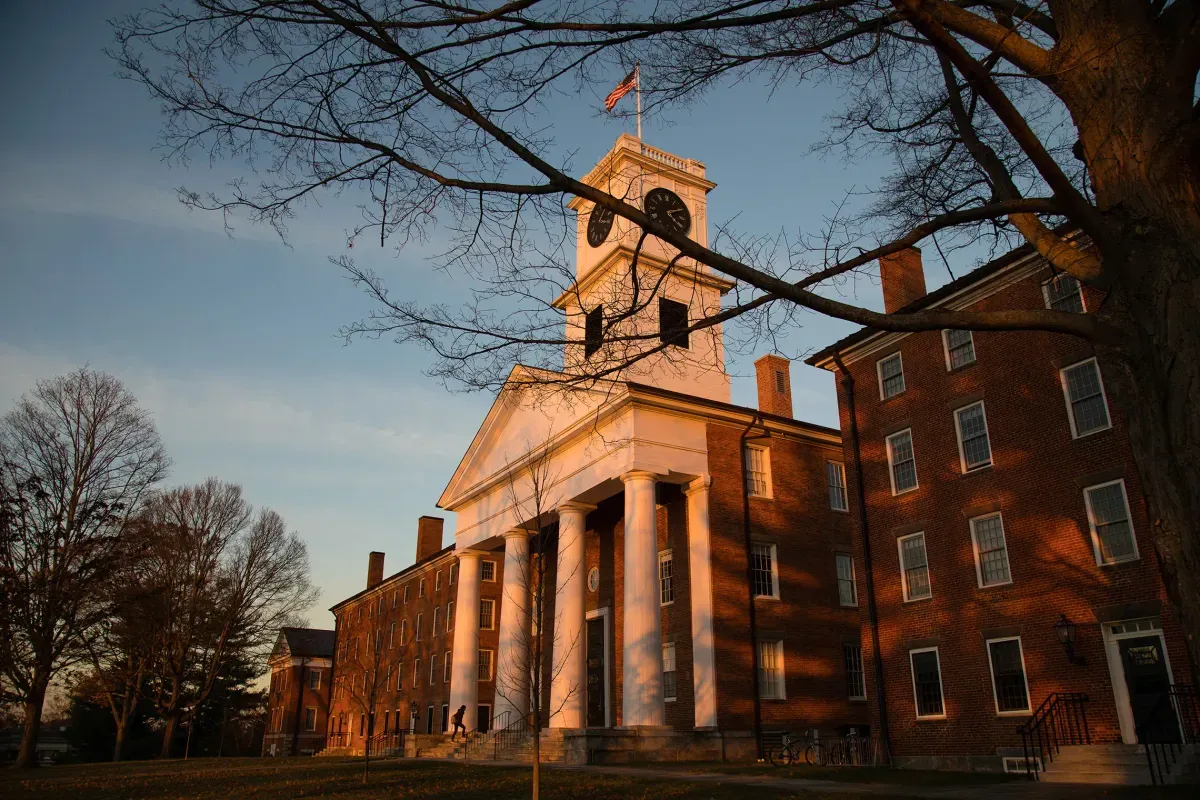
The Massachusetts Supreme Judicial Court (SJC) will hear an appeal case that contends Amherst College violated the Massachusetts Wage Act by paying former employees monthly rather than biweekly. In December 2024, two former employees — J.T. Martin, director of the Queer Resource Center from 2017 to 2023, and Danielle Amodeo ’13, a public programs and marketing coordinator — sued the college for violating payment requirements. Hampshire Superior Court judge James M. Manitsas originally dismissed the case in October of 2025 because he found that the college was exempt from the lawsuit based on the fiscal budget bill signed by Governor Maura Healey on July 4.
The case was transferred to the SJC on Feb. 26, and the plaintiffs’ attorneys filed an appeal brief last Thursday. “We are pleased that the Massachusetts Supreme Judicial Court accepted direct appellate review of this case and will address the important constitutional issues at play,” said Raymond Dinsmore, the lawyer representing Amodeo.
The Massachusetts Wage Act holds that exempt employees — those ineligible for overtime pay — must be paid at least semi-monthly, unless the employee chooses otherwise. Both Martin and Amodeo claim to have been harmed by the college’s payment policy. According to an article published in the Daily Hampshire Gazette, “the lawsuit contends Martin received $79,099 in gross wages later than required by law and Amodeo received $22,532 in gross wages later than required by law.”
According to the brief filed, Amherst began paying its employees on a bi-weekly basis in April of 2025, approximately six months after the plaintiffs originally filed suit.
Plaintiffs’ attorneys argue that the fiscal budget bill, signed after the original lawsuit, seeks to bail out Massachusetts institutions like Amherst College and Harvard University, who had been implicated in a previous lawsuit.“Our appeal challenges the constitutionality of the new legislation which offers retroactive immunity to lawbreaking employers and which retroactively strips workers of their rights under the Massachusetts Wage Act,” Dinsmore said.
The plaintiffs contend that Amherst and other institutions violated due process protections, hence removing employees’ ability to challenge and remedy illegal payment of late wages.
In a statement to the Gazette, the college’s Director of Media Communications Caroline Hanna shared that the college “appreciate[s] the Massachusetts Legislature’s transparent process to address unintended consequences of the Wage Act” for colleges and universities across the state.
“In fact, we joined the plaintiffs in requesting that the SJC review their appeal, because an SJC ruling will provide clarity for the many nonprofit institutions of higher education that previously followed a similar pay practice,” Hanna said.
Amherst has yet to file its brief, which is due April 21. The case will be decided by Dec. 26.
Comments ()