

North Amherst Expands Affordable Home Ownership
Amherst Community Homes, a new affordable condominium complex, is set to open this fall. This is Valley CDC’s first homeownership project in 20 years, with units selling for $200,000 and $250,000 below market value, prices considered “affordable” to those who make at or above the median area income.
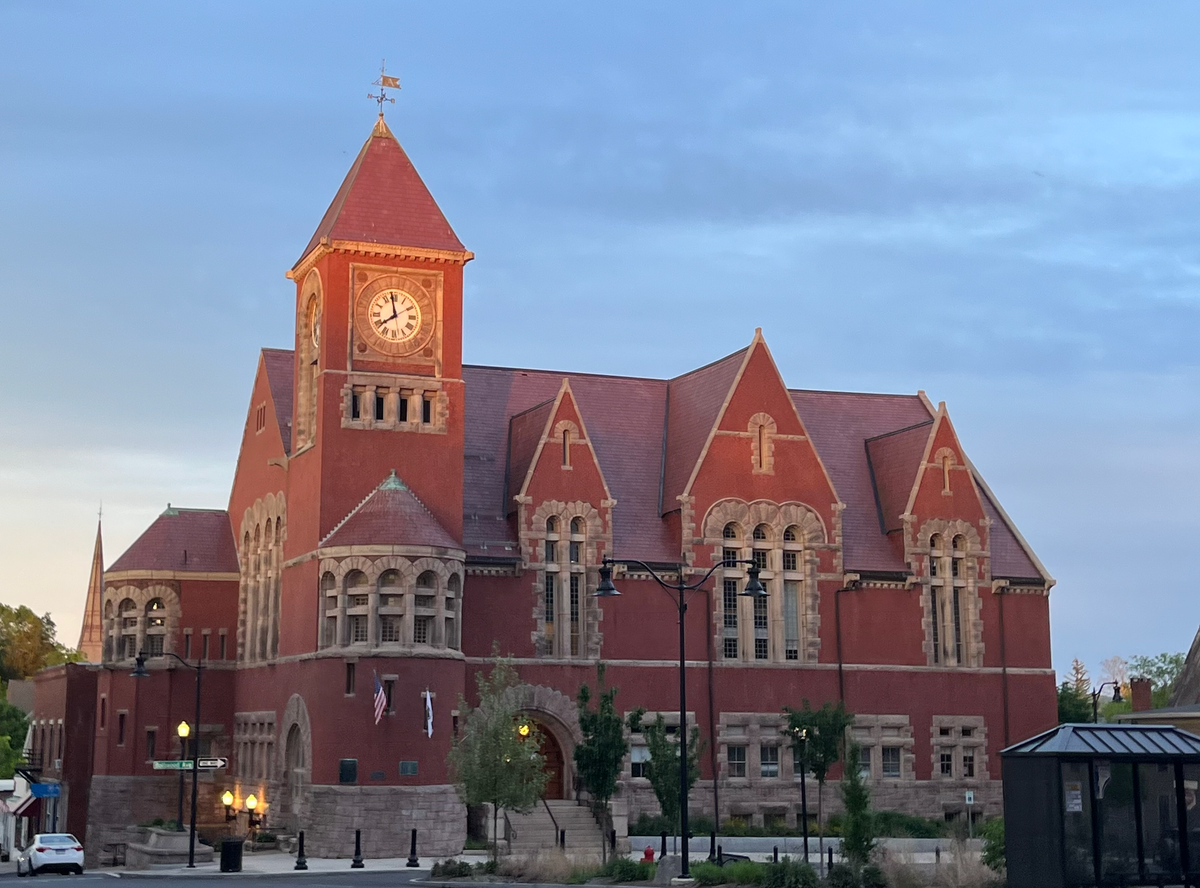
On Thursday, the first of 30 units in Amherst Community Homes, North Amherst’s new affordable condominium complex, were purchased. Eight more of the units are currently under agreement with Valley Community Development Corporation (Valley CDC), the project’s developer.
Reflecting a trend toward limited-equity homeownership as a model of affordable housing, Amherst Community Homes is opening this fall thanks to Valley CDC’s cooperation with and funding from both the state and the Town of Amherst. State funding is funneled through the CommonWealth Builder (CWB) program — an initiative of MassHousing, the state’s quasi-public housing bank — while the town’s Affordable Housing Trust and Community Preservation Act Committee allocated additional local funds.
According to Valley CDC’s executive director Alexis Breiteneicher, 70% of the soon-to-be residents currently live in Amherst, while the remaining are from the broader Hampshire County. The two- and three-bedroom duplex homes also allow for a range of occupancies. Breiteneicher said there is already at least one family including three generations set to move in this fall.
Despite opening more than 400 affordable rental units in the area since 1988, this is Valley CDC’s first homeownership project in 20 years. Greg Richane, the town’s housing coordinator, shared that “resources for affordable ownership are comparably quite scarce, as compared to rental.”
Per Amherst’s Comprehensive Housing Policy, “affordable” is defined as “when the monthly mortgage or rent is less than 30% of the monthly income of the household.”
While the units are selling for $200,000 (for two-bedroom) and $250,000 (for three-bedroom) below market value according to Breiteneicher, Richane emphasized that these homes are considered “affordable” to those who make at or above the median income in the area.
“These homes are for people at 80% or 100% of area median income … so these homes are not aimed at serving deeply low-income people, who might be making $10,000, $20,000, $30,000 a year. This product wasn’t aimed at them, but serving those folks is important as well. That's also a priority in town,” Richane said.
Richane, who also led the crafting of the Housing Production Plan (HPP), called Amherst community homes a “great individual project, [but] in order to meet what’s in the HPP, we would need many more.”
The Town of Amherst allocated $1.6 million for this project — approximately half of which were designated by the Housing Trust and the remaining half from the Community Preservation Act Committee.
Richane explained that funding for projects like this, at least in Massachusetts, is catalyzed by a locality apportioning “a proportionately modest amount of funds,” and then the state will come in — sometimes with state funds, sometimes with federal funds, or both. The state usually puts in a “much bigger chunk of funds into projects,” he said.
The state funding component of the project came from CWB, which aims “to make homeownership more accessible while creating pathways for wealth building” in the Commonwealth.
According to Richane, “[the Housing Trust] only invests in deed-restricted affordable units,” meaning developments with legal stipulations ensuring units retain their affordability. In this case, Amherst Community Homes “will be deed-restricted to low-to-moderate income first-time homebuyer households, with a preference for homebuyers that meet the CommonWealth Builders (CWB) program purchaser restrictions,” according to Valley CDC.
Traditionally, the issue with deed-restricted homes is that the owner will never be able to fully liquify the equity, no matter how long they live there, in order to preserve the units’ affordability. Whereas for limited-equity property, of which Amherst Community Homes is included, after a period of time, owners will be able to sell the unit for market-value.
“If the homeowner sells [a unit], then buys [a new unit], and then 10 years later, they’re like, ‘we want to move,’ the home still has to maintain that affordability, but then after 15 years, it goes to a market price, and so it’s both encouraging people to stay and establish roots, but then if they need to sell to get their equity, they can,” Breiteneicher said.
Richane emphasized this approach is intended to increase access to the type of generational wealth many white Americans collected since World War II. Per the Reparations for Amherst, Massachusetts’s “Report on Anti-Black Racism and Black/White Disparities in the Town of Amherst,” racially restrictive covenants shaped Amherst housing access for decades, preventing people of color from buying or leasing certain properties. The report cited six housing covenants on Blue Hills Road in 1947 alone, which notably bordered the Westside Historic District, a “haven for Black and Afro-Indigenous families” in the late 19th and early 20th centuries.
“Certain segments of folks were disproportionately locked out of that wealth building opportunity, so CWB is an opportunity to connect disproportionately excluded folks to wealth building,” Richane said.
This culture shift to limited-equity is, according to Breiteneicher, representative of a general increase in awareness about the throughline from red-lining to deed-restricted housing.
“There was redlining and people of color were not allowed to get mortgages for years and the deed-restriction is a version of that, and it's not as obvious, but it’s still often people in power saying to other people, ‘you actually can't get money out of this,’” Breiteneicher said. “A little bit like ‘we did you a favor, we let you buy this affordable home, and now you’re not actually getting anything out of it.’”
Enabling lower-income buyers to earn equity, Breiteneicher continued, is “a really important piece for economic development. Some of the folks are the first homeowner in their entire family because they’ve been priced out of the market for generations living out here,” Breiteneicher said.
A central component of Valley CDC’s development of this project focuses on community-centered approaches to living. Breiteneicher described the decision to orient homes toward the shared green space and construct parking lots outside of the housing complex itself, rather than adjacent to individual homes.
“There was a total intention around trying to create community by making people walk, and not the more common American model of just driving into your driveway, parking your car, and going right into your house, which often then disallows [you] from community,” she said.
Additionally, the Town and Valley CDC are proud of the environmental sustainability of the project.
“The energy costs of these homes are going to be much lower as compared to something built even 15 years ago of the same square footage. And as energy costs become more and more of an affordability concern, it’s sort of merging with affordable housing policy as a priority,” Richane said.
One of the key elements making this project sustainable was last-minute addition of solar panels.
According to Richane, after the homes were all mostly built, Valley CDC raised the observation that “with a comparably modest amount of local investment,” they would be able to add solar panels to the units. As it was told, the state miraculously discovered extra money, and with the addition of town funding, they were able to add these to the project last-minute.
“If we look at the savings that homeowners will experience over the life of those solar panels, I think the community return on that investment is quite high,” Richane said. “It won’t change the look of the homes, but it will change the financial experience of the families who live there.”
While Amherst residents shared concerns over potential chemical residue from the vegetable trucking company that previously owned the lot, according to Breiteneicher, Valley CDC conducted “above-and-beyond” soil testing and found no environmental concerns.
Looking forward, Breiteneicher hopes this development serves as a replicable project.
“I hope that the state does refund the [CWB] subsidy program because especially now that we went through all of the architectural designs for those buildings, one of the things that we’ve talked about internally is the ability to replicate something that we've already done,” Breiteneicher said.
Richane added that this complex could serve as a model beyond Amherst.
“I think it’s a great example of how towns can commit to helping finance this stuff,” Richane said.
Comments ()