

OICR Restructures Student Staff Hiring Process
Beginning Fall 2026, the Office of Identity and Cultural Resources will transition to a centralized student-staff hiring process. Student workers will either be assigned to a general overarching OICR position or serve as a liaison to a specific center.
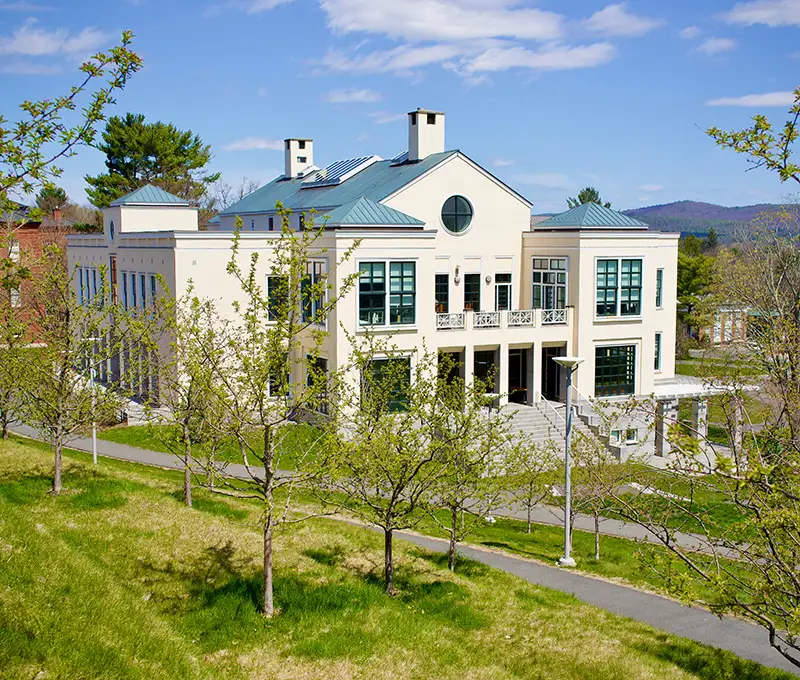
Beginning in Fall 2026, the Office of Identity and Cultural Resources (OICR) will transition to a centralized hiring process in which student staff will apply to OICR as a whole rather than to individual resource centers.
OICR oversees the resources center currently located in Keefe Campus Center, including the Class & Access Resource Center (CARC), the Center for International Student Engagement (CISE), the Multicultural Resource Center (MRC), the Queer Resource Center (QRC), the Center for Religious & Spiritual Life (RSL), and the Women’s & Gender Center (WGC).
Director of Communications in Student Affairs Dan Desrochers provided responses to The Student on behalf of Senior Director of Identity and Cultural Engagement Christopher Campbell. According to Desrochers, beginning next fall, OICR will introduce a shared student staff position titled “OICR Student Staff.” Until now, students applied specifically to the resource center they intended to work in. Under the new model, students will apply through the overarching OICR position. Once hired, they may either serve in a general OICR role — a newly created position — or be assigned as a liaison to a specific center.
In an interview with The Student, a current OICR student staff member who wished to remain anonymous due to concerns about losing their position, clarified that they were informed that even students assigned to a particular center will not exclusively work within it. Instead, their responsibilities will also include supporting operations across centers.
“This change reflects both the opening of the new Student Center and what we have learned about how students want to engage with identity-based spaces on campus,” Desrochers said. “Many students have shared that they value stronger connections across centers, an intersectional approach to their identities, clearer points of support, and a more coordinated experience when navigating these spaces; these changes will address this.”
Student workers were informed of the upcoming changes during an OICR retreat held at the end of February, led by Campbell and Associate Dean of Students Crystal Norwood. The student said they were informed during the retreat that candidates will be able to rank their preferred centers at the time of application, but that won’t guarantee they will be assigned to their first choice.
“As far as I understood correctly, [from next year on] you would have to apply directly for OICR, and they are going to assign you to individual centers,” they said. “You can indicate your interest in which resource centers would be your top choices, from one to six. They’ll read over your application, and they will assign you to certain resource centers.”
Desrochers explained that the changes were made to optimize OICR’s future location in the new Student Center. In the new building, each [resource] center will have its own dedicated space and a shared community space through which visitors must pass to access the centers. “Aligning student staffing with the new layout ensures clear roles for student staff, a consistent and welcoming experience for members of the campus community, and strong coordination across OICR,” he said.
The student added that student staff would no longer work at the front desk of specific offices. Instead, at least two students will be available in the common area to welcome visitors and share information about the centers.
“One thing that confused us was if we are going to be working in a common area and a guest comes in that does not know much about all the centers, then the person in the common area needs to know everything about all the centers, which is a lot of work and more than we're doing right now,” the student said.
They also said they were informed that each center will, from now on, have only four student staff members, while the overarching OIRC student staff position will have six members. As a consequence, some centers with more staff such as CISE, might see their staff numbers reduced, while others with fewer staff such as RSL, might see the opposite.
Desrochers clarified that there won’t be any reductions in overall student employment. According to information shared at the retreat, even if a few centers reduce their student staff, those students will still be offered the option to work exclusively in the overarching OICR position. “Each center will continue to have its own dedicated space, student staff support, professional staff leadership, and programming,” Desrochers said.
One of the biggest concerns expressed by student staff is that they won’t be able to apply to specific centers anymore.
“We have very specific reasons why we work at our respective centers, because of our shared identity, or we just deeply care about that specific identity,” the anonymous student said. “And with this new model, despite going through the application, you might not be able to work at the center you want to work at and become one of the more general OICR staff. I think that is very upsetting for students who genuinely want to work towards making the community a better place.”
When asked how they think the broader student community experience might be affected, they expressed concern that students might feel uncomfortable with the new system.
“Right now, if you go into the center, you’ll see someone in the individual centers welcoming you in, which does create a sense of welcoming and familiarity. And if that is not there, and only two people who might not even be that well-educated about each center [are there], that’s kind of odd,” the student said. “I would not really want to enter a space where no one’s sitting in. I would rather see a welcoming, smiling face.”
The student added that they were only informed of the changes at the retreat and were not consulted beforehand. However, they were able to provide extensive feedback afterward, which they believe might impact the proposal and shape final plans.
“I have heard that both Chris and Crystal really took our feedback into consideration, and they really saw how much we cared about our centers, which I guess they didn’t know before,” the student said. “So in a sense, I hope that our feedback has influenced something.”

Comments ()