

Professor Discusses Homophobic Populism in Latin America
Dwight D. Morrow 1895 Professor and Department Chair of Political Science Javier Corrales discussed populist anti-LGBTQ+ movements in Latin America, arguing that they frame illiberal agendas as promoting the public good.
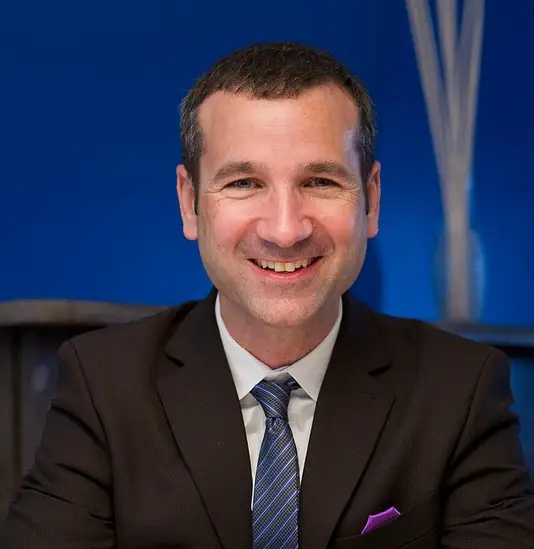
On Wednesday evening, five professors gathered in the Lyceum for the latest installment of the Sexuality, Women, and Gender Studies (SWAGS) Faculty Work-in-Progress Seminar series, titled “Homophobic Populism in the Americas.” Dwight D. Morrow 1895 Professor and Department Chair of Political Science Javier Corrales presented his research on how populist leaders across the Americas utilize anti-LGBTQ+ agendas to court religious groups and expand executive power.
The event was sat in on by four professors who provided feedback: Class of 1880 Professor in Greek and Department Chair of Classics Frederick Griffiths; Professor of SWAGS Krupa Shandilya; Winkley Professor of History and Political Economy and Department Chair of SWAGS Jen Manion; and Karl Loewenstein Senior Lecturer in Political Science and SWAGS Manuela Picq.
Corrales’ central claim reframes the current moment as “the backlash against the backlash,” referring to conservative populist response to the social progress achieved in the early 21st century. “In Latin America, there was a significant amount of legal progress regarding women’s rights, women’s participation in politics, and LGBTQ+ politics,” he said. This progress faced backlash as right-wing leaders sought to mobilize moral outrage and religious conservatism to consolidate power.
While Latin America has seen women in the presidency and in parliament, which Corrales said is “the result of feminist organizing and incredible strategizing,” he emphasized that these victories should not be overstated, because he didn’t “want to make it seem like the struggles [he is] talking about are definitive or decisive.”
Corrales then argued that “we’re witnessing the 16th-century Protestant Reformation now in Latin America.” He explained how Christian denominations that emerged and fought during that time period are now “coming together to fight progressive forces.”
Corrales defined this alliance as “homophobic populism” — when “populist politicians, secular politicians, and court religious leaders” promise to push hard in favor of conservative policies that align with the church and ask for its absolute tolerance of illiberalism.
He described populist homophobia as religious leaders trying to “figure out ways of making [politicians’ illiberalism] appear majoritarian and sell it as public good” — essentially using rhetoric that emphasizes family rights or religious pluralism to convey illiberal agendas as liberal, such as ending the separation of church and state.
Referring to images of Latin American leaders — such as former president of Peru Pedro Castillo — embracing religious figures, Corrales argued that populist anti-feminism and anti-LGBTQ+ protests organized by religious groups primarily use rhetoric such as “we are against the ideology of gender,” and “don’t mess with my children” to weaponize culture wars.
Corrales continued to describe how secular minorities and religious majorities are often set in opposition, citing Brazil as an example, where former President Jair Bolsonaro campaigned on the notion that “the minority that is against [religion] can leave. Let’s make a country for the majority.”
Despite these challenges, Corrales highlighted an emerging shift: the steady growth of irreligious or secular populations throughout Latin America. Corrales presented data on the large population of what he calls “light Catholics,” or people who are not deeply religious, which he notes are now “huge in many countries.”
However, this trend creates what Corrales described as the “schism,” or a visible internal divide within the Catholic Church, where progressive forces are weak and not effectively challenging conservative elements. “The problem is that they are not ready to fight tough with the conservative side of the Catholic Church, and they are letting conservatives do a lot of the driving,” he said.
Looking forward to a book chapter he is writing about weaponizing demographics, Corrales also highlighted recent victories of LGBTQ+ and progressive rights in Latin America.
“The cases I am discussing in the paper are real victories of successfully containing what seemed to have been a serious regressive [movement],” he said. Corrales cited examples such as “containing Bolsonaro, defeating the constitutional change in Chile, and getting the Peace Accords in Colombia” as positive signs of resistance to far-right populist attempts to roll back progressive rights.
Echoing Corrales’ cautionary optimism about resisting regressive students, attendees took away the importance of community solidarity. “The most important takeaway from the event was the success of organized, community action in combating harmful political rhetoric directly aimed at marginalized communities,” Christian Hall ’28 said.
Hall noted that there was a low student turnout and wished more students had attended the seminar. “We should be taking more advantage of the wonderful resources that we have in the form of lecturers,” he said.

Comments ()