

Thoughts on Theses: Emma Burd ’26
In this edition of Thoughts on Theses, Staff Writer Adrita Risha ’29 speaks with Managing Features Editor Emerita Emma Burd ’26 about her psychology thesis investigating parental engagement with children around emotion regulation, focusing on children with Attention-Deficit/Hyperactivity Disorder.
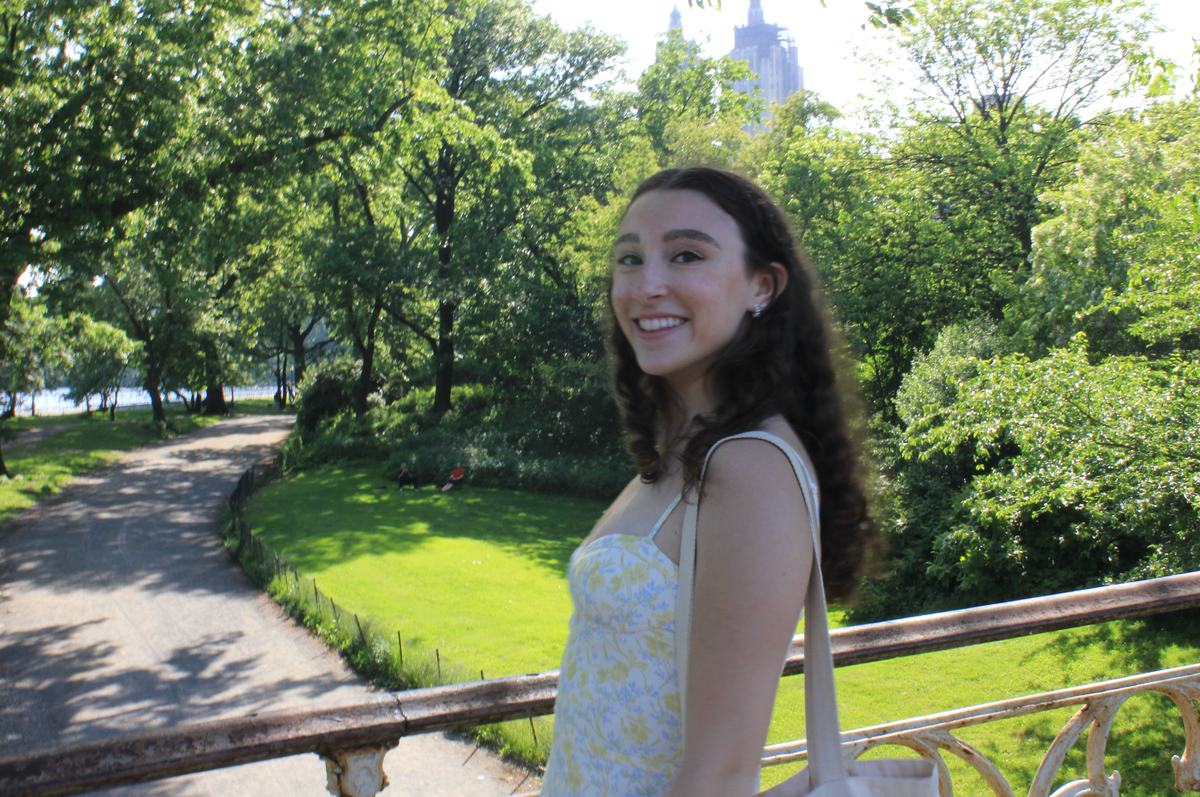
Q: Hi! Nice seeing you again, could you introduce yourself for our readers?
A: My name is Emma and I’m from a little town in New Jersey [called] Maplewood. I am currently a senior, and I worked as a Managing Editor for Features. I’m [also] a psychology major and was a research assistant in [Associate Professor of Psychology Carrie Palmquist’s] Child Learning and Development Lab (CLAD) on campus, and then switched over to [Professor of Psychology Julia McQuade’s] Peer Relationship Lab this past summer to start getting data for my thesis.
Q: Great, I’m excited to hear more! What is your thesis about? Is it about peer relations?
A: I [created] my thesis based on data that they were already collecting in the Peer Relationships Lab on campus. But my thesis is about something called parent emotion socialization behaviors, which are basically the ways that parents teach their kids about emotion regulation. My lab is specifically interested in kids with [Attention-Deficit/Hyperactivity Disorder] (ADHD).
We were trying to see if different parenting behaviors have disparate outcomes for kids who do and don’t have ADHD. The crux of my thesis is whether these parenting behaviors towards kids when they’re experiencing positive emotions are impacting their social functioning outcomes, for example, their relationships with peers. So it is sort of related to peer relationships in that way.
Q: What made you decide to do a thesis on this topic?
A: That’s a great question. I definitely was considering writing a thesis more on the developmental side of psychology. I started working in CLAD my sophomore year and was really interested in developmental psych early on in my time at Amherst. Then, I had a summer job working at two different labs at Princeton the summer after my sophomore year, where I got more interested in the clinical side of psychology. So, while I’m interested in development [and] want to work with kids in the future, I got interested in psychological disorders, and [then] knew I wanted to try [writing] my thesis on something more on the clinical side of things.
In general, I really wanted to write a thesis because I was interested in doing an in-depth year of research that I could really call my own, [and] learn more about the scientific writing process. I’m also interested in going to grad[uate] school, so I knew that writing a senior thesis would be good practice: A) to gain experience, and B) to see if I liked scientific writing and scientific inquiry as a longer-term project outside the classroom.
Q: Speaking of scientific research, how do you guys collect data for this kind of research?
A: I was here this past summer on campus, helping collect data, and … before I joined the lab they had [already] created a two hour long study [that involved] bringing a parent and a child into the lab. Across two hours, [the parents and kids] start by filling out a bunch of different questionnaires, some of which were assessing for ADHD symptoms and other symptoms of different disorders.
Then, we would have them engage in certain lab tasks together to get an idea of their parent-child interactions [and] what those actually look like. We had them do some fun [activities] and all of it was to evoke positive emotions, because that’s what we were interested in studying — parent behaviors in the context of positive emotions. One [task we] did was where [the parent and child] would take turns reading and guessing different phrases off of cards, but the speaker had a spoon in their mouth, so the parent and the child would take turns trying to say these words, which was funny, and evoked positive emotions. We record all of those interactions, and later we’ll go back and do what’s called qualitative coding. We’ll create a coding scheme and say, [for example], if a parent responds in one way or another way, it’s coded as either a one, two, or three. And then that changes the qualitative coding into quantitative coding. Then we [use that coding] for data analysis.
Q: Tell me a little bit about what you discovered with your thesis. Also, what does it mean to you to have your thesis make completely new discoveries for the field?
A: It’s really exciting, and I feel very proud to have accomplished that. And it definitely could not have been done without the support of everyone in my lab and my advisor. But I do think that it took a lot of hard work, and I’m happy to say that I have proved to myself that I can do it. There are definitely limitations of the study that I ran, and so in psychology, you never say, “oh, we’ve proven this point.” But the results that I found supported the idea that parenting behaviors in the context of positive emotions might not actually be the most important factor to be looking at. So what we found in the study was that it was really the variable of positive emotion dysregulation, which is [essentially] when kids are not able to regulate their own emotions in the context of positive emotions, that is really the significant predictor of negative social behaviors, and in kids with ADHD, especially. We didn’t find exactly what we thought we were going to find, which was that parenting behaviors are really important in shaping these social outcomes for kids. That was not so much the case. It was really the mediating factor of positive emotion dysregulation that’s causing these negative outcomes for kids, and so that’s really novel, and there hasn’t been that much research done on that.
I’d be really interested and excited to see follow-up studies that have bigger sample sizes and are more inclusive in terms of demographics, and see if that finding would still hold. But that’s a pretty new scientific discovery, so I think that’s really exciting and cool that I was able to contribute to the literature in that way, even if it was marginal. But I think it’s exciting.
Q: Who do you think should read your thesis? And why do you think people should read your thesis?
A: I love this question. That’s brilliant. I love it. Who should read my thesis? I definitely think people with ADHD would be interested in what I’m writing about. I didn’t realize how prevalent ADHD was until I started researching it. And I also think parents in general could get a lot out of reading my thesis, even though we weren’t finding [significant] parenting effects. I still think there are ramifications for parents who have kids both with and without clinical disorders.
Why do I think people should read my thesis? I think one thing that was really novel to me as I researched and wrote my thesis is that a lot of clinical psych is very focused on negative emotions, even cognitive behavioral therapy (CBT) is focused around “How do we get rid of negative behaviors, negative thoughts, negative emotions, [and] change them for something more adaptive?” What I found … is that positive emotions are also really important to consider in terms of outcomes for kids. Part of the reason I wanted to do my thesis was to see if and how pre-existing models on negative emotions translated to the realm of positive emotions, because recent research has been showing that when kids have dysregulated positive emotions, that can also be really detrimental to their outcomes as well. That’s kind of an understudied part of the field, because most people think, “Oh, positive emotions. Those are great! We should be trying to get kids to be experiencing as many positive emotions as possible, because that’s a really adaptive thing.” But I think that what a lot of people don’t think about is that it’s also potentially causing negative outcomes for kids. If they’re experiencing exuberance or excitement, but it’s uncontrolled, that might not be an adaptive thing. That’s really important, and I would hope that people would get that from reading my thesis and maybe start thinking about different valences of emotions in different ways.

Q: You collected data over the past two years, but when did you start the writing process for your thesis?
A: I was [at the lab the summer before my senior year] for the [lab’s] second summer of data collection. That’s when I technically started working on my thesis. I was collecting data over this past summer, and then the writing really started in the fall. I worked with [Professor] McQuade, who’s my thesis advisor. Typically for psychology, the first semester is devoted to writing the introduction, which is about 25 pages, and you’re essentially doing a literature review — seeing what’s already been published on the surrounding topics that you’re interested in.
[At the same time], I was also starting to think about what my next sections — methods, results, and discussion — could theoretically look like. But I didn’t do any data analysis at all until my second semester. This semester, two of my classes were thesis credits, so I spent a lot more time working on my thesis.
Q: That’s really cool. Was Professor McQuade the one who inspired you to do this thesis?
A: I took “Clinical Psychology” with her [my sophomore year] … and she is very well-versed in clinical psychology at large, but is definitely mostly focused on ADHD research. I remember when we got to that unit in clinical psych, she just got so excited about it, and it was so palpable. [The unit] was so exciting to her and such a big interest of hers that I was like, “I want to be that excited about something in my research.” I had also never done any research on ADHD, and at that time, I was still working in the developmental lab. But I think that was the first time I thought to myself, “What would it be like to write a clinical psych thesis?”
Q: Comparing last semester and this semester, what has the process of writing your thesis been like? What was the day to day?
A: I didn’t know that the psychology department has a norm for how many hours per week you’re supposed to be working on your thesis. They say that each class credit that the thesis is worth should [equate to] working for 12 hours. So, first semester, it was supposed to be 12 hours a week because it was one class, and second semester, it should be 24 hours a week [because it’s two classes]. It was a lot of work. What was difficult was, if I had a really busy week in my other classes, my extracurriculars, or my social life, having to balance that 24 hours a week was something I had to be very diligent about. I think if I hadn’t been really excited about what I was doing, that would have felt a lot more arduous.
I also had one thesis meeting a week on Wednesdays with my professor, [where] we got to touch base about the work I had done for the week, and if anything needed to be edited or changed. Then we would figure out what the next week would look like. [We had those] every Wednesday [for the past two semesters]. For the past few weeks [after submitting], I’ve been thinking, “What am I supposed to do for an hour on Wednesday?”
Q: Would you say meeting with your advisor was something that was helpful?
A: Oh yeah. Some of my friends had different experiences in terms of how involved their thesis advisors were. I was really grateful to get a lot of feedback on my work. I think [Professor McQuade] gave me the right kind of feedback, which was mostly pushing me to think more deeply about topics and to explore concepts in ways I probably wouldn’t have on my own. I feel like I came out of the process creating something that really was authentic work that I had done myself.
It was also really nice to have [someone that helped] make sure I was meeting expectations. Something that was really stressful for me was [thinking], “Am I falling behind? Am I pacing this [correctly]?” I had no idea. [Professor McQuade] was really helpful in terms of making sure that I wasn’t falling behind, and that I was where I needed to be. She used this metaphor from [Professor of Psychology] Matthew Shulkind; he said that a thesis advisor is supposed to help their students swim from Florida to Cuba and throw them a lifeline if they need it, but the student is doing the swimming, and the thesis advisor is on the boat, making sure that they successfully make it there. That’s exactly what it felt like. She’s gotten people from Florida to Cuba before, but it was my first time swimming, and she was definitely a big support. I like that metaphor.
Q: Did you have any particular study spots where you worked on your thesis? Did you work with other people around?
A: I’m a person who works best alone. I love doing work with my friends, but thesis work was deep, critical thinking, and I needed to be in a quiet, noise-restricted place.
It’s going to sound boring, but I did some of my best work in [Robert] Frost [Library], and I think Frost third [floor] was a great location for me. I also did some work in the Science Center because it was close to where my thesis meetings were, and between classes it was quiet there, so that was a good spot as well. Those are probably the most generic places to study on campus — the Science Center and Frost — but that’s my authentic answer for you.
Q: Now that you’re done with your thesis, what do your future plans look like? What are you doing after graduation?
A: I will be working as a clinical research coordinator at Massachusetts General Hospital, so I’m moving to Boston next year. I am really, really excited about it. I think it’s going be a good fit. It’s a lot of NESCAC people who are part of the lab: The [Principal Investigator (PI)] is a Williams grad[uate] and the current clinical research coordinators are from Middlebury. So, it’s very liberal arts-friendly.
I’m also hoping to live with two of my friends who are graduating from Amherst, and keep the little Amherst bubble going into post-grad, which will be nice. And yeah, I will be doing similar research there, so I’ll be helping them coordinate studies with kids who have ADHD and learning disorders more broadly. I’m really excited for a new adventure.
Q: Any last thoughts to share with the readers?
A: I think one thing that I would recommend to [rising] seniors in general, it sounds so corny, [but] I tried so many new things this year. I told everyone I was in my ‘say yes’ semester. I was in a play this semester, and I’m nowhere close to being an actress at all. But I was like, “Yeah, I’ll try out for a play.” I [also] ran a 10-mile race for funsies. I think that people think of theses as [big projects] where they think, “Okay, this is my focus for senior year. This is what I’m going to spend all my energy on.” And I just think it’s really a wonderful thing that I was able to pursue other [interests] in my ‘say yes’ semester. I would really recommend other people do that as well, if they have any desire, because when else are you going to be able to? It’s [your] last year of college! Now or never, you know what I mean?
Comments ()