

Thoughts on Theses: John Joire ’26
Managing Features Editor Talia Ehrenberg ’28 spoke with Managing Puzzle Editor Emeritus John Joire ’26 about his electro-acoustic chamber orchestra composition. Entitled “Swamp City” — a nod to a nickname of Joire’s hometown, Washington, D.C. — Joire conducted the premiere performance on Jan. 31.
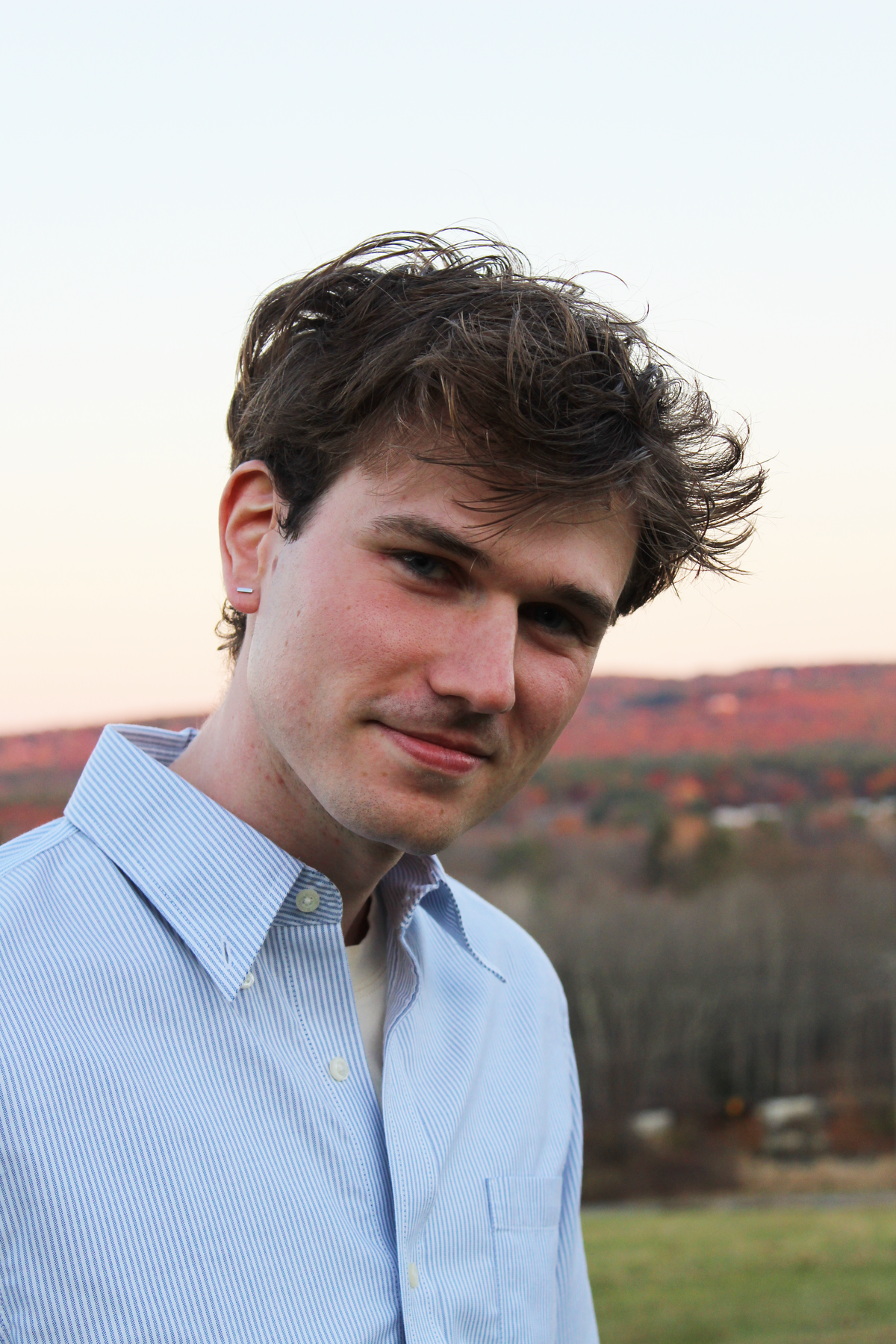
Q: To begin, would you mind introducing yourself?
A: My name is John. I’m a music and math major. Even though I wrote a music thesis, I see these majors as both very important to me and equal parts of my time here at Amherst. As a musician, I am a composer, hornist, and field recordist with a special interest in electroacoustic depictions of nature.
Q: How did you decide to write a thesis? Why did you choose to write it in music rather than math?
A: In the junior spring semester, ... I was debating whether [to write a thesis] in music or math. I had a much clear[er] idea of what I could write about in music than math. And when the math department sent out a schedule and list of potential topics, I looked at that, and I was like, “Okay, none of these are really speaking my name,” and I didn’t want to do a thesis for the sake of doing a thesis. So, that’s why I decided against [math].
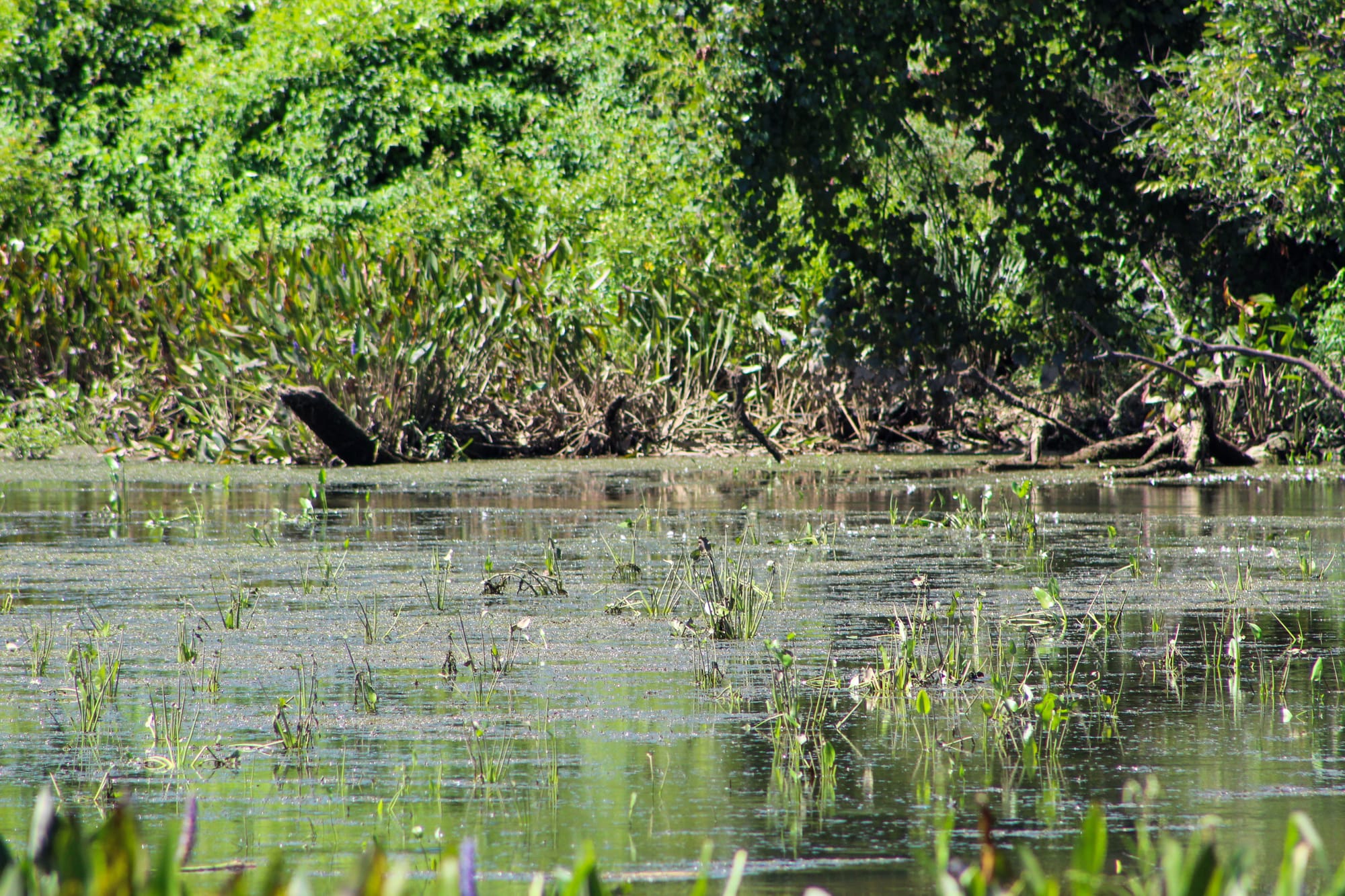
On the music side of things, at the time, I was doing [a] special topics [class] with [Assistant Professor of Art Brian] House on acoustic ecology, and we were talking a lot about nonhuman environments: how to record them, how to faithfully represent them, and the different rhetorical and artistic meanings that you can gain from them. It was very interesting, very rich. And I was already looking at swamps and these ecosystems that people, in many ways, cast aside, because of this colonial history of swamps being very hard to settle and very difficult to drain — it was considered this big engineering feat to do so. And because of that, they became an obstinate symbol. This history was really interesting. And also, they’re very rich with sound. They have such a diversity of insects and birds … it’s like [another] world. And, since they are aquatic ecosystems, you can record underwater with hydrophones — that adds another dimension to the actual vibrations that permeate the space.
Being from [Washington,] D.C., I was interested in how this perception of “swamp” as related to my hometown. So in this class, I built a mixer on an electronic instrument which used different field recordings taken from Washington D.C., some leaning towards the nonhuman, others leaning towards the more human. The goal of this project was to give agency to viewers, to take control of the city’s soundscape, and to make a political call to action by manipulating the sounds, distorting them, and draining them. I wanted people to take notice that they have power over this environment. And so that project was very public-facing. I relinquished a level of compositional control because I’m creating the bounds with which they can work in, but not the sound itself.
What I wanted to do for my music thesis was a more personal exploration. I have a background with classical music; I knew I wanted to write a larger work. When I was choosing instrumentation, I was thinking about what would be realistic at this school: How many people can I hire? What instruments would I want to write for? That’s why I settled on [a] chamber orchestra; I wrote for small string sections, single woodwinds, and electronics.
The single woodwinds are really my favorite things to write for because they have such varied timbres and can mimic so many biophonies really well. Then the electronics also create this second dimension of, “Where is this coming from? The orchestra? Is the sound coming from the playback or through the live processing?” It’s this ventriloquist effect of coloring the sound in interesting ways. That’s how I chose instrumentation.
Q: Have you composed anything in the past? How much work did it take to actually put this together?
A: This was definitely the largest work I’d written before. I had taken many iterations of the composition seminar here, thanks to my advisor, [Andrew W. Mellon Professor of Music David E.] Schneider, [who told me] “you really should take Composition I,” because I didn’t have much composing experience.
Coming to college, I had written a few songs for my high school’s production of “Much Ado About Nothing.” I had also scored a production of “Peter and the Starcatcher.” So, I was mainly writing for the theater world. But then, when I got here, I began to write music for its own sake, under the guidance of [Stanley King 1903 Professor in Dramatic Arts (music)] Sawyer. That was very eye-opening. But none of the composition seminar courses really give you enough time and resources to write a piece as large as this. Most of the time, the pieces [are at] maximum 10 minutes, and they’re for smaller groups as well.
[For example], I’ve written for brass quintet and choir, and there was an especially enjoyable instrumentation last year of alto saxophone, electric guitar, piano, and percussion with the Hinge Quartet. But never orchestral writing, [and] never with electronics. Both of those things were very much part of the research process. Over the summer, I delved into orchestration techniques and the electro-acoustic canon to feel comfortable enough to begin composing.
Q: Do you view your thesis as political? Do you think that it should be viewed as political? If so, what are the politics of your thesis?
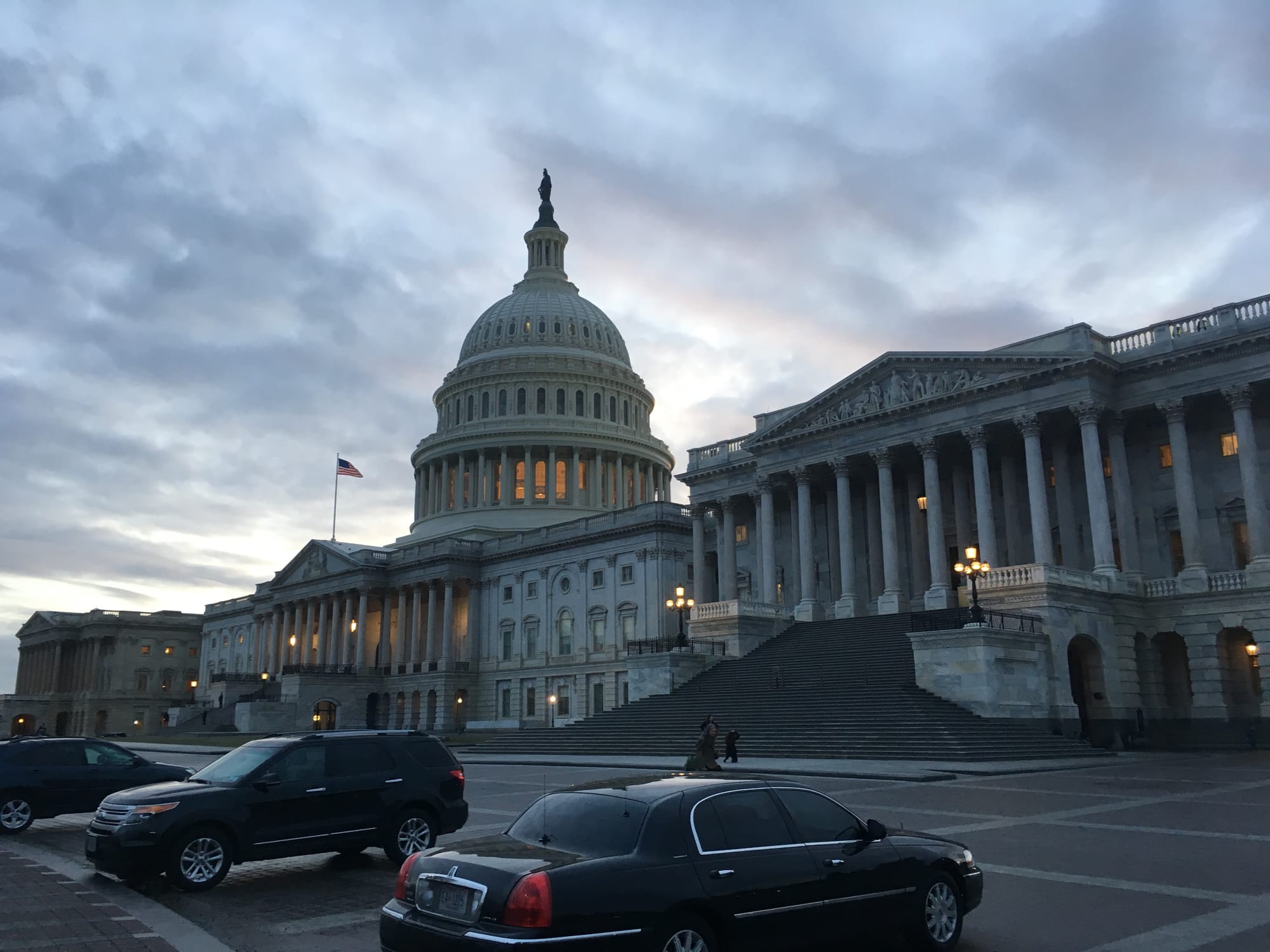
A: Absolutely. I think all, if not almost all, art is political in some way, and definitely can be analyzed through a political lens. [Especially] because this piece is so place-specific, involving people or inhabitants, both human and nonhuman. All of these are political ideas, because politics is, when you get down to it, how communities are able to live. Also, the first thing people think when they hear D.C. is what’s happening there with the federal government. Even though the main focus of my thesis was distinct from the federal government, intentionally, that is also an important detail. A large theme, or call to action, of my thesis is for D.C. statehood and how, today, 800,000 Americans are disenfranchised at a federal level. Of course, this also exists in other U.S. territories: Puerto Rico has millions of people. There are plenty of injustices that are so blatant, and I feel part of my duty to know about them is also to share this information, because I think a lot of people don’t know about the D.C. statehood movement.
Q: On that note, was it your third movement that you wrote specifically about the federal takeover? How did you organize the three movements and have the flexibility to incorporate political developments as recent as this summer?
A: As the events of a federal takeover in August were happening, I was shocked and horrified [by] how relevant it all was to the third movement. Formally, in the piece’s first two movements, I wanted to focus really on the environment. The first movement introduces the topic of unfurling the swamp. The second movement is about the relationship between the Potomac River and the D.C. metro system, both underground transportation systems. The first half of the work sets the stage, and we get to the third movement, and we’re introduced to humans. I guess we had a little bit of that when listening to the metro, but really, humans for what they are, not for what they have created.
I had to think about the history of Washington D.C. as well: “what was this city in its early colonial founding” and “when it was first marked as Washington, D.C.,” and “what were the values at that time?” … Most of the federal buildings in Washington D.C. were built by enslaved people, and so there’s this horrible dark shadow over the city’s architecture. Then, it was originally a diamond shape, and when it became clear D.C. would ban slavery, Alexandria took that chunk back, [creating] a sort of bite out of the city, so that Alexandria could still function as a slave market. So even the image of the city itself is a remnant of its ties to slavery — that is an inescapable truth of the city.
The beginning of the third movement — which is is about this contradictory hope of the founding fathers — plays this bassoon solo, which is literally a backwards version of Woody Guthrie’s “This Land Is Your Land,” and underneath the tune are these expressive lower strings, in meditation with the bassoon. But then there’s this electronic distortion happening as well. So, it’s overall very trippy and disorienting. As the movement keeps going, it bulges into this brutal, grotesque dance of something that I, at least, imagine as political gears turning, and it’s growing out of control. What got us to where we are today came from the past’s puzzle pieces stitched together, and so the arrival point of that movement is when the bassoon solo returns, now electronically reversed to actually reveal “This Land Is Your Land.” Now the audience can notice it, and it’s even stranger and more distorted since it’s a reversed track. It contains the magical artifacts of sound reversal, which is aesthetically intriguing and hopefully meaningful. My wish was to make the bassoon really question the fundamental values of the city, of the country, and how they were originally written and conceived. I mean, that’s not a crazy, groundbreaking point, but it was interesting to explore, especially with the electronics and how you can represent this contradiction through sound.
Q: How did you come up with the idea to play “This Land Is Your Land” backwards?
A: Music technology has always furthered composition. When tape was really taking sound by storm in the ’50s and ’60s, … composers were using all they could — that meant playback, speeding up, cutting, and reversing. The resultant genre was known as musique concrète, or tape music. The idea of reversing to create sound material wasn’t new. But I thought it could definitely have potential: have the acoustic source material begin reversed, then use the reversal as the distortion mechanism. As I was writing, I knew the strangeness should come from the electronics, so I thought, “What if we play it how it is, but with a huge amount of distortion on it?” And it admittedly sounded pretty cool, but also undoubtedly kitsch. It was too much. I went back to the drawing board, and this reversal was the one that stuck because it had these wonderful artifacts that didn’t sound like a human playing. A human can’t produce these pings and sudden drop-offs of pitch, so there’s an alien, otherworldly quality. To me, it sounds a lot like you’re remembering something, but it’s not quite how it actually happened — it’s blurry in some way. And so I thought it would work well to tell this passage of time.
Q: Was there anything unexpected you learned through this process — about yourself, Washington D.C., or the use of technology?
A: One of the biggest challenges was figuring out the actual skeleton of the electronics because part of the composition process, for electronics especially, is figuring out how to harness this infinite canvas. Acoustic instruments are also an infinite canvas, but they have a lot more established rules and practices, especially when there is a human performer playing your music. Everyone has built-in muscle responses, and they are practiced musicians, so they want to show their practice.
But with electronic instruments, you’re inventing the instrument’s own limitations, and it doesn’t become so tedious anymore. If the person controlling them presses a button, the sound can do anything you want.
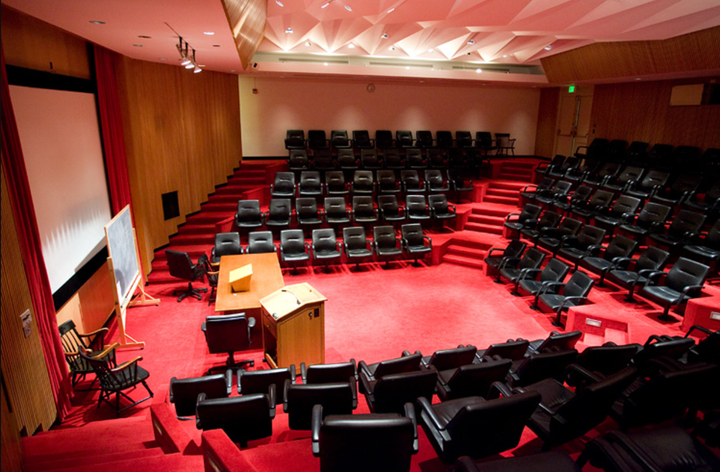
I was really excited to experiment with Ableton’s capabilities, [during which] I built this electronic skeleton … Also, I coded some effects in this programming language called Max. It was fun to think, “This is exactly what I want from this effect, and I will fashion it in a way that serves the piece most.” That’s what happened with the bassoon solo reverse mechanism, because Ableton’s reverse loopers are not very good. And thinking about where the mics would be, thinking about the signal flow and routing, and thinking about the space that I would be performing in: Buckley Recital Hall. When you’re electronically amplifying something, it’s so dependent on the space, so a lot of it was also testing what would work in that hall, in rehearsals and sound checks, and hoping that with all the work and planning I had done with the skeleton that things wouldn’t go horribly wrong on the sound check. I would have been in a scary position because that was the day of the concert, but thankfully, the electronics worked as planned.
Q: You mentioned that Professor House was really fundamental to your acoustic ecology class. Are there other professors or peer musicians that you’ve worked with that were particularly useful in this process?
A: Professor House fundamentally altered my trajectory at Amherst. I took “Intro to Sound Art” with him in my sophomore year, and from then on, I began thinking a lot more about listening, vibration, and how we experience sound. It became very romantic, like now when I walk, I don’t listen to music, because it’s just fun to listen to things [instead] and think about unseen vibrations. Aside from him, my thesis advisor, [Visiting Assistant Professor of Music LJ] White, definitely launched me towards finding a compositional voice of my own, which I hadn’t really considered or thought about before. Professor White is very good at helping you reflect on your own musical practice: “What do you want to say, and how do you use these fixed musical elements to say them?” He is also incredibly knowledgeable about orchestration and contemporary classical notation, so he was a great advisor for my first foray into contemporary orchestral writing.
[Karen and Brian Conway ’80, P’18 Presidential Teaching Professor of Music] Jeffers Engelhardt was also very influential, as one of the more sound studies-oriented professors here in the music department. I took “Soundscapes of the Connecticut River Valley,” where I] and my friend, Charlie [Odulio ’26], were examining the relationship of hunters to sound — how silence and listening are impacted in this very intimate moment. And then, outside of the College, I also have a lot to thank Mr. Paul Phifer, who is a music teacher at [Jackson-Reed] High School in Washington D.C. I had a few conversations with him [about] Go-Go music, which is D.C.’s official music genre, because I was hoping to incorporate it in the last movement of my thesis, since it is so oriented around community gathering. My associations of Go-Go music come from the park summer concerts I went to in my childhood.
Q: You performed the composition on Jan. 31. How did it feel to perform this? Where does that leave you in the thesis process now?
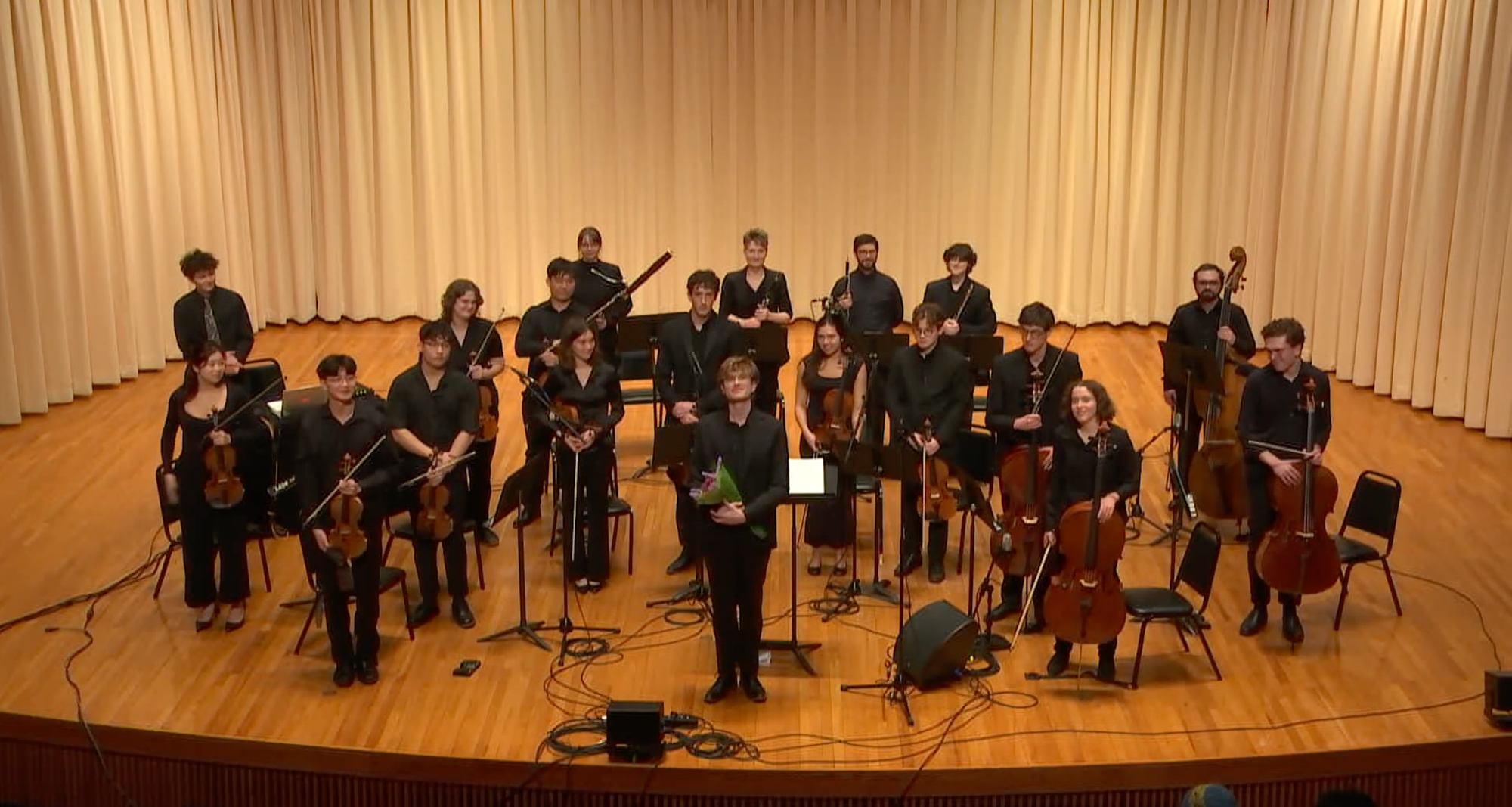
A: It felt amazing to perform. I had also been training as a conductor for the past months before with [Senior Lecturer in Music and Director of Instrumental Music] Mark Swanson, who I also have to thank. This was [my] conducting debut, I was actually way more nervous about conducting than I was about having the premiere of this composition, just because it was something that was completely new — I’d never performed in that way before. [Before the concert], I didn’t even plan how I was going to come out. And I forgot the sort of ritual: the concertmaster and then the conductor, with the tuning happening before me. My head was buzzing, but as it was happening, it felt very cathartic and just fun to play and make music with all these people that I was so grateful to be play[ing] in this piece. Some alums came back, and it was so nice of them. It was a very special moment. After, I definitely felt this release of pride for having done this huge work, for having performed it to my heart’s content, and, I hope, for having imparted its meaning to people.
In terms of the process, when I was preparing for the performance and the actual paper parts, I was focused a lot on getting it legible for the musicians themselves. But as for the score, I knew [that] I knew the piece, and so I was less worried about having that look really pretty for the performance, but the score is what I submit. And so, for the past month, I have just been formatting. I am lucky that my thesis did not feel like work until I had to format everything. I’ve been marking it up for a final look, and what I’m submitting to the registrar is the score, the concert recording, and the program. Those three things will together comprise my “thesis” in the eyes of the registrar.
I also think that, in terms of my process, the mixer, the electronic instrument that I built, was very important to the research of these ideas, as well as the recording, the Ableton set, and the Max patches. There are a lot of electronic things that a submission [to the registrar] would find very hard to parse, but I hope the score itself packages everything nicely.
Q: In terms of what’s next, do you hope to perform this again? This was only the premiere. Do you hope to bring it home to Washington D.C.?
A: I do. Once I’m done and I’ve done my [thesis] defense, I’m gonna send it to a few organizations in the city, hopefully setting up a performance there. I think it would change the meaning of the performance there and turn the music into a site-specific meditation. I really want to make that happen.
Q: That’s so exciting. Do you have any advice for someone who’s considering doing a music thesis?
A: Advice for someone doing a music thesis: I think it’s important not to let past theses inform your choices. Do what you want to do. If that’s a string quartet or a theory paper, amazing, but if that’s building an electronic instrument or scoring a film, you shouldn’t feel boxed in.
For those doing composition, don’t think you have to write for humongous instrumentations. Because I definitely thought that, at first, I needed brass and huge wind and string sections, but you can do so much with a pared-down ensemble, and it makes the logistics ten times easier. In a way, it works much better because people can converse more through the music and feel more connected, like one fluid organism. So, wash away your preconceived notions of what you think your thesis has to be, and try to start with a blank slate of what you’re trying to say. The music department has such varied theses. Many of my peers are writing humanities papers and doing historical research or sound studies research. One of my friends is producing a folk album, and another has written a generative AI algorithm for composing music. So it’s a humongous breadth of genre, humongous breadth of form, and that’s really inspiring to see.

Comments ()