

Vogel Lecture Discusses Global Wave of Democratic Backsliding
On Friday, the political science and economics departments hosted the lecture “Democratic Backsliding and Autocratization in the America.” Professors explored the global wave of democratic backsliding around the world, promoted by both left-populist and right-wing nationalist parties.
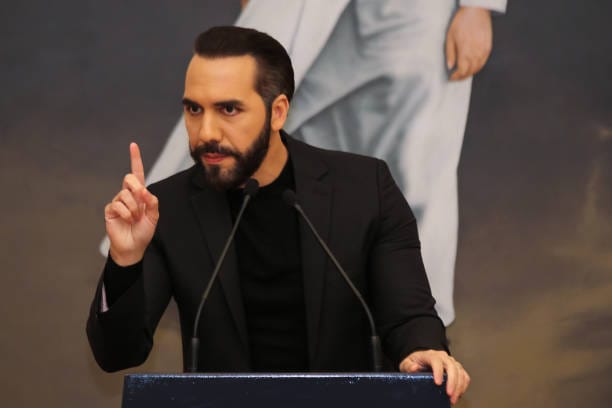
On Friday, the Department of Political Science and the Department of Economics hosted their annual Vogel Lecture, established in memory of Robert C. Vogel ’60, to highlight issues in Latin American political economy and development.
Professors of political science Susan Stokes from University of Chicago and Erica Frantz from Michigan State University were the visiting speakers who led this year’s lecture, titled “Democratic Backsliding and Autocratization in the Americas.” The talk was moderated by Dwight D. Morrow 1895 Professor and Department Chair of Political Science Javier Corrales and Professor of Economics and Environmental Studies Katherine Sims.
Frantz began the talk by stating that democracy is under stress globally in various ways and regions: In some places, such as in the U.S., Mexico, and India, the process of democratic backsliding — an incremental undermining of democratic institutions — left “democracy weakened,” while in other places, such as Serbia, El Salvador, and Georgia, it has led to the onset of authoritarianism.
“We used to think that if a country was democratic for many years, and if a country was rich, that it would be protected from democratic challenges. And instead, with a number of the examples that I just mentioned, we’re seeing some questioning of the traditional logic here,” she said.
Frantz highlighted a similar pattern in how democracies are falling apart in the 21st century, characterized by democratically elected leaders who undermine democracy from within. For Frantz, key indicators of democratic backsliding include efforts to undermine the independence of the judiciary, attacks on media outlets and censorship, assaults on civil liberties such as freedom of speech and freedom of association, and offensives on political opponents.
“All of those things are a sign that we have a problem in a democracy, but they don’t in and of themselves mean that the place has transitioned to authoritarianism,” she said. “For that to occur, the red line, in my view, is the freeness and fairness of the electoral contest.”
Frantz proceeded to examine the role of “political personalism” in democratic backsliding, a major concern in her research. According to her, the term “personalist party” describes parties that exist mainly to “propel the leader into power and to maintain them in power,” instead of traditional parties that are organized around a clear political platform. She highlighted that some examples include Hugo Chávez in Venezuela, who turned his party into a personalist one, and Nayib Bukele in El Salvador, who came into power through a personalist party.
“We have a really robust amount of evidence that when leaders come to power backed by these personalist parties and when the parties get a majority in the legislature, we see democratic backsliding.”
For Frantz, early action, broad-based coalitions, diversity of tactics, and a unifying message are essential for pro-democracy groups to stop democratic backsliding. She highlighted successful cases of pro-democracy efforts in Latin America, such as Guatemala in 2023, where pro-democracy forces were able to unite around the goal of fighting corruption, and Brazil in 2022, where the unifying message was “fighting against social injustice.” In both situations, the movements were able to stop further democratic erosion in their countries.
She added, however, that even in these cases, democracy doesn’t rebound immediately: “The damage that these leaders do and their leadership groups do can be fairly long-lasting. But at least it can stall some of the further slides or a more repressive and volatile political environment.”
Stokes joined the conversation after Fritz and made similar remarks. Stokes emphasized that, in addition to being a global phenomenon, democratic backsliding is also “ideologically diverse.” According to Stokes, backsliding leaders usually come in “two basic flavors”: left-wing populists, such as Bukele in El Salvador, Rafael Correa in Ecuador, and Daniel Ortega in Nicaragua, or right-wing nationalists, such as President Donald Trump in the U.S. and Viktor Orbán in Hungary.
Stokes also explored how her research presents a connection between income inequality and democratic backsliding. “The higher the level of income inequality of a country, other things being equal, the greater the risk that it would experience democratic backsliding,” she said. “We estimated 100 models, different statistical models, different sources of data, different kinds of wealth distribution ... it really is a very robust association.”
According to Stokes, one of the factors that explains the connection between income inequality and democratic backsliding is the “culture of grievance” produced by inequality, a sense that one was left behind or treated unjustly by the broader society. For her, this is a feeling that backsliding leaders can easily capitalize on.
Stokes also emphasized that countries with significant wealth inequality experience a sense of loss of confidence in institutions, which allows leaders to “trash-talk democracy” while the public becomes more tolerant of attacks on those institutions.
According to Stokes, there has been a steady decline in confidence in institutions over the past 50 years, coinciding with growing income inequality. She added that backsliding leaders take advantage of distrust in institutions as a result, allowing them to say, “don’t worry if I attack the press … they were already bad institutions in the beginning. They were already corrupt. They were expensive … [It] is no problem that I take them over and raise them to the ground and start over.”
Stokes concluded her portion of the talk by emphasizing that the most important actors in removing backsliders are voters. “[Backsliding leaders are] not usually ousted in popular protests,” she said. “They’re voted out of office. They’ve been voted out of office in several countries. And so voters and public opinion actually play a really important role in stopping the process of democratic backsliding.”
When asked about the relevance of welcoming speakers such as Frantz and Stokes to the Amherst community, Corrales said in an email to The Student that the two are global experts on the topic. “They are well known for their conceptual innovation, clarity of thinking, and original empirical research. And better yet, drawing from multiple cases from all over the world, they were able to apply insights to explain and interpret what's happening in the U.S. as we speak,” he said.


Comments ()