

Amherst Adventures Abroad: GeorgeDaniel Dixon ’27
In this installment of Amherst Adventures Abroad, Staff Writer Savita Jani ’28 interviewed GeorgeDaniel Dixon ’27 about his study away at Howard University, where he joined a step team, learned about fashion, and traveled to the Dominican Republic to aid an International Criminal Court case.
Q: Welcome! To start off with the basics, can you just tell me where and when you studied away?
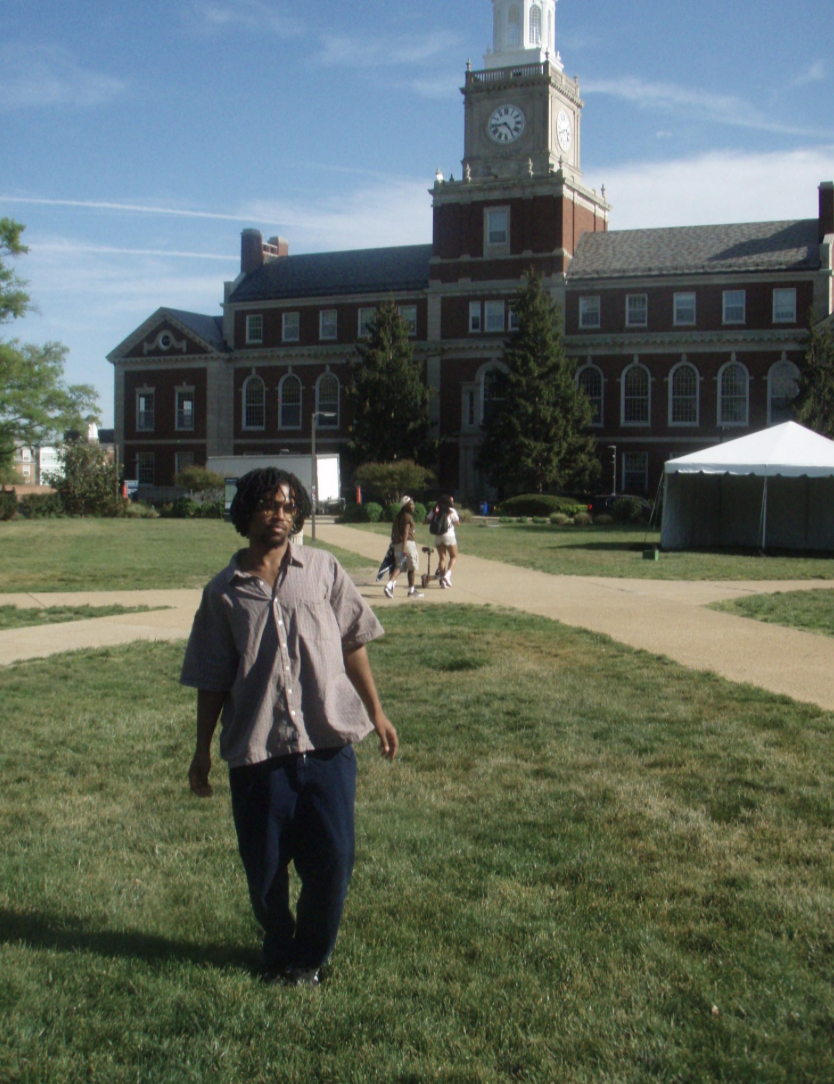
A: I studied away during my junior spring at Howard University. I did a domestic study away program. It was transformative, to say the least. Because I’m an economics major, I need to satisfy certain credits, and international study away programs are complicated when it comes to credits for the school. I wanted something that could give me a new experience, but also satisfy my credits. And Howard was uniquely positioned for that, specifically [since I am an] African American.
Q: What about it was transformative?
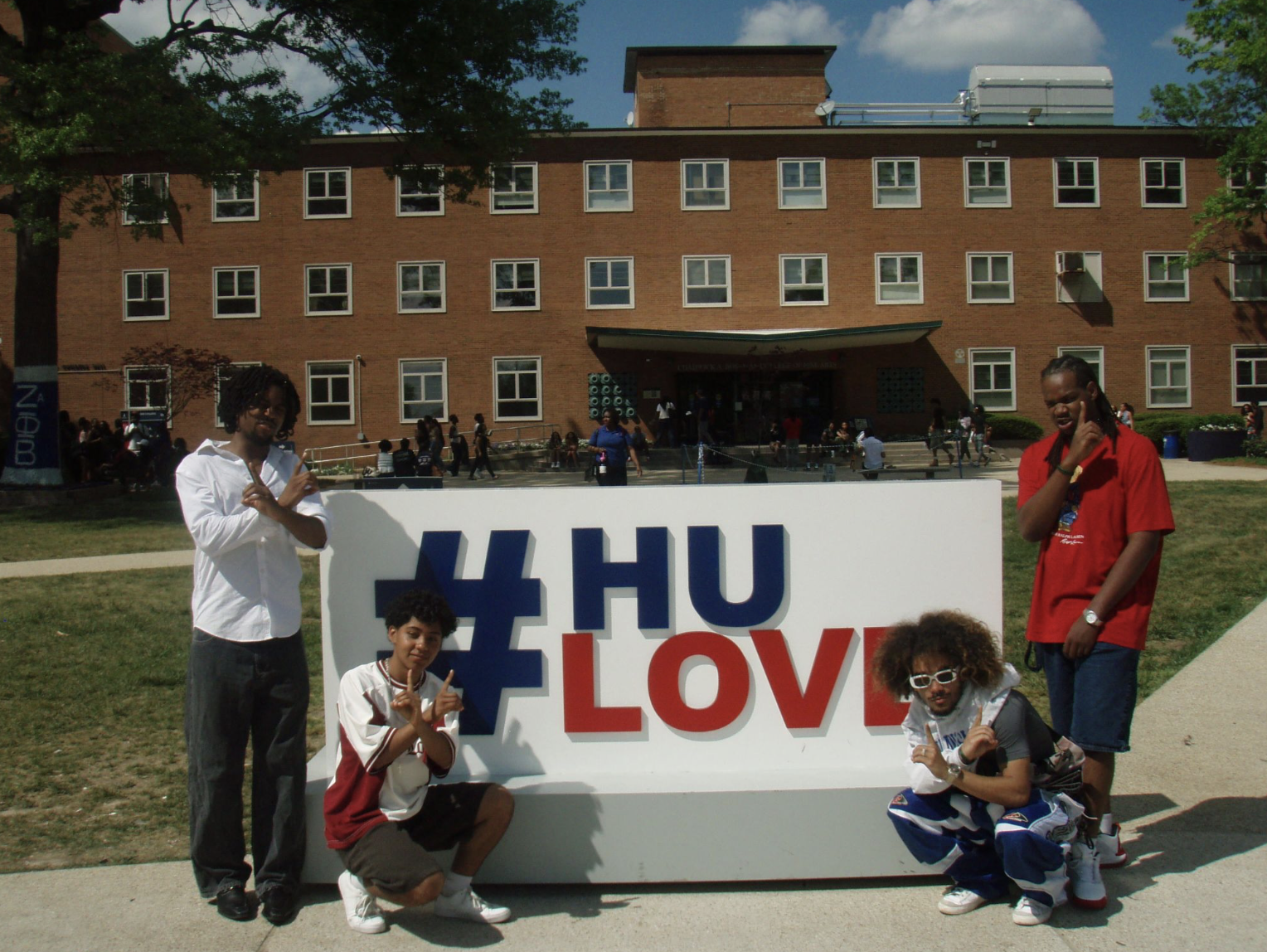
A: I think learning about the intersection of culture and institutions was really important for me. There were a lot of affirmations. There was a lot of racial pride. There was a lot of school spirit. Those are certain things you kind of don’t see here at Amherst [College], especially as it relates to my identity. And so I was just feeling honestly affirmed, seeing me and myself reflected in every aspect of the school, which was really inspiring. And also, instead of a quad, we have a yard at Howard. The yard was such a cultural immersive space where you could just dance, be yourself, and just exist without any requirements.
One of the things I [valued the most at Howard was] the Drew Hall Step Team. I joined a step team on campus, and it was just full of hard work [and] grit, but also brotherhood. I think the way that men care for each other at Howard is really special. I think it [creates] certain aspects of confidence, self-esteem, respect, but also fun, and softness, and all these vastly different levels of emotions. And so I think that’s one of the main takeaways that I got from Howard: just the brotherhood and being like, “what does it mean to be a brother in this society?”
Q: Are there any other favorite things about study away that you would like to highlight?
A: Yes! So during my “Black Experience in the Caribbean” course, we actually went on a trip to the Dominican Republic (DR). Amherst funded it. I’m super grateful for the Office of Diversity, Equity, and Inclusion, [the Provost], and the President’s Office for funding that. But I was able to research the ethnic Haitian experience in the Dominican Republic because of this inhumane treatment from the DR to ethnic Haitians. Because of the way the Trump administration has been retracting grants, it’s been incredibly important that we remain committed to projects [like this]. We documented [ethnic Haitian] experiences to then use for legal rationale in the International Criminal Court, because my professor is charging the president of the DR with crimes against humanity in the International Criminal Court. I was really happy to do work like that, but also [that should not be necessary] in the 21st century.
Q: And were you interviewing ethnic Haitians?
A: Yes, and actually I used some of my background in Spanish here. I took a year and a half of Spanish at Amherst, so that was helpful. I’m not completely fluent, but I am conversational in Spanish, so I was able to at least navigate my way and try to converse with those who are working on the bateyes, which are called plantations in the DR. So I was able to do some type of interviewing and qualitative work there.
Q: Do you have any other memorable courses you took at Howard?
A: Yes, and this is also just a reflection of the way I think culture [impacts] institutions. I also took a swimming course. Historically, resources [had] been restricted [from] Black communities in the Jim Crow era, specifically as it relates to the useful skill of swimming. I took that very seriously coming into college. But Amherst [still doesn’t offer] a swim course, even though a student had already passed away from a [required] swim test [in 1973]. His name was Gerald Penny [’77]. Going into Howard, I was like, “I want to learn how to swim.” And guess what? Howard had a swim course. That was also one of the main takeaways: that I learned a helpful skill not only in [academic] institutions, but in the real world. And it shouldn’t have taken me going to an HBCU to do that, but I really did enjoy that swim course.
Q: Yeah, that’s awesome. Were there any other favorite clubs or activities that you want to mention beyond dance and step?
A: Yes, the modeling and fashion show! I wasn't necessarily a part of it, but I was able to interact with it and engage with it on the yard, where I walked and just tried to show off my clothes, and that’s sort of a medium of confidence: the ways in which you can apply your confidence in institutions. That was pretty important for me because I really wanted to grow in that area of myself where I’m expressive, or [where] I can just be myself in certain spaces. And I think in a modeling/fashion show you have to present yourself in that way. So it was a very important thing for me.
Q: How is it feeling to be back at Amherst for your senior year?
A: It feels great, honestly. One thing I really appreciate about Amherst now that I’ve been away is the intellectual depth that we go into in the classroom, especially as it relates to the humanities. We read the readings, and we really aggressively tackle a question. And the professors are expecting that level of critique and analysis when it comes to the classroom. And I think also, with things I’m doing with the Black Student Union (BSU), it makes me think about how the institution can do more for the Black students on campus and institutional practices and norms and behaviors that go into how self-esteem is curated, and expression for Black students on campus. So even though I’ve been back and I’m enjoying my time back, I think there’s a lot of work to be done in terms of building an institution that is accommodating to all identities.
Q: Can you talk a little more about your involvement with the BSU here?
A: I’ve been in BSU ever since my sophomore fall. I serve now as the junior chair, which is essentially the vice president. One of the things we’ve been working on with the administration is the Black Beginnings Ceremony, which is a specific and tailored ceremony regarding Black history at Amherst. Most students don’t know that the first Black student, [Everett Jones 1826], was actually in the second class of Amherst in 1822. … But you come here not recognizing [that] your history is that deep, and your history is that rich. [Some] other things we’ve been doing [are] we’ve been trying to go to D.C. to go to the African American Smithsonian Museum, and even return to Howard University to engage in different cultural enrichment programs. Now that they’re trying to erase the history of the African American Museum, it’s really important that Black students have an opportunity to go view the history in this specific moment.
Q: You said you’re an economics major here. Do you have a second major?
A: Black Studies. I’m kind of more affiliated with my Black Studies degree than economics, because I just love the sort of ethics of Black Studies and morals and how we approach [things].
Q: Are you writing a thesis?
A: I am writing a thesis [with Professor Herben-Triant in the Black Studies department]. It’s actually from my experience at Howard. It’s about how Black self-esteem is curated in predominantly white institutions versus historically black colleges and universities (HBCUs). I also think it’s important to acknowledge the way culture intersects with institutional practices, such as [the] curriculum [and] who teaches. It’s about understanding how Black people show up in the classroom and how self-esteem is created.
Q: How’s the thesis going so far?
A: The thesis is a project! I did not anticipate all these challenges, like what needs to happen before you even approach a question. That in itself is really big in making sure you’re in conversation with the right literature, and making sure you have a good command of how you approach the literature and what the literature is saying about the question. Because other than that, no one’s going to take your question seriously or your response seriously if you haven't read the work. So I’ve written some pages, but most of it has been reading, reading, reading, reading, reading. It’s just been a very eye-opening experience.
Q: Do you have any advice for students considering studying away in general, and also Howard in particular?
A: Be comfortable with the uncomfortable. I think this is really important. You’re going to be put in so many uncomfortable situations, but you have to understand that being uncomfortable is temporary. That was sort of my experience. Like friend groups [are] already formed. I’m living off campus. Community doesn’t come to you. You have to create the community yourself, and I really took initiative on the creating community aspect because [now] I have so many close friends at Howard that I go back to see, and I just have a fun time around.
Q: I think that’s pretty great advice. Lastly, now that you’re a senior and you might be thinking beyond Amherst, is there anything about your study away that has impacted your post-grad plans?
A: Yes, I actually want to go back to Howard and pursue my Ph.D. in African American History. That’s one of the things I'm looking forward to applying to this semester. Applications are heavy amidst all these responsibilities, but I think being curated, specifically by Black intellectuals, is [really] different.


Comments ()