

Political Science Professor Discusses America’s Middle East
On Tuesday, Professor of Political Science and International Affairs at George Washington University Mark Lynch discussed his book “America’s Middle East: The Ruination of a Region.” He examined a regional order based on American primacy and changes in the global perception of U.S. foreign policy.
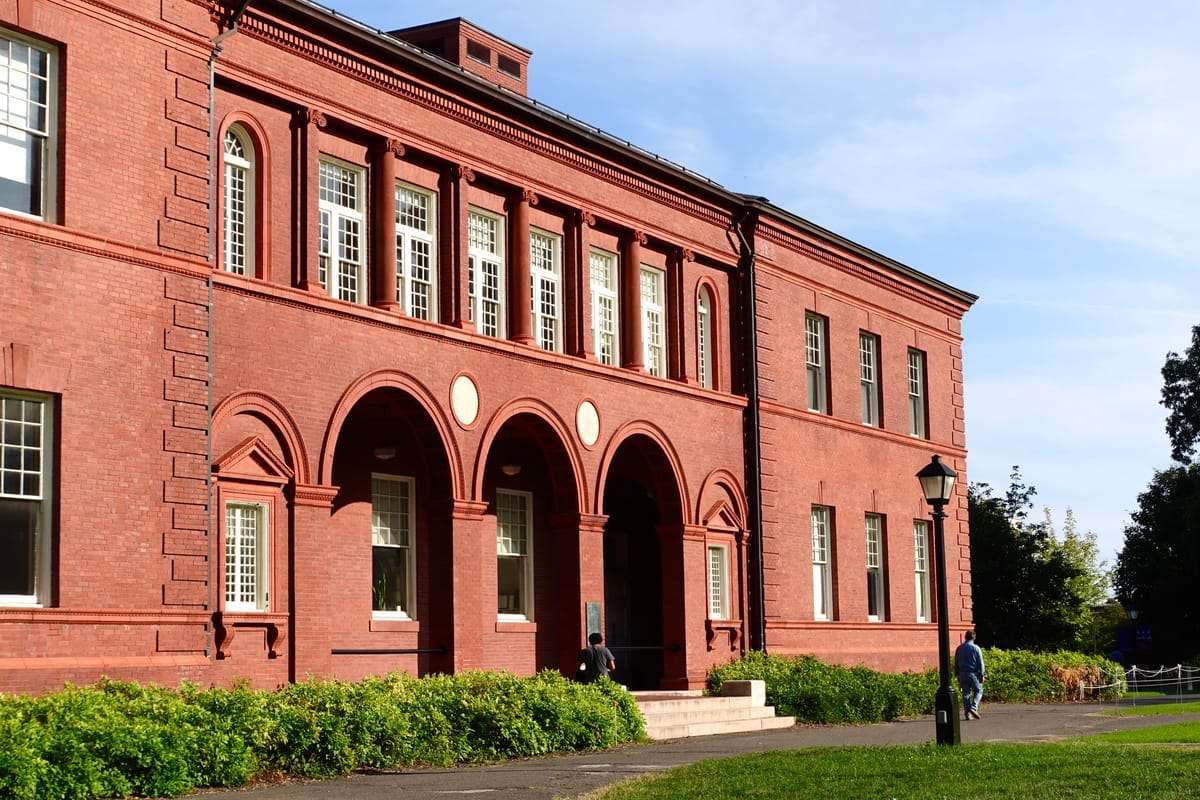
On Tuesday, Oct. 27, students and faculty packed into Pruyne Lecture Hall to hear Professor of Political Science and International Affairs at George Washington University Mark Lynch present on “The End of America’s Middle East.”
Lynch published the book “America’s Middle East: The Ruination of a Region” in 2025. The book examines the past effects of U.S. foreign policy on the Middle East and contends that U.S. intervention has systematically produced political and humanitarian catastrophe in the region.
In his talk, Lynch spoke about his book and beyond its scope, followed by a robust Q&A session. He began by defining “America’s Middle East” as a very specific regional order based on American primacy. He cited the George H.W. Bush administration’s 1990 peace projects, explaining that these initiatives were not intended to foster true peace in the region but rather establish American dominance. Oil was the primary goal of these projects and, while they haven’t fostered peace, they have been rather successful for their true purpose, he said.
Lynch continued to argue that, while America’s Middle East policy has been successful in pursuing oil and other political projects, the Middle East region itself has suffered tremendously under American supervision.
Specifically, Lynch recalled that he was “very angry” while writing his book, as he observed American support of Israel’s destruction in Gaza. He wished to demonstrate that the case of Gaza was not the “exception,” but the “extreme,” in the context of violence and American intervention in the Middle East.
Near the end of his talk, Lynch noted a handful of changes in the global perception of U.S. foreign policy that he believed were now irreversible. One was that the normative idea of the U.S. standing for anything beyond dominance was gone, and another was that Arab leaders would no longer believe the U.S. would guarantee their safety and survival.
During the Q&A portion of the talk, Lynch explained that, in his entire time as a scholar of Middle East politics, he has never seen a war truly end. He recalled the moment he saw George W. Bush’s “Mission Accomplished” sign on TV in May of 2003, deeming the war with Iraq over. Lynch argued that, in modern wars, nobody truly “wins” when nations can be destroyed and turned into vacuums.
After the Q&A session, students had the opportunity to speak with Lynch further about his work. Jimmy Chen ’27, a Political Science major who is currently enrolled in “The Politics of the American Middle East,” spoke with Lynch after the talk and was struck by his insights. “I mean, the book was published in December 2025, so a lot of the important current events in the Middle East hadn’t happened,” he said. “He made a lot of predictions through analytical reasoning, and came to a lot of conclusions that were actually correct, but it all came a lot faster than expected.”
Chen noted his surprise at the sheer speed of the developments Lynch had predicted in his book: “In really just the eight months since he published [his book] sort of everything that was predicted to unfold almost completely unfolded, which I thought was quite interesting.”
Chen concluded, “It’s always fun to read a book and then meet the author.”
Comments ()