

Belichick’s Carolina Blues: Chaos in Chapel Hill
Assistant Sports Editor Annie Lopez ’29 provides a deep dive into Bill Belichick’s tenure thus far at the University of North Carolina, which only scratches the surface of the reputational damage he has caused to the team, the institution, and himself.
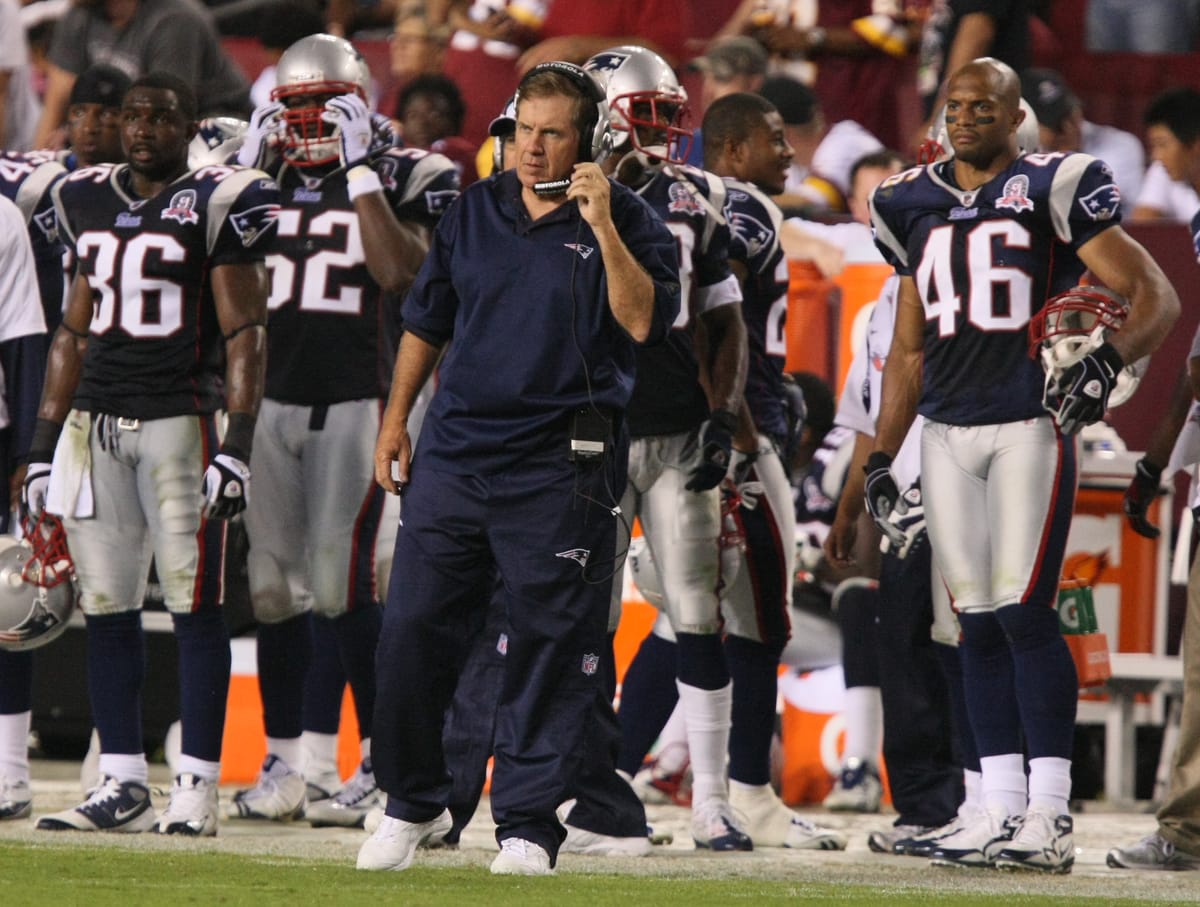
Bill Belichick is a name that, as a kid from Cambridge, MA, ceaselessly floated around my house for as long as I could remember. The dynasty of the New England Patriots shaped my childhood; from my dad teaching me how to get to “the good part” of the Sunday Globe, where they show the spreads in the very back of the Sports Section, to watching the Super Bowl every year at my best friend’s brownstone on Comm Ave. Thus, the legacy of the name Belichick had always meant one thing to me: Do Your Job. The iconic mantra of the days of Brady and Belichick, meaning to drown out the media, stare menacingly at reporters until they leave you alone, and quietly lead your team to victory without publicly basking in the spoils of your success. Belichick had represented what it meant to be a “Masshole” (yes, it’s a word, check Merriam-Webster): to approach every situation with a bitter look on your face, a chip on your shoulder, and maybe even some chopped-off hoodie sleeves.
Everything I thought I knew about Belichick changed when, in December of 2024, he accepted the Head Coaching job at the University of North Carolina (UNC). At the time, his public activity had already begun to raise eyebrows, especially when it was confirmed in June of 2024 that the 73-year-old was dating then 24-year-old Jordon Hudson, a dancer who will without a doubt become a key part of the rewritten Belichick legacy. Though it had been apparent that Belichick was struggling to find a new NFL job after his disgraced departure from the Patriots, the last thing anyone expected was for him to turn his sights towards the NCAA. Yet he did, becoming the highest-paid public employee in the state of North Carolina when he signed a five-year, $50 million contract with UNC.
It was almost immediately after the 2025 season commenced last year that the facade began to crumble. The highly anticipated season opener ended in a brutal Tar Heel defeat when Texas Christian University (TCU) routed UNC 48-14 at home in front of a litany of North Carolina royalty, ranging from Michael Jordan to Mia Hamm. It was humiliating, in every sense of the word. It wasn’t just the loss that stung; it was everything attached to it. All of the money, excitement, and control that UNC had given Belichick had only produced a hollow imitation of the coach’s former teams. It would only get worse from there.
Belichick’s Tarheels finished out the 2025 season a sorry 4-8, putting them well out of the conversation for even a bowl game qualification (a team must win six regular-season games) and raising ever more questions about both the initial hiring process of Belichick and how the organization under his command was faring.
An initial report published by ESPN before the 2025 season suggested turmoil at the university between the Board of Trustees and Athletic Director Bubba Cunningham. The reporting suggested that the Board had conducted its own hiring process after former UNC head coach Mack Brown was fired following the 2024 season. The hiring process coincided with Belichick’s own fruitless job search in the NFL, which the report believed led him to lean on political friendships and connections to begin lobbying for the UNC job. ESPN even reported that Belichick’s calls went as high up as former Florida Senator Marco Rubio. Thus, a split in the hiring process emerged, as Cunningham and the UNC Athletic Department continued to gather lists of names and conduct interviews, while the Board had already made up its mind to hire Belichick. Reportedly, Cunningham was unaware of the commitments that the board had pledged to Belichick and had no knowledge of contract negotiations, which had already begun by late November/early December in 2024.
The results delivered by Belichick in his inaugural season led to further questioning of the board’s decision not only to hire him but also to pay him handsomely. Per FOX reporting, rumors of a potential $40 million buyout to be paid by the university were already circulating at the end of the season. Despite the red flags in the 2025 season, the board decided to keep him. The Sports Gossip Show, under the umbrella of The Athletic, has followed this story extensively, mostly through the angle of Belichick and Hudson’s relationship. They surmised that the board’s decision may have been more PR-motivated than anything else, given their commitment to Belichick during the hiring process.
Unfortunately for UNC, the optics would only continue to get worse. Last offseason, there were numerous reports that the General Manager Belichick had hired, Michael Lombardi, was being investigated by the university for unspecified fraud and inappropriate conduct. The Athletic reported that, because of circulating allegations and personnel’s general distaste for Lombardi during his tenure, he officially resigned from his position as of Sept. 3, 2026. He was formerly the highest-paid GM in college football, raking in $1.5 million a year. Similarly, Steve Belichick, Bill Belichick’s oldest son, who was hired as Head Defensive Coordinator, was also under investigation by the university for multiple instances of misconduct. ESPN reports these ranged from drug distribution among staff and players to inciting inappropriate sexual relations among female university staff, players, and coaches. Again, because of the nature of these questions, Steve Belichick also chose to resign as of Sept. 17, 2026.
Even with all the rumors swirling about the pandemonium within Belichick’s organization, he has still tried to maintain the same demeanor when it comes to talking to the press. The Tar Heel Tribune reported that during a press conference on Sept. 6, days after Lombardi had resigned and his son was facing a growing investigation, Belichick was confronted with important questions about the team’s future. Instead of openly and honestly addressing the situation, he chose to fall back on the same techniques he used during his time with the Patriots, even referencing his famous “we’re onto Cincinnati” conference by reiterating that the team is solely focused on Eastern Tennessee State University (ETCU) whenever confronted with organizational questions.
Now, looking back at this dumpster fire Belichick left in his wake, it raises questions about his legacy. Belichick is a six-time Super Bowl-winning head coach, regardless of personal beliefs that he could not have accomplished such a feat without the generational talent of Tom Brady. However, this new era of media presence and reception has begged the larger question: How will he be remembered in a sport he has dedicated his entire life to?
The most troubling part of the equation is that it seems that Bill is resting on his newfound laurels; he is in for a penny and in for a pound, so to speak. As the 2026 season continues to unfold and after Saturday’s loss to a struggling Clemson team, this question will only become more prevalent in the minds of football fans. Will he be remembered as the Belichick of my childhood, a brooding, salty old man who had earned the hearts and trust of every New Englander alike, or this new version who can’t seem to decide who he is and who he has become? Perhaps most importantly, he’s no longer dealing with professionals, but student-athletes with real futures ahead of them. Even within the age of Name-Image-Likeness and contractual negotiations between players and coaches, Belichick is gambling with the futures of 18- to 24-year-olds. Thus, the question remains: How will all of this end, and how will it contribute to the legacy of the mighty, sleeveless, coaching giant?
Comments ()