

Fresh Faculty: Emma Brush
Emma Brush is an assistant professor of law, jurisprudence, and social thought. Staff Writer Daphne Witherell ’27 spoke with Brush about her academic journey, experience as a Division I athlete, and advice for current students.
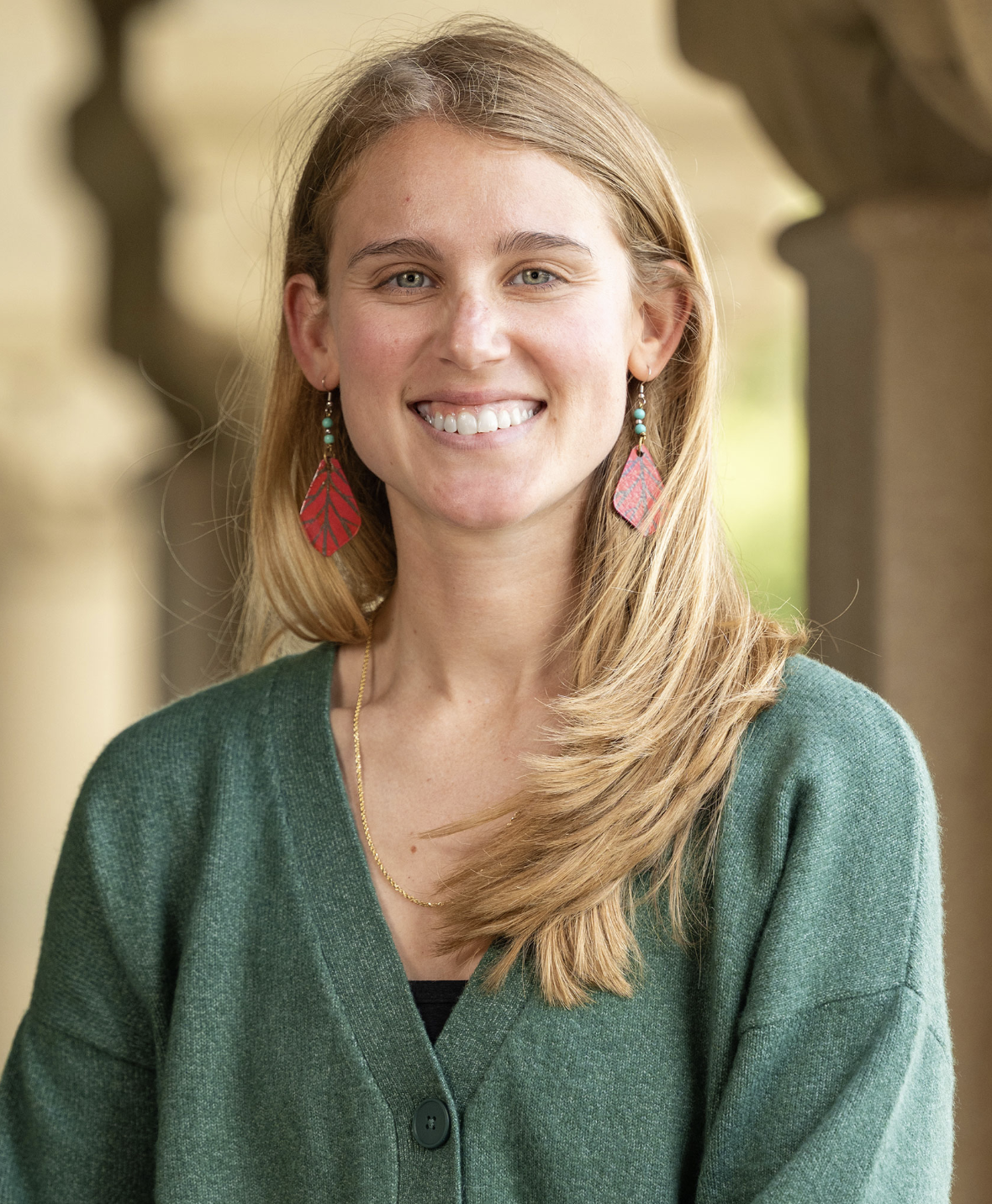
Emma Brush came to Amherst this fall after earning joint JD and Ph.D degrees at Stanford University, where she wrote her dissertation and soon-to-be-published book on the constitutional arguments of American abolitionists. She is teaching a new class this semester called “The Problem of the Color-Line” and co-teaching “Legal Institutions and Democratic Practice” with James J. Grosfeld Professor of Law, Jurisprudence, and Social Thought Lawrence Douglas. Reflecting on her time at Amherst so far, Brush shared her childhood connection to the town, her research interests, and her own undergraduate experience as a Division I student-athlete.
Path to Professorship
Growing up in Grosse Pointe, Michigan, Brush was exposed to the harsh realities of American society at a young age. In her day-to-day life, she encountered overt government policies and social practices that upheld racial segregation, including the effects of the “Grosse Pointe Point System” historically used by realtors to preclude buyers of color from purchasing homes in the neighborhood. “I felt like that wasn’t the kind of world we should be inhabiting … That motivated a deep interest in questions of segregation, how we got there, and also, just more broadly, racial justice,” Brush said.
Brush’s sophomore summer at Dartmouth helped her realize her passion for academia. She described it as a period of “deeply impactful intellectual exploration.” During her summer quarter at Dartmouth she only took two classes: a creative writing class and a political science class called “Great Issues” which encouraged students to engage critically with contemporary political and social questions.” Combining creativity and current events allowed her to “find [her] intellectual curiosity and confidence,” as well as discover her academic passion: the intersection of law, culture, and race.
After earning her degree at Dartmouth College, where she also played Division I soccer, she worked several jobs and even tried out for professional soccer teams. In the end, she returned to humanities research and decided to work toward a master’s degree at the University of Chicago. Later, she worked at The Breakthrough Institute, an environmental think tank in the Bay Area, where, as managing editor, she continued writing and researching while engaging in social issues.
After applying to various Ph.D. programs — and facing several rejections — she was ultimately accepted into Stanford’s English Ph.D. program. While in the program, Brush maintained her interest in legal and political questions. As a result of that curiosity, she decided to apply — and later enroll — in Stanford Law School, where she began developing the interdisciplinary approach that now defines her work.
Shortly after finishing her program at Stanford, she came across the LJST department at Amherst and learned about an opening in her field of race and American law. Brush immediately felt that the college was the perfect fit. Brush’s scholarly work examines how activism and public participation can shape the law. Her current book project, which grew out of her dissertation, explores how American abolitionists used constitutional arguments to challenge slavery — broadening the concept of abolitionism beyond well-known figures to include the everyday acts of resistance of enslaved and formerly enslaved people.
“I’m following the work of the scholar named Manisha Sinha and others who say [that] abolitionism really begins with those who were enslaved,” Brush explained. “The desire and drive to end the institution of slavery begins in enslavement and follows those enslaved people who are either emancipated or who emancipate themselves and move into the North and start agitating on their own behalf.” In her book, she argues that these abolitionist interpretations helped shape later constitutional and legal thought from the nation’s founding through the Civil War.
In addition to the job being a great fit, Brush was also excited about working at Amherst because of her deep personal ties to the Amherst area. Her grandfather taught English at the University of Massachusetts-Amherst; her grandmother taught at Wildwood Elementary and Amherst Regional Middle School, and many of her relatives live nearby. In her words, “it felt like this beautiful, full circle thing, my ending up back here and teaching at the college.”
Advice for Current Students
Brush shared that while college students often feel compelled to sign up for as many activities and classes as possible, sometimes there are advantages to doing less. “Sometimes, when you actually do fewer things, and you give yourself more space to invest in them, that can also be really beneficial in so many ways,” Brush said.
Following a similar line of reasoning, Brush found that there was a benefit to starting her Ph.D. and law degree at Stanford after working for several years. She was clear that the decision is personal to everyone, and that there is no one right path when deciding whether to go straight to graduate school or to take time to work beforehand. However, for her, working in professional settings helped ease her transition from undergraduate to graduate school.
While Brush is grateful for the community she built as a Division I soccer player at Dartmouth, she notes that she would have tried to expand her horizons earlier if she could do college again. She found that, similar to Amherst, Dartmouth had a noticeable student-athlete divide. While being on the team gave her a strong sense of belonging and resilience, it initially limited her social circles. During her second half of college, she met her husband, who introduced her to new communities and friendships beyond athletics — many of which she still maintains today. Reflecting on that experience, Brush emphasized the importance of connecting across difference, encouraging students to “stay rooted in the communities where you feel comfortable, but also try to reach across different divides.”
Looking Forward
In her time outside of her academic endeavors, she wants to get to know the Amherst area better. Despite growing up visiting the area, she feels there is much left to explore, and — alongside playing local pickup soccer games and cooking — hopes to partake in outdoor activities such as hiking. While moving to the area has been a big transition, Brushshe has found that the friendliness of local residents has helped her acclimate. “I bought a bike on Craigslist, and I went to this person's house, and he was, like, the most friendly person I could possibly imagine,” Brush said. “He showed me everything I could possibly need to know about this bike, and he made me leave with a helmet and a lock.”
Brush is looking forward to continuing to support the intellectual curiosity of her students in her first year at Amherst, both in the classroom and while advising thesis writers. After spending the past two years writing instead of teaching, she is particularly excited about returning to the classroom.
“Amherst students have blown me away already: The intellectual curiosity I've already encountered [from] students coming to office hours and asking questions, and just generally being curious and open-minded,” Brush said. “I’m really excited to keep encountering that.”

Comments ()