

Ibram X. Kendi Discusses New Book ‘Chain of Ideas’
On Tuesday, Oct. 6, the Black Studies department welcomed Ibram X. Kendi for a conversation about his new book, “Chain of Ideas: Origins of Our Authoritarian Age.” Kendi explained the ideas behind “great replacement theory” and the spread of hostilities against minorities around the world.
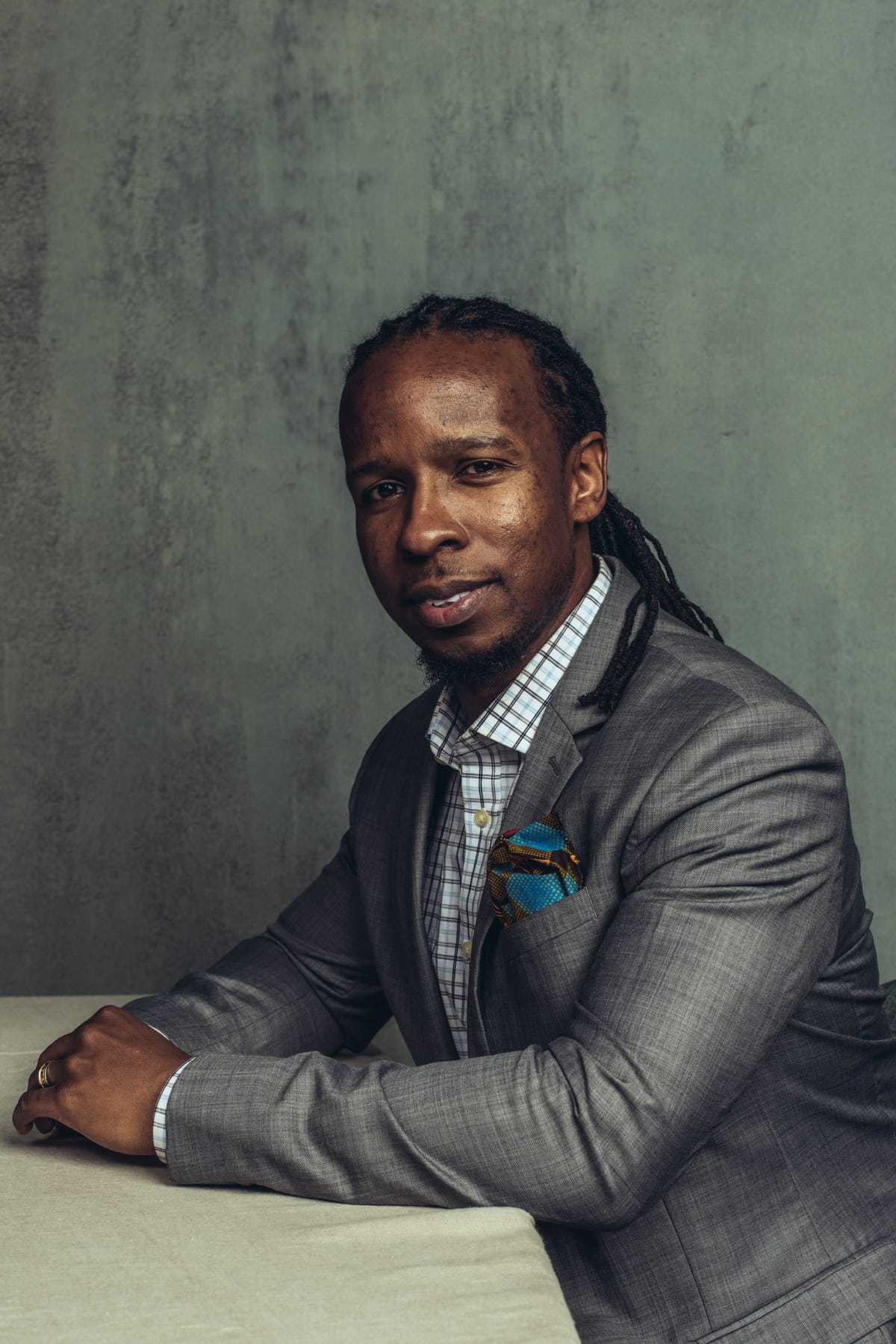
On Tuesday, Oct. 6, the Black Studies department welcomed Ibram X. Kendi for a conversation about his new book published in March, “Chain of Ideas: Origins of Our Authoritarian Age,” which explores the ideas fueling authoritarian movements today.
Currently the Carter G. Woodson Endowed Chair in History at Howard University and the inaugural director of Howard’s Institute for Advanced Study, Kendi is one of the world’s foremost historians of racism and a leading antiracist scholar. He has published 18 books for adults and children, including the international bestseller “How to Be an Antiracist.” In 2020, The Times magazine named Kendi one of the 100 Most Influential People in the world.
The conversation was moderated by GeorgeDaniel Dixon ’27 and Charles Hamilton Houston ’15 Professor of Black Studies Stefan Bradley. Kendi opened the talk by sharing his motivations for writing “Chain of Ideas,” explaining that around 2021, a segment of propagandists were reframing Critical Race Theory as anti-white.
“There were all these inversions, as I talk about in the ‘Chain of Idea[s]’, the inversion of anti-racism, the inversion of feminism, the inversion of really any social justice movement as indeed seeking to harm people,” he said.
According to Kendi, this ideological moment stemmed from “Great Replacement Theory,” a framework that embraces discourses that Black and brown immigrants are “invading” the nation. “Ideas like ‘diversity, equity, and inclusion are discrimination against white people,’” he said. “Ideas like ‘Muslims are the internal enemies of this country.’ Ideas like there’s this ‘war against men.’ Ideas that Black and brown voters are ‘stealing elections.’ Ideas like ‘that accomplished Black woman has taken that job from that white man.’”
Kendi argued that this type of discourse enables anxieties that spread economic inequality in today’s world. With economic inequality rising in recent decades, he added that elites began spreading a discourse blaming minorities for these problems.
“So those super wealthy people are essentially telling those low- and middle-income white people, ‘we’re not robbing you. Those Black and brown people are. Those immigrants are. Those Muslims are,’” he said. “But I think what makes Great Replacement Theory the most pernicious is then these billionaires turn around and tell the people that they’ve robbed that ‘I am your protector, I am your savior ...’ and [so] people who have been robbed [then] look to their robbers for protection, and that’s the political dynamics … we’re facing right now.”
Dixon then asked Kendi to elaborate on how this type of discourse is articulated through the dynamics of white-on-white power and how this contributes to modern disillusionment. According to Kendi, he believes that many white Americans associate their identity with privilege, a heritage of the country’s historical past attached to slavery. Today, as the narrative that minorities are taking over the country spreads, Kendi said that many people are willing to give up their rights to retain their privilege.
According to Kendi, authoritarians say “I will build a racist electoral dictatorship that will protect your privileges. But the only way I’m going to be willing to do that is if I’m able to eliminate democracy, and you have no ability essentially to vote in free and fair elections.” As a result, Kendi said people are consistently willing to, and even “craving” the handing over of their power so they can retain their privileges. “Because for … many white Americans, they connect their own identity with their privilege,” he said.
Bradley followed up by asking how, as a professor, Kendi dealt with the sudden surge of fame he had to face, “along with some controversy and some kinds of demonization.”
Kendi said he believes that some criticism comes from people who haven’t actually read his work. “The biggest challenge with what I think you’re describing has been that I’m a ‘scholar’ scholar, which is to say I’m not going to assess a scholar and their work if I haven’t actually read that work and read it very closely,” he said.
Kendi also highlighted that the Great Replacement Theory goes beyond the U.S. and has become a global phenomenon. “[It has] mutated from a racist theory and attached itself to frankly every form of bigotry, to ultimately state that any disadvantaged or minority group is coming and is taking over, and that any privileged or majority group is being displaced or replaced. That’s also allowed this theory to spread around the world, frankly.”


Comments ()