

Satire: The Cocaine Capital of Western Massachusetts
Assistant Opinion Editor Caroline Flinn ’28 covers the ongoing saga of the Hotel UMass scandal, the Pioneer Valley’s most controversial new hotspot where white powder has drawn the attention of many.
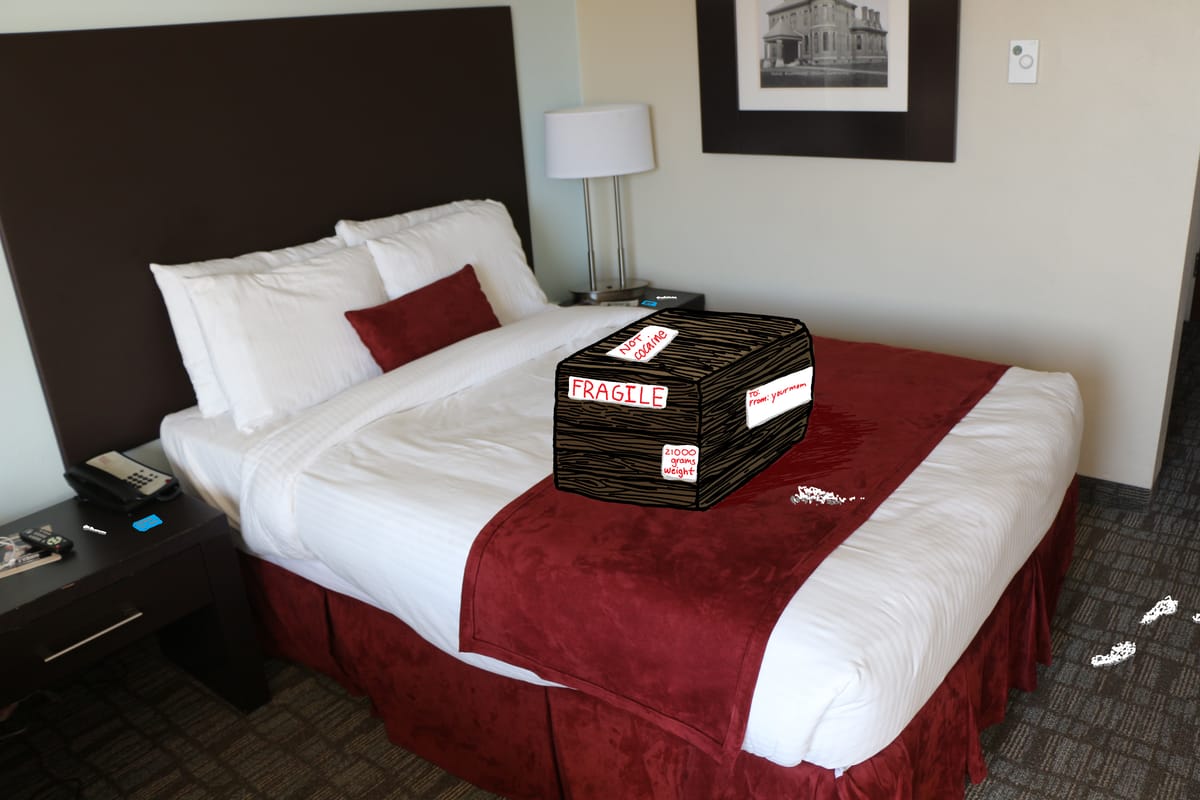
Students at Amherst College were shocked this week to learn that the University of Massachusetts, Amherst not only operates a ”hotel,” but that said hotel has allegedly been moonlighting as the Pioneer Valley’s cocaine distribution center.
“I just assumed ‘Hotel UMass’ was, like, a metaphor,” said Aspen Wildflower ’26, an Amherst College student, who is still undecided on their major. “You know, the hotel as a symbol for the transient condition of public education. But apparently it’s an actual building. And full of cocaine.”
Federal authorities reportedly seized nearly 29 pounds of cocaine from packages addressed to non-existent hotel guests — a situation Amherst’s sexuality, women, and gender studies (SWAGS) department immediately described as “a bold postmodern commentary on identity and absence.”
“This isn’t a crime,” insisted Visiting Professor of Philosophy Thelma Vortex. “It’s a Derridean text. The ‘guest who doesn’t exist’ destabilizes the notion of presence. The cocaine is simply a metaphor for meaning itself.”
Academia Reacts Swiftly
In response, Amherst College has announced an emergency symposium titled “Lines: The Semiotics of Substance and Space in Post-Brutalist Infrastructures.” Panelists include a chemical physicist, a poet, architect Zaha Hadid, the former rat czar of New York City Kathleen Corradi, and someone from Facilities who “just wanted to know why there’s suddenly a tent on the quad.”
The college also unveiled new safety measures, including an initiative to “reexamine our own architectural vulnerabilities to narcotics.” As of Wednesday, the Office of Student Affairs confirmed that all powdered sugar in Valentine Dining Hall has been placed under 24-hour surveillance by button-downed economics majors who keep referring to it as a “white-collar operation.”
“Out of an abundance of caution, we’ve also cordoned off sections of the Frost Library Catacombs,” said Dean of Students Merriweather Crumb, “after several reports of students ‘moving product’ between the stacks. However, upon investigation, the product turned out to be Marxist theory.”
UMass Remains Calm
UMass administrators, meanwhile, have declined to comment publicly, citing the ongoing investigation and a strong desire to preserve the hotel’s four-star TripAdvisor rating. “We prefer to focus on the positive reviews,” said Associate Vice Chancellor for Public Relations Todd Flexner.
TripAdvisor reviewers, undeterred by the scandal, have continued to praise the establishment. “Rooms were spotless, service was energized,” wrote one user from Connecticut. “Felt like I didn’t sleep for three days — just what I needed to get back to my high-stress job on Wall Street.”
One anonymous UMass student defended the institution’s reputation: “People are acting like this is new,” said Kyle "Big Spoon" Lippman, a senior majoring in hospitality and entrepreneurship. “We’ve always had a robust hospitality program. Now we’re just expanding into international logistics.”
Several tour guides were seen outside the Isenberg School of Management giving tours to prospective students. “We like to think of the Hotel UMass as a hands-on learning environment,” said Mikayla Belfort. “You just can’t get this kind of real-world experience at any other school.”
Another student, Brandon "Beef" Penders, a sophomore studying event management and hospitality, said the scandal had actually boosted morale. “Applications to the hospitality major are up 200% this week,” he said. “People are finally realizing we’re not just folding towels here — we’re building empires.”
Community Struggles to Cope
Back on the Amherst College side of Route 9, the news has prompted a wave of moral introspection and deeply serious student activism. A group calling itself Students Against Structural Narcotics (SASN) held a silent protest on the First-Year Quad, during which participants handed out fair trade organic baking soda and vowed to “decolonize powder.” The group concluded the demonstration by symbolically burying a Dixie cup of confectioners’ sugar on Webster Quad, “to represent the burial of innocence — and also capitalism.”
Meanwhile, Green Amherst Project released a statement condemning “the environmental implications of cocaine trafficking,” calling the entire scandal “a textbook example of unsustainable sourcing, urging smugglers to adopt better practices.” Members later announced plans to launch an initiative to replace all illicit narcotics in the Pioneer Valley with locally-grown crops.
The Amherst Marxist Book Club also weighed in, describing the sting as “a dialectical inevitability under late-stage capitalism,” before adding that they themselves “would have done it for the praxis.”
The Amherst ski team has also found itself unexpectedly at the center of the controversy after posting “Can’t wait for some fresh powder this season!” on Friday via Instagram. “We meant snow,” insisted Captain Sierra Powderly ’27, who also clarified that “Colombian” was just the brand of coffee they serve at team meetings. The team has since renamed its annual winter fundraiser from “Blow for the Slopes” to “Snow and Tell,” emphasizing its commitment to “keeping the white stuff strictly recreational.”
Tourism Opportunities Abound
The Amherst Chamber of Commerce has already pivoted, announcing new “Vice & Virtue” heritage tours of the Pioneer Valley, including stops at Emily Dickinson’s house (“a different kind of high”) and the Hotel UMass loading dock (“please don’t touch the evidence”). Tickets sold out within hours, with proceeds reportedly earmarked for “the rehabilitation of local reputations.”
Entrepreneurs have also seized the moment. The UMass Bookstore has begun selling commemorative tote bags that read, “Hotel UMass, Four Stars, 13 Kilos” as well as engraved Isenberg School “Business Cards,” pre-scored for students eager to line up their career prospects.
Meanwhile, the Office of Global Education at Amherst reported a sudden spike in study-abroad applications to Colombia, Peru, and Bolivia. “We’re seeing unprecedented interest in the cultural and economic history of that area,” Director of Global Education Spencer Lark said. “It’s really encouraging to see students so passionate.”
Economics major Maya Quimby ’27 said she’s excited to go abroad on a new Semester at Sea trip where students sail from Boston harbor to Colombia on a small rowboat next semester. “It’s field research,” she explained. “You can’t critique international markets if you don’t sniff around a bit.”
A Teachable Moment
The Amherst College Administration hopes the incident will serve as a teachable moment. “We encourage our students to reflect critically on the porous boundaries between substance and scandal,” read an all-campus email sent this past week. “And also to remember that cocaine remains prohibited under the Honor Code unless you are working on a senior thesis. Reach out to your thesis advisor for more information."
Yesterday, the Five College Consortium announced a new certificate program in supply chain management, while Amherst students began petitioning to rename Keefe Campus Center “The Hotel Amherst,” claiming it would “honor the spirit of interdisciplinary trafficking” and “live up to the liberal arts ideals.”
When reached for comment, Juniper Slagel ’26 shrugged: “It’s honestly impressive. I mean, 13 kilograms? That’s like … three senior theses’ worth of focus.”

Comments ()