

The Epic vs. the Film: ‘The Odyssey’ Movie Review
In this review of Christopher Nolanʼs 2026 film “The Odyssey,“ Contributing Writer Hayliann Smith ʼ28 lays out a comparison between Nolanʼs and the original epicʼs portrayal of the people, monsters, and gods that Odysseus and his crew encounter along their journey.
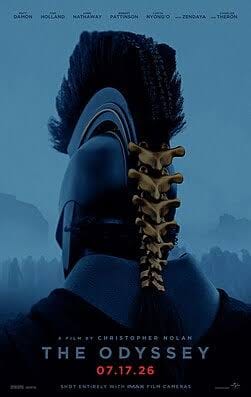
With the release of Christopher Nolan’s film, “The Odyssey,” this summer, there has been an increased interest in Greek mythology and epics. While some are up to the task of reading the lengthy poetic verse, others may not have the time or the desire to do so. I’m going to compare and contrast the film and the epic, so that even people who haven’t read the epic can know what the film does right and what it is missing. Be warned: There will be mild spoilers in this review.
Nolan is one of the most acclaimed filmmakers of the 21st century, directing blockbuster titles such as “Oppenheimer” and “Interstellar.” He is known for his intense themes, such as grief and war, as well as his serious tone. These are apparent in “The Odyssey,” which is a story of war, loss, and return.
“The Odyssey” follows — or, as some may argue, created — the archetype of the hero’s journey: The protagonist is forced to leave their home, faces trials and tribulations on the road, and then returns home having grown from the experience. In the case of Odysseus (Matt Damon), he is forced to leave the kingdom of Ithaca, which he rules, in order to fight in the Trojan War. After winning the war, he spends 10 years trying to make his way home, facing cyclops, sirens, nymphs, and other mythological creatures on his way, until he eventually returns home and saves Ithaca from destruction and capture. Although this structure stays the same in both the epic and the film, there are some notable differences between the two.
Arguably, the largest change is to the character Circe (Samantha Morton). Staying true to the epic, she turns Odysseus’ crew into pigs after they dock on her island, but the film adds nuance to her motives. The film suggests Circe acted out of vengeance, as she says she was revealing the true nature of men. This interpretation has become a popular one in modern culture, with retellings such as Madeline Miller’s novel, “Circe,” taking a more feminist approach to analyzing her character. Additionally, the film omits Circe requiring Odysseus to sleep with her in exchange for turning his crew back into humans, as well as the crew staying on her island for a year.
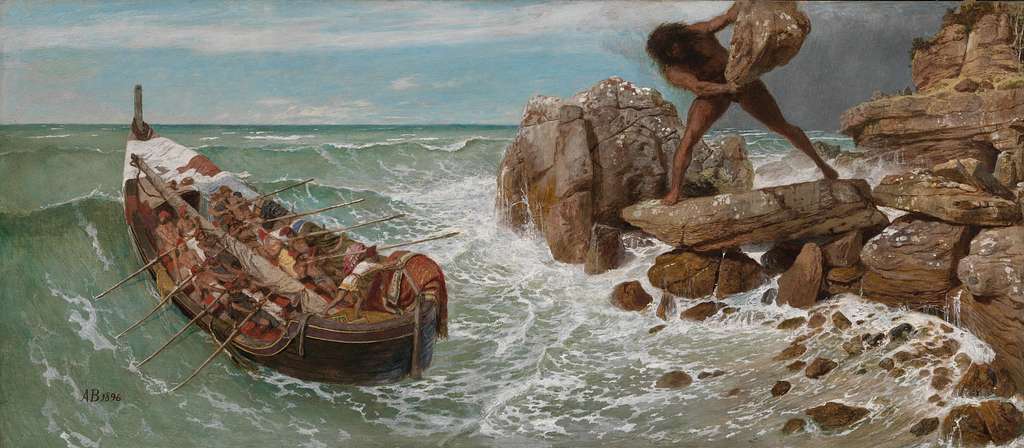
Another major difference between the film and the epic is the scene with the Cyclops. Although the film portrays the Cyclops and the horror of being stuck in a cave with it extremely well, it leaves out the humor and wittiness of the original. In the epic, Odysseus speaks to the Cyclops and tricks him through his words — the emphasis is placed more on how crafty and witty he is. Then, after Odysseus and his crew escape the cave, the Cyclops asks what his name is, and he replies that his name is “Nobody,” so that when the Cyclops tries to curse him, he says “I curse Nobody.” This is arguably the most humorous moment in the epic, but there are additional bits of humor that the film also omits. The decision to omit these moments of humor makes sense considering Nolan’s serious film style, but I can’t help but wish that some of Odysseus’ humor and wit were portrayed in the movie.
Another striking difference is Athena’s (Zendaya) role in the film versus in the epic. In the film, Athena is portrayed as a silent, guiding figure for Odysseus. Although they have one verbal exchange, it feels as if she is there in his mind and not physically present. This contrasts sharply with the epic, in which Athena takes a more active role in Odysseus’ journey. Not only does she give him advice on how to handle situations (for example, giving him an antidote to prevent him from being transformed into a pig by Circe), there are also scenes of her speaking to Zeus and asking him to protect Odysseus on his journey home. This has been one of the more controversial changes made in the film, as it not only diminishes the role of the gods but also detracts from the development of a powerful female role.
Although Nolan made many changes when adapting “The Odyssey,” there are also some elements that are very accurate, including the loyalty of his swineherd, Eumaeus (John Leguizamo), and his dog, Argos. It also accurately portrays the role of Penelope and how she is Odysseus’ equal in life. Even though it can be easy to criticize literary film adaptations, it’s important to question what the changes add to the story and how they reflect the style of the director. In the case of “The Odyssey,” Nolan added many changes that better suited his style, while still remaining true to the heart of the famous epic of Odysseus.



Comments ()