

WNBA Finals Preview: The Atlanta Dream vs. the Golden State Valkyries
Managing Sports Editor Joey Supik ’27 tells you everything you need to know about the Dream and Valkyries ahead of the 2026 WNBA finals.
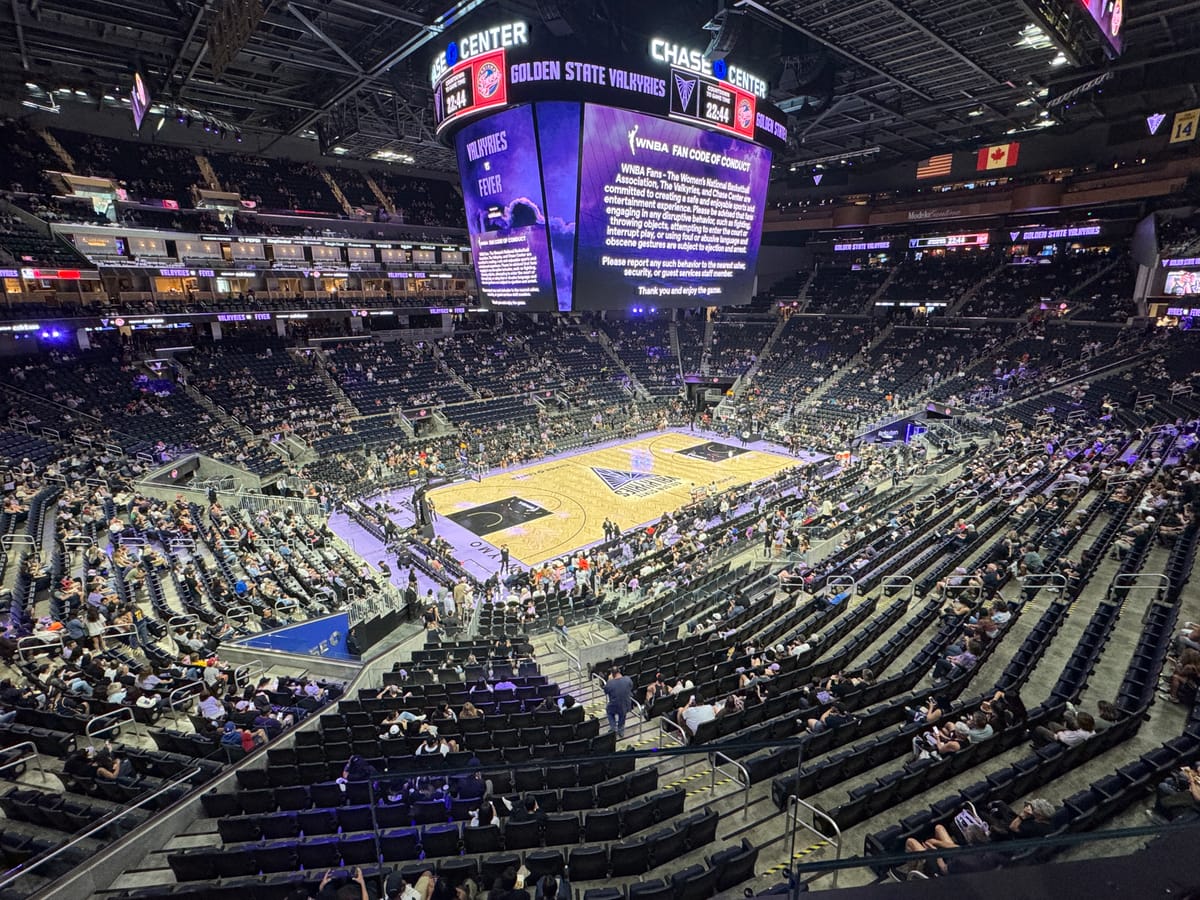
The Women’s National Basketball Association (WNBA) Finals are officially set. The Atlanta Dream and Golden State Valkyries will match up in a seven-game series, starting on Oct. 17. If you’re interested in getting into the WNBA, or want to have something to talk about with a friend who is interested, this article is for you.
The top eight teams, regardless of conference, compete in the WNBA playoffs. The first round goes by a three-game series, and the semifinals by a five-game series. The fourth-seeded Dream won 2-0 in the first round against the fifth-seeded Washington Mystics, and then 3-0 in the semifinals against the eighth-seeded New York Liberty. Meanwhile, the second-seeded Valkyries beat the seventh-seeded Dallas Wings 2-1 in the first round, and swept the third-seeded Las Vegas Aces in the subsequent round.
In the team’s five postseason games so far, the Dream has had a league-best 9.5-point differential per game, as well as the highest scoring offense and second-lowest-scoring defense based on points per game. In comparison, the Valkyries boast the second-best per-game point differential at 7.1, and allow the fewest points per game through six games. The difference-maker will likely be the Valkyries’ offensive output, as the team has the tied fourth-highest scoring offense, averaging 87.0 points per game to the Dream’s 92.6 points per game — a 5.6 difference.
Sticking with offensive output, certain individual players have had crucial roles in boosting the teams’ performances. The Valkyries’ forward Gabby Williams, the team’s leading scorer, has increased her regular-season scoring of 14.4 points per game to 22.7 points per game in the postseason. Williams also leads the team in points, assists, and steals per game, so the team will heavily rely on her in the series to create offensive opportunities.
The Dream, on the other hand, will rely on five main scorers: forward Angel Reese, guard Jordin Canada, forward DeWanna Bonner, guard Rhyne Howard, and guard Allisha Gray. These five have averaged over 13.0 points per game in the postseason, with no other player averaging more than 5.6. Howard, Reese, and Gray haven’t made significant changes in their offensive averages, with most of the change coming from Canada and Bonner. Canada, who averaged 11.6 points per game in the regular season, jumped up to 19.2 points per game in the postseason, the joint-highest scorer with Howard. Bonner, who joined the Dream as part of a contract buyout with her previous team, the Phoenix Mercury, played only five regular-season games with Atlanta. In the postseason, compared to the regular season, Bonner’s points per game went up by 4.6 points, from 8.6 to 13.2. With the other three’s offensive consistency, it may fall to Bonner and Canada to continue their impressive performances.
On the other side of the ball, both teams have some key defensive distinctions. For example, while the Valkyries and Dream are nearly identical in blocks per game, Atlanta produces 3.4 more steals per game than Golden State. The steals may explain why the Dream force its opponents to turn over the ball more than any other team in the postseason, an alarming 17.2 turnovers per game and almost double the Valkyries’ average.
Despite these facts, the matchup may still be more favorable to the Valkyries, who average 37.8 rebounds per game in the postseason — the second-highest. Not only do the Valkyries outrebound the Dream in total rebounds, but also in offensive and defensive rebounds. The Dream also allow the most rebounds to opponents on average in the postseason, possibly spelling disaster for the team if left unaddressed.
Looking towards the individual players, the Valkyries have one major player of note: center Kiah Stokes. The Valkyries’ starting center is averaging 9.5 rebounds and 2.0 blocks, leading the team by a wide margin in both. No other player averages more than 5.7 rebounds and 0.5 blocks. Stokes will be the primary shot-blocker and paint-guardian to watch.
For the Dream, three players — Canada, Howard, and Gray — all average 2.0 or more steals per game, which no player on the Valkyries does. Reese, Bonner, and forward Naz Hillmon all average at least 1.0 steals per game as well. Similar to Stokes, Reese serves as the primary shot-blocker and rim protector, averaging 2.2 blocks and 8.4 rebounds, leading the team in both categories. Reese’s blocking has been a major factor in the postseason, considering the regular-season team leader in blocks was Howard, averaging only 0.9 blocks per game.
Overall, the Dream and Valkyries are, relatively speaking, evenly matched, with several factors distinguishing the two teams, including offensive output, turnovers, steals, and rebounding. Outside of these team categories, it may come down to the excellent performances of players like Williams, Stokes, Canada, and Reese. While the winning team is yet to be decided, it’s certain that we’re getting an amazing WNBA Finals matchup.



Comments ()