

Adventures Abroad: Mikka Wolff ’27
In this edition of Amherst Adventures Abroad, Contributing Writer Esther Bittker ’30 spoke with Mikka Wolff ’27 about his study abroad experience in Jordan, which was derailed and relocated to Morocco due to the outbreak of the Iran war.
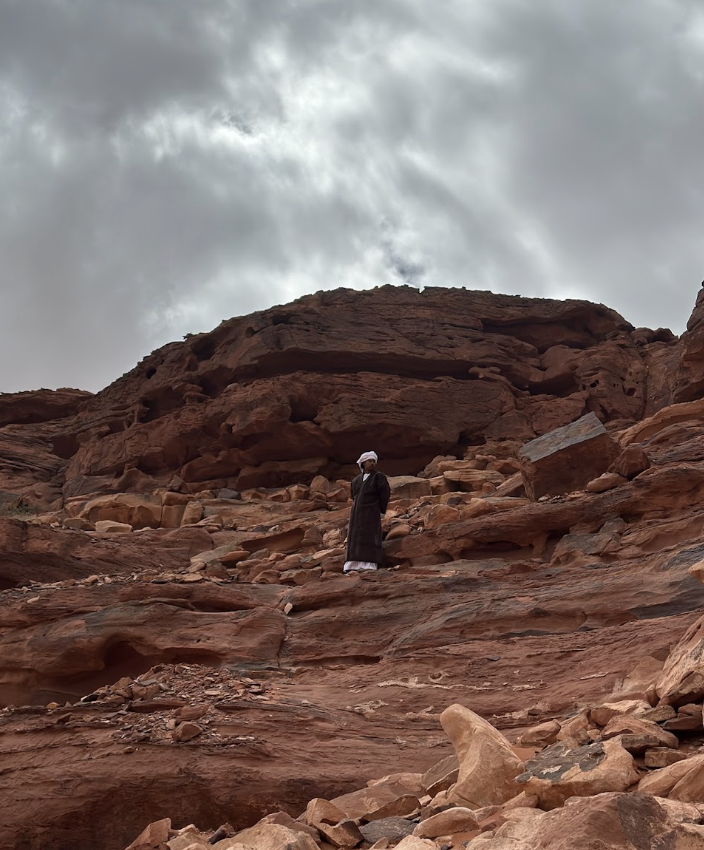
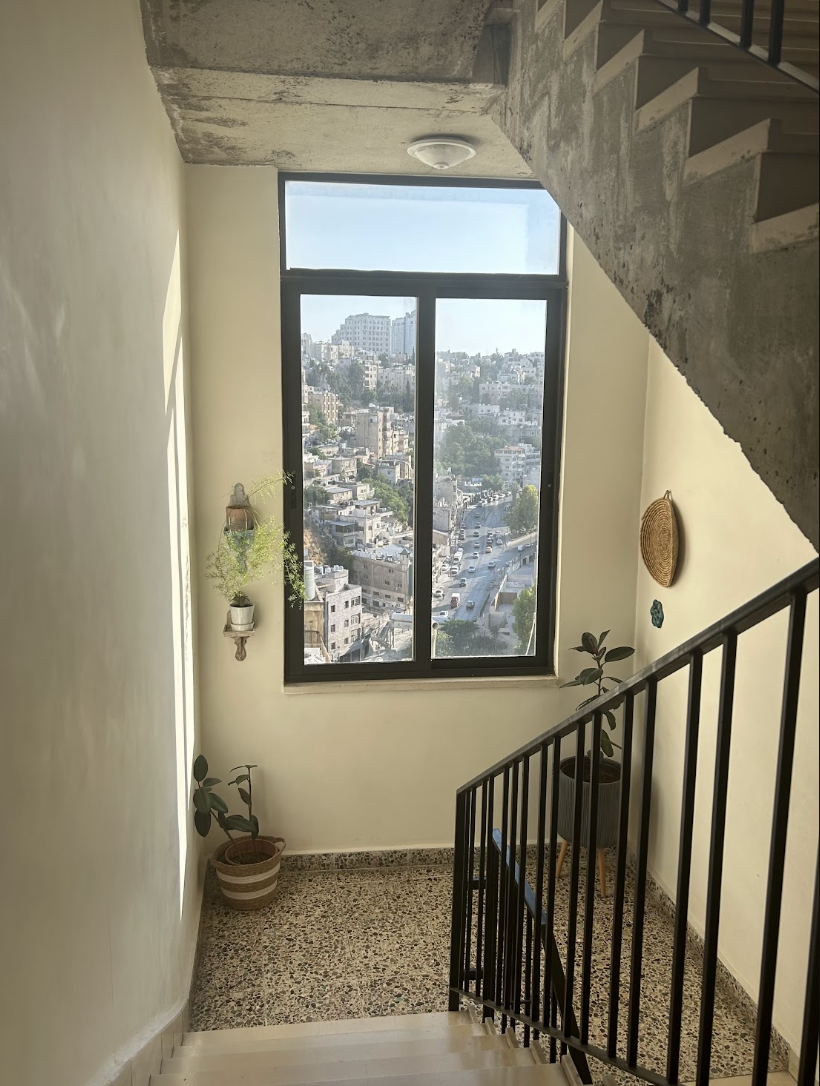
Just six weeks into studying abroad in Amman, Jordan, during the spring 2026 semester, Mikka Wolff ’27 was forced to relocate to Rabat, Morocco, due to the outbreak of the Iran war. Despite the geopolitical turbulence, Wolff spoke highly of his time abroad.
Wolff came to Amherst dreaming of working for the United Nations (UN), which is an “incredibly competitive” job for Americans. As he learned from his uncle who works for the UN, speaking Arabic is an especially helpful qualification for those hoping to enter international diplomacy. This knowledge contributed to Wolff’s interest in Arabic and desire to study abroad in the Middle East.
Following his freshman year, Wolff was admitted to a summer Arabic Language Study Fellowship based in Lebanon. But just weeks before the program was meant to begin, Israel carried out air strikes on Beirut, and the fellowship was forced to pivot, relocating to Jordan. Wolff spent the summer before his sophomore year studying abroad at Amideast in Jordan. Ultimately, “everything about Jordanian society, culture, [and] politics” captivated him.
When it came to choosing his spring 2026 study abroad, Wolff considered going to Egypt, due to the advice of others, including his uncle. However, his fascination with Jordan, which formed during his summer fellowship, led Wolff to return through a program run by Middlebury College.
On Feb. 28, when the U.S. and Israel launched a series of strikes on Iran, Wolff was on a trip to Wadi Rum, a protected desert wilderness in southwestern Jordan, with classmates from his study abroad program. He described Wadi Rum as “mind-bogglingly beautiful.”
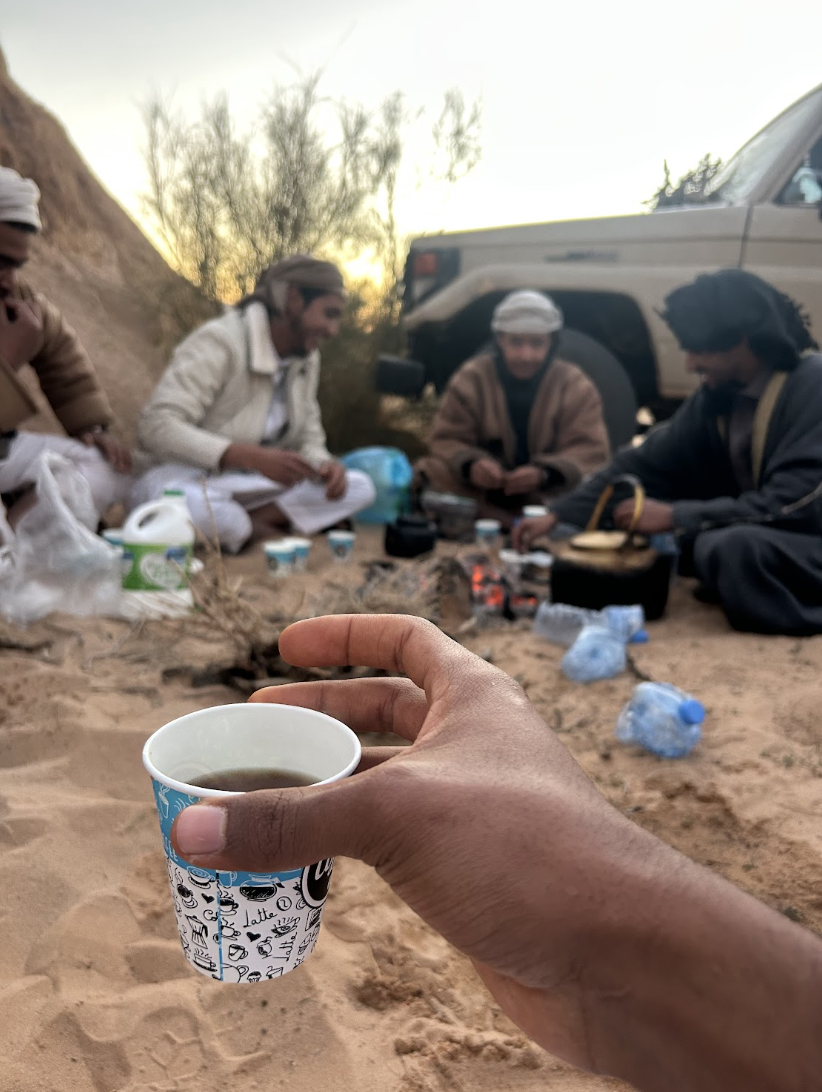
In most of Wadi Rum, there is no cell phone service. “We were absolutely in the dark as to what was going on in the real world,” Wolff said. Serendipitously, on that same day, they hiked up a major mountain where they could receive cell phone service. They were instantaneously flooded with news notifications and emails from the U.S. Department of State. These emails warned them to “shelter in place, effective immediately, [and] have enough food for 30 days.” They also told them to “not attend political demonstrations” in Jordan.
Ironically, the night before, Wolff had been discussing the possibility of a U.S.-Iran war with a classmate. They both believed a war with Iran “wouldn’t make sense from a Trumpian standpoint” and assumed that Israel, without U.S. assistance, would only be able to do “a couple targeted assassinations.” As Wolff noted, they were “sorely proven wrong.”
After initially “laughing it off” because of the unexpected nature of the situation, the entire group became stressed. They rapidly returned to Amman.
Following the onset of the war, threats were made against the U.S. embassy in Jordan. At about 1:45 a.m., the U.S. Department of State’s Consular Affairs team tweeted, instructing American citizens in 14 countries to “depart now.” One of those countries was Jordan.
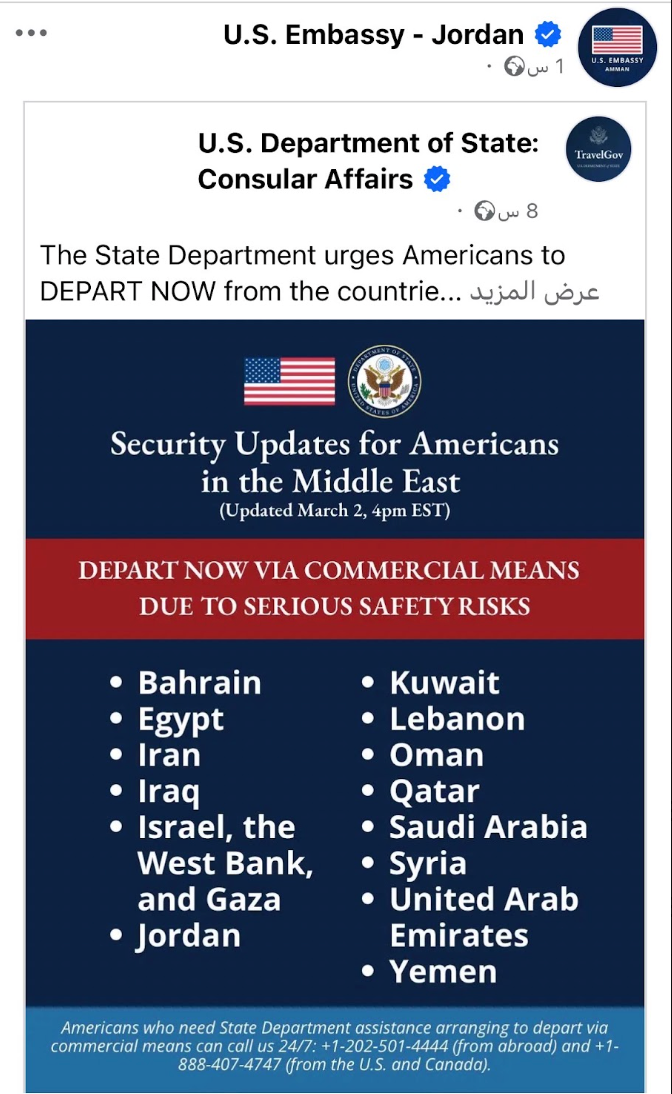
By 4:00 a.m., the post was deleted, but the New York Times and other major news outlets had already reported on the order. Wolff’s study abroad program called the U.S. embassy to determine whether they had to leave the country. They received “contradictory messages from people within the U.S. embassy,” with some saying they had to leave and others saying they could stay. Following the precedent set by other American programs in Jordan, Middlebury decided they “did not want to be the last program staying” and opted to leave the country. By then, Wolff recounted, “missiles were flying overhead and … F-35s were zooming through the airspace.”
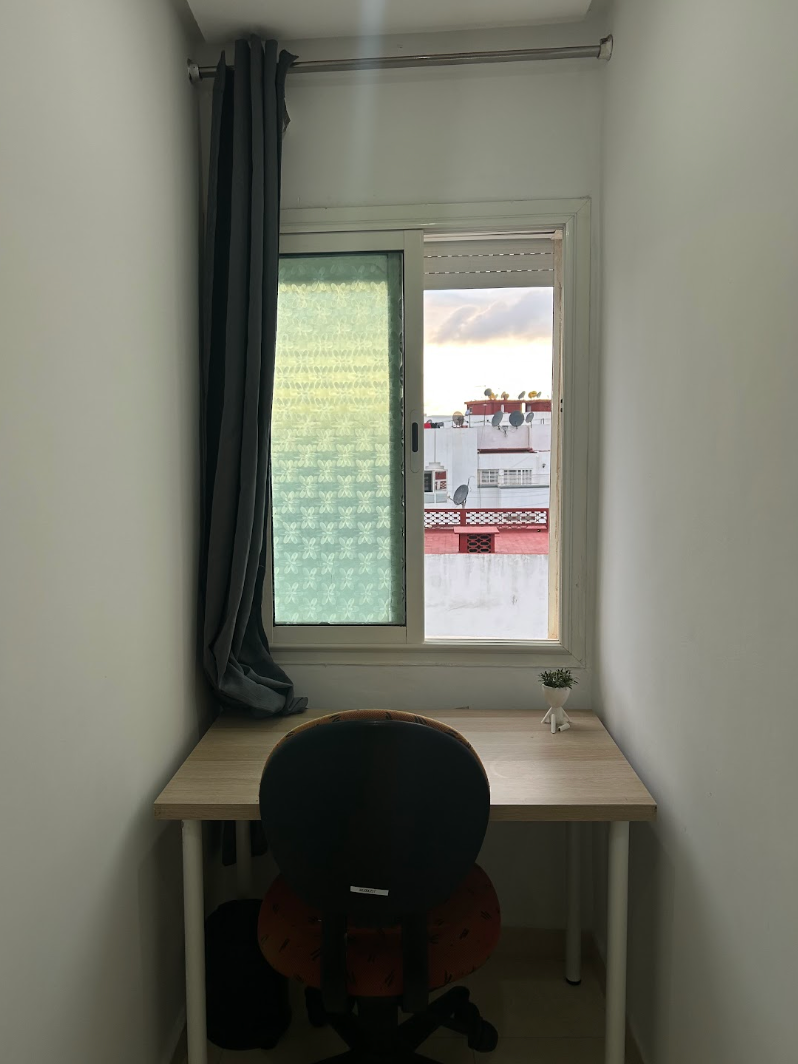
The students had just 30 hours to say their goodbyes before they were whisked away to Rabat, Morocco. Wolff “didn’t even have enough time to read the Wikipedia” page on Rabat.
Wolff’s host family in Jordan depended on the income of hosting students studying abroad. His host father was a photographer, but had just been diagnosed with cancer and was in the beginning stages of chemotherapy. During his departure, Wolff was also concerned for his host family and their “terrifying” situation.
Regarding his classes, Wolff said it was “unfortunate” that they “miss[ed] out on a lot” due to the war and relocation. Wolff took a class on gender studies in the Middle East, designed around students conducting interviews with local Jordanians. They “unfortunately didn’t get to do a lot of the interviews” as a result of the disruption. For Wolff’s two language classes, he had to transition mid-semester from the Shami dialect of Arabic to the Darija dialect of Arabic.
While Wolff has learned a lot about the evolution and shortcomings of international law through his law, jurisprudence, and social thought (LJST) courses and research under James J. Grosfeld Professor of LJST Lawrence Douglas, his time in Jordan imparted on him “a thorough, realist sense of how geopolitics works at the level of individuals.” Wolff said the experience “took [him] away from the grand theoretical ideas of national interests.”
Returning to Amherst, Wolff was disappointed by the “tiresomely apathetic stance” held by Amherst students. “Given the amount of political activism on campus for Palestine in 2023 and 2024, I expected to see far more agitation around the injustice against Iran,” Wolff said.
Despite all the twists and turns of his study abroad experience, Wolff spoke highly of his time in Jordan. He plans to return to Jordan next summer with his family to show them the country he loves and introduce them to his host family.
“When the U.S. [Department of State] is not getting all anxious about potential security dilemmas, Jordan is perhaps the best place you could do study abroad,” Wolff said. His advice for everyone who will listen is: “Go study abroad in Jordan!”
Comments ()