

Érica Ayala: ‘Why Not?’
Érica Ayala approaches every conversation, class, and opportunity with a spirit of infectious generosity. From La Causa to Frost Library, Érica has made her impact across Amherst through her commitment to community.
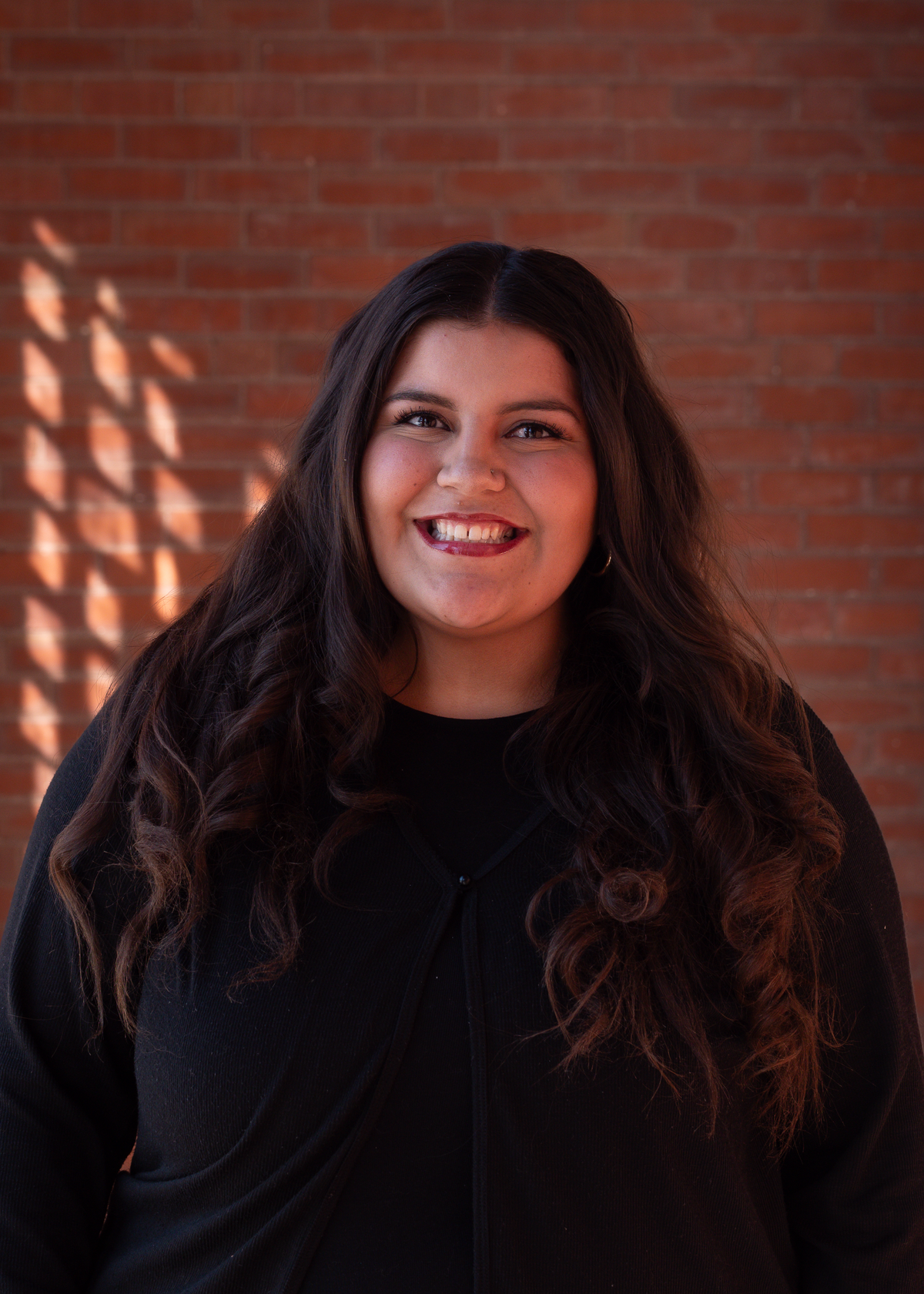
To have a conversation with Érica Ayala ’26 is to feel like you’re talking to someone from home. While for me that feeling rings especially true, given our shared midwestern identity, Erica’s kindness truly invites anyone who interacts with her to show up as their whole selves, as if they were talking to family.
Though Érica’s most frequent reflection in our interview was “I’m so lucky,” I am convinced that it is Amherst College, not her, that is the lucky one for Érica’s time on campus. A triple major in education studies, sociology, and Spanish; a first-generation college student; and a lifetime educator, Érica’s commitment to all of her passions, whether that be research or card games, will continue to leave every space she enters better than she found it.
Early Education, Family, and Doing it All
Érica and her family call a small suburb outside of Chicago home, a town with a “predominantly Latine community [and] big immigrant community.”
As the youngest of four siblings, Érica quickly admitted that she believes she embodies younger sibling stereotypes — or rather, is told she does. With all of her siblings being at least six years older than her, Érica recounted spending a lot of time at school and even more time with imaginary friends. Her favorite thing to do with her imaginary friends was perhaps foreshadowing: “I would teach history or English … I would have my imaginary class, and I’d be at the front of the board and be teaching.”
Growing up, Érica’s connections with family extended far beyond the Chicago area, starting at eight months old when she first visited her dad’s family in Jalisco, Mexico. To her, it “felt like a home away from home in a way. When I was younger, I would [pretty much] spend entire summers [there].”
Érica cites her upbringing as the foundation for her extroverted nature. “I think coming from the Midwest and also coming from a big family … I genuinely feel I can walk into any room and have a conversation with anybody in the room,” she explained. “I also thrive in chaos. I love, love chaos. My big Mexican family … it was always shouting, fighting, dancing, singing.”
From teaching imaginary friends in a homemade classroom to learning in a classroom, Erica cultivated an early interest in learning. Always a good student, her parents enthusiastically supported her educational pursuits. “My parents would be like, ‘you know you’re going to be the one who goes to college, you’re going to be a doctor or a lawyer,” Érica said.
While their encouragement certainly made an impact, Érica’s own interests were a dominant factor in her pursuit of higher education. “I think I’ve always been motivated to go to college, and I didn’t know what that would really mean for a while,” she said. “I just knew I wanted to leave home. I wanted to go and experience something different.”
By the time that Érica started high school, those aspirations turned into concrete plans. Érica and her best friend, Evelyn Perez, committed to a shared goal of attending college. Their mentality was: “We’re going to do everything possible to get to college for free, or for as low cost as possible.” And do everything possible was exactly what Érica did.
Érica attended a Title I high school. “Most of my classmates were also going to be first gen[eration] college students. A lot of us were on free and reduced lunch,” Érica said. Many of the conversations about college that Érica witnessed at her high school were “geared towards community college or state schools in and around Illinois.” Érica, who saw higher education as a chance to leave the Midwest, took the college search and application process into her own hands. “My dad stopped going to school a little bit before middle school, and my mom stopped midway through high school and then later received her GED. None of my siblings went to college, so this whole process was something that I did on my own,” she explained.
Along with devoting herself to academics, even if that meant taking a 7 a.m. class to fit an extra course in her daily schedule, Érica also committed herself fully to her school’s culture, participating and leading many clubs at her high school. While joining so many extracurricular activities was, in part, to bolster her college applications, she also just wanted to be involved. “I was just super social, so that was a way that I could connect with people in my community,” Erica said.
Érica and Perez appointed themselves as the unofficial social chairs of their senior class, running multiple Instagram accounts, organizing school events, and staying up late to create posters for their school’s football games. By the end of the year, Érica was aptly crowned with dual senior superlatives: most school spirit and social butterfly.
A Mammoth Transition
Despite being wholeheartedly committed to her high school experience, by the time college application season rolled around, Érica still doubted whether she had done enough. “When I was going through the application process, there was so much imposter syndrome … I really did not think I was going to get in anywhere except for my state schools.”
Érica hadn’t even heard of Amherst until her senior year, when Belem Oseguera ’23E, a graduate of Érica’s high school who had recently transferred to Amherst, spoke on an alumni panel. Oseguera told Érica that she thought she’d be a great fit at Amherst, and Érica decided to heed Oseguera’s advice and applied to Amherst on a whim. “I had a fee waiver for College Board,” she explained. “So I submitted it [on the] last day, like, ‘why not?’” After attending Be a Mammoth later that year, Érica was sold.
Even though she found great friends early on, Érica struggled to feel truly integrated into the Amherst community in her freshman year: “It [still] was super isolating to be from a public high school in the Midwest that was predominantly Latinx students.”
A lot of this sense of isolation also came from an adjustment to a new classroom environment. “I felt like Bambi a little bit, trying to learn how to walk and learn the rules of this institution: the things you do say, the things you don’t say … things that you say in office hours, and the kinds of contributions you make in class,” Érica said.
Through a lot of trial and error, Érica found that relying on the things that made her Érica — asking questions, reaching out to others, and welcoming feedback — would lead to success. In the end, that adjustment period paid off. “I don’t think 18-year-old me could have ever imagined all [that] I have accomplished now. I’m very proud of myself,” Érica said.
Neighbors, La Causa, and Community
As Érica continued to settle into life at Amherst, she sought out community in both informal and formal spaces. The friends that she made in her first year on James’ third floor are still her neighbors, but now on the third floor of Moore Hall, and Érica has also cemented herself as a fixture of Amherst’s Latino community through her leadership in La Causa.
Tiernee Pitts ’26, one of Érica’s close friends from freshman year, shared that Érica’s ability to be a safe space for everyone in her life makes all the communities she is a part of so inviting: Érica is the first person to make a new groupchat, invite someone she’s just met to dinner, or bring out the silly side in all of her friends. Pitts described her and Érica’s routine of ending nearly every day together with hours-long conversations in the hallway. “We spend more time in the hall outside of our doors than we probably spend time in our actual, respective rooms,” Pitts said.
In her sophomore year, Érica took on the position of secretary for La Causa, “We threw a lot of parties, we had a lot of cooking events, we did our annual ‘Voices’ event — which was so much fun, but so much work.” Pitts said that when Érica was in La Causa, it “was the most efficient [student organization] board I’ve ever seen.”
To Érica, the extra work, stress, and pressure La Causa put on her schedule were more than worth it. “You need to inconvenience yourself to create community, and if nobody’s doing that work, then nobody’s going to have community,” Érica said. “I feel very lucky to have been a part of Latino community across campus.”
Érica feels that La Causa and other affinity groups have only become more essential during her time at Amherst because of the decreased diversity of the college. “I hope that La Causa continues to do the work so that they feel they belong in a space like this … [and] that Latino students in the future can continue to feel like they are able to take up space.”
Finding an Academic Niche
On top of her commitment to the Amherst community outside of the classroom, Érica is also graduating with three majors — sociology, Spanish, and education studies. To her, the combination was an easy decision. “I absolutely think all of my interests lay at the intersection of my three majors,” she said. “I often tell people that my triple major isn’t that impressive because there’s a lot of overlap.”
Érica had been interested in studying sociology since she arrived on campus, “I’ve always been curious about society and systems, systems and institutions, and the ways in which people and groups interact with each other.” For Érica, sociology also “gave me a framework to understand my lived experience.”
As a native Spanish speaker, Érica gravitated towards the Spanish courses and department at the college. Although her interest in the language came naturally, Érica’s decision to eventually major in Spanish was very intentional. “I really wanted to better my Spanish so I could use it in a professional capacity,” she explained. “At home I really only honed it to be able to use it interpersonally, informally, with my family or with friends, but never really academically.”
While she quickly found her first two majors, committing to education studies took longer. Érica started taking education studies courses during her first year, and almost immediately, her professor, Five College Professor of Education Studies Kristen Luschen, told Érica that she would be a good fit for the education studies department. “I laughed,” Érica recalled. “I said, ‘no, I just like these classes … I already have two majors.’”
After a few more semesters of relentless encouragement from her education studies professors, Érica eventually settled into the department. Now, Érica is a student member of the education studies steering committee, wrote an education studies thesis, and has worked or studied with the department every year.
In her first year at Amherst, Érica began working with the program Collab for College (C4C) in her class “Race, Education, and Belonging.” Through C4C, Érica, along with Margo Pederson ’25, organized and planned college access days with workshops, panels, and tours for local middle school students. In her sophomore year, Érica continued this work as a teaching assistant for the class, and during her junior year, she worked with Luschen and Senior Lecturer in English Kristina Reardon to collect data on the program, which eventually turned into co-authoring a research paper. In her senior year, Érica continued with C4C through Morning Movement — a town initiative that offers early-morning recreational programming in Amherst schools — waking up at 6:30 a.m. to play basketball and cards with local students.
Theorizing a “Campesino Epistemology”
Érica’s thesis, “Campo as Classroom: An Archival Analysis of Co-Constructed Campesino Epistemologies through Literacy Education in the Armed Revolutionary Forces of Colombia-People’s Army,” was a natural continuation of her academic interests at Amherst.
Inspired by a semester spent abroad in Cali, Colombia, as well as a class she took in the fall of her junior year, “War and Peace: The Colombian Archive,” Érica’s thesis examines the pedagogical practices of communist guerrilla group the Armed Revolutionary Forces of Colombia-People’s Army (FARC-EP).
While abroad, Érica participated in the Afro-Colombian Activist and Social Movements Program, which investigated how the decades-long Colombian armed conflict “impacted different communities of color throughout the country, specifically Afro-Colombians, and how … they’ve created resistance movements against subjugation and other forms of marginalization.”
In “The Columbian Archive,” Érica did her final project on the child recruitment practices of the FARC-EP in Colombia and of the Sandinistas in Nicaragua. “It was a super interesting project that I knew I was barely scratching the surface on,” Érica said. In an effort to satisfy that curiosity, Érica spent hours combing through archival materials, magazines, and workbooks created and written by insurgents in the Princeton University archives over January break her senior year. The project consumed Érica and quickly spread into all aspects of her life at Amherst. “I remember every time I would find a really cool source or a really cool article, I’d immediately want to tell my friends, and I would not shut up about it,” she said.
In her thesis, Érica argues that the education that was going on among insurgent groups in rural Colombia was a “campesino epistemology,” and that the FARC-EP, through teaching insurgents to read and write, “create their own forms of knowledge that refute these ideas of campesino inferiority that permeate the public education system through cultural production, by making songs, performing plays, dancing, writing books, and writing articles in this magazine.”
Reardon, Érica’s thesis advisor, spoke highly of Érica’s ability to let her intellectual interests drive her work. “I’ve just seen her go from an idea that was born out of a passion and a desire to connect her disparate interests into … a real, full-fledged archival research project,” Reardon said. In fact, Reardon pointed out that this research project likely could not have been done by someone without Érica’s interdisciplinary knowledge, largely because of the primary source translation effort that accompanied the thesis. “Anything she quoted, she translated on her own,” Reardon said.
Frost Library
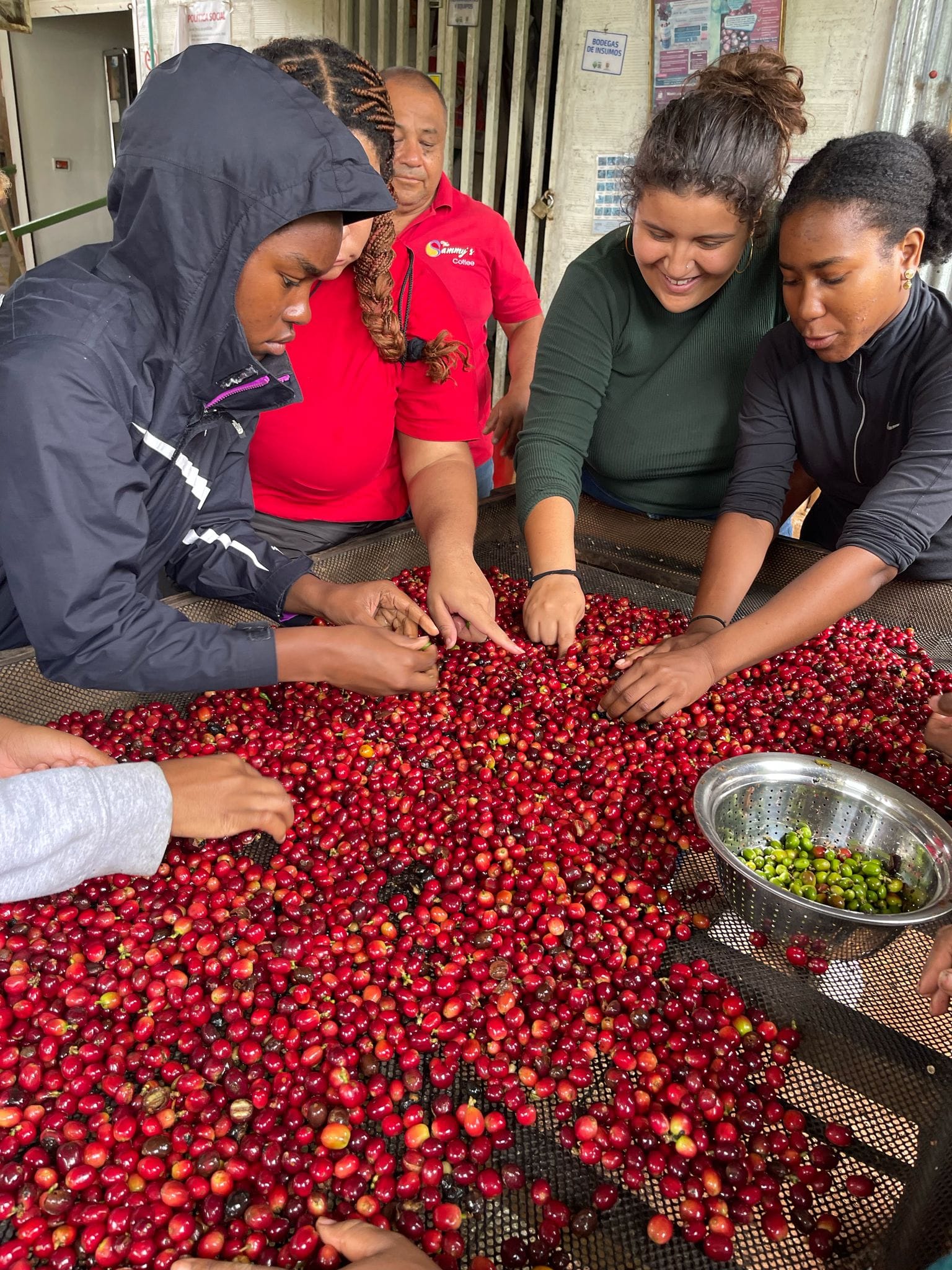
Érica’s knack for research extended beyond just her thesis and archival work to her role as a Peer Research Assistant in Frost Library. Having taken two classes with Érica this semester, I couldn’t count on two hands the amount of times I’ve gone to the reference desk with a pile of disconnected ideas, and have come out with an Érica-curated concept map, source list, and research question. To Érica, helping students is exactly what drove her to the role. “I’ve been able to work with students who, like me, came into Amherst not having any experience doing research,” Érica said. “I didn’t know what a database was, I didn’t know what a concept map was, I didn’t know what a call number was.”
Research, Instruction, & Outreach Librarian Blake Doherty commended Érica’s excitement to engage with students in the research process. “Érica is just always out there, inviting anyone who walks by to come over [so she can] share what she does and [offer] support,” Doherty said. Social Sciences Librarian Cat Hanulla said Érica’s warmth was key to why she is so skilled at her job. “I think she’s really great at making [students] feel like it’s okay to ask questions,” Hannulla said. “Sometimes that can be intimidating, but she creates a really good and supportive environment for that.”
Beyond Amherst
After graduation, Érica will return to her home in Illinois to volunteer, spend time with family, do some free babysitting of her nieces and nephews, and study for the LSAT. When thinking about her future, Érica says, “There’s kind of three pathways I could go. I could be a teacher or professor, or I could be working in government as a policymaker, or I could be a lawyer.” As Érica has done with all of her pursuits, she is choosing to follow the path that is calling to her the most, which is to be a lawyer. Érica is especially interested in the changing legal landscape of immigration policy and law.
Érica shared a few pieces of advice for current and future Amherst students about how to make the most of their time at the college, which were less pieces of advice and more like tenets of Érica’s life: be friendly to people, be nice and genuinely interested in them, and go to office hours and the library.
It has been an absolute pleasure to personally get to know Érica over this past semester and to witness her kindness and commitment to everything she loves and does — even if it means I’ve had to sit through her rendition of “Bear Down, Chicago Bear Down” one too many times as an avid Green Bay Packers fan.
The Amherst College community will forever benefit from Érica’s time on campus, a sentiment that Érica feels goes both ways: “I’ve just felt really lucky to have been a part of such a great community that all loves learning in one way or another.”
Comments ()