

Frost Library C Level Closed Due to Mold
C Level of Frost Library has been closed since the beginning of the academic year due to a mold infestation. The infestation has affected 60% of the aisles, preventing students from requesting any of the 300,000 books on the floor. Director of the Library Martin Garnar cited humidity as the cause.
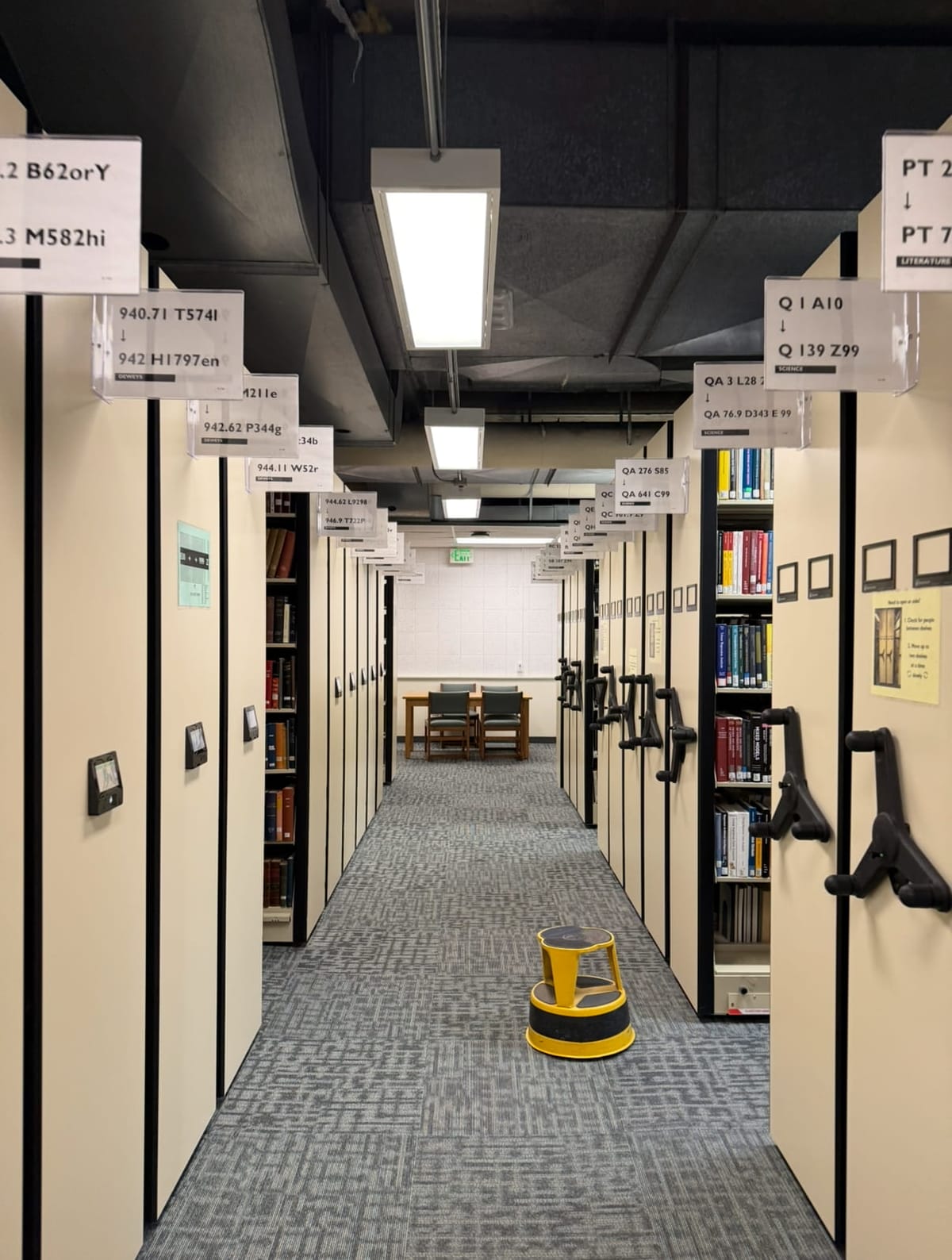
Since the start of the academic year, C level of Frost Library has been closed to the public because of a mold infestation, leaving students unable to study on the floor or request any of the 300,000 books housed there. According to Director of the Library Martin Garnar, this is the first infestation of its kind, at least in living memory.
On Aug. 5, a library staff member went to C level to retrieve a requested book from the medical section and noticed three books covered in mold. The whole aisle was considered infested if at least one of its books contained mold spores. Additional staff members then inspected each aisle to assess the extent of the infestation. At the initial assessment, staff identified about 60% of the aisles as infested.
Garnar named humidity and lack of a dehumidification system as likely reasons for the outbreak. “Mold spores are everywhere … It’s just whether or not they get to the right conditions for that or to be a bloom,” he said. “One of the challenges for C level, and in fact for every space outside of archives and special collections, is that we don’t have dehumidification in the library.”
Construction projects, including work related to the Climate Action Plan and the reconstruction of faculty offices, contributed to the humidity issue, as the ground-level door to the library remained open for much of the summer. As a result, humidity levels rose to 60%, while the Library of Congress research guide recommends relative humidity between 30% and 55% for storing books. Although three industrial-sized de-humidifiers were brought in to improve the conditions, they did not affect relative humidity levels.
On Aug. 10, the library staff held a meeting with the independent mold remediation company ATI Restoration. Nine days later, the company started cleaning all the shelves and vacuuming books to remove dust — a primary organic food source for mold. They finished cleaning the structures and books on Sept. 3. When the library staff subsequently inspected the floor, however, they found more mold spores.
Library staff is now reinspecting every shelf for mold and marking those that require treatment for the remediation company. The company will then return to conduct another full cleaning of the floor. After the cleaning concludes, library staff will inspect and reorganize the materials before reopening C level to the public.
While there is no fixed reopening date, Garnar expects the floor to reopen to students by the end of September. Most of the books on the level have been recovered.
“Most books are able to be treated and [will] be fine,” he said. “If there was anything that was really damaged beyond [what] we feel comfortable with, then we will replace it where possible.”
Archival materials and rare books on the floor, which are housed on a separate HVAC system with climate control, have not been affected. Library staff continues to monitor all other levels of the library, where no mold bloom has been identified.
As the library prepares to reopen the floor, Garnar explained the precautionary measures for visitors with mold sensitivity. A basket of masks will be available on the floor, and signage will inform visitors of the recent bloom. Any student or faculty member can also put the requested book on hold and page a library staff member to retrieve it for them.
The staff is also working with facilities on longer-term solutions to prevent future blooms. “Now we are working … to put together a proposal for a capital budget request, to look at adding dehumidification to the main air handling unit that serves the floors where the collections live, and so it would be a reheater system [that would] warm up the air a little bit before it goes back into circulation,” Garnar said.



Comments ()