

History Department Hosts Annual Hugh Hawkins Lecture
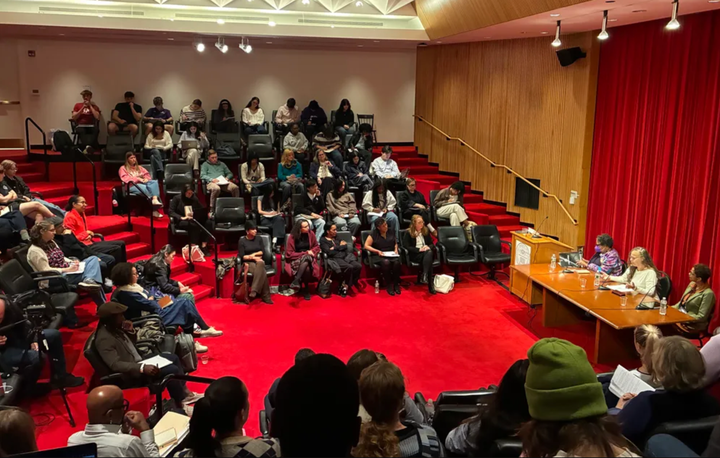
On Wednesday, Distinguished Professor and Gary B. Nash Endowed Chair in U.S. History at the University of California, Los Angeles Robin Kelley delivered a talk as a part of the annual Hugh Hawkins Lecture in History.
On Wednesday, the history department hosted its annual Hugh Hawkins Lecture. This year’s lecture, titled “Falling Apart: Between the University and America,” was delivered by Distinguished Professor and Gary B. Nash Endowed Chair in U.S. History at the University of California (UCLA) Robin Kelley.
The lecture series is named in honor of Hugh Hawkins, Anson D. Morse professor of history and American studies emeritus. Kelley began his lecture by describing how two of Hawkins’ books — “Banding Together and Between Harvard and America” — inspired the talk’s title and theme.
Kelley’s talk covered structural discrimination in higher education, the history of campus protests, and the fight for Third World Studies, including the systematic examination of power and its locations and articulations involving race, gender, sexuality, class, and nation. He emphasized the role protests have had on college life and their consequences. “These intense battles turned college campuses into a thorn in the side of the Cold War project, and there were real victories,” he said. “I mean, some of the victories were here at Amherst College. You got Black Studies.”
In the next part of his lecture, Kelley discussed the neoliberal crisis he observed within the University of California (UC) schools, which is present in many other colleges and universities in the country as well. As of fall 2024, the system could only house 41% of its students, he noted. Rather than create new housing, the university created a homeless shelter for students. “How ridiculous can it be?” he said. It struck Kelley that campus tours happen around unhoused students. He overhears parents commenting, “Well, my daughter’s going here and I see homeless people. Is it going to be safe?’ And I walk by and say, ‘these are students. It may be your daughter, you know.’”
Kelley also noted the lack of support for undocumented and international students facing issues involving Immigration and Customs Enforcement (ICE). He referred to the head of campus security as a “czar,” and noted that campus was informed “that if ICE were to come to our campus, his office might take as long as two days to inform the community.”
“He warned against interfering with the operations,” Kelley continued, “and vowed that the UCPD would not stop ICE from taking illegal action on campus. Kelley then shifted to discuss the UCs’ corporate-oriented policies, and the consequences faculty face for expressing “unwanted” opinions.
He also addressed President Harry Truman’s 1964 Commission on Higher Education, which, he argued, “rejected the old elitism. The commission called for democratizing higher education, “was actually advocating for more federal grants, more federal funding for scholarships,” and resulted in the establishment of community colleges. “Well, we’re losing them,” he said. “Hopefully, they are coming back, but we will see.”
The lecture drew approximately 70 attendees, including students and faculty from across the Five College Consortium. One of the attendees at the end of the lecture resonated with Kelley’s experience: “Here at Amherst, as an example, the institution is made up of the faculty and the students. But then you see that there is this huge disconnect between them, what students and faculty want, and what the administration and board of trustees want.”

Comments ()