

Inside Amherst Veterans’ Successful Push to Change College Financial Aid Policy
After student veterans challenged how Amherst College calculated its aid, the college quietly changed its financial aid policy to stop counting all student disability income and other select military-related benefits — a shift newly reported here following an investigation by The Student.

Joe Reigel ’29 expected to attend Amherst College for free. He is a disabled veteran with 100% Post-9/11 GI Bill eligibility and was approved for the Yellow Ribbon Program, a federal-college partnership that helps cover tuition and fees beyond what the GI Bill can provide.
Before coming to Amherst in 2025, he served as a Marine deployed to the South China Sea and Okinawa in 2021, spending time aboard the USS New Orleans countering Chinese operations during the height of the Covid-19 pandemic.
“I was told over the phone that all my needs would be met,” Reigel told The Student. “Free health insurance, free everything; all costs covered.”
On June 25, 2025, however, after committing to Amherst, Reigel received an email, obtained by The Student, from Associate Dean of Financial Aid Heidi M. Bohn, clarifying that this would not be the case.
The issue was his disability compensation: Reigel said he received $3,830 per month in non-taxable disability compensation from the Department of Veterans Affairs (VA), and some of it was sitting in his bank account.
“[T]hat will impact your contribution.” Bohn wrote. “Your assets in cash are also impacting it so you will have a substantial contribution. I am not sure how to get around that at this point with your consistent disability income and savings.”
There was no resolution: Reigel said he paid about $16,500 out of pocket during his first year at Amherst — $16,500 more than he expected.
“Your Tuition at Amherst Will Be 100% Free”
Throughout this investigation, The Student communicated with five current Amherst student veterans, four of whom recounted similar confusion or frustration over how the college treated their benefits and non-taxable income.
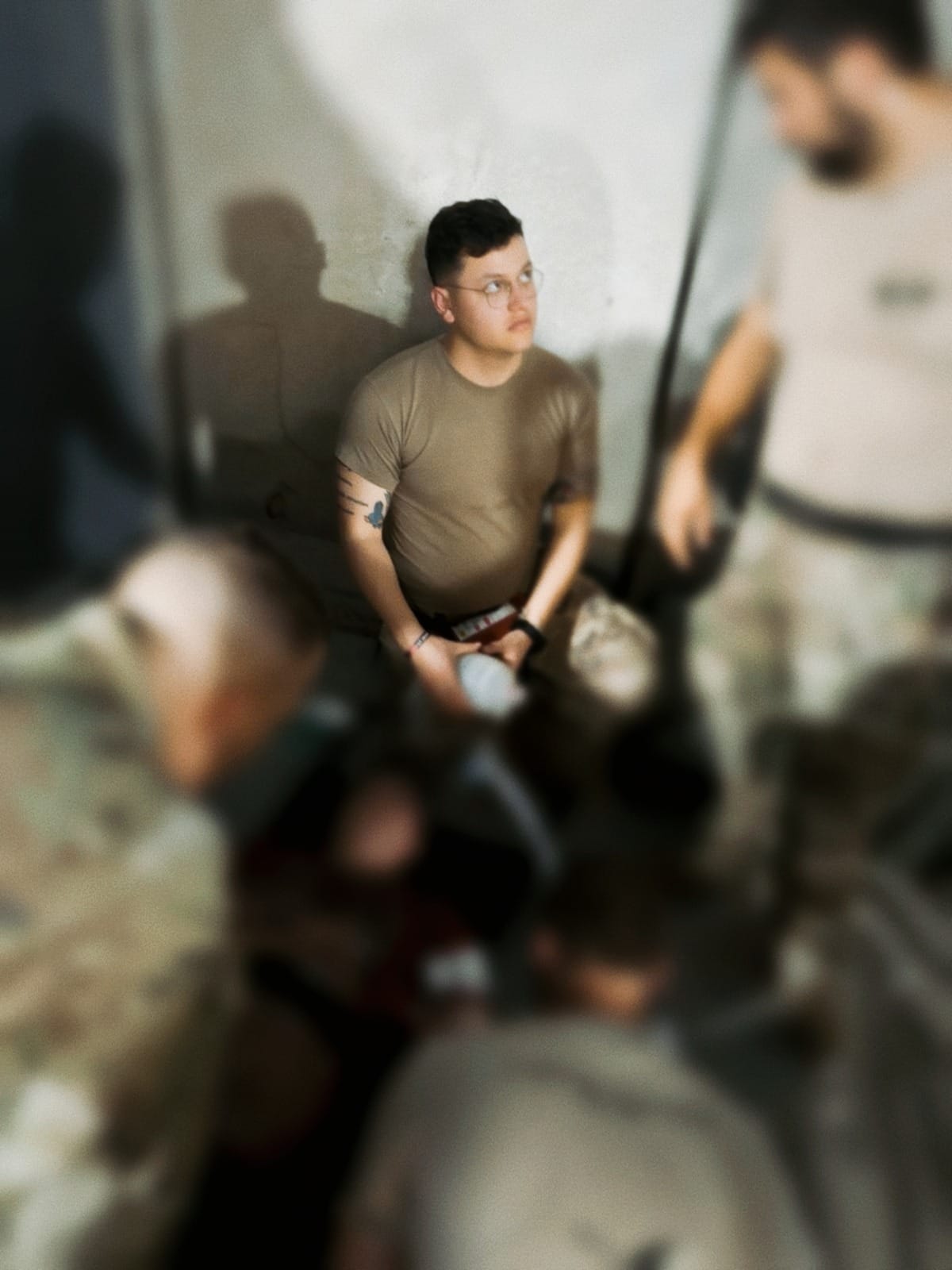
Joey Cano ’28E, a veteran who transferred to the college in 2025, has firsthand experience with the financial aid challenges veterans face. Cano served on active duty in the U.S. Army from June 2018 to December 2022, and after transitioning out, continued his service as a medic in the Massachusetts National Guard. In 2024, he was deployed to Iraq with his unit, during which he received combat pay — a non-taxable lump sum granted to service members serving in designated combat zones.
Cano said the college initially attempted to include his combat pay in its financial aid calculations, potentially leaving him responsible for tens of thousands in out-of-pocket costs.
"I did fight them on it, said like, ‘hey, that’s not accurate’... and they said all of this income is taken into account, whether it’s taxable [or] non-taxable ... it really felt as though it was falling on deaf ears,” Cano said.
Another veteran, who spoke with The Student via text message and wished to remain anonymous due to concerns about possible reprisal from the college, echoed similar frustrations with Amherst’s treatment of veterans’ benefits.
“I had to tap into my savings that I earned through my service to pay for my education,” they recalled. “I can understand paying out of my own pocket — I’ve done that at my previous institution — but the school has to keep their word when it states such generous financial aid, attracting more veterans that qualify but end up paying when they get here.”
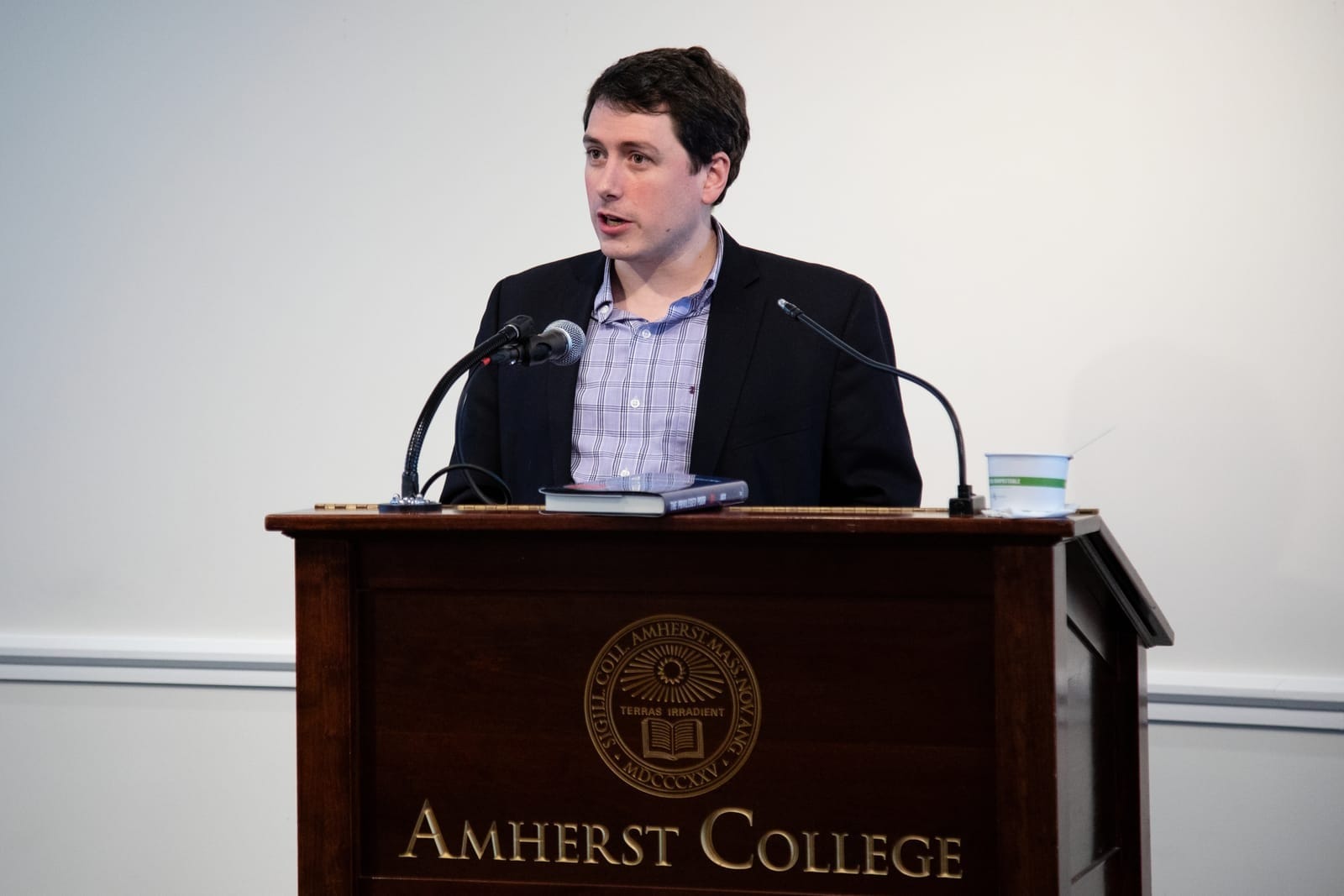
Though not speaking specifically about Cano’s situation, Vice President and Dean of Admission & Financial Aid Matthew McGann — who responded to The Student via email on behalf of himself and Dean of Financial Aid Gail Holt — said Amherst does not differentiate between taxable and nontaxable income when calculating student aid.
“Institutional calculations are based on all sources of income (both taxable and non-taxable) that support living expenses,” McGann said. “[The practice] ensures that our financial aid calculations are equitable across a wide range of student financial situations.”
In Cano’s case, however, the college did ultimately change course. For reasons still unclear, Cano said the financial aid office initially included his 2024 combat pay rather than following what Amherst later described as its best practice in combat-pay cases: using a veteran student’s most recent income when it better reflects their finances. According to three sources, after he pushed back, Amherst reviewed Cano’s updated 2025 income — which showed he’d earned only about $5,000 that year — and recalculated his aid using the updated figures.
As for the anonymous veteran, The Student asked McGann whether, in certain cases, a veteran using 100% GI Bill and Yellow Ribbon benefits would still owe additional out-of-pocket costs. He explained that while tuition and required fees are covered, veterans who do not qualify for full institutional aid are responsible for other expenses such as housing and meal plans, which are not included in Yellow Ribbon coverage.
“The Yellow Ribbon program covers tuition and required fees,” McGann said. “The only required fee at Amherst is the student activities fee. Housing and meal plans are not covered by Yellow Ribbon funds.”
McGann also noted that veterans using their benefits receive extra support from the VA, such as a monthly housing allowance that can be used to help offset additional college fees.
“Student veterans who utilize their benefits have additional support toward meals and housing through the Monthly Housing Allowance (MHA, commonly referred to as BAH) which covers nearly all of Amherst’s housing and meal plan costs,” he said.
When The Student asked the anonymous veteran whether he had lived on campus or purchased a meal plan, he responded, “I lived on campus and had a meal plan. I did tell them I have disability [compensation], but I don’t know if they counted it. But they did tell me I had to give them all my Gl Bill BAH.”
The sum total cost of attending a residential college — which often includes the full cost of housing and meals — can far exceed just tuition and required fees. At Amherst, for example, students often pay up to $21,030 more than base tuition to cover additional expenses.
But many people, including prospective students, do not always recognize this distinction. Amherst’s own “U.S. Veteran Applicants” page, as of September 2026, primarily emphasizes that “your tuition at Amherst will be 100% free.” While true, several students The Student spoke with said they were unsure what this meant, noting that the page never mentions the possibility of paying out of pocket or using direct deposit military benefits to pay for other expenses.
Along these lines, multiple sources tell The Student that poor communication from the college, both before and after the recent changes, has continued to leave veterans uncertain and confused about their benefits and financial aid.
For his part, Reigel said that when he tried to clarify why his disability compensation was being counted against him, his questions went unanswered. “The school’s reply … was to stonewall me essentially,” he recalled. “Their answer was basically, ‘No, that’s how we do it here. There’s no mistake. And we’re not gonna look into it any further.’”
Another anonymous veteran, who was still working through their financial aid situation when they spoke with The Student via text message, expressed similar ongoing frustration. “Financial aid didn’t adequately explain the financial aid process [to] me, especially with military benefits,” they said. “I never had the opportunity to speak with anyone in the office specializing in veteran benefits prior to making my decision to come to this school.”
Push for Change
In response to these frustrations, several student leaders began working directly with the administration to push for policy changes and greater transparency on veterans’ issues.
More specifically, The Student has confirmed that Reigel and Cano, spearheading an informal and fluid coalition of veterans, met with senior administration — including President Michael Elliott, McGann, and other deans — throughout the summer to push for policy changes and greater transparency on several veterans’ issues.
Their efforts focused on, but were not limited to, how the college calculates veterans’ financial aid, including how it treats student disability income, non-taxable military benefits such as combat pay, and retirement assets like the Thrift Savings Plan (TSP), as well as improving communication about these policies to veteran students.
“In June of this year, I finally decided there’s something wrong here. This doesn't make sense.” Reigel said. “I started contacting financial aid again … I can’t imagine any institution, especially an institution that essentially has the GDP of a small country, would need to nickel and dime disabled people, disabled veterans, for essentially a drop in the bucket.”
The Association of Amherst Students (AAS) supported these efforts behind the scenes by helping facilitate communication between the veterans and administration, though AAS members themselves did not attend the meetings.
AAS President Charles Tufenkji ’28 said he first became involved after one of his senators connected him with Cano late in the summer. “I got a phone call from one of my senators, who connected me with Joey, and we talked for maybe an hour or two about the complaints they had, specifically about financial aid … I told them, ‘let me see what I can do on my part.’”
Tufenkji said he then worked to help the veterans seek clarity from the administration, speaking with McGann and other senior officials, researching the students’ concerns, and staying in contact with Cano and others as their push for policy changes continued.
The group’s summer push, according to five sources, came to a head in a meeting on Aug. 24 that included nearly a dozen key college officials and faculty.
“Joe and Joey, I give them a pat on the back for being totally fearless,” Assistant Professor of Classics Richard Hutchins, who attended the meeting in support of the student veterans, said. “[They] explain[ed] all the issues they’ve been having. Joe and Joey did most of the talking. The deans did mostly listening.”
According to an email obtained by The Student, the college had already agreed to change its policy on several matters by Aug. 21 — three days before the Aug. 24 meeting.
“These changes will benefit veterans at Amherst now and going forward,” McGann wrote in the email. “We will no longer consider student disability income in our assessment of total income. We will reduce the consideration of independent students’ assets. We will not consider the Thrift Savings Plan (TSP) for veteran students. We will redesign our veteran webpages to provide clearer information and reduce confusion.”
McGann also clarified the school’s position on combat pay, reiterating that Amherst generally does not consider combat pay as income when calculating financial aid.
“I would classify the evolution in financial aid policy as a huge success,” Tufenkji said. “Both the disability policy specifically, and then everything else that was achieved, too.”
Dean of Students and Class Dean for Transfer & Veteran Students Scott Howard, who was present at the meeting, shared the importance of supporting veteran students in an email to The Student. “Veterans are an important part of the Amherst community, and they have unique circumstances and needs that many other students may not experience,” he wrote. “It is important that our services meet the needs of our students, no matter their situation.”
A Changing Landscape for Veteran Aid
When asked if there was anything unusual about Amherst’s previous approach to counting VA disability compensation and non-taxable benefits in financial aid calculations — whether it was more restrictive than policies at other selective private colleges — McGann said Amherst’s previous approach was not unusual.
“Amherst has followed the common guidance for Institutional Methodology (IM) since it was first conceived in 1992. We believe our approach has been typical among institutions that use IM, including peer colleges,” he said. “Following a review of our approach, informed in part by feedback from student veterans, we have updated our policy to no longer consider student disability income in our assessment of total income. This change from the standard IM guidance used by most institutions is intended to ensure that Amherst remains one of the most supportive places for a veteran to attend college.”
According to Dr. Abby Kinch — a leading national expert on veterans’ higher education policy and Vice President of Research at Student Veterans of America, a national nonprofit umbrella organization representing nearly 1,600 student veteran chapters across the U.S. — Amherst’s former policy of counting VA disability compensation toward institutional financial aid, while not a compliance violation, is not necessarily a universal standard.
“I would not necessarily characterize a college considering VA disability compensation in its institutional aid methodology as a compliance problem,” she wrote in an email to The Student. “I also would not characterize reducing institutional aid based on VA disability compensation as a standard Yellow Ribbon practice.”
Kinch also pointed to broader changes in the educational landscape that help explain why such issues are emerging now. Until recently, she said, federal financial aid forms required veterans to report VA disability compensation as untaxed income — a practice that changed with the introduction of the simplified Free Application for Federal Student Aid (FAFSA) beginning in the 2024-25 award year.
“The new federal methodology eliminated veterans’ noneducation benefits from the need analysis, meaning VA disability compensation is no longer included in the federal Student Aid Index calculation,” she said.
The institutional aid policy at a private college like Amherst, then, which supplements the FAFSA with the College Scholarship Service (CSS) Profile to distribute its own funds and follows the common guidance for IM, has thus only recently diverged from the new federal standard, although they are not required to follow federal rules in awarding institutional aid.
“Particularly at institutions that provide substantial need-based aid, the institutional methodology may consider financial information differently than the FAFSA currently does,” Kinch said.
Continuing Challenges
Despite the meaningful changes to financial aid policy, nearly all the veterans The Student spoke with noted a continued sense of isolation or lack of recognition on campus, although their experiences varied in severity.
“I will say, in general, I just don’t get the sense that students, deans, or faculty — myself included — really know how many veteran students there are, who they are, or where they are on campus,” Hutchins said. “I just get the sense that veteran students feel kind of atomized.”
For some veterans like Tim Locher ’29, a first-semester transfer student at Amherst on a full ride, the student experience has been largely positive so far, with most challenges he has noticed pertaining to campus life, not financial aid.
“There are some glaring things that can be uncomfortable for veterans,” Locher said. “For example, there are plenty of houses on campus reserved for affinity groups, but older veterans aren’t given the same treatment. You end up with a 20-something-year-old veteran living with an 18-year-old in first-year housing. It can be uncomfortable.”
For others like the two anonymous veterans, frustration has to do with the ongoing lack of clear communication from the administration. And for affected, disabled veterans like Reigel, the frustration lies in what he considers the lack of meaningful redress or accountability. While the college ultimately changed its policy around disability income and adjusted Reigel’s financial aid package moving forward, he said it has yet to take responsibility for or address the impact of its past policies.
“I told [the administration] ‘look, I’m a low-income student. I spent the entire summer working on this to try to bring this to the school’s attention and get this fixed … the right thing to do moving forward would be [to] return it to me, because possessing money that’s taken under those circumstances, I would consider that theft personally,’” Reigel said. “[They] told me very coldly that Amherst does not award funds retroactively … to be rebuffed in that way, very coldly, I would almost say contemptuously — it felt like a slap in the face.”
When asked about the possibility of retroactive refunds, McGann explained that Amherst’s approach is consistent with its long-standing policy for financial aid updates.
“Amherst has regularly made financial aid enhancements over the years; these changes are always forward-looking, and do not apply to previous years and this new policy is no exception,” McGann said.
For this reason and more, several veterans interviewed by The Student said that while policy changes mark progress, much work remains to address the broader challenges the student group currently faces at Amherst.
“I think people have a right to know that their school was doing this, and that their school is claiming they’ll no longer do it,” Reigel said. “But I think they need to be held accountable.”
Others, though, including student leaders, faculty, and administrators, see the recent changes as a good start, or note that Amherst is already doing well compared to other institutions.
“I am a veteran myself. I served in the Colombian Army (Infantry branch) during my military service,” Associate Professor of Mathematics Ivan Contreras, one of the professors who attended the Aug. 24 meeting in support of the students, wrote in an email to The Student. “Veterans bring so much to our community! I feel particularly close to our veterans given my own identity, and I also recognize that not everyone is aware of the issues that our veterans and students with disabilities face on a daily basis. [Luckily], [w]e have amazing faculty and staff who care and support our students.”
Building on this perspective, Hutchins emphasized the significance of Amherst’s ongoing commitment to veterans, especially as a private institution.
“You know, we’re a private institution rather than public,” he said. “We don’t have to make a commitment to veterans, but we do.”


Comments ()