

Kamil Mouehla: After the Afterparty
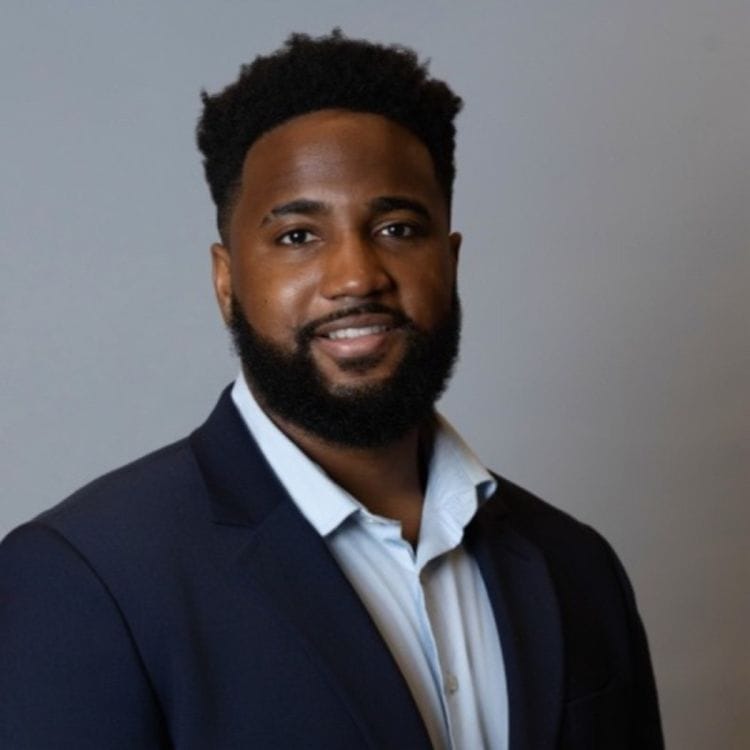
While Kamil Mouehla is well known and loved for his pivotal role in Amherst’s social scene, his distinctly compassionate and energetic approach connects all aspects of his life in ways most don’t see.
It’s a Friday night at Amherst College. You enter Seelye House just before midnight with your friends to a thumping baseline, low lights, and a throng of college-aged students. The air is hot and thick despite the 20-degree weather outside. You wade through the pulsing crowd toward the DJ booth, and inevitably get stuck somewhere in the middle of the floor. Several students are standing on windowsills and furniture pushed to the sides of the room, feeding off the energy of the crowd below. The beat switches, and the tide of the bodies begins to pull you back and forth.
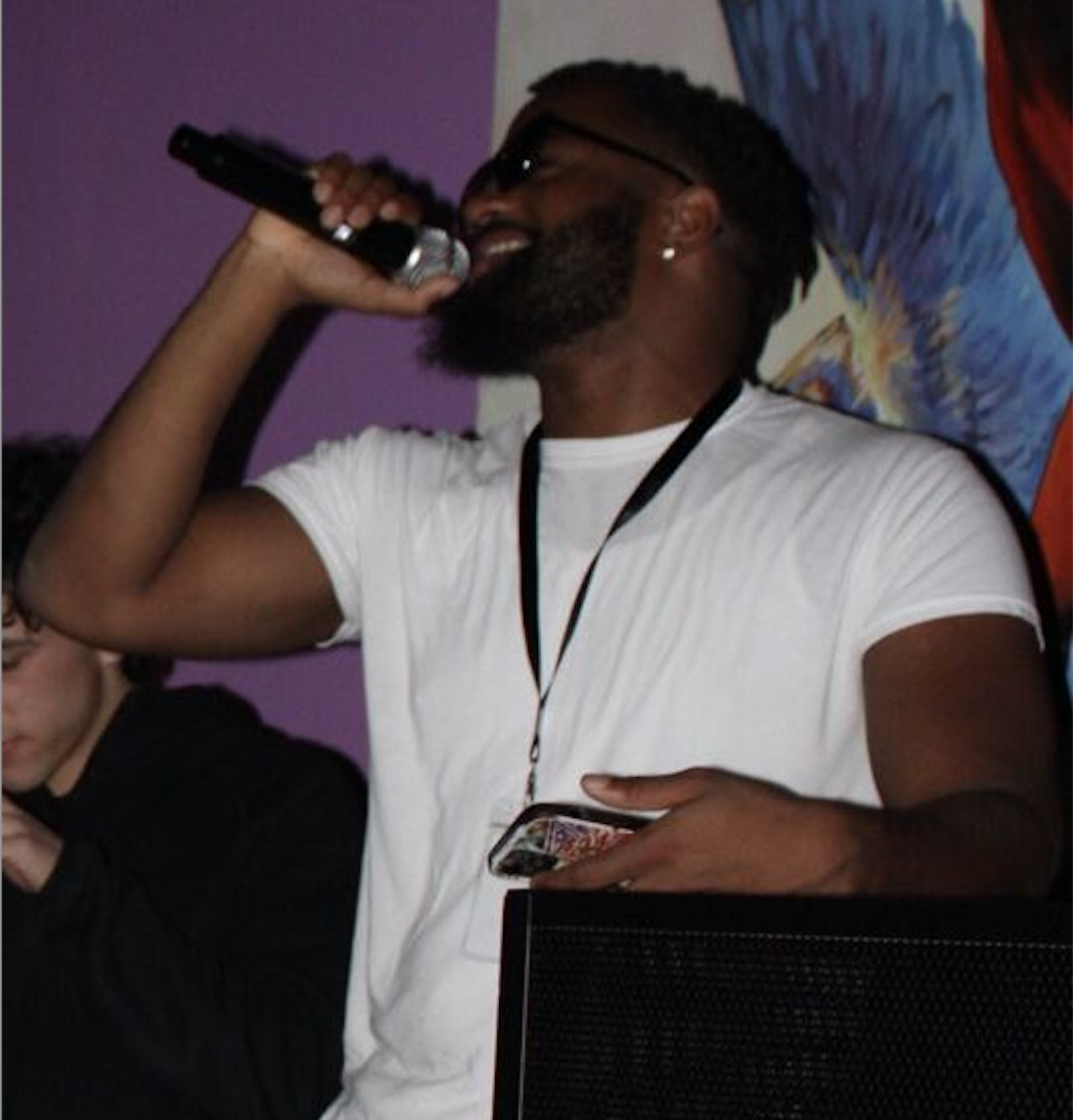
Few organizations at Amherst have the ability to create this atmosphere. Yet Kamil Mouehla ’26 seems to do so effortlessly. He posts a few well-designed flyers for a party on Instagram, drops a line on Fizz, tells a few of his friends, and suddenly half the student population of the Pioneer Valley materializes on the Amherst campus. When you talk to Mouehla, this level of influence seems like an inevitability. If you ask him how he became such a figure at Amherst, Mouehla will shrug and tell you that he just likes having genuine conversations with those around him.
Anyone who is regularly out and about on weekends at Amherst already knows Mouehla. He has a hand in orchestrating much of student life at Amherst, from throwing weekend ragers to galvanizing the student section at sports games. And while it seems like a desire for genuine connection surely cannot be all that powers Mouehla’s influence on campus, he denies that it could be anything else: “A lot of people look at professional pursuits, academic pursuits, and don’t feel bridled by anything. You just go and pursue. You go and do it. It’s the same way socially, right?” For him, it’s about “making those beautiful connections and relationships.” Faculty and students alike recognize his talent for rallying a crowd, yet those beyond his inner circle rarely grasp how deeply this connective energy flows into all aspects of his life.
Fun is Political
Mouehla hit the ground running at Amherst, inspired early on to begin organizing social events on campus. “We had this crazy party at [Morris Pratt Dormitory] and I’m like, ‘This is what it’s gonna be like every weekend, like when I was watching Disney Channel [and] Cartoon Network when I was younger,” Mouehla said as he recounted the first week of his freshman year. “[But] the first party was a false impression … The next weekend it was a mixer. I was like, 'what the hell is that?'”
Mouehla’s sense of the potential for Amherst’s social scene to be inclusive and exciting motivated him to create the type or party that he and everyone else could engage in. He recalls thinking, “this is boring, I can’t do this. I’m too lit, I’m too social, I have too many ideas in my head. That’s when I started throwing parties.”
As he became more familiar with his party guests, Mouehla realized that the stratification between athletes and non-athletes, exemplified by exclusive “mixers” between varsity teams, contributed to the divide between white students and students of color. Mouehla has written in The Student about the racial divide that permeates the social scene at Amherst, and how his outlook has been shaped by being one of the few Black students at a predominantly white high school.
Recognizing his influence in the social scene at Amherst, Mouehla decided that he could contribute to changing Amherst’s broader social culture through individual parties. “My whole thing is just bridging the divide,” he said. Mouehla’s events are distinct for their attendance from across the Amherst campus and the broader Five College Consortium, facilitating the creation of new relationships for students both within Amherst and to the broader community.
It is easy to write off Mouehla’s contribution to Amherst as nothing more than several well-attended parties with good music. However, he encourages people to understand that “fun can be political.” It matters who we spend time with, who feels like they belong, and what kind of culture we contribute to. And at its most basic level, much of that starts with what we do on a Friday night.
Beyond a Perfect Playlist
Mouehla’s goals for a party, however, transcend a few hours of (very fun) dancing. Many of the DJs he has met at the University of Massachusetts Amherst (UMass) have inspired him to incorporate greater swathes of the local population in his parties. He explained how their events welcomed a variety of social groups beyond the usual frat crowd, an interconnected environment he wanted to replicate at Amherst. He remarked how Amherst has been insular due to the “elitist culture here,” where parties often center only on Amherst students or organizations. Mouehla has tried to combat that elitism by inviting different groups of people in the area, from local artists to the broader community. He sees this inclusive environment as key to both students’ mental health and tackling greater social dynamics.
Mouehla sees mental health as often connected to a feeling of belonging, which can be directly impacted by what people spend their weekends doing. His own experience before Amherst shaped his unique sense of social connection: “I was a social butterfly, but because there was a racist environment in [my] high school, I wasn’t invited to a lot of parties, so I was often isolated from my peers.” He also credited his inclusive approach to growing up having friends that are “in prison and have passed away from gun violence,” and having friends “who can’t go to school or don’t even want to go to school.” These friendships made him conscious of the elitism that often permeates party culture. Mouehla seeks to do his part to combat these divides by trying to be “a voice for people of color” in the community through his events.
At Amherst, Mouehla pointed out that “a lot of parties here are centered around white frat culture … we kind of emulate what UMass or the University of Arizona does.” He has observed a stark difference between who attends those parties and who attends events organized by the Black Student Union, La Causa, and the African & Caribbean Students Union, for example. After realizing these divides were impacting attendance, Mouehla told himself, “I’m a loud, outspoken person. I’ve made impacts already; people know me by my voice … If I’m here and have the ability to do something I’ll do it.”
The challenge of creating an environment that everyone flocks to has motivated Mouehla for the past few years. Early on, he noticed that “when you play certain types of music like Afrobeats, Soca, reggae, bachata, and salsa, a lot of people don’t feel comfortable because they are so used to pop, electronic dance music, and house music.” Mouehla tries to blend a lot of these genres, understanding that playing a little bit for everyone can create an environment where everyone can come together.
This is what made his recent “Purple Reign: Strictly 2016 Vibes” party in February particularly gratifying. “Seeing different faces … making them feel comfortable and making them have a good weekend, that’s something that I truly value,” he said. “I think I’ve thrown a lot of memorable parties … It’s sort of hard to say which one was the best, [but] that was the one that didn’t get shut down.”
Paying it Forward
Mouehla’s desire to create a positive environment for others extends beyond Saturday night. All of his friends and mentors, if nothing else, emphasized his unique drive and passion for what he does. Mouehla’s friend Amaya Martinez ’26 remarked that, fundamentally, “Kamil is someone who wants to ensure everyone has an opportunity to crack a smile every day.”
While it is hard to believe anyone could maintain a presence like that across all aspects of their life, for Mouehla, enthusiastically engaging in a 9 a.m. upper-level math course appears as easy as hyping up a crowd at a varsity game.
Charles Hamilton Houston ’15 Professor of Black Studies and History Stefan Bradley shared that “I don’t think I’ve ever met a student, at least here at Amherst, who felt it was his responsibility to uplift the spirits of and increase the cohesion of Amherst students.” Bradley made it clear that even he was able to see how this characteristic extended to all aspects of Mouehla’s life. Bradley recalled that at a men’s varsity basketball game, he looked over and saw Mouehla leading the cheer squad. “And we don’t have a cheer squad,” he said. “Kamil is the whole cheer squad. And then I find out that it’s not just basketball.” This mentality of supporting different groups on campus pushes beyond supporting varsity games — Mouehla organizes intramural sports leagues, is a math peer tutor, and “a friend to all in a lot of ways.”
Mouehla said that he doesn’t see a clear break between his approach to campus life, academics, or his career. “It’s the same mentality I have with parties, right? I think a lot of people think parties are just getting a venue, getting a speaker, and getting a group of people,” he said. “It’s simple, but it’s not that simple. You need connections, right?” Mouehla understands that energy without a target to direct it toward is much like yelling into a void. “I’m really big on collaboration,” he said. “I’m big on fostering relationships. And everything I do, whether it’s my professional life, whether it’s my academic life, or my social life, I try to make meaningful relationships.”
His enthusiasm and willingness to take up space without bracketing others out often creates collaborative environments in academic spaces. Associate Professor of Mathematics and Class Dean Ivan Contreras remarked that “seeing him with high energy [and] being able to ask questions” encouraged other students to participate and made the classroom setting less intimidating. As Bradley said, Mouehla tutors students in math and helps them with other subjects: “He’s gonna crack jokes half the time, but he’s gonna get people prepared to do better, because he did better, and it’s that generosity of spirit that I appreciate about him.” Moeuhla demonstrates that there is a certain humility in taking up space, saying what others cannot, and shouldering some of their burdens.
This humility has also grown out of Mouehla’s response to mental health challenges and his deep sense of empathy for those around him. Mouehla has been open about his experience with depression and the medical leave he took in the 2021-22 academic year. He has come to understand the need to admit when he needs help, in all aspects of life. That help comes from the vast support system Mouehla has built up around himself, a web of people who deeply understand him and are understood in turn.
“One day [during] our sophomore year, before he and I were close, he came to my room, and we talked for three hours trying to piece together how we ended up at Amherst and what made us the people we are,” Martinez said. “I learned so much about his successes, his struggles, his tight-knit family, and how the massive personality we all see isn’t a facade at all.”
Mouehla has learned to balance his mental health, his academics, his social life, and the high expectations of the Nigerian household he grew up in. The standards his family set have both challenged and encouraged him; he initially chose a computer science major because he felt that it was the one path to success he knew about coming to Amherst. It took self-reflection and courage to drop that major, realizing that he wanted to invest his time into honing his math skills and exploring other disciplines like Black studies.
It was in a Black studies class where Mouehla connected with Bradley, who jumped at the opportunity to gush about Mouehla. Bradley explained how Mouehla’s distinctive approach was immediately apparent: “I believe he emailed me before class started, so that he could have a sense of the readings … I remember thinking, ‘leave me alone, you can’t have the readings earlier.’” However, he was quickly swayed by Mouehla’s infectious personality and genuine effort.
As they grew closer, Bradley learned how Mouehla is “really big on supporting family … he’s here to do well on behalf of his family.” When it came to his mental health struggles, family and community were always part of Mouehla’s thought process. “He was smart enough to know that I could use a hand in making sure my mental health was in such a state that I could be productive and be beneficial as a friend and family member and scholar on campus,” Bradley said.
The Sendoff
Seelye House and Charles Drew House experienced a flood of people on May 1 in what was Mouehla’s “sendoff” to Amherst’s Class of 2026. In reality, the Class of 2026 only accounted for a small fraction of the attendees, as college students from around Massachusetts packed into the dorms. This was Mouehla’s influence in full force. Students recruited to be “bouncers” were turning people away from Seelye as early as 10 p.m. because the dorm was at its fullest capacity. DJs mixed Chief Keef with Afrobeats and Bad Bunny while the windows fogged up.
In our conversation a week before the party, Mouehla promised that “this is going to be something different that a lot of people are not really going to expect … I don’t know how Amherst will look without me next year, so I might as well give everyone a bang before I leave.”
While the sendoff was certainly a successful final party at Amherst, it was far from Mouehla’s final party. After graduation, Mouehla is moving to Boston to become a client service associate at Guidepoint. His goal, which he says is already in the works, is to start his own media agency in Boston. Rest assured, he told me: “I’m already connected with people, so I’m still gonna be throwing events.” The invite is open, he said, for Amherst students to attend.
Mouehla also has hopes for what Amherst will become when he returns. He wants to return to “people taking the initiative, throwing something, throwing bashes, having people involved across different groups, that's something I want to see.” When asked about Mouehla’s legacy, Bradley leaned back in his chair and told me that “he’s a STEM guy, but he has a heart for the people. And by people, I mean the most vulnerable people in the U.S. and in the world. [He wants] to use his talents to make sure that those vulnerable people have access in the ways that he had access, and to make life better for people who just could never come to an Amherst College.”
Mouehla’s own aspirations about his impact were more humble, yet just as telling: He just hopes he was able “to inspire people to get out of their comfort zone.”
Comments ()