

Local Lookout: The Amherst Farmers’ Market
What goes into running the third largest economic driver in Amherst? Staff writer Esther Bittker ’30 interviews David Machowsky, longtime Amherst Farmers’ Market manager, and six vendors, current and past, about their perspectives on this community centerpiece.
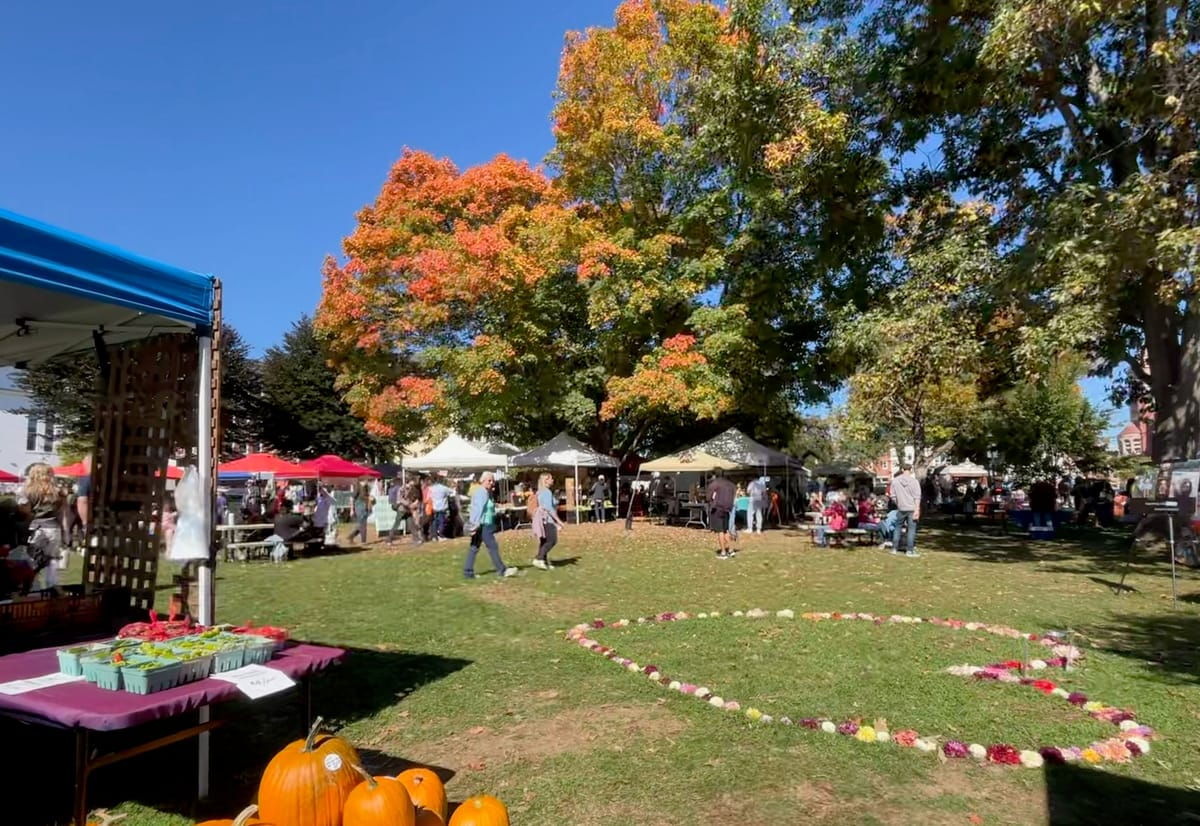
Every Saturday morning, my friends and I go to the Amherst Farmers' Market. We buy coffee from Stout Pigeon Coffee, pick up an assortment of flowers, fruits, and baked goods from various vendors, then sit at a picnic table to catch up. On Family Weekend, the six of us introduced our families to both our friends and the Amherst Farmers’ Market. With my mother on my left, my father on my right, and my friends (as well as their families) across from me, I realized that despite the copious amount of time I spend at the Amherst Farmers’ Market, I know very little about its history, vendors, and behind-the-scenes operations.
To remedy this misfortune, on Saturday, Nov. 14, I spoke with David Machowski, the Manager of the Amherst Farmers’ Market. I also interviewed five current vendors: David Drugan, owner of Buzz Off Be Co.; Lyn Fioravanti, owner of Baker’s Lane Biscotti; Olga Kouloufakos, owner of Twisted Buns; Emily Sweet, a vendor for Apex Orchards; and Ben Wells-Tolley, owner of Chase Hill Farm. Additionally, I talked to Taylor Lopatosky, a former Amherst Farmers’ Market vendor and the current Manager of the Greenfield Farmers Market. She also owns Alléchant Macarons.
Between interviews and sweet sips of my Maple Cream flavored coffee, I pet a copious number of dogs and discovered detailed information about this beloved Amherst institution.
An Economic Driver For Amherst
Forty years ago, when Machowski became manager, there were just six vendors. Today, there are 60 vendors and “thousands of people who come out on a given day,” says Machowski. “[The Amherst Farmers’ Market] is not a new kid on the block anymore.”
“The town [of Amherst] has told me that we’re the third largest economic driver for the town,” Machowski mentioned. He takes immense pride in this fact. For Machowski, farmers’ markets are crucial to keeping “the community together and the dollar local.”
Many vendors at the Amherst Farmers’ Market are “mom-and-pop [shops] that are making ends meet” and rely heavily on the audience and support of the Amherst Farmers’ Market. Lopatofsky, a former vendor at the Amherst Farmers’ Market and the current manager of the Greenfield Farmers Market, explained “it’s a business incubator.”
“A lot of vendors start small in a booth,” she said, “then they’re in stores,” and eventually, “they open their own storefront.” Machowski affirmed this, noting that farmers’ markets provide “a pathway to wholesale brick-and-mortars.”
Machowski was the first person to give Lopatofsky’s business, Alléchant Macarons, a chance. For Machowski and Lopatofsky, the economic uplift of small businesses through personal connections forged between vendors, managers, and markets is the essence of farmers’ markets — especially, the Amherst Farmers’ Market.
Lopatofsky was not the only manager of a competing farmers’ market who visited the Amherst Farmers’ Market this Saturday. Lopatofsky explained that “all farmers’ markets supporting each other is the most important thing,” citing the popular aphorism, “a rising tide lifts all boats.” Additionally, many of their vendors overlap. Some current vendors at the Amherst Farmers’ Market used to be vendors at the Greenfield Farmers Market; some others are vendors at both the Amherst Farmers’ Market and Grow Food Northampton, an indoor and outdoor farmers’ market that runs on Tuesdays.
Copious Commutes and Countless Challenges
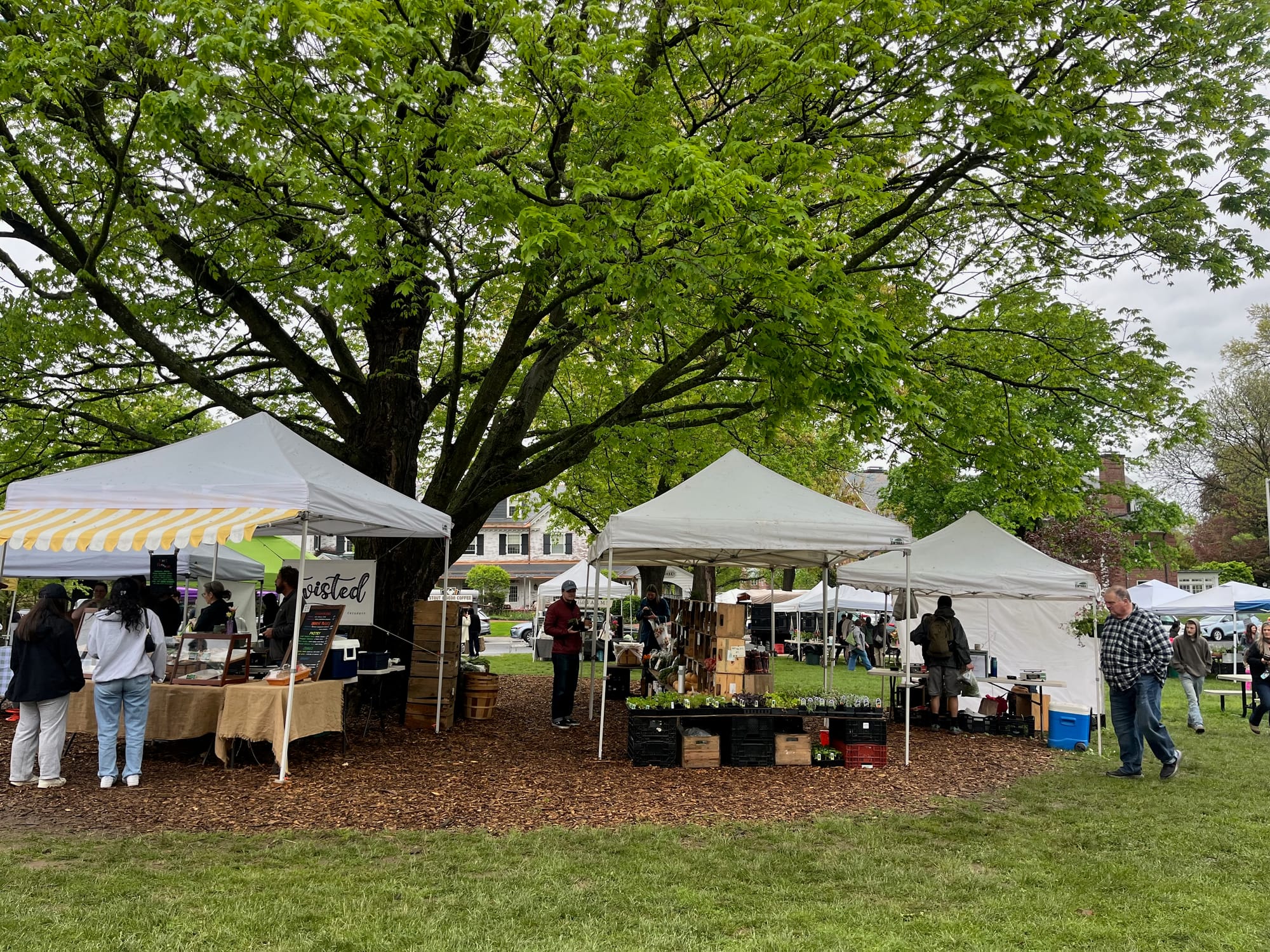
In 1972, when the Amherst Farmers’ Market was founded, it was one of very few in the state. Now, farmers’ markets are in almost every town in the Connecticut River Valley. While local farmers’ markets have multiplied, the number of local farms have been decreasing. This has caused difficulties for both farmers’ markets and farmers, particularly as it creates long commutes.
Ben Wells-Tolley drives almost two hours roundtrip every Saturday for the Amherst Farmers’ Market. Wells-Tolley has been a vendor at the Amherst Farmers’ Market for 18 years. Originally he worked for a local farm that had a stand at the Amherst Farmers’ Market; today, he and his wife, Laura Wells-Tolley, own their own farm, Chase Hill Farm, located almost an hour away in Warwick. Lyn Fioravanti, the owner of Baker’s Lane Biscotti, has been a vendor since 2021. “Schlepping everything [to the Amherst Farmers’ Market],” she says, is the most challenging part of being a vendor.
David Drugan, owner of the Buzz Off Bee Co., believes that “there’s a special breed of people [that] want to get up at 4:30 or 5:00 in the morning” to sell their products at farmers’ markets. It takes dedication and a certain disposition. On cold November mornings, it can also take a heated jacket.
A High Moral Fiber (and Work Ethic)
In 1986, when Machowski, then an undergraduate at Westfield State University, saw an ad on a local television station advertising an open manger position at the Amherst Farmers’ Market, he knew “nothing” about what it involved.
“It’s a lot of work, but it's enjoyable,” Machowski says. He does marketing and promotions to generate interest for the vendors, in addition to managing the placement, logistics and spacing of the market. His job is a balancing act: he must ensure “that there’s not too much competing product, but enough to saturate, so we can fulfill the local community’s needs.” He explains that “there’s a lot of little hidden details that go on behind the scenes,” and like anything else in life, “you’re dealing with human nature.”
While all four of Machowski’s volunteer assistants have unique roles, much of what they do is “just keeping the pleasantries here going.” He says there is a “high moral fiber amongst the staffing” and that all the vendors “seem to get along.” The vendors, Machowski said, “are just good people.”
Olga Kouloufakos owns Twisted Buns, a vegan bakery with a stand at the Amherst Farmers’ Market. Before moving to Amherst, she resided in California where she was a vendor at the Sebastopol Farmers’ Market. Located in a city of over half a million people, the Sebastopol Farmers’ Market is booming, busy, and beautiful. Yet, Kouloufakos says, the Amherst Farmers’ Market manages to be even better. She attributes this, in large part, to the fact that all the vendors at the Amherst Farmers’ Market are incredibly kind, explaining that “it’s not always like that.”
Emily Sweet, who runs Apex Orchards’ vending stall at the Amherst Farmers’ Market, similarly describes the Amherst Farmers’ Market as “a magical place with wonderful people from all over.” Apex Orchards acts as ample evidence of the kind-heartedness of the Amherst Farmers’ Market vendors: they recently donated 20,000 pounds of apples to the Food Bank of Western Massachusetts.
Machowski himself embodies the friendly spirit of the Amherst Farmers’ Market. He politely pokes fun at the vendors and knows every regulars’ dog by name. On a typical Saturday, Machowski’s pockets are overflowing with dog treats for furry friends. But, don’t worry, if he ever doesn’t have treats, the Amherst Farmers’ Market has a vendor that exclusively sells premium pet treats, Sir Barks-A-Lot.
Vendors further have exceptionally unique connections with their regulars. Kouloufakos has been at the Amherst Farmers’ Market for three years. “We have a customer that was pregnant when we first started, and now her little kid is running around, asking for stuff on his own,” she says.
In fact, many vendors opted to sell at farmers’ markets because of the opportunity to closely connect with customers. This is why Fioravanti chose to involve herself with local farmers’ markets; it is also what she’ll miss most when she closes her business later this year.
Generations and Motivations
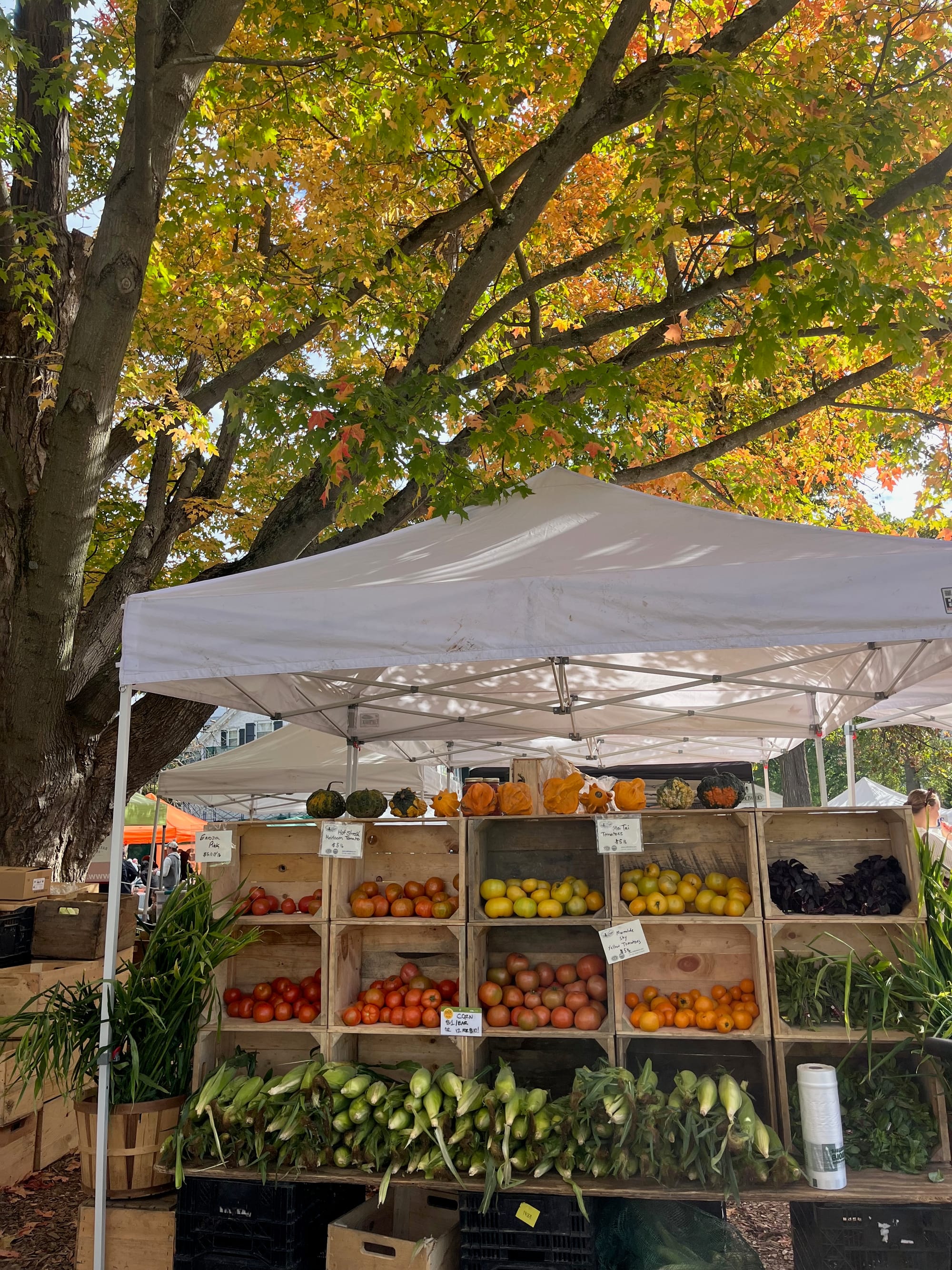
Drugan highlighted not just the regulars, but the diverse mix of people that intersect in Amherst to visit local colleges. Fioravanti raved that whenever there is a college event, “family members just descend on [the Amherst Farmers’ Market].” Many families, she said, come to the farmers’ market year after year.
Wells-Tolley emphasized that “more students have been coming [to the Amherst Farmers’ Market] in the past few years.” His stand offers free samples of their products, and he says students enjoy these freebies.
Many vendors credibly claim that the Amherst Farmers’ Market is the ideal Saturday morning shopping ground for local students. Drugan emphasizes that “everything here is truly affordable, [and] more importantly, it’s not commercialized.” As noted by Wells-Tolley, it is a way for you to “connect with the community that you’re studying in the midst of.” He mentioned that oftentimes, college campuses can feel fairly isolated from the residential community they reside in. The farmers’ market is one way to combat this. Fioravanti says the farmers’ market can help students adopt a mindset oriented around buying local goods from local businesses. She explains that “as a student, I didn’t think to do that,” but wishes she had.
Vendors at the Amherst Farmers’ Market aren’t just looking toward future generations, but also past generations. Fioravanti started her business because of her mother and grandmother. She still uses her grandmother’s recipe for her hallmark good: Biscotti. Lopatofsky began selling her macarons at farmers’ markets because of her late mother-in-law. Since her passing, Lopatofsky has displayed her mother-in-law’s picture at her booth.
Other vendors entered the farmers’ market circuit for non-familial reasons. Drugan “needed an outlet to sell all of [...] the byproducts of doing beekeeping as a hobby.” Kouloufakos wanted to “show everybody how delicious vegan food is.” Her message is simple: “eat more vegan!”
Swan Song of the Summer Season
This upcoming Saturday, Nov. 21, will be the conclusion of the 2026 season for the Amherst Farmers’ Market. Machowski and his vendors have mixed feelings as they approach the final day. While they’ll miss the camaraderie and commerce of the farmers’ market, they’re looking forward to “hibernation.” For the first Saturday since April 18, they won’t have to wake up at ungodly hours of the morning and trek to the Amherst Town Common.
Machowski is hopeful they will get a good turnout on the 21st. After all, there’s supposed to be good weather this Saturday! But even if the forecast changes for the worse, Amherst College students would be well obliged to head to the Amherst Town Common anytime between 8 a.m. and 1:30 p.m. this coming Saturday to experience the Amherst Farmers’ Market.
Sweet suggests that students consider using cash rather than credit cards when they visit the Amherst Farmers’ Market, explaining that “cash is always better for small businesses.” Though that shouldn’t dissuade students from coming if paying by card is their only option, as just about every vendor accepts payment by credit card.
“If you haven’t come to check [the Amherst Farmers’ Market] out, just come walk around,” said Sweet. “It’s a nice vibe: there’s dogs to pet [and] there’s people to say hi to. You can always buy one apple [or] a cup of coffee. [Get] something to treat yourself!”
Comments ()