

Matthew Fisher: More than a ‘Dirtbag’
Whether chatting to people on the quad or hucking a disc at a frisbee tournament, Matthew Fisher is a fixture of the Amherst College community.

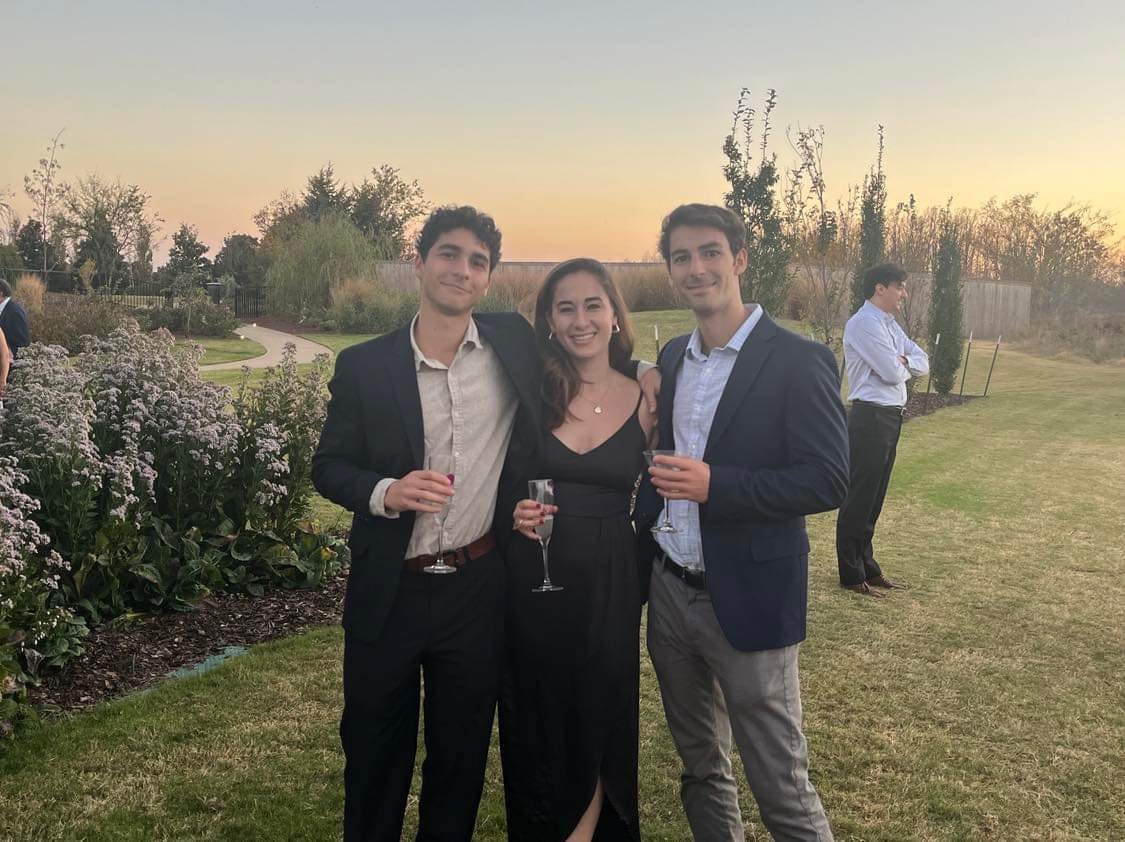
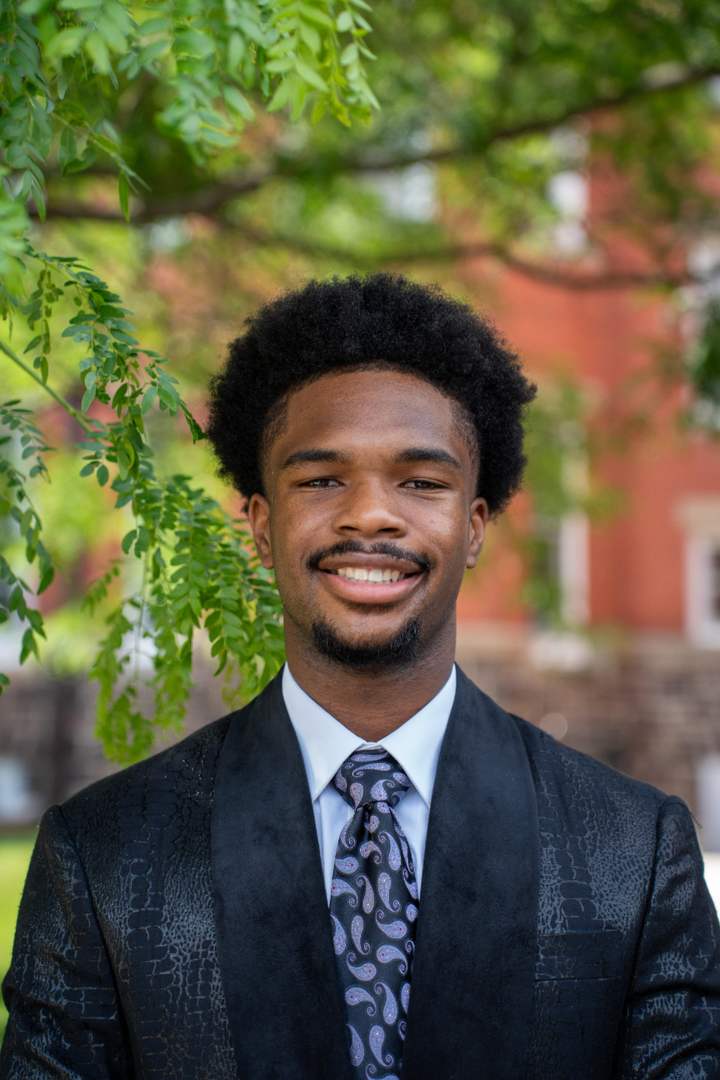
If you go to Amherst College, you probably know Matthew Fisher. He’s the guy on the first-year Quad hucking a frisbee with his friends. He’s the guy in Valentine Dining Hall (Val) casually chatting with Michael Elliott, while stopping every five seconds to wave at someone he knows. He’s the guy who was voted by his class to be the Commencement speaker this year, so if you don’t know him by now, you will.
The thing I love about him is that he’s not just saying hi. He truly cares about the people who are in his life, and he remembers so many things about them. Once, Matthew and I were working outside Frost Library, and he started talking to someone about a specific snag in their thesis they had been struggling with. They were not close friends. Matthew just remembered and wanted to check up on them.
“He’s somebody who, I think, is a listener at heart [and] he will always, always listen to you,” Ethan Schiff, Matthew’s home friend who goes to the University of Massachusetts Amherst, told me. “As long as you’re there for him, he’ll be there for you.”
Small Fish(er) in a Very Big Sea
Before Matthew came to Amherst, he struggled to feel motivated at school.
“I went to Brooklyn Tech[nical High School], which [has] 6,000 students, and my last name is Fisher. I felt like a small fish in a very big sea,” he joked.
With such a large student body, Matthew struggled to find his people at school and felt that students and teachers alike were not super invested in the educational experience. For example, in his senior year English class, the teacher did not assign a single book. Instead, they were assigned anime to watch.
Matthew said part of why Brooklyn Tech was not intellectually rigorous at that time was because of the Covid pandemic. New York City delayed in-person school longer than many other American school districts, and when students were allowed back, many restrictions remained that made learning difficult.
“They had to have all the windows open in the classroom [even during winter], so everyone was just in their coats, on their phones — no learning was happening,” he explained.
Dirtbag
However, Matthew found his people through his extracurricular activities.
“Before, I felt like I always had to change myself a little bit,” he said. But he started playing frisbee and rock climbing in middle school, and joined teams, where he formed close bonds and felt like himself.
Matthew loved climbing in particular. Despite his initial love for climbing, the competitive aspect of the sport deterred him.
“People might know gymnastics competitions more, but they’re very high-stress environments … it’s very comparable, and kids would always cry,” Matthew said. “I cried [during] my first 10 climbing competitions, and then after a couple of years of being on the team, I quit, because I really loved climbing, but I hated competing.”
But eventually, his coaches brought him outside of the climbing gym and showed him how to boulder. Being chosen as the kid who should boulder made Matthew feel special, and it unlocked something for him.
“You walk outside with these big crash pads on your back, and you put them down on the ground, and you fall … it’s not really that dangerous [but] there was something really scary about it,” Matthew explained. “I just really liked how focused you needed to be and how you needed to know the rock well, and just have everything kind of dialed in, and I just like the adrenaline.”
For a while, all Matthew wanted to do was climb. Since school was unstimulating, he focused on the things he loved outside the classroom.
“All I wanted to do is [be] what in the climbing world is called a ‘dirtbag,’” Matthew said. “Like, live in a van and go climb rocks and sit in the dirt all day.”
Sometimes, it was a little “demoralizing” that he mainly cared about climbing, not school, because his older siblings were so academically successful — at the time, his sister was a neuroscience major at Brown University, and his brother was a math major at the University of Chicago. He felt less smart than them.
But over time, he became more assured in his own intelligence.
“What I’ve come to realize is maybe it’s not even being smart, but [that] I just have different strengths,” Matthew explained. “We’re different people. I’m not my brother, and I’m not my sister. I’m not, I guess, necessarily dumber — I’m worse at math, and I’m worse at biology, but my sister is a doctor, and my brother’s a mathematician, so that makes sense.”
Part of that came from realization came from going to Amherst.
“Being here and just growing as a person, seeing all the different ways that people are just incredible people and talented and all the ways people can be amazing, it’s opened my mind a little bit and allowed me to get out of [that] headspace,” he said.
Novellaist
Matthew almost did not attend Amherst. He had been waitlisted here and was planning to attend the University of Vermont (UVM). He was excited about UVM and was ready to go, when he got a call from Amherst admissions telling him he got off the waitlist.
“I almost said, ‘no, I want to go to UVM.’ But then … I remember my exact words were: ‘I still have some interest.’ So I sounded very uninterested,” Matthew said.
He still planned on going to UVM, but his mom and his climbing coach both talked to him and told him he needed to go to Amherst.
“So reluctantly, I came here,” Matthew said. “I’m very happy that I did.”
Immediately, Matthew got the spark for learning that he never had at Brooklyn Tech. During his freshman fall, he took “One Hundred Years of Solitude” with Lewis-Sebring Professor of Humanities and Latin American and Latino Culture Ilan Stavans. They spent the first class spending 30 minutes analyzing the first sentence of Gabriel Garcia Marquez’s novel, and from there, read one chapter each week. That slow reading and close analysis sparked something in Matthew.
“That class was what really made me love reading and school, and made me want to be an English major,” he said.
That class was also the first time he tried creative writing. While he did not think about it at the time, “One Hundred Years of Solitude” and an English course he took with Winthrop H. Smith 1916 Professor of American Studies and English Lisa Brooks — “Imagining History” — planted the seeds of his thesis. In both of them, he experimented with creative writing, and in “Imagining History,” Matthew did research on European Jews and wrote about his roots. But he had no idea he would end up working on a 110-page novella about his great-grandparents in 1930s Hungary.
The concept formed when he was abroad in Granada, Spain, during the spring of his junior year. He did not know what to do with his summer, and he wondered whether he should apply for one of the English department’s travel awards. Matthew and his friends were traveling, staying in hostels, when suddenly an idea popped into his head.
“It was about the story that I had always heard of … about my grandma coming over on this boat from Hungary in 1930, and I was like, ‘wow, I really want to write about this, and I don’t want to lose this idea that I’m having,’” Matthew said. “I just got my journal out — like my small, mini notebook — and started writing while we were all sitting in the lobby of the hostel.”
He emailed back and forth about the concept with Brooks as well as his second cousin once removed, Julie Cahn, who did an oral history with his great-grandmother for her own senior thesis 30 years ago. He wrote a thesis proposal and, after feedback from Brooks, rewrote the entire proposal 20 hours before his program was going to Morocco without service.
Once approved, he spent his summer traveling to his great-grandparents’ hometown and writing 40 pages of his novella. When he got back to campus, he was in for a surprise. He presented the pages to his thesis advisor, Lecturer in English Dennis Sweeney, who told him he needed to scrap all the pages.
“Artists often say … you need to have that first draft or the second draft where you delete it all, and that’s just part of the process,” Matthew said. “But it’s hard to feel in the moment like those 40 pages that I ended up not using weren’t just wasted time … Looking back now, having finished it, I think it was probably important [to do it].”
He spent his fall semester trying to write 10 new pages every week, then revising and revising until it became something he was content with.
“I did the best I could, and it was something really meaningful for me,” Matthew said. “I think it connected me with my family in a way that I hadn’t before. I have this great relationship with … Julie Cahn that I never had before … I had gone to the town that my great-grandparents came from [during my summer travel], and I showed my entire family these photos of this town that our ancestors came from … It just was very meaningful.”
Beyond Amherst
Matthew has done incredible things at Amherst, but perhaps the things most meaningful to him are the moments he has with his friends. Through frisbee, climbing, and even auditioning for Mr. Gad’s House of Improv as a gag with Nina Aagaard ’26, Matthew has made Amherst his home, his community.
“One of the things I valued about college was the time I spent chatting in the dining hall and sitting on the quad — doing a little bit of reading on the quad, and then getting distracted and talking to people, and, you know, we’re not going to get that a lot again,” he said. “I’ve had such a great time here, where I see familiar faces everywhere.”
Now, he’s off to work at a local news station in Knoxville, Tenn., for two years. He told me he was nervous, but excited to break into professional journalism, building on his experience as an intern on the Amherst Magazine.
“I’m going to be challenged in ways I haven’t been challenged before,” Matthew said. “But this is how I’m gonna learn how to write, and learn to become a journalist. And so … it’s an opportunity to start the career that I want.”
Comments ()