

Noor Rahman: Building Her Own Community
Whether in her community organizations, The Amherst Student, or MSA, Noor Rahman can always be counted on for her commitment to her communities and for adapting to the unpredictable.
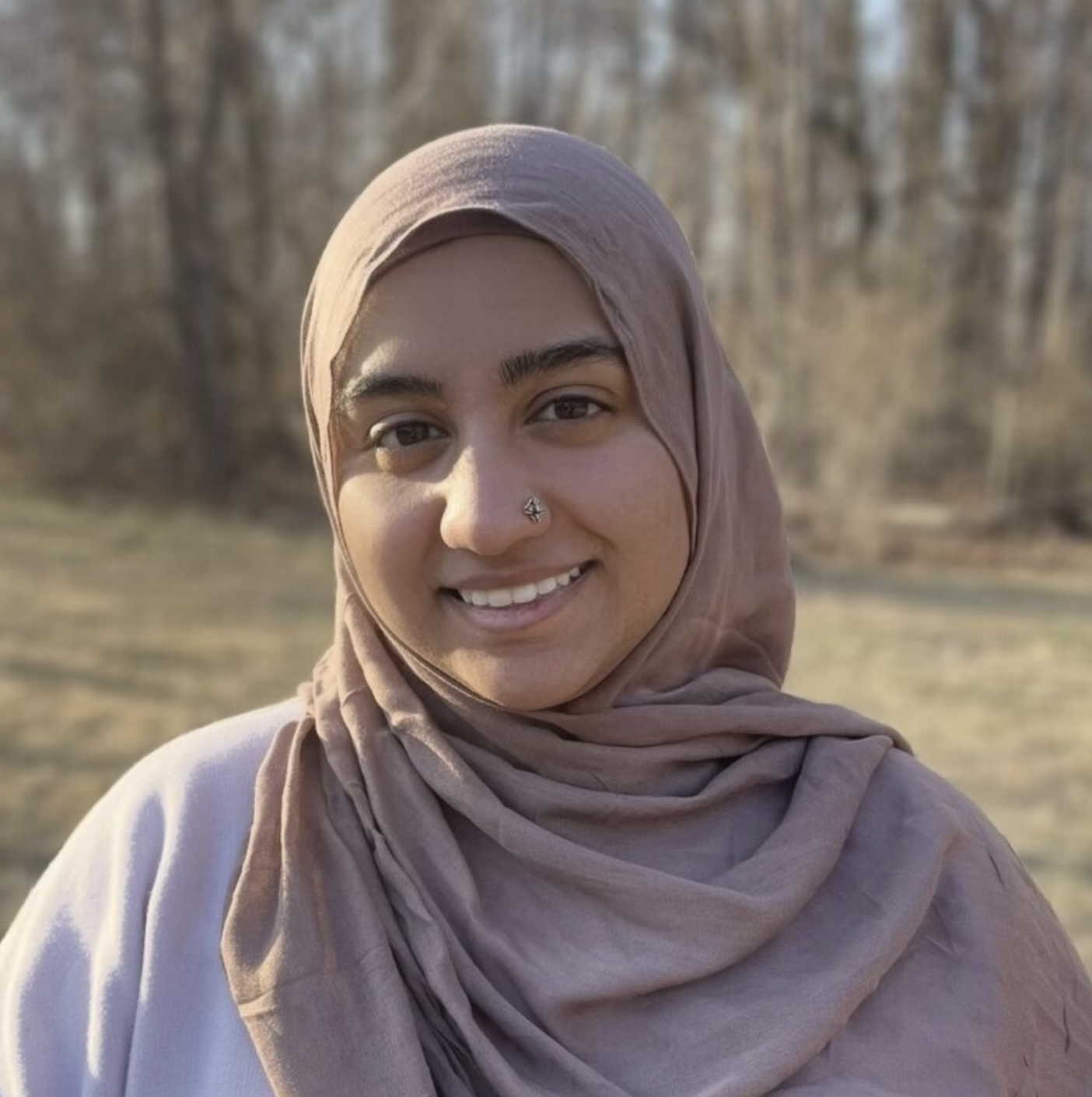
Noor Rahman ’26’s accomplishments are impressive. During her time at Amherst, she has served as a senior managing editor of The Amherst Student, president of the Muslim Students Association (MSA), Gregory Call intern in the religion department, the recipient of a cultural language scholarship, and much more. She has also engaged in public policy and community engagement work off-campus, and recently completed a fascinating thesis in the religion department.
But beyond these accomplishments, what stood out the most in my interview with Rahman was her reflectiveness and adaptability, along with a deep commitment to building community. Over the course of our conversation, I was continuously inspired not only by Rahman’s willingness to accept and adapt to change, but also her intentionality in creating positive change for herself and her communities.
Finding Community, Shaping Community
Rahman grew up near Poughkeepsie, N.Y., with her mom, dad, and two younger brothers.
“It was a very homogenous, white, mostly Republican area,” Rahman said. “There would be a lot of weeks and months where some of the only people of color I would interact with would be my own family … I wouldn’t say I was ever super connected to the community, per se.”
But that changed when Rahman’s family moved to northern New Jersey after she graduated high school, a place with a much larger South Asian and Muslim community. “I am seeing the way that my brothers are growing up in that environment, feeling very integrated and feeling like they have a sense of home … I didn’t really realize that I was missing it until [I saw] my brothers growing up with it,” Rahman reflected. And these experiences with community — or lack thereof — shaped how she approached her first year at Amherst College.
“Coming to Amherst, I was really hungry for a sense of community, and [wanted to find] people who had similar backgrounds to mine,” Rahman said. “I wouldn’t say that’s necessarily still how I approach relationships, but it felt really important at the time.” But community is not simple, and it took her some time to adjust to the “culture shock” of being in these spaces.
“I didn’t know exactly how to carry myself in those spaces,” she said. This uncertainty initially limited Rahman’s involvement with groups like the MSA and the South Asian Students Association (SASA), but this changed during her sophomore year, when she decided to become more involved with MSA. Her work soon shifted from finding space for herself to building a welcoming space for other Muslim students on campus, serving as vice president and later as president of MSA.
“It was really important to us that it felt like a welcoming community to everyone who wanted to be there,” she said. Rahman wanted MSA to “[feel] like a place where [one] could grow in one’s practice of their religion, [and where] being visibly religious — as a lot of Muslims are on campus — felt easy and welcoming.” She was particularly committed to making MSA accessible to new students on campus and strove to build relationships between the MSA community and incoming students.
Rahman’s friends know her as the person who’s always committed to the wellbeing of those around her. “She’s someone I can go to for pretty practical advice, but also someone who understands people on an emotional level as well,” said Hannah Kim ’25, Rahman’s first-year roommate and friend. “She blends those two areas pretty seamlessly, besides just being caring and responsible and all those other great things.
Rahman views her work with the MSA as one of the most significant parts of her Amherst experience. But being the well-rounded person that she is, Rahman’s impact soon extended beyond.
Rahman worked on The Amherst Student for a significant part of her time at Amherst, starting off as an assistant arts and living editor and eventually serving as senior managing editor in spring 2024. “I think working for The Student was the most important thing I did at Amherst,” she said. “Personally contributing to the community, making friends, getting to know this place really well … all that happened through The Student.”
Off-Campus Adventures
Alongside her experiences on campus, Rahman had equally impactful experiences off campus. In 2023, Rahman received a Critical Language Scholarship, which allowed her to travel to Meknes, Morocco, to learn Arabic over the summer before her junior year. She described the experience as one of the most influential of her life, largely shaped by her roommate in the program, a fellow Muslim American student.
“It was the first time that I had met a Muslim woman who was thinking about the same questions that I was, and we just had the whole summer to just talk and to be pretentiously philosophizing [in] kind of a silly but also kind of a serious way,” Rahman said. “So I think that was the summer when I realized [that] I want to be more serious about Arabic, [and] that I wanted to be more serious about Islamic studies.”
Rahman also described the importance of living in a Muslim country for an extended period, which enabled her to learn more about how she wanted to practice her own religion and to reflect on her religious and cultural identity. While she enjoyed celebrating Eid and participating in Moroccan Muslim culture, Rahman felt the experience also helped her recognize her own cultural traditions as valid. “I think I realized just because we’re in America doesn’t mean our cultural practices [are] less legitimate,” she said. “It also made me appreciate the ways that the Muslim American community has developed our own traditions and institutions.”
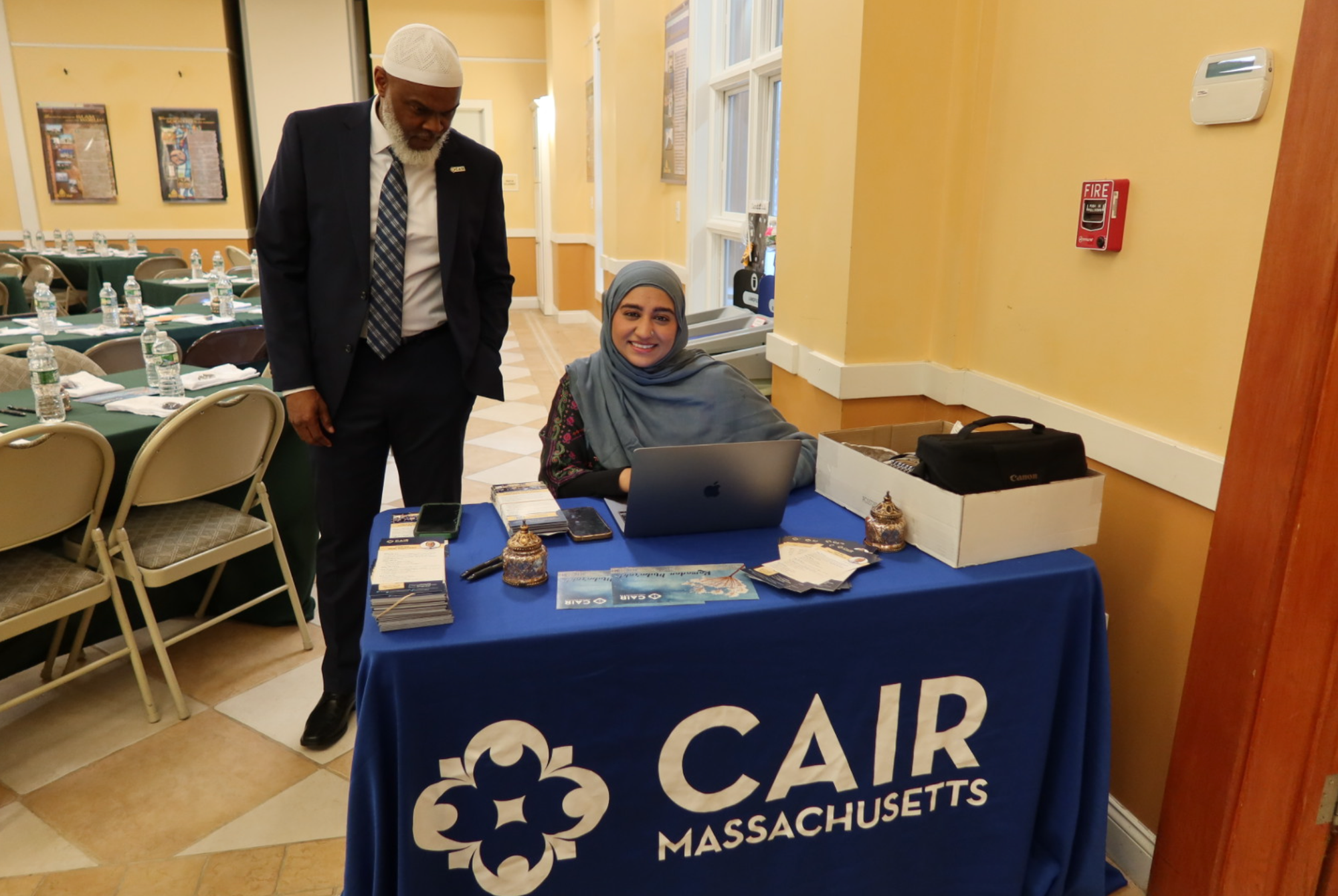
This commitment to her faith-based community, already demonstrated in her work with the MSA, also manifested in Rahman’s off-campus work. After her junior year, Rahman took a year of leave from Amherst, during which she worked with the Council on American-Islamic Relations (CAIR). “I had a bad junior year — emotionally, health-wise, academically — so I took time off to kind of tend to myself and figure out how to address the mental health issues that I was dealing with,” she said. “CAIR was a really happy surprise to come out of that.”
The summer after her junior year, Rahamn interned remotely with CAIR Massachusetts, where she demonstrated her commitment to building welcoming, agentive communities. As a Youth Department Intern, she helped develop a week-long leadership program in Boston. While many such programs are career-focused, Rahman’s program was grounded in local communities. “[We were] very focused on empowering high school students in their current community,” Rahman explained. “So not really focused on, ‘what are you going to do in the future?’ but rather ‘what are your skills right now?’”
The program was a huge success, and Rahman stayed on to help relaunch CAIR’s high school leadership fellowship. She became a Community Engagement and Advocacy Specialist at CAIR in April of 2025, an official position that she still holds, and one that allows her to engage in lobbying and advocacy on behalf of the Massachusetts Muslim American community.
The CAIR community was personally impactful for Rahman, too. “I’m so grateful that during probably the worst year of my life, I had that community,” she said. “I was just so nurtured by this group of people who were excited to have me and excited to hear what I had to say, and took me from someone who was at my lowest to someone who’s doing a lot better.”
Senior Year
Rahman returned to her senior year with a fresh perspective. “I think I came back with a lot more clarity on who I was and what I wanted out of Amherst,” she said. “There’s such a big world outside of Amherst, and it’s really easy to forget that.” Taking time off allowed her to regain that broader view and approach Amherst with a renewed sense of purpose.
Upon her return, Rahman continued her coursework as a religion major and wrote a senior thesis with her advisor, Professor of Religion Tariq Jaffer, who incidentally had helped her discover her passion for Islamic studies. Jaffer was Rahman’s randomly assigned first-year advisor, and encouraged her to take a religion class with him during her first semester. The rest is history.
The major culminated in Rahman’s senior thesis, which focuses on the concept of “ikhtilaf” in Islamic jurisprudence and its manifestation in British Colonial India. As she explained, ikhtilaf is the idea that “for every one legal question, there can be multiple mutually legitimate answers.” This contrasts with modern Western law, which generally seeks a single determinant answer. For her thesis, Rahman explored what happened to ikhtilaf’s “juristic flexibility” under the pressure of the inflexible British colonial law. She focused on the work of Abdur Rahim, a Muslim judge who wrote English texts about Islamic law while under British rule. Through her thesis, she also sought to answer questions about the ways Pakistani Islam was shaped by colonialism, something that has had a direct impact on her own family and identity.
According to Rahman, both Rahim and ikhtilaf have been given relatively little scholarly attention, which led Rahman to undertake a lot of original analysis. But despite the difficulty of the task, she described her thesis in an unpretentious, reflective manner.
“It was really humbling,” she said when asked about the research process. “You learn one thing, and then it doesn’t make you feel like you’ve learned anything. You just realize how much you don’t know.”
But according to Jaffer, Rahman’s thesis work was nothing short of extraordinary. “The department called the thesis breathtaking,” he said. “And that’s really the right word [for it.]” Jaffer and Rahman are now considering the possibility of publishing parts of the thesis, which is a great honor for any thesis student.
Jaffer highlighted Rahman’s determination in working on such a complex thesis, especially when it came to undertaking very difficult Arabic translations. “I remember occasions when I was ready to give up on a passage, [but] she just kind of persisted,” Jaffer said. “In my time here since 2008, I haven’t had [another] student [with] that set of skills: the philological, the historical sensibility, the interpretive skills, and the ability to convey her ideas with such precision and with such eloquence.”
This tenacity is also something that, according to Kim, manifests in all aspects of Rahman’s life. “She is incredibly resilient throughout all the different environments that I’ve seen her,” Kim said. “She really tries to see everything [through] until the end.”
An Interdisciplinary Approach
The more I talked with Rahman’s network the more I realized that Rahman was committed to interdisciplinary thought throughout her time at Amherst. Until her senior year, she was an economics and religion double major, a combination that she really enjoyed. “It was always nice to always have a mix of class types, and … the frameworks of economics … have really helped me put into words certain ideas that are hard to articulate,” she said.
Consistent with her interest in a wide range of fields, Rahman also highlighted the geology course, “Introduction to Oceanography,” as one of her most memorable classes. “That’s the best class I’ve taken here,” she said. “This is such a beautiful place we’re in, and geology is cool because you have to study the place you’re actually in. I’ve always regretted not being a geology major.”
To Divinity and Beyond
Rahman will carry these interdisciplinary interests and skills to her post-graduate plans. As an Amherst Folger Humanities Fellow, she will spend the next year conducting research at the Folger Shakespeare Library and Dumbarton Oaks Research Library and Collection, which are both in Washington, D.C. She is particularly excited about the Plant Humanities Initiative at Dumbarton Oaks, where she will be able to study the cultural and social history of plants, a project that will also include asking questions about Islamic law and its perspective on the natural world.
“I really wanted [the fellowship] because I love the humanities, and I just don’t really know what I want to do in the humanities yet,” Rahman said. “I wanted to take the next year as a place where I can really expand more and not have to specialize yet.”
This flexibility and interdisciplinary thought will continue into Rahman’s time at Harvard Divinity School, which she will attend in fall 2027. There, Rahman will work towards a master’s degree in theological studies with a focus on Islamic studies, while furthering her commitment to blending community engagement with scholarly work.
“I think what really appeals to me about the [Harvard] Divinity School is that … [it has] a real ethos of … how religion should interact with the public,” Rahman said. “I feel like I’ve understood my interaction with religion in two different spheres: I have this Islamic studies thing that’s very ‘secular Western Academy,’ and then I have CAIR, which is out in the community. And they’re so separate, and I really want [to use] my time at the div[inity] school to [ask], how do these things work together? Can we merge the scholarly stuff with the stuff that people actually need?”
One Step at a Time
As Rahman transitions away from Amherst, she offers some insightful advice, especially about taking time off. “A year sounds like a really long time,” Rahman acknowledged. “But it wasn’t. No decision is irreversible; you can take as much or as little time off as you need.” She added that she would encourage everyone who is in a privileged enough position to “lean into a little bit of unpredictability and flexibility, [and] the next step will materialize.”
Rahman also has more concrete advice for students, for which she credits her dad. “Sometimes we feel like we have to have the next several years figured out. And actually — my dad said this — you really have to have the next four hours figured out,” she said. “As long as you’re doing things intentionally and living according to your values, I think that’s more important than having everything figured out.”
If you ask Kim, this value-based approach captures Rahman’s spirit perfectly. “She has a very strong moral compass,” Kim said. “She carries her values very strongly, and I really respect that.”
Comments ()