

Revisiting Shakespeare: Finding Monstrosity in “The Tempest”
Examining Shakespeare’s “The Tempest” in this edition of Revisiting Shakespeare, Editor-in-Chief Edwyn Choi ’27 explores Caliban’s legacy and how the play’s language of monstrosity, law, and property continues to shape conversations about colonialism and race.
“O, wonder!
How many goodly creatures are there here!
How beauteous mankind is! O brave new world,
That has such people in’t” (5.1).
William Shakespeare didn’t write monsters into his plays, at least depending on who or what you mean by “monster.” There are some obvious contenders, don’t get me wrong: The three witches in the so-called “Scottish Play,” the fairies in a “Midsummer Night’s Dream” (if we consider fairies as monsters), and we might even put Richard III on the list if we want to include humans with monstrous qualities.
But the play that immediately came to my mind on the topic of monsters is what many consider to be Shakespeare’s last play, “The Tempest.” You’ve probably heard of this play’s monster, even if you’ve never seen or read it: Caliban. There’s an entire Wikipedia page dedicated to Caliban, but here are a few notable places where you might’ve seen him: the item “Caliban’s hand” in the video game “Destiny 2,” the title of Marxist feminist Silvia Federici’s 2004 book “Caliban and the Witch,” and the mutant from Marvel Comic’s “The X-Men” (also see: James Mangold’s 2017 film, “Logan”).
There’s a reason Caliban has had such a lively (though maybe “lively” isn’t the right word) legacy, to say nothing of the popularity of the play itself. Scholars and viewers alike have been visiting the island at the center of “The Tempest” for centuries now, be it the play’s themes on colonialism or the generalized sentiment that this play was (debatably) Shakespeare’s farewell to the stage.
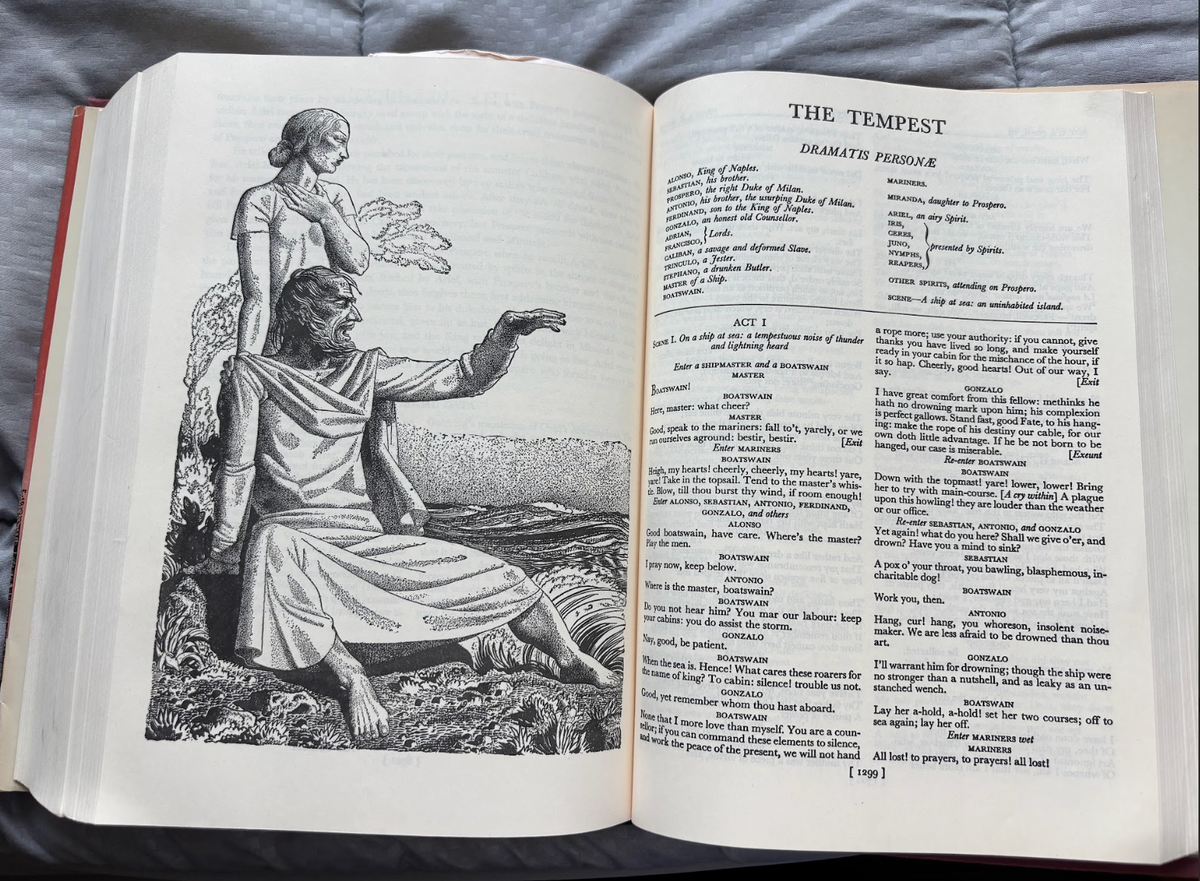
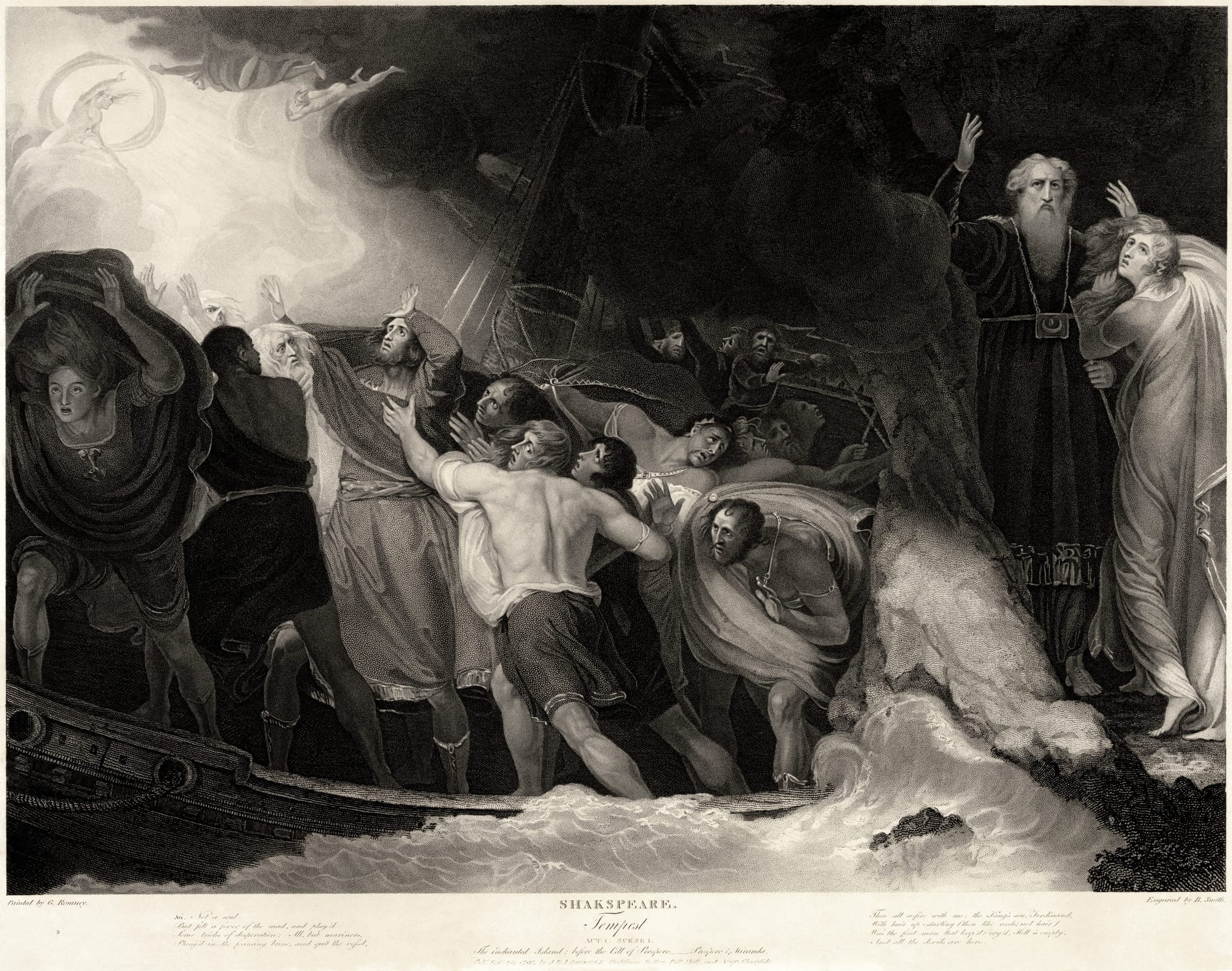
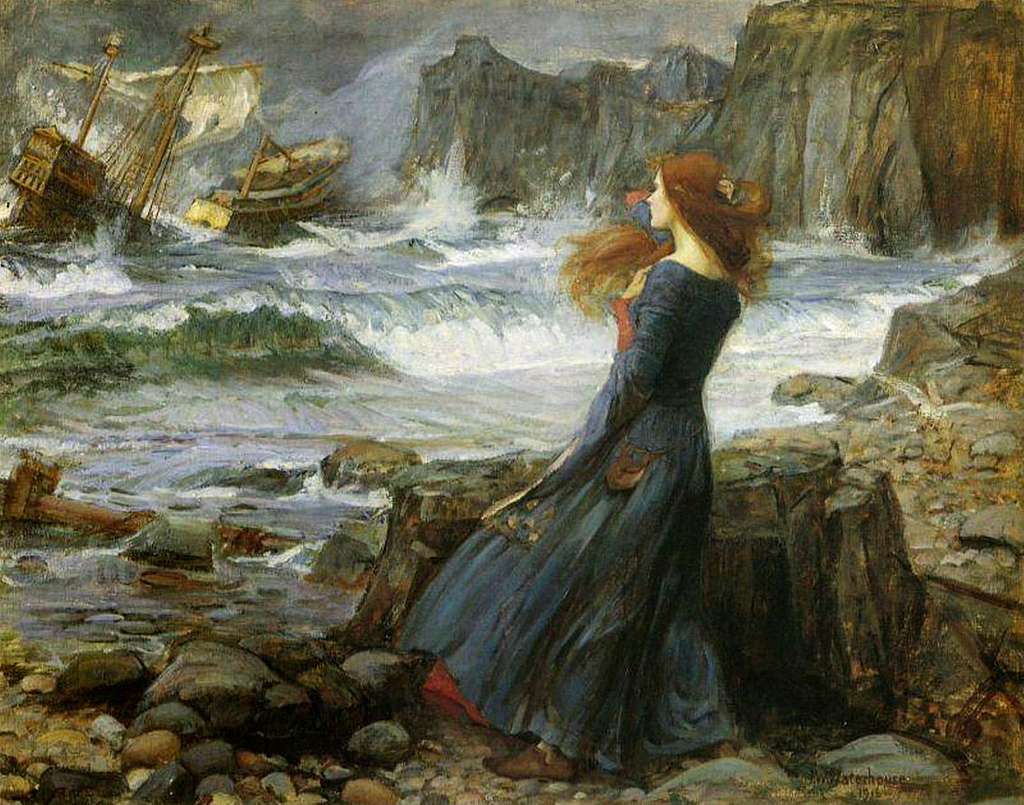
“The Tempest” unsurprisingly opens with a ship in a storm, which crashes onto an island by the end of the first scene. Some of the passengers aboard this ship are Alonso, King of Naples; Ferdinand, Prince of Naples; Antonio, the Duke of Milan; and Gonzalo, Alonso’s councillor. There are also a few assistants to the authorities aboard this ship, such as Trinculo and Stephano, who later become important to the play.
You might ask, “why exactly was there a storm?” It’s the work of Prospero, the exiled Duke of Milan and now part-time wizard, full-time father. He’s accompanied by his daughter, Miranda, who asks about the storm and the ship. Prospero has conjured the storm because he wants to enact revenge on Antonio (who’s not only the duke but Prospero’s younger brother) for conspiring with Alonso to force Prospero out of his dukedom 12 years prior. Why exactly is Prospero exiled? Because he gave Antonio “The manage of my [Prospero’s] state.”
The island’s other inhabitants include Ariel — a spirit bound to serve Prospero — and Caliban, Propsero’s monster slave and the only character native to the island. The rest of “The Tempest” follows Prospero’s attempts to torment the castaways, plus Caliban’s attempted uprising and Miranda’s romance with Ferdinand (Alonso’s son).
I know, I know. There are a lot of names. I’m ending the plot summary a little short here because it’s difficult trying to describe this play’s plot or dramatic action. It’s not as clear-cut as, say, “Julius Caesar” or even “A Midsummer Night’s Dream.” Stuff just happens, and Shakespeare clearly isn’t interested in giving you something action-packed.
Personally, I find it a little difficult to enjoy this play solely for its entertainment value; I always need an academic paper with me for “The Tempest.” Granted, this is just for the text — things change a lot when you watch a performance (try imagining a shipwreck onstage!). But for “Revisiting Shakespeare,” “The Tempest” is just one of those texts where I have to shirk this column’s purpose: Engaging with him outside of the classroom.
There’s a lot to work with for this play, but I want to return to Caliban. I first point readers to Aimé Césaire’s classic text, “Une Tempête” (1969), which is a postcolonial adaptation of “The Tempest” that emphasizes the play’s issues of race: While Shakespeare’s Prospero leaves the island at the end, Césaire’s Prospero stays because moving back means relinquishing his colonial authority. That raises another question: How does colonization affect the identities of not only the colonized but the colonizers themselves?
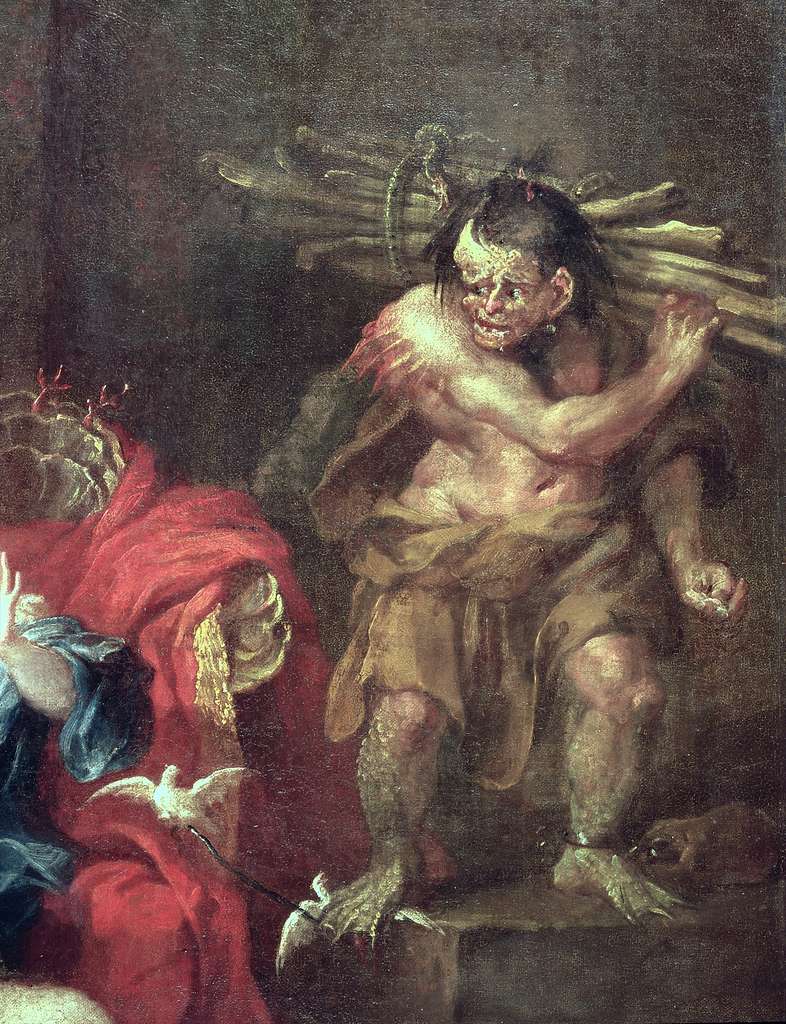
On the note of colonization, it’s worth mentioning that there’s a long theatrical tradition of portraying Caliban as an Indigenous or African character, even if the play doesn’t explicitly describe him as such (in the eyes of some he’s arguably not even human, though he’s native to the island). Instead, the play’s castaways and slavemaster describe him as a “mooncalf” (born with a birth defect such that the baby is akin to a monster), “monster,” “servant monster,” “fish,” “beast,” and “A freckled whelp, (hag-born) not honored with / A human shape.”
You’ll notice that the theme of “monster” frequently comes up in these descriptions. Taking inspiration from Assistant Professor of Law, Jurisprudence, and Social Thought Mark Firmani’s class, “Law’s Monstrosity,” I want to prod this word a little further: What does it really mean for the play to label Caliban as a monster?
Legally speaking, the word “monster” takes us back to William Blackstone’s “Commentaries on the Laws of England” (1765), where he describes a monster as something “which hath not the shape of mankind, but in any part evidently bears the resemblance of the brute creation …” Immediately there are tons of parallels with Blackstone’s language and the various descriptions that Caliban’s body bears. Notice how, for instance, both Blackstone and Shakespeare use the phrases, “human shape” or “the shape of mankind,” respectively.
Blackstone goes on to explain that monsters “hath no inheritable blood, and cannot be heir to any land, albeit it be brought forth in marriage …” This is not only about the appearance of monstrosity, but the way legal systems police perceived non-human abnormalities through property inheritance.
Applied to the world of “The Tempest,” Blackstone’s “Commentaries” suggests that Caliban cannot inherit the land he was born on simply by the virtue of him having a monstrous body. But he protests Prospero’s control over the land:
“This island’s mine by Sycorax, my mother,
Which thou [Prospero] tak’st from me” (1.2).
There’s a strange intertwining between blood, law, and monstrosity here. We’re seeing a clash between two systems of inheritance: Shakespeare’s legal culture versus his imagination of a legal (or non-legal) culture beyond the borders of the “West.” Think about it this way: Did the idea of inheritance as a legal concept exist on the island before Prospero arrived? What about the connotations of the word “monster?” Property? When Caliban describes the island as “mine by Sycorax,” did he always think about land in this way, or did he inherit this framework of land-as-property and property-via-bloodline from Prospero and Miranda, who taught him English?
Maybe that question’s a little speculative. But Caliban is pretty intent on toppling Prospero’s property inheritance hegemony: Caliban later wishes he had been successful in raping Miranda (which is how Prospero justifies his harsh treatment of Caliban), because he would have populated “This isle with Calibans.” The more Calibans there are, the less space Miranda and Prospero have to themselves, and eventually they’ll get kicked out — even if the legal system tries to prevent these monstrous bodies from occupying these spaces. I'm reminded here of the fact that white slaveowners in the American South had a similar fear of non-white bodies overpopulating and even gaining political power.
That final note brings me back to the theatrical tradition of performing Caliban through Indigenous or African bodies — race itself as a form of monstrosity. I’m privy to bring Cheryl Harris’s 1993 Harvard Law Review article and foundational Critical Race Theory text, “Whiteness as Property,” into the discussion. Cheryl notes that whiteness in an American cultural context assumes a property interest by providing certain rights and social privileges — among other things, whiteness is exclusive and can be inherited:
“The possessors of whiteness were granted the legal right to exclude others from the privileges inhering in whiteness; whiteness became an exclusive club whose membership was closely and grudgingly guarded.”
Through this lens, we can see why Caliban’s vision for an island filled with Calibans could be so terrifying for Prospero, and not only because Caliban attempted to rape Miranda. To put it one way, what’s so monstrous about all these Caliban look-alikes occupying what Prospero claims as his land is not just that Caliban looks like a monster or that his body is racialized in contemporary imaginations thereof, but that Caliban’s non-white body intrudes upon spaces that the law has restricted solely for white bodies. Key word: the law — would Caliban’s body be monstrous without the cultural and legal system Prospero imposes upon the island?
As a concluding note, those who want to learn more about the way race intertwines with “The Tempest” might find “The Tempest and Early Modern Conceptions of Race” in “The Cambridge Companion to Shakespeare and Race” (2021) interesting. There’s also an interesting genealogy to Caliban himself, to which I point you to Alden T. Vaughan ’50 and Virginia Mason Vaughan’s “Shakespeare’s Caliban: A Cultural History” (1991). As for performances, the Royal Shakespeare Company is putting one on later this year starring Kenneth Branagh as Prospero, and the college has access to several past performances via Frost Library.
But it would also be remiss of me not to mention “The Tempest” in other “brave new worlds,” so to speak (as problematic as this phrasing is), such as Oh Tae-Suk’s performance adaptation, “The Tempest” (2011), which reimagines Shakespeare’s play in a Korean cultural context. I recommend that you read Daeyeong (Dan) Kim ’12’s “Shakespeare and Korea: Mutual Remappings” (2017), which poses some important questions: How are we to interpret this play, especially if we “revisit” Shakespeare as a global phenomenon? Does Oh’s “The Tempest” speak to South Korea’s history as a Japanese colony? In fact, should it? To what extent should we interpret Caliban’s monstrous (and now culturally Korean) body through the racial legacy of Shakespeare’s original text?
Whatever the answer is, I can tell you one thing for sure: We’ll be wrestling with the monstrosities of Shakespeare’s “The Tempest” for generations to come.


Comments ()