

Staff Spotlight: Rob Johnson
In this edition of Staff Spotlight, Contributing Writer Charlotte Moore ’30 spoke with Director of Community Safety Rob Johnson about running SHEP training, how he created the CSA department, and how parties have changed since his time in college.
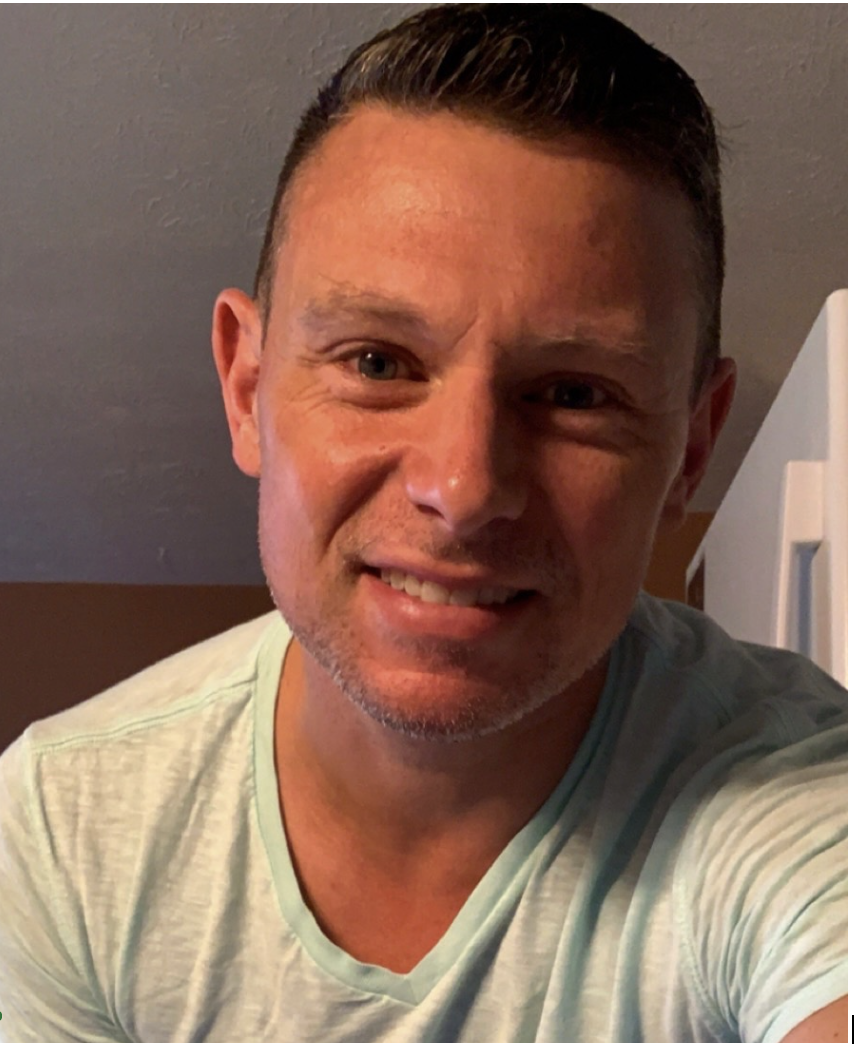
Q: Hi! Can you introduce yourself?
A: I'm Rob Johnson. I'm the director of Community Safety here at Amherst College. And I also manage the [Amherst College Emergency Medical Services](ACEMS) student medical team. I am actually from this area, even though I did a lot of traveling in past careers. I'm from Northfield, Massachusetts, which is 35 minutes from here. Right now, I live in Ashfield, Mass., which is 40 minutes away.
Q: And how long have you worked at Amherst?
A: I just hit five years.
Q: Cool! Where'd you work before coming here?
A: I went to college back in [19]96. I graduated from [the University of Massachusetts] Dartmouth, which is down by the Cape, with a [degree in] criminal justice and a minor in sociology. I went into law enforcement, and I was pretty much in law enforcement training for about 28 years. I've worked for various police departments around the area. I also worked for a nuclear power plant back in the late [19]90s. I think 2013 is when I left because the plant closed. I was their training supervisor for their security team — I did all of their qualifications, trained all the new people, all their firearms stuff, all their procedural compliance. When the place closed down, they were going [to] send me to Mississippi, Louisiana, Arkansas, one of the places that was still open. At the time, I was married, and I couldn’t do all that. I had little kids and everything. So I left, and I got a [new] job.
I went back to regular police work, and I worked as a resource officer in a couple of different high schools in the area. Then I went into corrections, and I worked as a deputy sheriff at a prison. I was not looking for a different job, but the college reached out to me — I guess they knew someone that I knew. At the time, five years ago, [the Amherst College Police Department] (ACPD) was going through a year-long assessment. They weren’t sure if they were [going to] stay here at the college. At the time, the president, Biddy Martin, wanted to develop a community safety team that would work under the student affairs umbrella, not through the police department. It was something totally different [that] would respond to calls for service [and] medicals. Basically, just keep the students, faculty, and staff safe. So, they reached out to me, and I was very intrigued. After 27, almost 28 years in law enforcement, it was time for a change. Better environment, dealing with a younger generation that is working to better themselves and get to school, and I was really excited about that, because one of the things that I really loved about working in law enforcement was helping people. The community service part of police work was what I enjoyed the most. It's not fun arresting people. Even working in corrections, one of the most rewarding things for me was, when an inmate was released, actually having a chance to coach them and say, “hey, look, I don’t want to see you back here. I want to see you thrive out in the community.” And sometimes, they would come back, but other times, it was so rewarding to see them in a grocery store or whatever. And they’d be like, “hey, this is my kid. I’m not doing this anymore. I’m not doing that.” And they were so excited.
Q: What was your experience like when you started to work at Amherst?
A: When this place reached out, I was intrigued because it was a brand new department, and [I had a chance to build it from the ground up. They were looking for someone who could build a team of really good communicators that could develop relationships with the students and the staff. When they first brought me on, we pretty much took a lot of the tasks that the ACPD did so they could focus on higher-level things. My biggest thing when I started hiring folks as Community Safety Assistants (CSAs), was that I wasn’t looking for former police, or former military or security [personnel]. If you had that [background] that [was] fine, but that wasn’t my goal. I was looking for people who knew how to talk to a student who was having a really tough time. Obviously, we all had to be trained as first responders, so we could respond to medical calls. But I was really looking for folks that I knew I could trust, that would be able to put the students first. Over the course of the last five years, we’ve taken on so many things, like health and safety checks. We do well-being checks on students who are struggling, medicals; we work with housing and operations, issue keys, and provide respite rooms.
Q: Can you talk about Student-Hosted Event Policy (SHEP)?
A: One of the biggest things that we manage, and I took over the training for this a year ago, is the Student-Hosted Event Policy (SHEP) program, which basically translates to the party nights. When we first came, we responded to parties on the weekends. The biggest thing for me is I did not want us to come across as the party police. I completely understood and still do today, even more so, that students who go here — we want them to have parties. We want [students] to have fun, just safely.
There was training that [party] hosts would have to go through each semester, and it was being done by student care, and they did a great job at it. But there was a disconnect. I said, “look, I want to do the training.” I think it's an important fact that we’re the ones who are going to the gatherings, that see what’s happening on Fridays and Saturday nights. So if we’re doing the training, the students already know who they're gonna be dealing with. And we ended up taking [charge of] the training program a year ago in the fall. And we went from training 68 hosts in the past to 160 [last year]. We do the training every Friday, from 3 to 4 p.m. We talk about how to have a successful gathering, what to look out for, how to help a student if they’re intoxicated, and how to call ACEMS. We started delivering water and snacks to the folks for each of the parties. The number of parties that we’ve had to shut down in the last year and a half is four out of the entire year. One of the best things, [in] the last year and a half [that] we’ve been doing this, has been that when something starts to get to a level where it’s possibly becoming dangerous or possibly becoming a violation, the host will call us. We’ll go over and casually help some folks leave. It’s been so successful because in years past, we would shut down probably five, six parties every couple of months. Now it’s down to four for the entire year, two semesters, which is a testament to the students' cooperation and taking safety seriously. Yes, there are times when we don’t have a choice. When somebody’s doing something that they’re not supposed to do. We do have to address that, but we try to [take] the softest approach possible. I don’t like the word “enforcing,” that’s a past life for me. I prefer coaching students on the policies and working with them. There have been a couple of occasions in the last year where we did have to ban some of the hosts’ privileges for a short period of time. But the good news is, as we coach them we talk to them, they understand why these particular policies were in place, and they were successful after that. It’s really nice to have that good relationship with the students [as opposed to] an adversarial one.
Q: How does this sort of system compare to your own college experience?
A: When I was in college in the mid-to-late '90s, we had our parties; we definitely did, and I did partake in those — never anything bad or anything like that. In those days, there was no such thing as a SHEP, or hosts, or whatever. You just partied. If things got out of hand, the police or security would just come and shut it down. There were definitely some crazy times. There was a lot of Title IX stuff, unfortunately, that happened. A lot of it didn’t even get documented because it was never reported. It was a different world back then, and it was a different time. We had our fun, but at the same time, it wasn’t. I think it’s important to maintain and foster the lifestyle of [a] party atmosphere, because students do have a right to [have fun]. I mean, going to college isn’t just studying. You gotta have a good time. Our goal is to make sure that happens, but nobody gets hurt.
It's funny. I just turned 53, and time goes by so fast, and, as I said, [my] five years here have gone by so fast. One of the best things about this job, for me, is connecting with the students. I remember when I was in college, we had police, and we had security, but there was really no connection. I think it’s important that students have friends and colleagues and their instructors but also people they know that they can get a hold of if something's wrong.
Comments ()