

The Timely, Curated Works of ‘My beautiful, pitiful age’
Exploring the latest exhibit at the Mead Art Museum, Contributing Writer Silas Gollnick ʼ30 walks through “‘My beautiful, pitiful age:’ The 20th Century through the Thomas P. Whitney Collection” that features works created in Russia under the Soviet Union’s regime of censorship.
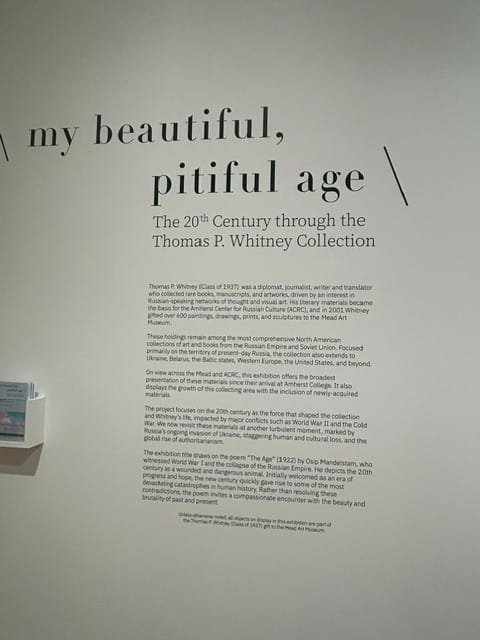
Walking into the Mead Art Museum’s new exhibit, “‘My beautiful, pitiful age:’ The 20th Century through the Thomas P. Whitney Collection,” I did not know what to expect. In fact, this was my first time at the Mead Art Museum. Maria Timina, a former researcher at The Pushkin State Museum of Fine Arts in Russia and now Curator of Russian and European Art at the Mead Art Museum, curated the exhibition, which is separated into six distinct sections: (1) Many Faces of the Intelligentsia, (2) The Barn Studio and Gallery, (3) Experiencing Lived Spaces, (4) Languages of Abstraction, (5) Imaginaries, and (6) Humanity Under Pressure. “My beautiful, pitiful age” will be on display through Jan. 3, 2027, and will be followed by a second installation of the Thomas P. Whitney collection titled “Anchors and Aspirations” from Feb. 23 to July 3, 2027.
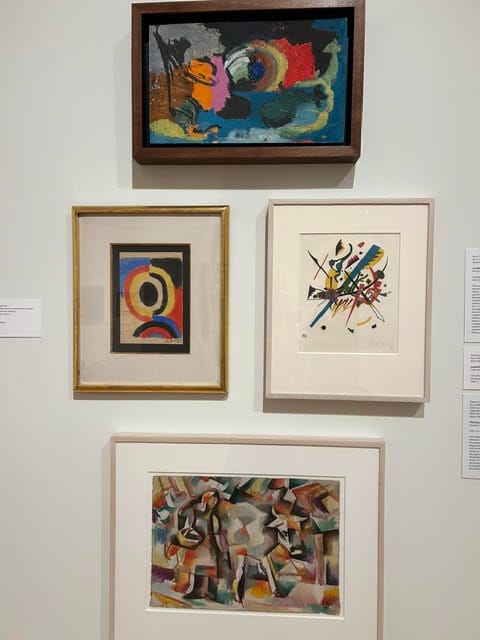
I was thoroughly impressed by the variety of artwork on display. There were sculptures, paintings, prints, and photographs from different artists whose works spanned across styles and time periods. Thomas P. Whitney ’37 amassed the collection over his lifetime, during which he worked as an analyst, translator, diplomat, and journalist. It was evident to me as I perused the many works that the exhibition told not only the story of Soviet and Russian artwork during this time, but Whitney’s own relationship with it.
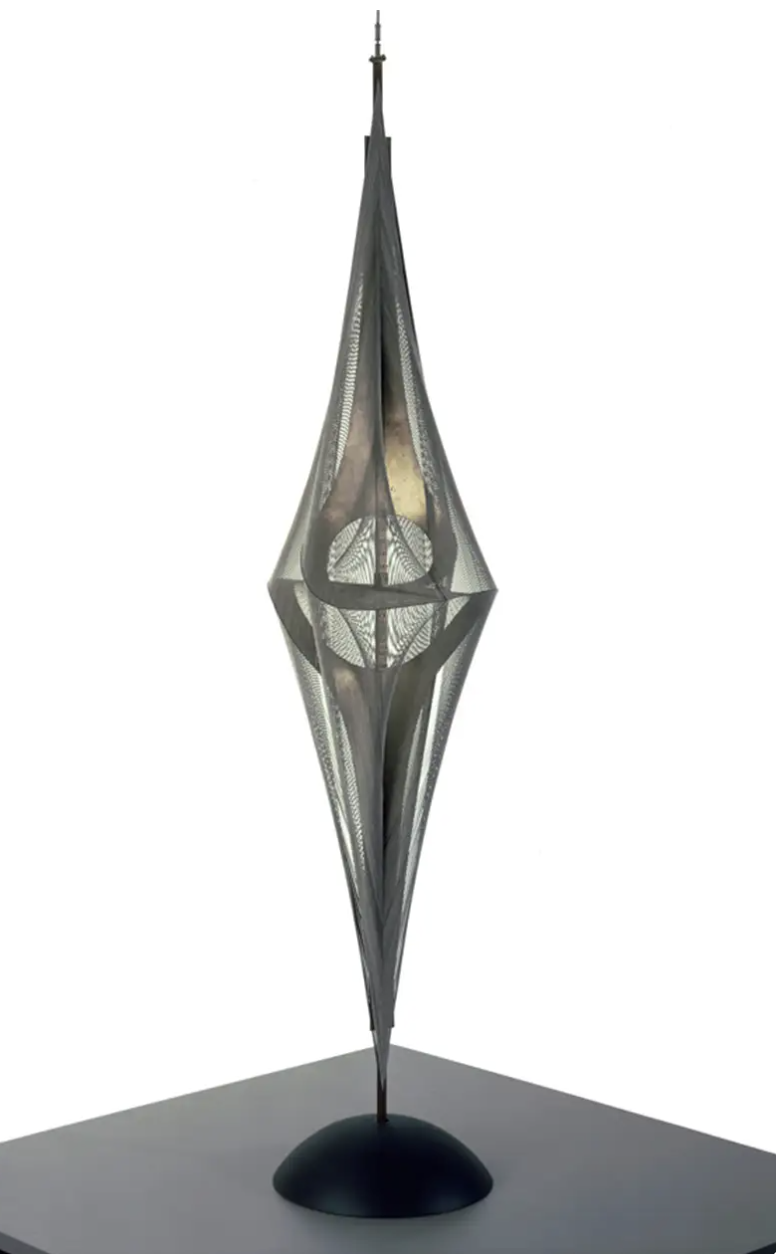
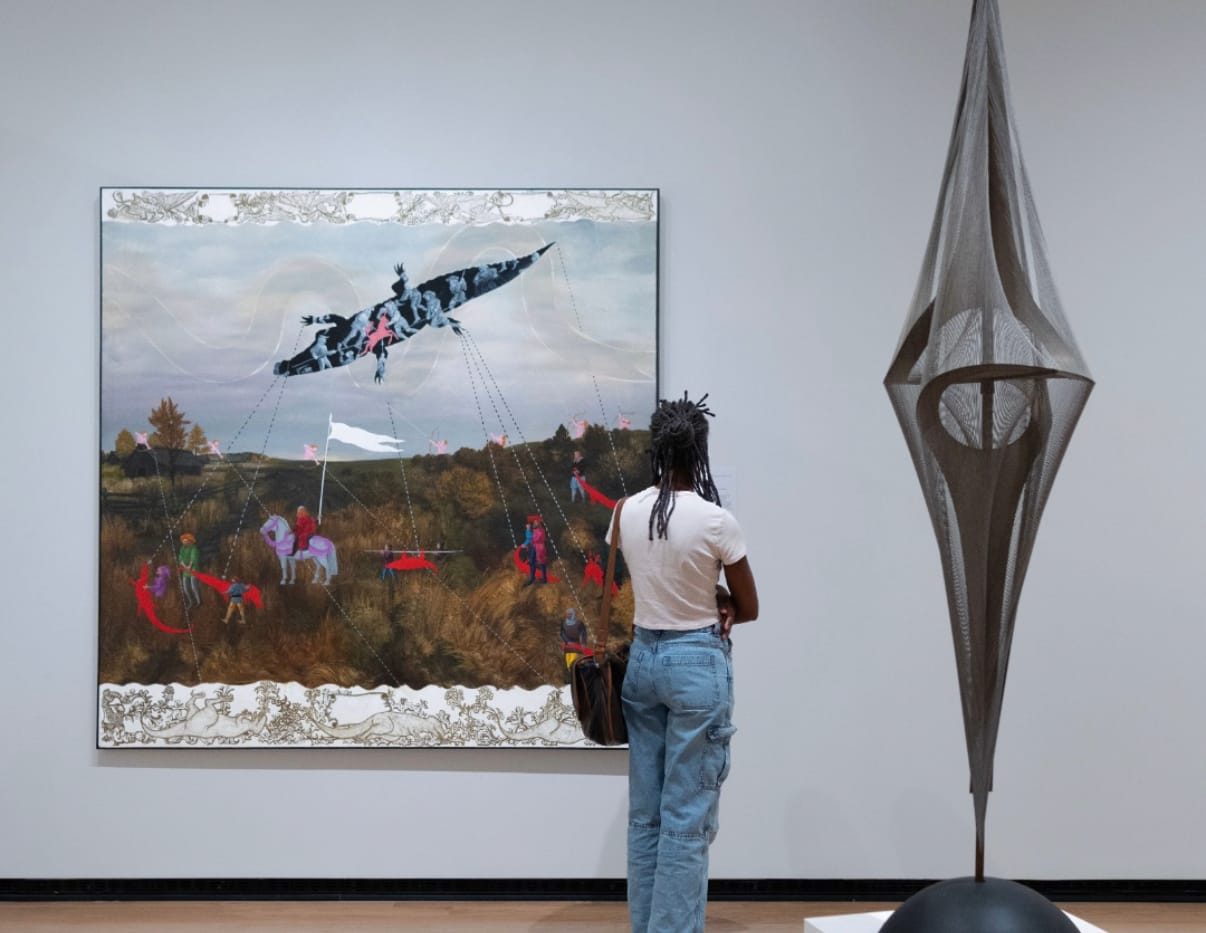
What immediately caught my eye was the kinetic sculpture, “Vertical Construction No. 2 (the waterfall)” (1965-1966) by Russian-American sculptor Naum Gabo. Gabo was himself a close friend of Whitney, and it was with his encouragement that the Whitney collection was born. In the section of the Mead exhibit titled “The Barn Studio and Gallery,” Gabo is photographed in Whitney’s Connecticut studio, where he was a frequent visitor and guest. The sculpture also appears in a photograph in Whitney’s studio. Whitney’s personal connection to Gabo made me even more intrigued by the sculpture. Found in the section of the exhibit entitled “Languages of Abstraction,” it is perhaps one of the most visually captivating works of art on display. Constructed from bronze and stainless steel, the sculpture draws the eye with a flowing mesh-like texture. It is over six feet tall and uses a motor to generate rotational motion, providing a natural, water-like fluidity. Gabo commented on this work, stating: “My sculpture is a living thing … I am doing, or trying to do, something which nature could have done, but didn’t.” He sculpted this work in the U.S., far away from the Soviet Union, which suppressed this type of avant-garde expression. Many of the works on display in “My beautiful, pitiful age,” like Gabo’s sculpture, came from Russian artists working internationally to avoid these restrictions.
However, there are also some fascinating works on display that were created in Russia under the Soviet Union’s regime of censorship. One of the largest paintings on display in the exhibit is Heorhii Voloshin’s “Birth of a Hero” (1970). I was struck by the sheer size of the image. The foreground features the side profile of a bust of a Soviet leader and the sculptor who is admiring his work. In the background, Vladimir Lenin’s death mask and bust are seen observing the scene. From the clean trim details of the leaders’ uniform to the expression of reverence on the sculptor’s face, there is a clear sense of stoic national pride ubiquitous in Soviet artwork of this time. I learned from the placard next to the painting that Heorhii Voloshin was a Ukrainian artist who operated under the Socialist Realism doctrine.
This work exists worlds apart from Gabo’s abstract sculpture, merely feet away on the floor of the Mead. Voloshin’s “Birth of a Hero” is an example of a Soviet state-mandated style that aimed to present life in the Soviet Union under a strict, ideological lens. Standing in front of the oil on canvas painting, I could feel this socialist realism in the lights and darks. However, one detail stands out to the observer. In the background, on the cheek of Lenin’s austere bust is a teardrop. This singular brushstroke contrasts with the uniformity of the rest of the painting and encourages the viewer to interrogate beyond the canvas. It was not uncommon for socialist realists to incorporate such ambiguous details into their otherwise ideologically clear works. According to the placard: “Limited expressions of dissent could sometimes be introduced through subtle details, excessive sentimentality, or deliberate ambiguity … The pink teardrop on Lenin’s cheek suggests a potential underlying irony.” Perhaps Voloshin deliberately chose to add this teardrop as a form of protest. Or perhaps it was an attempt to add further reverence to the image. Either way, I walked from “Birth of a Hero" looking for more such details in other works created during this time period.
Whitney’s affinity for art collecting started with ancient Russian icons of religious figures. On display in “The Barn Studio and Gallery” are two early acquisitions to Whitney’s collection: an 18th-century piece by an unknown maker titled “Icon With Christ Pantocrator” and a 17th-century miniature Deesis. On display only a few steps away from both Voloshin’s “Birth of a Hero” and Gabo’s waterfall sculpture is an icon of the prophet Elijah from the end of the sixteenth century. These reflected the artistic themes of the ancient Russian empire, in the same way Voloshin’s work existed under the uniformity of Soviet rule. Ancient Russian art centered almost entirely on religious figures, while Soviet art aimed to propagate an ideological homogeneity. In contrast to both of these strict forms of expression is Gabo’s abstract kinetic sculpture. Nonetheless, they all trace their roots back to Russia. I found it fascinating to walk across the Mead and see how these different works fit together into the exhibit as a whole. It is precisely these stylistic differences that exemplify the themes of “My beautiful, pitiful age.”
The title of the exhibit, “My beautiful, pitiful age,” draws from Osip Mandelstam’s poem “The Age” (1922). When I first arrived at the Mead, I took a brochure from the front of the exhibit that briefly highlights Whitney’s life and collection as well as Mandelstam’s poem. One of my favorite sections of the poem reads as follows:
“The buds will swell again
And a green shoot will burst,
But your backbone is broken, alas,
My wonderful wretched age”
Translated by Ian Probstein from the Russian, Mandelstam’s “The Age” characterizes the 20th century as a wounded beast. The majority of the poem carries this bleak tone, but some lines allude to a potential for redemption. I went into this exhibit with little prior knowledge of Russian artwork. I came away from “My beautiful, pitiful age” with not only a greater appreciation for Russian artwork of this time, but also the way that Whitney’s collection approaches the 20th century’s turbulent nature. The exhibit and collection as a whole reflect Mandelstam’s characterization of the period as both “wonderful and wretched.” Voloshin’s “Birth of a Hero” is a masterpiece of socialist realism — a style that naturally shows this dichotomy: a wonderful piece of art that arose from an oppressive and abusive Soviet regime. However, the existence of such pieces, the efforts of people like Whitney, and the curation of similar exhibits can be inspiring during moments where authoritarian regimes around the world are encroaching upon our rights. In turbulent moments such as now, it is natural to question how much has really changed. Are we living in yet another wonderful, wretched age? I would encourage anyone to visit the exhibition and interact with the beautiful artwork that calls on this question.


Comments ()