

Workers Transition to Betty’s Kitchen, Cite Challenges
Since beginning work at Betty’s Kitchen, workers have faced challenges with new equipment, workload, and safety since beginning work in mid-August. Although the administration expresses excitement about serving the community, some believe the opening should have been delayed.
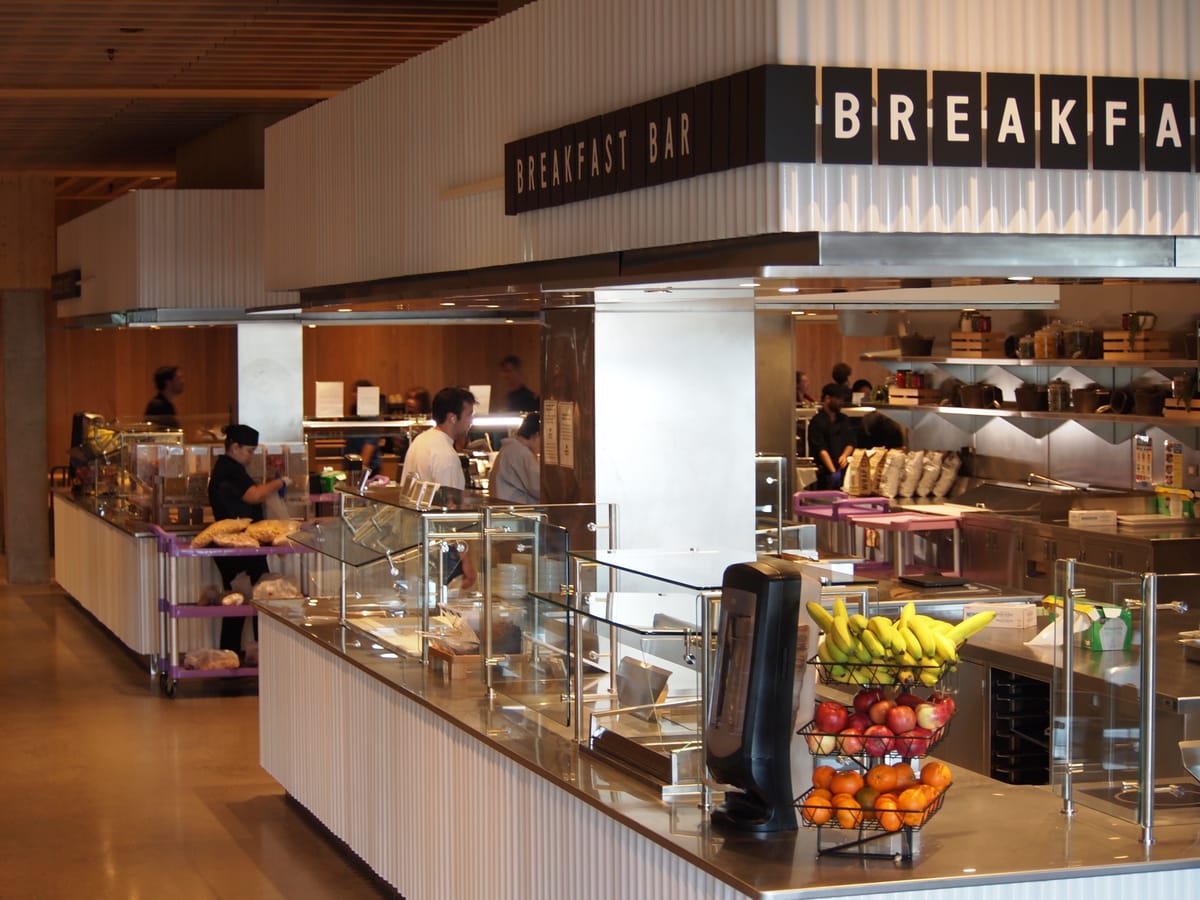
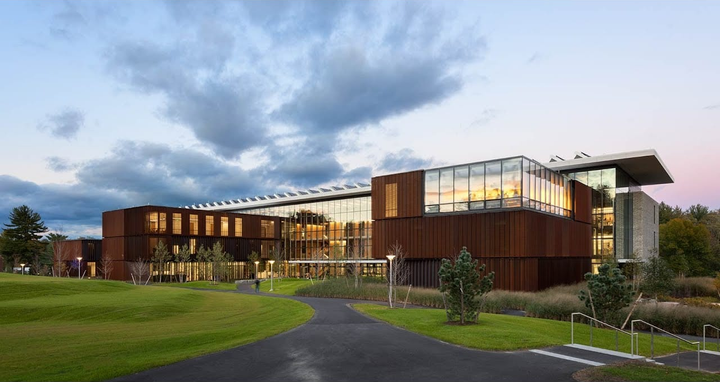
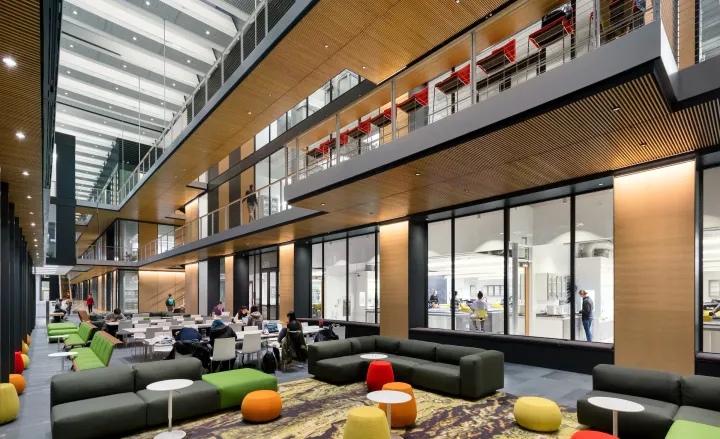
As the community adjusts to Betty’s Kitchen as the main dining space on campus, the transition from Valentine Dining Hall (Val) has brought both anticipation and difficulty. This is especially felt by its workers, who began training over the summer and are still adjusting to their new workspace.
In an email to The Student, Director of Dining Services Cynthia Nardulli and the Dining Leadership Team wrote, “While the planning for the move has been years in the making, the actual transition began in late May of this year and was completed in late August.”
Some staff have raised concerns about rushed training, unfamiliar or flawed equipment, and staffing shortages. “[The transition] was difficult because we didn’t get much time to train before the building opened,” server Hilari Demas said. “We got three or four shifts of a lunch shift to practice, and then we opened up for the students.”
Betty’s Kitchen incorporated new equipment, including transitioning to a fully electrical kitchen. Nardulli regarded these changes in equipment as positive. “Newer equipment that requires less maintenance has helped to make [the transition] easier,” she said. She also highlighted the learning curve that comes with adjusting to the new building. “We are still learning how to optimize our operations in the new building. Continuous training is offered to help in this regard,” she wrote.
However, following training, workers have found the new space not quite ready for full operations. “We have a lot of leaks throughout the building, and then the water fountains and stuff don’t work,” server John Ayala said. “I definitely think we should have waited to open the building a few more months.”
There was a consensus among the employees interviewed that Betty’s Kitchen required more work than Val did. “We’ve had a lot of workers walk out because the workload is way too much at this new building,” Guest Service Attendant Khaalid Rizwan said. Ayala agreed, adding that he thinks “it’s definitely a lot more work” at Betty’s Kitchen.
In an interview with The Student, Late Night Service Assistant Samuel Cha ’29 said he believes that the dining service is understaffed, noting a decline from over 15 active student workers at Val to only five at Betty’s. “From what I know, a total of five people have [recently] quit, two of them walking out,” Cha said. He also stated that walking out has “definitely been a common thing for the workers” due to frustration with lack of training and increased responsibility.
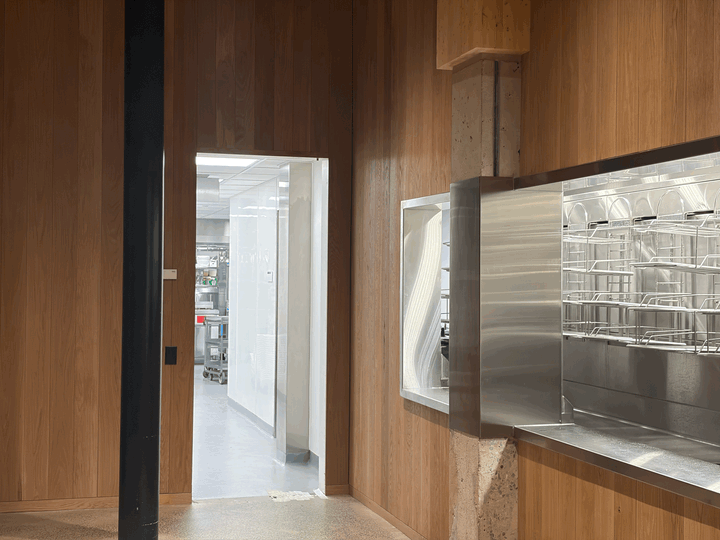
Cha also noted issues with Betty’s layout from a worker’s perspective. “I don’t think they considered the workers at all … the dish room is relatively far from the main space,” he said. “The floors behind the counters are different from the floor of the dining hall … The material of the floor is really slippery.” He also listed the large amounts of oil that splatter from the grill, the difficulty of cleaning the long booths, and the added task of cleaning plates that rotate on the dish return as flaws in considering workers.
Regarding the layout of the new building, Nardulli noted elements that staff are still adjusting to. “Learning a new building, with new traffic patterns, while cooking in a sustainable way are elements we are still adjusting to,” she wrote.
With these drawbacks comes concern for workers’ wellbeing. “A lot of our workers are older, and … they’re already doing so much manual labor. The way they designed these tables is just really inconsiderate, and I still don’t understand why late night or Betty’s [Kitchen] in general requires so much manual labor,” Cha said.
Cha also expressed concern regarding dining staff’s wages. “[Some] of our student jobs pay more than these full-time jobs,” Cha said. “For example, [being] the mascot pays $25 an hour … I don’t understand how you can be paying students $25 an hour and you can’t pay these full-time employees who are doing 10 times the work barely $20.”
From The Student’s search on Workday, full-time positions such as kitchen runners, dishroom attendants, checkers, and prep cooks pay around $20 per hour, second cooks, third cooks, and receivers pay around $21 to $23 per hour, and dining or retail supervisor positions pay up to $29 per hour. The estimated living wage in Amherst is $26.31 per hour for a working adult with no children, according to the MIT Living Wage Calculator.
In an email to The Student, Associate Vice President for Operations Ralph Johnson addressed the issue of compensation. Johnson stated that the college does not discuss individual employee compensation, and that all non-faculty staff positions, including dining staff, are structured under the college’s Job Classification and Compensation Program (JCCP) managed by the Office of Human Resources. “Because different positions have different starting wages determined by their specific job classification level, responsibilities, and market data, pay ranges for open positions are transparently listed on active job descriptions when advertised,” he wrote.
He added that dining staff who experienced significant changes to their job descriptions prior to the transition received salary adjustments. “Workers received the exact same percentage annual pay increase,” Johnson wrote. “3.5[% since] July 1, [same] as the rest of the college community, as recommended following a financial evaluation and officially approved by the Board of Trustees at the start of the fiscal year.”
Tension between frontline workers and administrative staff also takes the form of regulations concerning cleanliness, as Cha noted that workers are promptly corrected when surfaces are not sufficiently cleaned. “The true backbone of the new dining hall is the actual workers who are in the back cooking, cleaning, and serving the food,” he said.
Cha also expressed a need for students to respect workers at Betty’s Kitchen regardless of how they feel about the new dining hall. “At the end of the day, these are full-time employees just trying to make a living, especially in the economy we have right now. The way that I’ve heard some people talk to the workers is just not justified,” he said, adding that “the disrespect a lot of people have in not cleaning after themselves” is unacceptable.
Although the transition has not been seamless, some of the dining staff expressed hope about the future at Betty’s. Nardulli wrote that she is looking forward to “consistently and reliably providing the Amherst community with excellent meals and service.”
Rizwan felt as though the situation would get better as time went on. “It’s just been a few weeks since we got here, and it’s just a time thing,” he assured. Ayala echoed Rizwan’s feeling when asked whether he thought things would improve: “I think so as long as we work together and help each other.”
Comments ()