

Editorial: Our New Room: Seeing Red
The Editorial Board challenges Amherst College’s decision to relocate The Student into an undersized newsroom, arguing that the move threatens the community essential to student journalism, revealing how institutional support shapes the future of independent campus media.
Dear readers,
We are writing to inform you that The Student, one of the oldest college newspapers of its kind in the country, has been forced to operate out of an office the size of a single dorm.
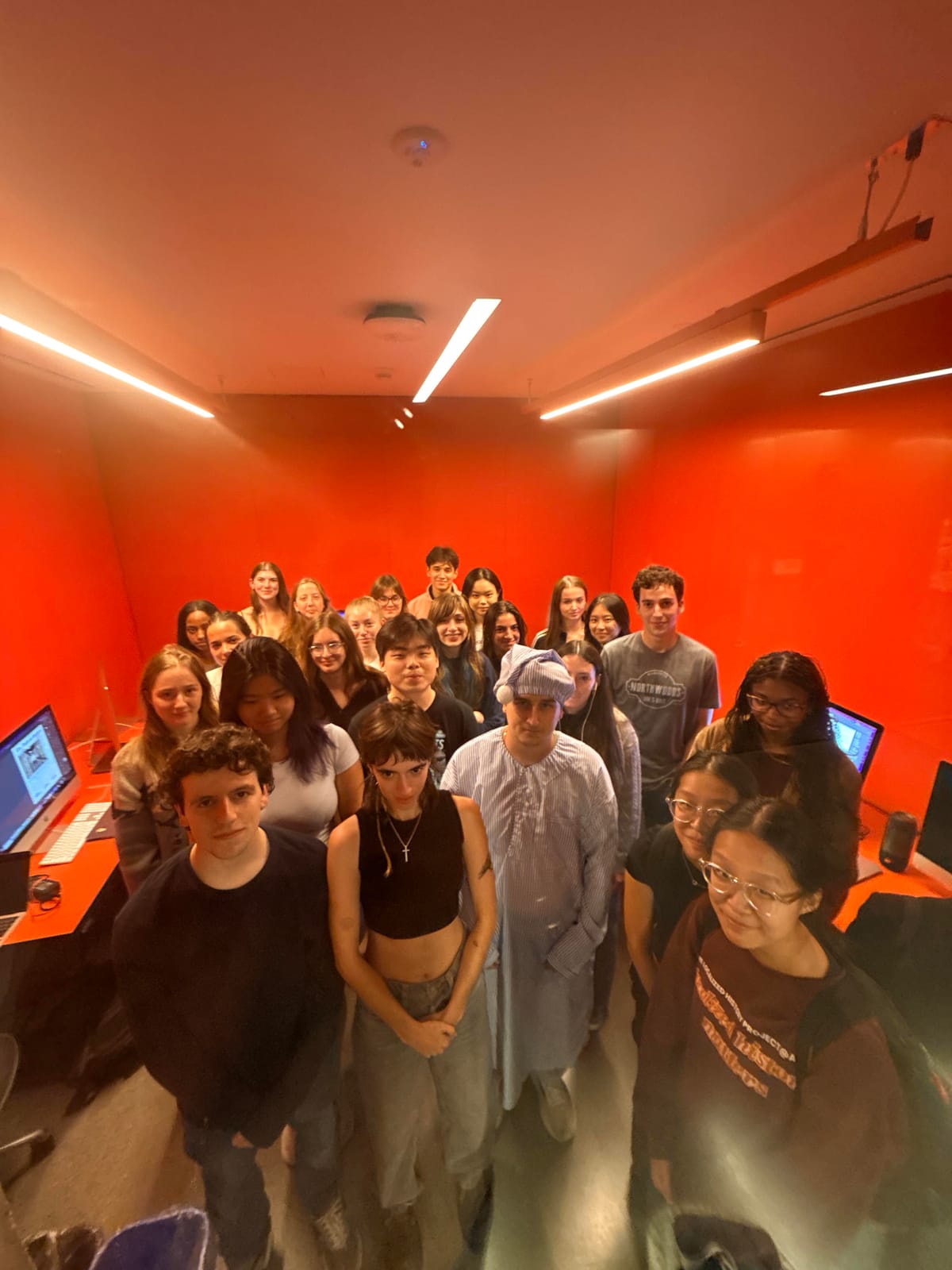
Like our neighbor WAMH’s studio, our new office is painted red, with red tables and curtains that only amplify the color’s boldness. But the color is far less of an issue than its size and layout. At the start of production night, more than 20 editors packed into 186 square feet of space. It became clear that we would not all fit. Many of our editors had to move into WAMH’s lounge next door and nearby open areas. This unsuitable space has fundamentally disrupted our highly collaborative editing process that is crucial to the paper’s success.
The new room is about a third of the size of our former newsroom in the Morrow Hall basement, which, though far from perfect, supported our weekly productions for almost a decade. It had enough desks and chairs to accommodate our staff, an open area where editors could discuss edits and troubleshoot last-minute Adobe InDesign crises, as well as a couch area where we could relax during the often-overwhelming production night (with past editors even sleeping on these couches). Our old newsroom did what any newsroom is supposed to do: support the work of producing a newspaper.
Our new room marks a fundamental misunderstanding of how a newspaper operates. Each issue of The Student is produced through close collaboration rather than independent work. Every article passes through multiple editors. Every page benefits from more than one set of eyes. Every production night depends on conversations, questions, revisions, and collective problem-solving. The new room only leaves space for one editor per section, with the remaining editors either scattered across the first level of the Ford Student Center. No newspaper’s staff should be fractured during its work nights.
As editors, we are not paid nor do we receive academic credit, yet we, as individuals, commit more than 10 hours per week on average. Most of these hours accumulate during production night — from 6:30 p.m. until however late we need to finish laying out, copy-editing, and proofing the pages, often lasting to 2 a.m. Production night is never easy work, but week after week, we return to our roles not only because we are passionate about student journalism, but also because we have built a community around that work. We return for the inter-section collaborations, the collective troubleshooting sessions, the spontaneous late-night conversations, and, yes, the music playing at 2 a.m. while everyone races to meet the print deadline.
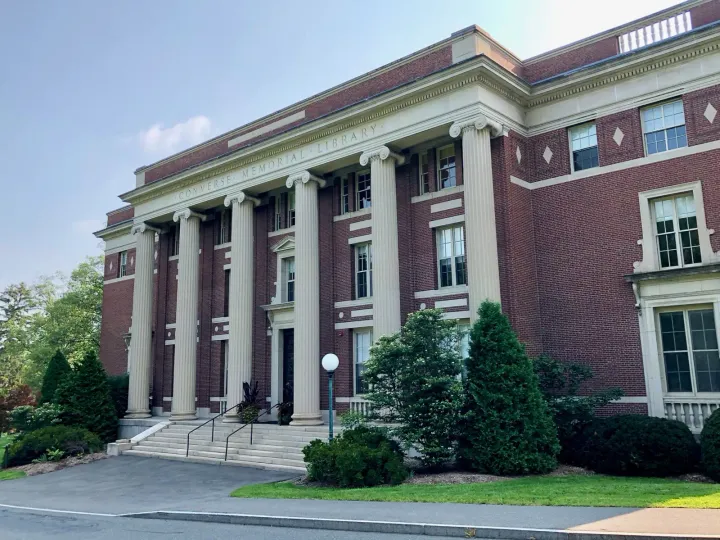
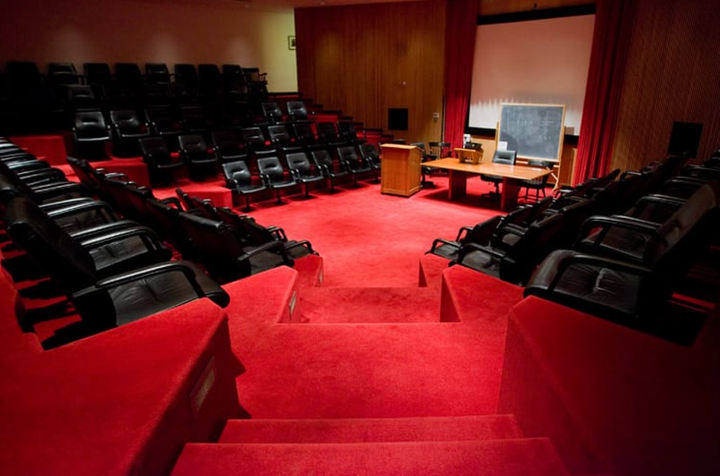
Over the past three weeks, we have been forced to hold our production nights in the Barker room in Frost Library. Our new space in Ford was unavailable to us until this Tuesday due to the ongoing construction. The administration did not offer us support for finding Barker room or any other alternatives, and we had to contact the library staff on our own accord. While we have greatly enjoyed Barker’s size, computers, and access to printers, it is not a newsroom by design, and operates only as a temporary solution. It doesn’t feel like our own, and it probably will never be. But neither does our space in Ford. We worry it will never be a space we can comfortably settle into.
The Student’s weekly issues provide our campus with a moderated platform for student voices and institutional memory. We understand the challenges that naturally accompany a transition to a new space; we are and have been willing to be patient with inconveniences and growing pains. We cannot operate out of a space that lacks the resources necessary to support a weekly newspaper and that undermines the collaborative environment that makes our work possible. A newsroom should foster conversation, creativity, and community. This space threatens to jeopardize the future of one of the few independent platforms for student voices and information on campus.
Our goal is a solution. We are eager to work with administrators, faculty, staff, and anyone invested in the future of The Student to identify a space that meets the basic needs of our staff and publication. We welcome conversations about alternatives and encourage members of the college community to reach out to us.
We will continue advocating for a newsroom that allows The Student to serve this campus by producing the journalism our community deserves.
Unsigned editorials represent the views of the majority of the Editorial Board (assenting: 20; dissenting: 0; abstaining: 1)

Comments ()